A social media marketing best practices rubric Template is most useful when it turns broad marketing principles into observable criteria, consistent scoring levels, and actionable feedback. Instead of asking whether a social campaign is simply “good,” a well-designed rubric defines what strong performance looks like across strategy, audience alignment, content quality, platform fit, engagement, measurement, brand consistency, ethics, and presentation. This makes evaluation more objective and gives marketers, educators, and project teams a shared language for improving their work.
The search intent behind this topic is broader than finding a blank scoring sheet. Readers commonly need to understand what a social media rubric should measure, how to weight criteria, which formats are practical for different workflows, and how to adapt one for classroom assignments, professional campaigns, writing tasks, or team reviews. A useful rubric therefore needs both an evaluation framework and instructions for applying that framework consistently.
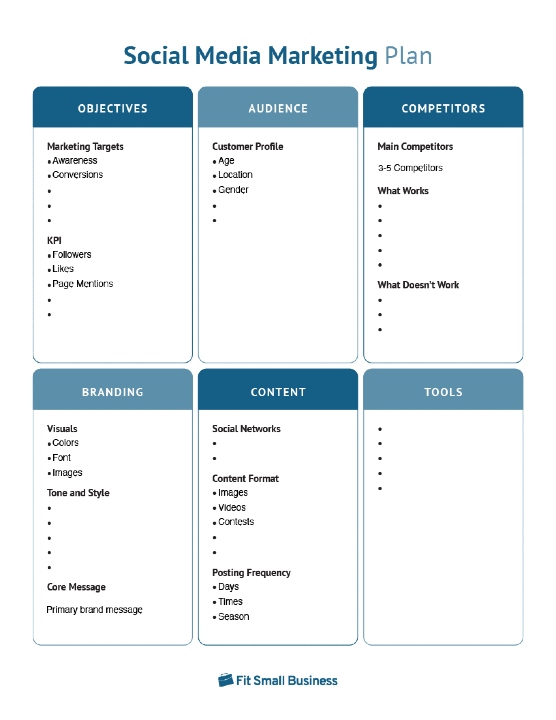
Research into current social media strategy resources and educational assessment examples shows a recurring pattern: effective evaluation frameworks connect goals to audience, content, platform selection, measurement, and improvement. Professional strategy templates commonly document objectives, target audiences, competitors, channels, content, and key performance indicators, while educational rubrics often add criteria such as research depth, case-study application, visual integration, citation quality, and overall organization. The strongest approach combines these ideas without making the rubric unnecessarily complicated.

What a social media marketing rubric should evaluate
The foundation of a strong rubric is criterion clarity. Each criterion should represent one meaningful aspect of performance and should be understandable without a separate explanation. For example, “content quality” is useful only when the evaluator knows whether quality means factual accuracy, relevance, originality, readability, visual consistency, or all of those factors. Splitting complex ideas into observable dimensions makes scores easier to defend and feedback easier to act on.
A practical rubric usually begins with strategic alignment. The evaluator should be able to determine whether the campaign has a defined objective and whether the proposed social activity actually supports that objective. A campaign designed to build awareness should not be judged primarily by direct sales outcomes, while a conversion-focused campaign should not receive a high score simply because its posts receive attention. The criterion needs to match the intended outcome.
Audience relevance is another essential dimension. Strong social marketing demonstrates an understanding of who the content is intended to reach, what those people need, what language is appropriate, and why the chosen platform makes sense. A campaign can have polished graphics and consistent publishing yet still be strategically weak if its audience definition is vague or the content does not address audience needs.
Core criteria worth including
- Strategic alignment: objectives are specific enough to guide decisions and are connected to the broader marketing purpose.
- Audience understanding: content reflects a defined audience and its needs, interests, problems, or motivations.
- Content quality: information is accurate, useful, relevant, clear, and appropriate for the selected channel.
- Platform fit: format, tone, creative treatment, and publishing choices suit the platform rather than treating every channel identically.
- Engagement design: content gives audiences a meaningful reason to interact, respond, save, share, click, or continue the journey.
- Brand consistency: messaging, visual identity, tone, and calls to action remain recognizable across the campaign.
- Measurement: selected metrics are relevant to objectives and are interpreted rather than merely listed.
- Compliance and responsibility: claims, sources, intellectual property, privacy considerations, and platform rules are handled appropriately.
- Execution quality: scheduling, organization, proofreading, formatting, and presentation meet the expected standard.

How to structure scoring levels
A rubric becomes substantially more useful when each criterion has performance descriptions rather than only a numerical score. A four-level structure is often practical: exemplary, proficient, developing, and needs improvement. A five-level structure can provide more nuance, but additional levels are worthwhile only if evaluators can reliably distinguish them.
The highest level should describe observable excellence rather than vague praise. For example, “excellent content” is weaker than “content is accurate, audience-specific, platform-appropriate, clearly sourced where needed, and consistently connected to the campaign objective.” The lowest level should also be specific enough to explain the problem. “Poor” tells the learner or marketer very little; “content is inconsistent with the target audience and does not demonstrate a clear connection to the stated objective” gives direction.
Rubric levels should also represent meaningful progression. If a score of four means strategic alignment is excellent, a score of three should indicate a smaller but identifiable weakness, not a completely different standard. This consistency makes the rubric more reliable across multiple evaluators and across multiple projects.

A practical four-level model
- Exemplary: the work demonstrates a clear, well-supported, highly relevant approach with strong execution and evidence of thoughtful decision-making.
- Proficient: the work meets the main requirements and shows sound judgment, with only minor weaknesses.
- Developing: the work addresses the criterion but lacks depth, consistency, evidence, or precision.
- Needs improvement: the criterion is missing, unclear, inaccurate, poorly aligned, or insufficiently developed.

Choosing the right weighting system
Not every criterion deserves equal weight. A rubric should reflect what actually matters to the task. If the assignment is about campaign strategy, strategic alignment, audience research, channel selection, and measurement may deserve more weight than visual polish. If the task is specifically a social post design exercise, content quality, creative execution, platform fit, and accessibility may deserve greater emphasis.
A simple example is a 100-point rubric with 20 points for strategy, 15 for audience, 20 for content, 15 for platform execution, 10 for engagement, 10 for measurement, and 10 for responsible practice. These numbers are illustrative rather than universal requirements. The important principle is that weighting should follow the purpose of the evaluation.
Weighting also prevents attractive but strategically weak work from receiving an inflated score. A beautifully designed campaign should not automatically outrank a less polished campaign that demonstrates stronger audience insight, clearer objectives, better measurement, and more appropriate platform choices. A rubric is valuable precisely because it separates appearance from substance.

Evaluating content quality and platform fit
Content quality should be assessed according to purpose. A useful post is not necessarily long, highly technical, or visually elaborate. It should deliver a clear message suited to the audience and the platform. Evaluators can examine factual accuracy, clarity, originality, usefulness, tone, visual hierarchy, call-to-action relevance, and consistency with the campaign objective.
Platform fit deserves its own criterion because different social environments encourage different behaviors and formats. A campaign that simply republishes identical material everywhere may demonstrate efficiency but not necessarily strong platform strategy. The rubric can ask whether the team adapted dimensions, format, opening message, caption style, pacing, calls to action, and creative treatment to the context of each selected channel.
Visual consistency can also be evaluated without making aesthetics the dominant factor. Useful questions include whether the brand is recognizable, whether typography and layout support comprehension, whether images have enough contrast, and whether the creative treatment remains consistent across a series. Current social strategy examples show how reusable visual systems can help maintain recognizable presentation across multiple content formats.


Using measurement as a rubric criterion
Metrics should be evaluated for relevance, not volume. A strong submission explains why particular indicators matter and how they relate to the objective. Depending on the goal, useful measures can include reach, impressions, engagement, engagement rate, clicks, video completion, follower change, website actions, leads, or conversions. The correct metric depends on what the campaign is trying to accomplish.
A rubric should distinguish between reporting numbers and interpreting numbers. Listing performance figures demonstrates data collection, but interpretation requires the marketer to explain what changed, why the result may have occurred, what content or audience segment appears significant, and what action should follow. This is where a rubric can encourage analytical thinking instead of superficial reporting.
When evaluating analytics, avoid rewarding unsupported causal claims. If engagement increased after a new content format was introduced, the evaluator can recognize the observation without assuming the format was the sole cause. Strong analysis identifies evidence, acknowledges limitations, and proposes a reasonable next test.


Adapting the rubric for education
A social media marketing best practices rubric template for students should measure learning as well as the quality of the final campaign. Students may need to demonstrate research, strategic reasoning, source evaluation, audience analysis, creative development, platform knowledge, and reflection. A rubric can make these expectations visible before the project begins.
Educational rubrics are especially useful when the assignment involves a presentation or written analysis. A student can receive credit for explaining why a platform was selected, identifying the intended audience, connecting content decisions to marketing objectives, interpreting analytics, and citing evidence. This makes the assessment more educational than a simple popularity-based evaluation of how attractive the final posts appear.
For classroom work, the rubric should also distinguish between individual and group responsibilities when appropriate. If several students collaborate, criteria can evaluate the final campaign while separate process criteria address research contribution, planning, communication, or documentation. This helps prevent a strong final product from completely masking uneven participation.


Format choices for different workflows
Readers often search for a social media marketing best practices rubric template free because they want a practical starting point without building the framework from scratch. The important consideration is not the label attached to a resource but whether its criteria can be edited to match the assignment or campaign. A generic rubric may be useful as a starting structure, but it should still be reviewed before being adopted.
Someone seeking a social media marketing best practices rubric template free download is usually looking for a reusable document that can be stored locally or shared with a team. A social media marketing best practices rubric template pdf can be convenient when preserving layout matters, while a social media marketing best practices rubric template google docs can be more suitable when multiple reviewers need to comment or revise the criteria together.
For presentation-focused work, a social media marketing best practices rubric template ppt can make sense when scoring is integrated into a slide-based briefing. A social media marketing best practices rubric template word is practical for narrative evaluation forms, while a social media marketing best practices rubric template google slides can support collaborative presentation reviews. The format should follow the workflow rather than dictate the evaluation method.


Spreadsheet and collaborative formats
A social media marketing best practices rubric template excel can be particularly useful when scores need to be calculated across multiple criteria, reviewers, campaigns, or students. Spreadsheet-based rubrics make weighting transparent and can make repeated evaluations easier. They are most valuable when the scoring logic is simple enough for reviewers to understand and audit.
People searching for a social media marketing best practices rubric template google may be considering a collaborative ecosystem rather than a single document type. In practice, the key questions are whether the scoring structure is easy to edit, whether reviewers can access the same version, whether comments can be preserved, and whether the final scores can be summarized consistently.
For writing assignments, a social media marketing best practices rubric template for writing should emphasize message clarity, audience awareness, factual accuracy, structure, tone, persuasive effectiveness, evidence, and platform suitability. A rubric for writing should not overemphasize visual design because that would measure a different skill from the one the assignment intends to teach.


Using a rubric for projects and campaign reviews
A social media marketing best practices rubric template for project work should be organized around the actual project lifecycle. Early criteria can evaluate research and planning, middle criteria can evaluate content and execution, and later criteria can evaluate measurement, reflection, and recommendations. This structure mirrors how campaigns are developed and prevents the evaluation from focusing exclusively on the final presentation.
For a campaign project, the rubric can begin with the brief: business context, objective, audience, competitive environment, selected platforms, and proposed content themes. It can then examine the logic connecting those components. A strong project should show that the selected tactics follow from the research rather than appearing as a collection of disconnected social posts.
The final portion should examine evidence and improvement. Teams should be able to explain what they would retain, change, test, or stop based on the available results. This creates a useful bridge between evaluation and future strategy. The rubric therefore becomes not only a grading mechanism but also a structured review document.


Common rubric mistakes
One common mistake is creating too many criteria. A rubric with dozens of tiny requirements can become difficult to score and can encourage mechanical compliance. Criteria should be broad enough to matter but specific enough to evaluate. If two criteria repeatedly receive the same score for the same reason, they may belong together.
Another problem is using vague descriptors. Words such as “good,” “effective,” “professional,” and “creative” need observable explanations. Creativity might mean originality, purposeful experimentation, distinctive storytelling, or an inventive solution to a communication problem. Professionalism might mean accurate information, appropriate tone, consistent formatting, and responsible use of sources.
A third mistake is treating engagement as the universal definition of success. Likes, comments, and shares can be relevant, but they are not interchangeable with business or learning outcomes. A rubric should reward appropriate measurement rather than automatically rewarding the largest visible number.


Making scoring more reliable
Consistency improves when evaluators score against evidence rather than impressions. Before evaluating a large batch of work, reviewers can examine one sample together, discuss why each criterion receives its score, and clarify ambiguous wording. This calibration step is particularly helpful when multiple instructors, managers, clients, or team members will use the same rubric.
Comments should explain the relationship between evidence and score. Instead of writing “needs better content,” a reviewer might note that the content is informative but does not connect the stated audience problem to the proposed call to action. Such feedback identifies a change the creator can actually make.
It is also useful to separate scoring from recommendations. The score records the current level of performance, while the recommendation describes what should happen next. This prevents the rubric from becoming overloaded with instructions and gives the evaluation a clear progression from evidence to judgment to improvement.


Practical Solution
Start by writing the purpose of the evaluation in one sentence. For example, the purpose might be to assess whether a campaign demonstrates strategic social media planning, audience understanding, platform-specific execution, responsible content creation, and evidence-based improvement. This statement becomes the filter for deciding which criteria belong in the rubric. If a proposed criterion does not help answer that purpose, remove it or place it in a separate checklist.
Next, create six to nine criteria and assign weights according to the task. Write the highest performance description first, then describe what progressively weaker performance looks like. Use observable language and avoid relying on adjectives alone. After drafting the rubric, test it against two or three hypothetical projects. If two performance levels are difficult to distinguish, revise the descriptions before using the rubric with real submissions.
Finally, use the rubric as part of a feedback cycle. Score the work, identify the two or three criteria with the greatest improvement opportunity, and turn those observations into specific next actions. For example, a low platform-fit score might lead to channel-specific content adaptation, while a weak measurement score might lead to clearer objective-to-KPI mapping. The best rubric does not simply produce a number; it helps the next version become better.
Reference Examples
Visual references can make a social media marketing best practices rubric Template easier to understand because they show how strategy, planning, content structure, measurement, and presentation can be represented in working documents. A useful reference is not necessarily a rubric itself; a campaign plan, content calendar, analytics dashboard, audit worksheet, or presentation layout can reveal the kinds of evidence that a strong rubric should evaluate. Looking at these formats side by side helps readers recognize the difference between planning information, execution evidence, and performance reporting.
The following examples illustrate several practical forms that can support rubric design and review. They include planning worksheets, calendars, dashboards, presentation structures, and campaign assessment layouts. Use them as visual references rather than as universal standards: the appropriate scoring criteria depend on the purpose of the campaign, assignment, organization, audience, platform mix, and evidence available for evaluation.
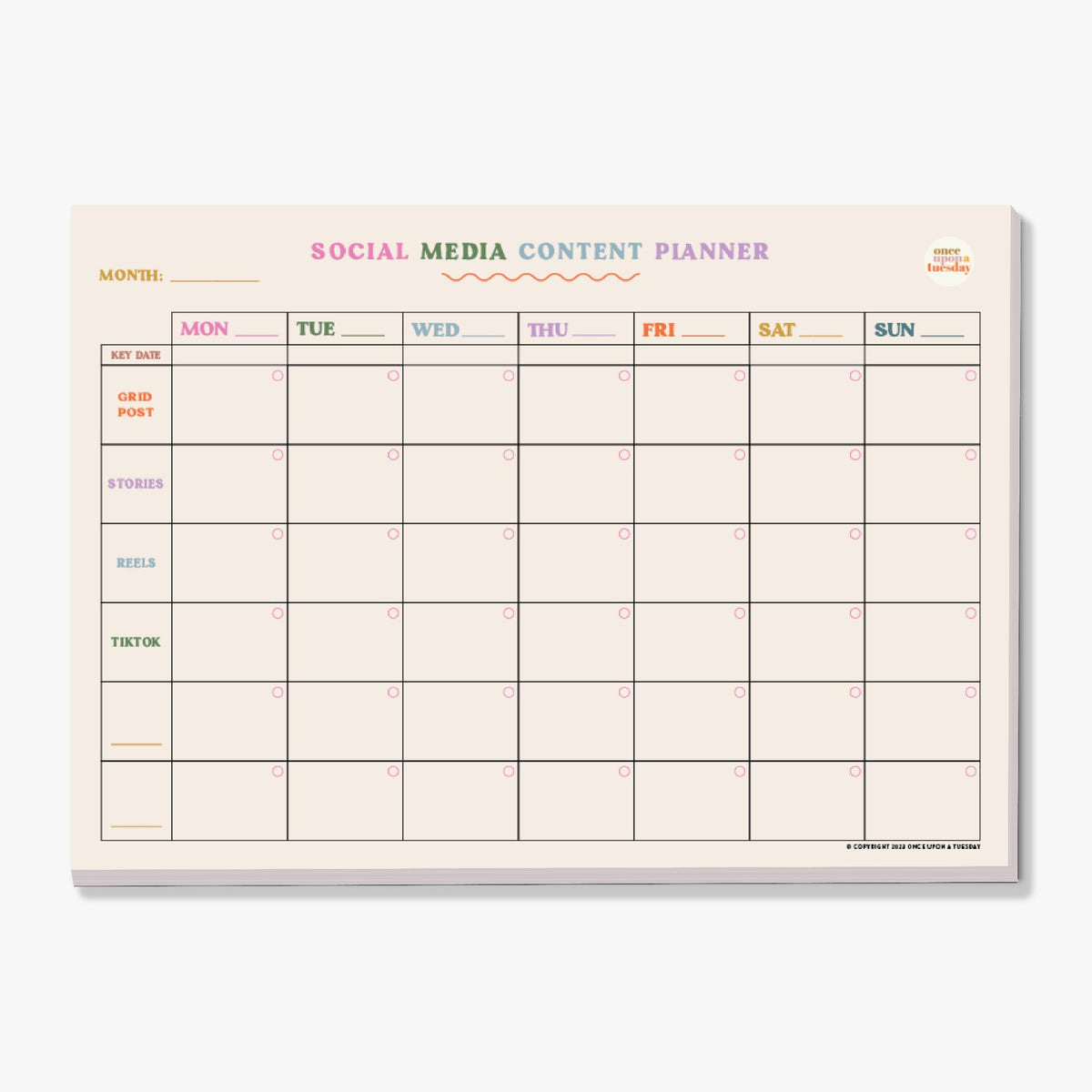
Social Media Weekly Content Planner Pad
Source: Form Shop & Studio
Vibrant Social Media Marketing Presentation Template
Source: Venngage
