A well-structured marketing plan schedule can turn a collection of marketing ideas into a clear, manageable action plan. Instead of wondering what to publish, which campaign to launch, or when to follow up with customers, a schedule gives your team a practical timeline for completing each marketing activity.
Whether you run a small business, manage an online store, work in digital marketing, or coordinate a larger campaign, a marketing schedule helps you connect your goals with specific tasks, deadlines, channels, and measurable results. The right template can also make it easier to see what is happening each week and identify tasks that need attention.
This guide explains how to create an effective marketing plan schedule, what information to include, and how to use a printable template to organize your marketing activities more efficiently.
What Is a Marketing Plan Schedule?
A marketing plan schedule is a timeline that organizes marketing activities according to specific dates, objectives, channels, and responsibilities. It transforms a broader marketing strategy into actionable tasks that can be planned and tracked.
A typical schedule may cover a week, month, quarter, or full year. For example, a monthly marketing schedule might include social media posts, email campaigns, blog publishing, promotional offers, paid advertising, SEO activities, and performance reviews.
The main purpose is to make marketing more consistent. Instead of creating campaigns at the last minute, you can plan activities in advance and ensure that every task supports a specific business goal.
Why Use a Marketing Plan Schedule?
Marketing involves many moving parts. Without a schedule, important tasks can easily be forgotten or delayed. A structured plan provides a central place to organize campaign activities and deadlines.
1. Keep Marketing Activities Organized
A schedule gives you a clear overview of what needs to happen and when. You can organize content, advertising, email campaigns, promotions, and other activities in chronological order.
2. Connect Tasks With Marketing Goals
Every marketing activity should have a purpose. Connecting individual tasks to goals such as increasing website traffic, generating leads, improving engagement, or increasing sales helps prevent random marketing activity.
3. Improve Team Coordination
When several people work on a campaign, everyone needs to understand the timeline. A shared marketing schedule can show content deadlines, campaign launch dates, review periods, and important milestones.
4. Make Performance Easier to Measure
A schedule can include success metrics alongside marketing activities. This makes it easier to compare planned activities with actual results and determine which campaigns deserve further attention.
What to Include in a Marketing Plan Schedule
A useful marketing plan schedule does not need to be complicated. The goal is to include enough information to make each activity clear without creating unnecessary administrative work.
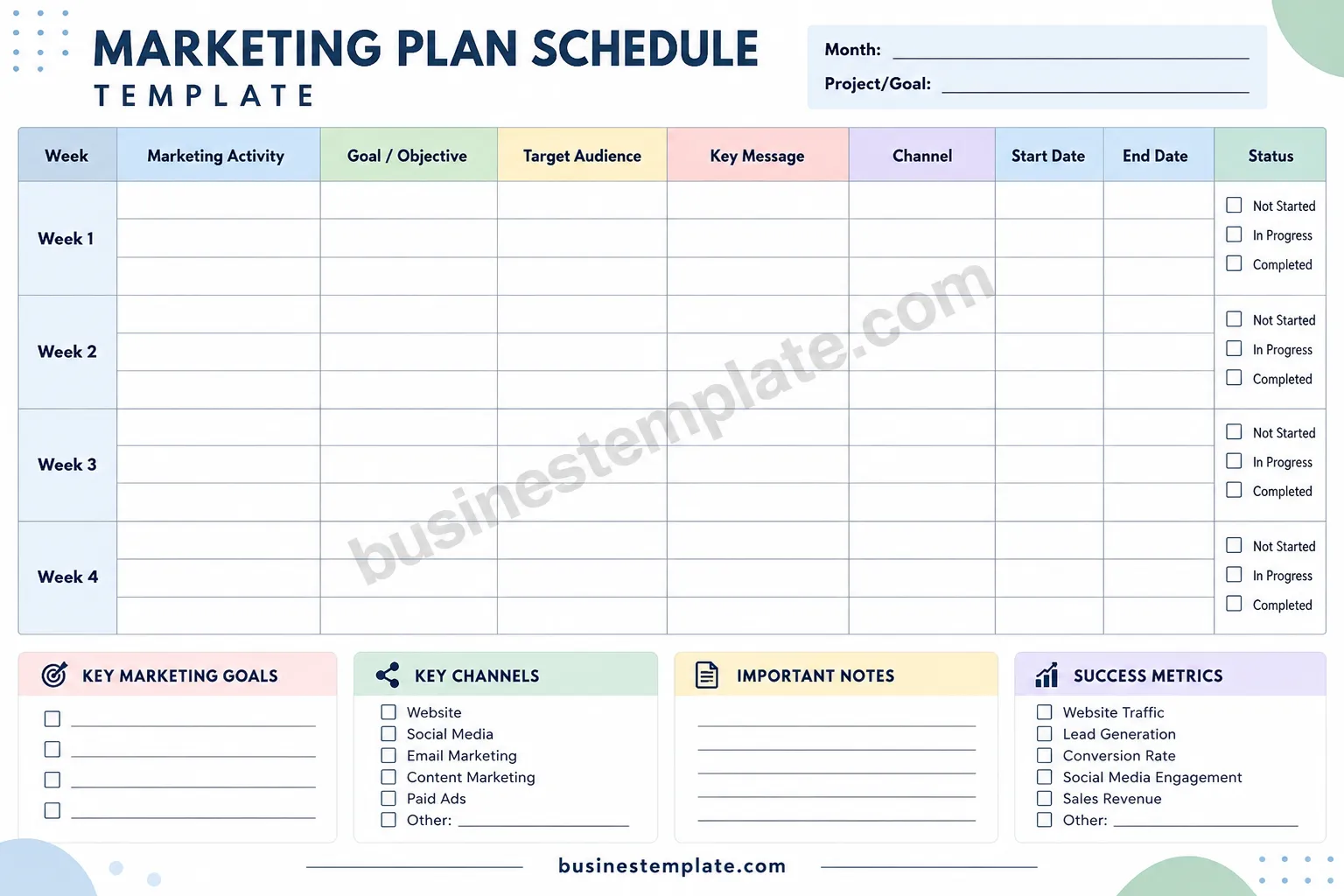
- Marketing activity: Describe the task or campaign, such as publishing a blog post or launching an email promotion.
- Goal or objective: Explain what the activity is intended to achieve.
- Target audience: Identify the customers or audience segment the activity is designed for.
- Key message: Record the main idea or offer communicated to the audience.
- Marketing channel: Specify where the activity will take place, such as a website, email, social media, or paid advertising platform.
- Start date: Record when preparation or execution begins.
- End date: Set the completion or campaign deadline.
- Status: Track whether the activity is not started, in progress, or completed.
- Success metrics: Define how results will be measured.
How to Create a Marketing Plan Schedule
Step 1: Define Your Marketing Goals
Start by identifying what you want your marketing efforts to accomplish. Goals might include increasing brand awareness, generating qualified leads, growing an email list, improving website traffic, or increasing product sales.
Try to make each goal specific enough to guide your activities. A clear objective makes it easier to decide which marketing tasks belong on the schedule.
Step 2: Identify Your Target Audience
Determine who each campaign is intended to reach. Your audience may differ depending on the product, service, campaign, or stage of the customer journey.
Understanding your audience helps you select appropriate messages and channels instead of publishing the same content everywhere without a clear purpose.
Step 3: Choose Your Marketing Channels
List the channels that support your strategy. Common options include:
- Website and blog content
- Search engine optimization
- Email marketing
- Social media marketing
- Content marketing
- Paid advertising
- Influencer or partnership campaigns
- Promotional and seasonal campaigns
You do not necessarily need to use every channel. Focus on the platforms where your target audience is most relevant and where your team can maintain consistent activity.
Step 4: Break Campaigns Into Specific Tasks
Large campaigns become easier to manage when they are divided into smaller actions. For example, an email campaign might include writing the email, creating the design, reviewing the copy, testing the message, scheduling the send, and analyzing the results.
Adding these individual tasks to your marketing schedule creates a more realistic timeline and makes it easier to identify potential delays.
Step 5: Assign Dates and Deadlines
Give every important activity a start date and completion date. Include preparation time rather than scheduling only the final publication or launch date.
For recurring activities, establish a consistent pattern. For example, you might publish educational content every Tuesday, send a newsletter every Thursday, and review campaign performance at the end of each week.
Step 6: Add Success Metrics
Decide how you will evaluate each activity. Depending on the campaign, useful marketing metrics can include website traffic, leads, conversion rate, engagement, email clicks, advertising performance, or sales revenue.
Measuring results allows you to improve future schedules based on actual performance rather than assumptions.
Marketing Plan Schedule Example
A simple four-week schedule can provide enough structure for many small businesses and marketing teams.
- Week 1: Research the audience, prepare campaign content, and publish initial educational content.
- Week 2: Launch email marketing and social media promotions while monitoring early engagement.
- Week 3: Optimize underperforming campaigns and publish supporting content.
- Week 4: Complete promotional activities, review results, and prepare the next month’s plan.
The exact activities will depend on your business. The important principle is to connect each weekly task to a broader marketing objective.
Tips for Maintaining an Effective Marketing Schedule
Keep the Schedule Realistic
A common mistake is planning more activities than your team can realistically complete. A smaller number of consistently executed campaigns can be more manageable than an overloaded schedule.
Leave Room for Changes
Marketing conditions can change quickly. New opportunities, customer feedback, seasonal events, and campaign results may require adjustments. Treat your schedule as a working document rather than an unchangeable calendar.
Review the Schedule Regularly
Set aside time to review completed activities and upcoming tasks. A weekly review can help identify overdue work, upcoming deadlines, and campaigns that need additional resources.
Separate Planning From Measurement
Planning tells you what you intend to do, while measurement tells you what actually happened. Include both elements in your workflow so that each new marketing plan can learn from previous results.
How a Printable Marketing Plan Template Can Help
A printable template can be especially useful when you prefer to see the entire marketing timeline at a glance. A structured worksheet allows you to record weekly activities, goals, audiences, messages, channels, dates, and campaign status in one place.
It can also be useful during marketing meetings. Team members can review upcoming activities, discuss priorities, and write down changes without moving between multiple digital tools.
For small businesses, freelancers, students, and marketing teams, a simple printable marketing planner can provide enough structure without requiring complex project management software.
Common Marketing Scheduling Mistakes to Avoid
- Planning without objectives: Every major activity should support a defined marketing goal.
- Ignoring deadlines: Campaigns often require preparation before the public launch date.
- Using too many channels: Focus on channels that are appropriate for your audience and resources.
- Forgetting measurement: Without performance metrics, it is difficult to determine whether an activity was successful.
- Never updating the schedule: Marketing plans should evolve as campaigns produce new information.
- Making the schedule too complicated: A useful plan should be easy for the team to understand and maintain.
Final Thoughts on Creating a Marketing Plan Schedule
A well-designed marketing plan schedule gives your marketing strategy a practical timeline. By organizing activities, objectives, audiences, channels, deadlines, and success metrics, you can turn broad marketing goals into manageable actions.
The best schedule is not necessarily the most detailed one. It is the one your team can understand, maintain, and use consistently. Start with your most important goals, divide them into actionable activities, assign realistic deadlines, and review performance regularly.
Whether you use a digital calendar, spreadsheet, project management system, or printable worksheet, having a clear marketing schedule can make campaign planning more organized and help your team stay focused on measurable business objectives.
