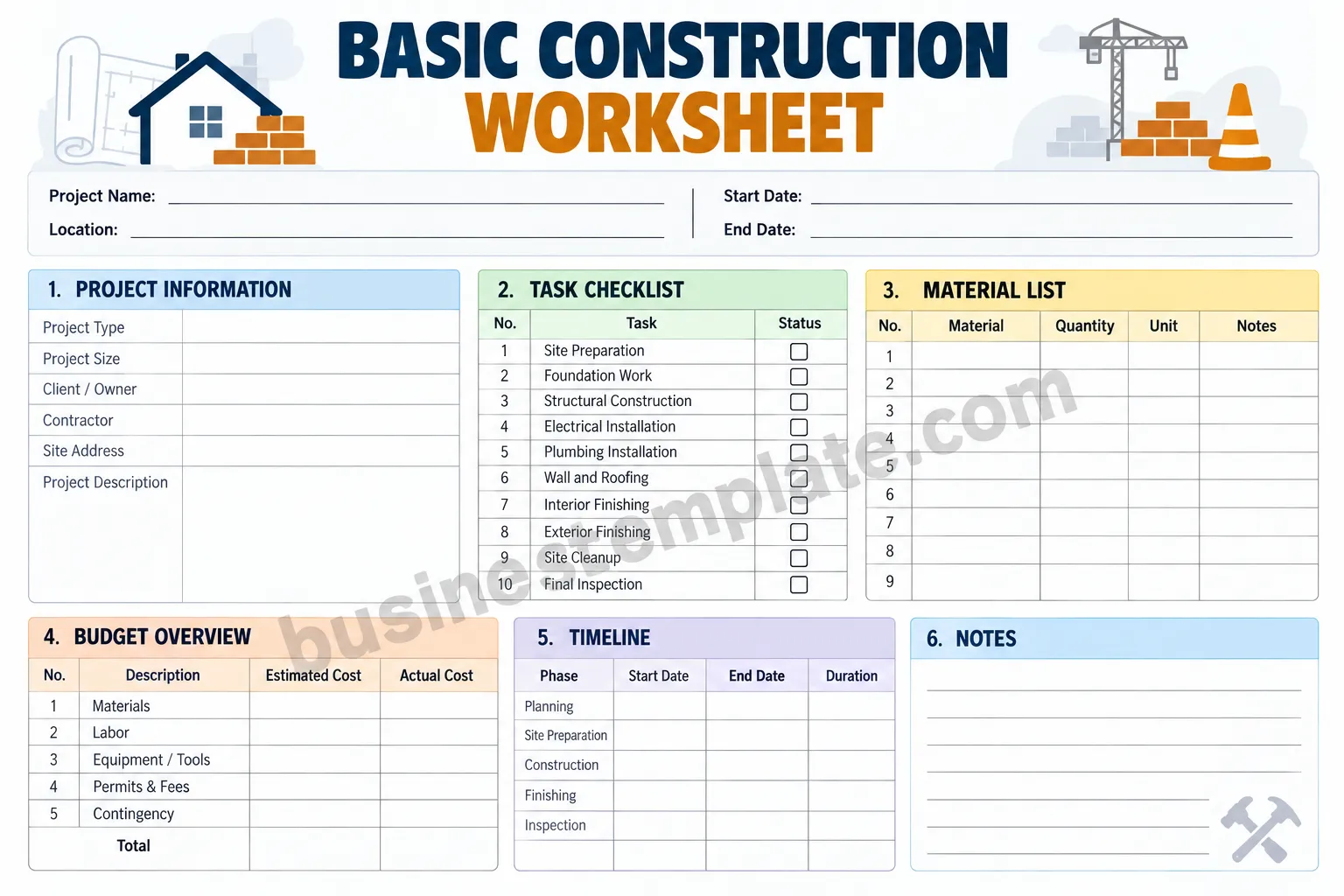
A basic construction worksheet is a simple but effective tool for organizing important project information in one place. Whether you are planning a small renovation, residential construction project, repair job, or general building work, a well-structured worksheet can make it easier to track tasks, materials, costs, schedules, and notes.
Construction projects often involve multiple activities happening at different stages. Without a clear system, it can become difficult to remember which tasks have been completed, what materials are still needed, or how actual expenses compare with the original budget. A construction worksheet provides a practical way to keep these details organized.
The right worksheet does not need to be complicated. A printable template with clear sections can provide enough space for project information, task tracking, material lists, budget planning, timelines, and notes. This makes it useful for homeowners, contractors, builders, students, project managers, and anyone who needs a straightforward construction planning tool.
What Is a Basic Construction Worksheet?
A basic construction worksheet is a planning and tracking document designed to organize essential information about a construction project. It can be used before work begins and updated throughout the project to keep important details easy to access.
Depending on the type of project, a construction worksheet may include information such as the project name, location, contractor, client, materials, labor costs, equipment, project phases, deadlines, and completion status.
The main purpose is organization. Instead of keeping information across separate notes, spreadsheets, receipts, and calendars, a worksheet brings the most important details together in a convenient format.
Why Use a Construction Worksheet?
Construction work involves many moving parts. Even a relatively small project may require planning materials, coordinating workers, monitoring expenses, and completing tasks in the correct order.
A construction project worksheet can help simplify this process by providing a visual overview of the work.
1. Keep Project Information Organized
A worksheet can begin with basic project information such as the project name, location, client or owner, contractor, start date, and expected completion date. Having these details at the top of the document makes the worksheet easier to identify and update.
2. Track Construction Tasks
A task checklist makes it easier to see what has been completed and what still needs attention. Common construction phases can include site preparation, foundation work, structural construction, electrical installation, plumbing, roofing, interior finishing, exterior finishing, cleanup, and final inspection.
3. Plan Materials
Material shortages can cause unnecessary delays. A material list provides space to record the required item, quantity, unit, and notes. This can be useful when preparing purchasing lists or checking materials delivered to the job site.
4. Monitor the Budget
Construction costs can change as a project progresses. A worksheet can provide separate areas for estimated and actual costs, allowing project owners or contractors to compare the original plan with current spending.
5. Create a Simple Project Timeline
A construction timeline helps establish when major phases should begin and end. Even a basic schedule can make dependencies and upcoming deadlines easier to understand.
Key Sections to Include in a Basic Construction Worksheet
A useful worksheet should focus on the information that matters most for the project. The following sections provide a practical starting point.
Project Information
Start with the basic details of the project. Useful fields include:
- Project name
- Project location
- Project type
- Project size
- Client or property owner
- Contractor or project manager
- Site address
- Project description
- Start date
- Expected completion date
This information creates a quick reference point and makes the worksheet easier to identify when managing multiple projects.
Task Checklist
A task checklist is one of the most practical parts of a construction worksheet. Break the project into manageable activities and add a status field for each task.
For example, a basic checklist might include site preparation, foundation work, structural construction, electrical work, plumbing, wall and roofing work, interior finishing, exterior finishing, site cleanup, and final inspection.
For larger projects, tasks can be divided into smaller activities. This makes progress easier to monitor and can help identify work that is falling behind schedule.
Material List
Use the material section to record everything required for the project. A simple table can include the material name, quantity, unit, and notes.
For example, depending on the project, the list could contain concrete, lumber, bricks, roofing materials, fasteners, pipes, electrical components, paint, flooring, or finishing materials.
Keeping quantities documented can also make purchasing and inventory checks more efficient.
Budget Overview
A construction budget worksheet should make it easy to compare estimated expenses with actual costs. Common categories include materials, labor, equipment, tools, permits, fees, and contingency expenses.
Adding a contingency category is useful because construction projects can encounter unexpected expenses. The exact amount needed depends on the project and should be determined using an appropriate budgeting method.
Timeline
The timeline section can divide the project into major phases. For each phase, record the planned start date, end date, and duration.
Typical phases may include planning, site preparation, construction, finishing, and inspection. More detailed projects can include additional phases and milestones.
Notes
A notes section provides flexible space for observations, reminders, measurements, changes, questions, or follow-up items. This is especially helpful when information does not fit neatly into a table.
How to Use a Basic Construction Worksheet
Using a worksheet effectively is straightforward. The key is to complete the important information before work begins and update the document as the project develops.
Step 1: Enter the Project Details
Begin by filling in the project name, location, client or owner, contractor, dates, and project description. Keep the information accurate so the worksheet can serve as a reliable reference.
Step 2: Break the Project Into Tasks
List the major construction activities in the order they are expected to occur. If a task is complex, divide it into smaller steps. This makes progress tracking more useful than relying on a single broad project status.
Step 3: Prepare the Material List
Record the required materials and estimated quantities. Review the list before purchasing materials and update it if project specifications change.
Step 4: Set a Preliminary Budget
Enter estimated costs for materials, labor, equipment, permits, and other expenses. As purchases and payments are made, record actual costs so you can identify differences between the original estimate and current spending.
Step 5: Add Target Dates
Assign target start and completion dates to major project phases. Consider the sequence of work when setting dates because some activities cannot begin until earlier work has been completed.
Step 6: Update the Worksheet Regularly
A worksheet is most useful when it remains current. Update task status, material quantities, costs, dates, and notes whenever there is a meaningful change to the project.
Tips for Creating an Effective Construction Planning Worksheet
A good construction worksheet should be easy to understand at a glance. The following tips can make a basic template more practical.
- Keep the layout simple: Avoid unnecessary fields that make the worksheet difficult to complete.
- Use clear categories: Separate tasks, materials, budget information, timeline details, and notes.
- Use consistent terminology: Use the same names for project phases and materials throughout the document.
- Record actual costs promptly: Updating expenses regularly makes budget tracking more accurate.
- Review the material list before ordering: Confirm quantities and units to reduce purchasing mistakes.
- Break large tasks into smaller steps: Smaller tasks are easier to track and verify.
- Leave room for notes: Unexpected changes and observations are common during construction.
- Review progress regularly: Use the worksheet as a project management reference rather than completing it only once.
Printable Construction Worksheet vs. Digital Spreadsheet
Both printable and digital construction worksheets can be useful. The best format depends on how the project information will be collected and updated.
A printable worksheet can be convenient at a job site where users need to make quick handwritten notes. It can also be useful for meetings, inspections, walkthroughs, and physical project folders.
A digital spreadsheet may be more suitable when the project requires automatic calculations, frequent updates, multiple contributors, or detailed financial tracking. Digital tools can also make it easier to sort information and create formulas.
For simple projects, however, a printable basic construction worksheet can provide an efficient way to organize essential information without requiring complicated software.
Who Can Use a Basic Construction Worksheet?
This type of worksheet can be adapted for a variety of users and construction situations.
- Homeowners planning renovations
- General contractors
- Construction project managers
- Builders and subcontractors
- Property managers
- Students learning construction planning
- Small construction businesses
- DIY project planners
The template can also be customized according to project size. A small home improvement project may only require a few tasks and materials, while a larger building project may need more detailed schedules and cost categories.
Benefits of Using a Simple Construction Template
The biggest benefit of a construction worksheet is that it turns scattered project information into a structured reference. This can make planning and communication easier.
A worksheet can also help users identify missing information before construction starts. For example, reviewing the material list may reveal an item that has not been ordered, while checking the timeline may show that two activities have overlapping deadlines.
Another advantage is consistency. When every project uses a similar worksheet structure, it becomes easier to review projects and find important information quickly.
Final Thoughts
A basic construction worksheet is a practical planning tool for keeping construction projects organized. By combining project details, task checklists, material requirements, budget information, timelines, and notes in one document, it provides a simple overview of the work from planning through completion.
The most effective worksheet is not necessarily the most complicated one. A clear and printable construction template can be enough for many small and medium-sized projects, especially when it is updated consistently.
Whether you are managing a renovation, organizing a building project, preparing a material list, or tracking construction expenses, a well-designed worksheet can provide a useful foundation for better project organization and day-to-day planning.
