Business proposals are often confused with business plans, pitch decks, quotations, or capability statements. They overlap in places, but their jobs are different. A proposal is usually designed around a specific opportunity and a specific reader. It explains what you propose to do, why the proposed work matters, what the client will receive, how the work will be delivered, what it will cost, and what both sides need to agree before work begins.
The best template is not necessarily the longest or most visually elaborate one. A simple document can be highly persuasive when it reflects the client’s actual situation. Conversely, a beautifully designed proposal can fail if it talks mainly about the seller, hides important assumptions, uses vague deliverables, or makes the reader work too hard to find the price and next step.
This guide explains how to choose, adapt, and write a business proposal template for sales proposals, consulting engagements, creative projects, professional services, partnerships, implementation work, and other client-facing opportunities. It also explains when Word, Google Docs, PDF, and editable online formats make sense and how to turn a reusable template into a document that feels specific rather than generic.
Throughout the guide, examples are illustrative rather than promises about actual results. Pricing, timelines, deliverables, and business outcomes should always be replaced with information that has been confirmed for the particular client and project.

What Is a Business Proposal Template?
A business proposal template is a pre-structured document used to organize a proposal before it is customized for a particular prospect or client. It commonly provides spaces or sections for the client need, executive summary, proposed solution, scope, deliverables, schedule, pricing, qualifications, terms, and acceptance. The exact structure can vary by industry, transaction size, and procurement process.
The central advantage of a template is consistency. Instead of remembering every section each time you respond to an opportunity, you begin with a proven framework and spend your time adapting the substance. This is especially valuable when several people contribute to proposals because a shared structure creates a common standard for what must be reviewed before a document is sent.
A template should never become a substitute for discovery. The document needs to reflect the prospect’s objectives, language, constraints, priorities, and decision criteria. If a generic template says the same thing to every customer, the reader may reasonably conclude that little effort was invested in understanding their situation.
A useful way to think about the template is as a sequence of questions. Who is the client? What problem or opportunity are they dealing with? What outcome do they want? What will you do? What will you deliver? When will it happen? What will it cost? Why should they trust you? What assumptions or conditions apply? What should they do next?
That sequence also explains why a proposal should usually move from the client’s situation toward the decision rather than beginning with a long company biography. The reader first needs to recognize the relevance of the proposal, then understand the recommended response, then evaluate evidence, investment, risk, and next steps.

Why a Good Business Proposal Template Matters
A proposal can be technically correct and still be difficult to approve. Decision-makers often review documents while balancing budgets, operational concerns, internal stakeholders, procurement requirements, and competing priorities. A clear template reduces cognitive friction by putting information where the reader expects it and making the argument easier to scan.
Templates also improve completeness. Important details are often forgotten when a proposal is written from a blank page, particularly assumptions, exclusions, payment terms, acceptance criteria, responsibilities, and dependencies. A checklist-driven structure makes omissions easier to identify before the document reaches the client.
Consistency is another benefit. If your proposals use different terminology, pricing structures, headings, and formatting every time, prospects may struggle to compare information. A standardized framework does not mean every proposal must look identical; it means the underlying logic and quality controls remain dependable.
A strong template can also shorten production time without encouraging copy-and-paste writing. Reusable sections can include standard legal language, company information, service descriptions, credentials, methodology explanations, and formatting rules. The proposal writer then concentrates on the client-specific sections where personalization creates the greatest value.
Finally, the template can improve internal review. When reviewers know where the scope, price, risks, assumptions, and next steps belong, they can focus on whether the content is accurate and commercially sound rather than spending time learning a new document structure for every opportunity.

Business Proposal vs. Business Plan, Quote, and Pitch Deck
A business proposal is usually opportunity-specific. It is directed toward a potential customer, partner, buyer, or other decision-maker and describes a proposed engagement. The document may include elements of a business plan, but its purpose is generally to secure agreement on a particular piece of work rather than explain the entire strategy of the business.
A business plan is broader and often describes the company’s model, market, operations, strategy, financial assumptions, and long-term objectives. A proposal might borrow market analysis or financial information from a business plan, but it normally selects only the information relevant to the opportunity at hand.
A quotation or estimate is usually more focused on price. It may list products, quantities, rates, taxes, and totals, but it may not explain the full business case, implementation method, qualifications, or client problem. A proposal can include a quotation while providing the reasoning and scope around it.
A pitch deck is typically presentation-oriented. It uses slides, concise messages, diagrams, and visuals to support a live or digital presentation. A proposal is generally more self-contained and detailed, although a proposal and pitch deck can be developed from the same underlying strategy.
Understanding these differences prevents a common mistake: taking a generic business document and calling it a proposal without changing the content. A proposal should make a specific recommendation to a specific audience and establish a clear path from the client’s need to an agreed course of action.

Core Sections Every Business Proposal Should Consider
1. Cover Page
The cover page identifies the proposal without forcing the reader to search for basic information. Include the proposal title, client or organization name, your business name, submission date, and relevant contact information. If the proposal has an expiration or validity date, make it visible where appropriate.
The title should describe the engagement rather than relying on a generic phrase such as “Business Proposal.” For example, “Customer Experience Optimization Proposal for Northstar Retail” tells the reader immediately what the document concerns. A specific title also helps when multiple proposals are stored or circulated internally.
Design should support recognition rather than compete with the content. A restrained logo treatment, consistent typography, clear spacing, and one strong visual are often enough. Avoid decorative elements that make the page difficult to print, compress, or read on a mobile device.
The cover is also a useful place to establish document control. If the proposal has a reference number, version number, confidentiality notice, or validity date, those details can be included without overwhelming the main title.
Before sending the proposal, verify every name, title, company name, date, and contact detail on the cover. A small factual error on page one can undermine confidence in a much larger document.

2. Executive Summary
The executive summary should give a busy reader enough information to understand the proposal without reading every supporting detail. It should identify the client’s situation, summarize the proposed response, highlight the expected value, and indicate the investment or decision required when appropriate.
A practical approach is to write the executive summary last. Once the problem, solution, scope, schedule, and pricing have been settled, the writer can summarize the final proposal instead of guessing what the rest of the document will contain.
Keep the summary focused on the decision. Instead of opening with several paragraphs about company history, begin with the client’s objective. For example: “The proposed engagement will help the client consolidate three disconnected reporting workflows into one operating process, with implementation organized into discovery, configuration, testing, and rollout.”
The summary should also avoid unsupported promises. If an outcome has not been measured or guaranteed, use careful language such as “designed to,” “intended to,” or “expected to,” and explain the assumptions behind the expected outcome.
A useful final sentence points toward the next action. The reader should understand whether the next step is approval, a discovery meeting, a contract review, a purchase order, a signed acceptance page, or another clearly defined action.

3. Problem or Need Statement
The problem statement demonstrates that you understand why the prospect is considering a change. It should reflect information learned from discovery conversations, documents, research, or an official request for proposal when one exists.
Good problem statements are specific enough to be recognizable but careful enough not to exaggerate. If a client says its proposal process takes too long because information is stored across several systems, describe that operational issue rather than claiming the client has a generalized “business efficiency crisis.”
Where evidence is available, connect the problem to observable consequences. Those consequences might include duplicated work, delayed approvals, inconsistent reporting, missed deadlines, customer complaints, or unnecessary administrative effort. The proposal should distinguish verified facts from assumptions that still require validation.
A useful structure is situation, challenge, consequence, and desired outcome. This creates a natural bridge to the solution. The reader can see what is happening now, why it matters, what needs to change, and what the proposed engagement is intended to accomplish.
Do not use the problem section to criticize the client. The tone should be diagnostic and constructive. The objective is to demonstrate understanding and establish a shared definition of the problem, not to make the prospect feel responsible for every issue you identify.

4. Proposed Solution
The proposed solution is the heart of the proposal. It should explain what you recommend, how the approach responds to the stated problem, and why the proposed method is appropriate for the client’s objectives and constraints.
Describe the solution in terms of actions and outcomes rather than a long feature list. If you are proposing a website project, for example, explain the discovery process, information architecture, content migration, design, development, testing, and launch rather than simply listing “responsive design,” “CMS integration,” and “analytics.”
Make the connection between each major activity and its purpose explicit. A discovery workshop is valuable because it clarifies requirements. User testing is valuable because it identifies usability issues before launch. Training is valuable because it helps the client’s team operate the completed system after delivery.
Complex proposals may benefit from a methodology subsection. You can divide the approach into phases such as discovery, planning, production, review, implementation, and optimization. Each phase should have a defined purpose and a clear transition into the next phase.
A solution should also state what it does not include when exclusions are commercially important. Explicit boundaries reduce ambiguity and make later change requests easier to manage.

Scope, Deliverables, and Responsibilities
Scope describes the boundaries of the work. Deliverables describe the tangible or measurable outputs. Responsibilities explain what each party must provide or perform. These concepts should be related but should not be treated as interchangeable.
For example, a marketing proposal might have a scope covering campaign strategy and creative development. Deliverables could include a strategy document, campaign concepts, approved creative assets, and a reporting framework. The client responsibilities might include supplying brand assets, approving content within agreed review periods, and providing access to required platforms.
Specificity is especially important when several people will later interpret the proposal. “Provide social media support” leaves substantial room for disagreement. “Prepare and schedule twelve approved social posts per month across two specified channels, with one revision round per post” creates a much clearer commercial boundary.
Deliverables should also be connected to acceptance criteria where appropriate. A software project might define a successful deliverable as a tested feature that meets agreed requirements. A consulting engagement might define completion as delivery and presentation of a final report containing specified analyses and recommendations.
If the project depends on information, access, approvals, third-party services, or client resources, list those dependencies. A realistic scope is not merely a description of what the seller will do; it is a description of the conditions under which the work can be delivered successfully.

Building a Timeline and Milestone Plan
A timeline helps the client understand how the proposed work becomes a completed outcome. It also forces the proposal writer to test whether the scope is realistic. If the proposal promises ten substantial deliverables in two weeks without explaining dependencies, the timeline exposes the problem before the client does.
Use milestones when the project contains meaningful stages. A typical structure might include kickoff, discovery completion, first draft, client review, final approval, implementation, and handover. The actual milestones should reflect the work rather than being copied mechanically from another proposal.
Dates should be expressed carefully when they depend on client decisions. Instead of promising an exact launch date before requirements are approved, state that implementation begins a specified number of working days after approval of the relevant deliverables.
Where possible, distinguish seller-controlled activities from client-controlled activities. This makes the schedule more credible. It also provides a useful basis for discussing delays caused by missing information, late approvals, or changes to requirements.
A timeline does not need to be visually complex. A simple table with phase, activity, output, owner, and target timing can be more useful than a decorative diagram that does not show dependencies.

Pricing and Investment Sections
Pricing should be understandable without requiring the reader to reconstruct the calculation. Show what is included, the relevant quantity or unit, the rate or fixed amount when appropriate, and the resulting subtotal or total. If taxes, travel, third-party costs, or optional items are excluded, state that clearly.
A pricing table can be especially useful when the proposal offers multiple packages. For example, a consulting engagement might provide a foundational option, a standard option, and an expanded option. Each option should have a meaningful difference in scope or service level rather than being three versions of the same offer with arbitrary price changes.
Payment terms should be consistent with the delivery model. A project might require a deposit followed by milestone payments, while an ongoing service may use monthly billing. Avoid inserting terms merely because they appear in a previous template; every commercial term should be reviewed for the actual engagement.
Pricing should also connect to value without making unsupported return-on-investment claims. Explain what the client receives and why the investment is relevant to the stated problem. If the client has provided a budget range, the proposal can acknowledge how the recommended scope fits within that constraint.
When pricing depends on assumptions, identify them next to the relevant line item or in a dedicated assumptions section. This prevents a low headline price from creating expectations that cannot be met without additional work.
Qualifications, Proof, and Trust
The qualifications section should answer a practical question: why are you credible for this particular engagement? Relevant experience is generally more persuasive than a long list of unrelated accomplishments.
Choose examples that resemble the client’s situation in meaningful ways. A cybersecurity proposal should emphasize relevant security expertise and comparable implementation experience rather than a generic statement that the company has been operating for many years.
Case studies can follow a concise situation, action, and outcome structure. Explain the context, what your team actually did, and what changed. If results are confidential or cannot be independently verified, describe the work without inventing precise performance figures.
Testimonials and references should also be used responsibly. Obtain permission where required, identify the context accurately, and avoid presenting an isolated success as evidence that every future engagement will produce the same outcome.
Credentials, certifications, partnerships, awards, and team biographies can strengthen credibility when they are directly relevant. The objective is not to fill pages with credentials but to reduce the reader’s uncertainty about whether your organization can execute the proposed work.

Terms, Assumptions, and Acceptance
Terms and conditions establish the commercial and operational rules that apply if the proposal is accepted. Depending on the engagement, they may address payment, intellectual property, confidentiality, cancellation, warranties, liability, change requests, data handling, dispute procedures, and other relevant matters.
Not every proposal needs a long legal section written from scratch. If your organization has approved standard terms, a template can provide the correct location for them while allowing legal or commercial teams to review the final version before submission.
Assumptions deserve separate attention because they often explain why a particular price or timeline is possible. Examples include the client providing timely feedback, supplying content in an agreed format, maintaining access to required systems, or limiting revisions to a stated number.
Change control is another important consideration. A proposal can state how changes to scope will be identified, estimated, approved, and scheduled. This does not need to sound adversarial. The purpose is to give both parties a predictable mechanism for handling legitimate changes.
An acceptance section should make the next step unambiguous. It may include a signature block, purchase-order requirement, approval instruction, or other agreed mechanism. Where the proposal is intended to become contractually binding, the appropriate legal wording should be reviewed for the relevant jurisdiction and transaction.

How to Create a Business Proposal From a Template
Step 1: Define the Decision You Want
Start with the decision rather than the document. Ask what you want the reader to approve. Is it a defined project, a recurring service, a partnership, a purchase, a pilot, or a specific next stage?
The answer determines the proposal’s scope. If you want approval for a three-month pilot, there is little reason to spend most of the document describing a five-year transformation roadmap. If you are responding to a large procurement process, the proposal may need much more detail about methodology, compliance, governance, and delivery capacity.
Writing the desired decision in one sentence also helps prevent scope drift. Every major section should support that decision or provide information needed to evaluate it.
For example, an illustrative objective might be: “Obtain approval for a twelve-week customer research and service-design engagement that will produce a prioritized improvement roadmap.” That single sentence gives the writer a clear basis for deciding what belongs in the document.
Once the decision is defined, identify the people who influence it. The person who requested the proposal may not be the only reviewer. Finance, procurement, legal, technical teams, executives, or operational managers may each evaluate different parts of the document.

Step 2: Research the Client and Opportunity
Research should begin before the template is opened. Review the client’s website, publicly available information, previous correspondence, discovery notes, procurement documents, product information, and any materials the client has supplied.
If the proposal responds to an RFP or another formal request, create a requirement matrix before drafting. Record each requirement, where it appears in the source document, the proposal section that answers it, the person responsible for the response, and the status of the review.
Research should also identify decision criteria. Some clients prioritize price; others may care more about delivery confidence, technical compatibility, compliance, experience, speed, service quality, or integration with existing systems.
Do not confuse research with collecting facts simply to make the proposal longer. The purpose of research is to improve relevance and reduce assumptions. A small number of verified, decision-relevant facts can be more useful than pages of generic market commentary.
When you use client-provided numbers or statements, preserve their meaning and context. If something is uncertain, flag it internally rather than quietly turning an assumption into a “fact” inside the proposal.
Step 3: Build the Proposal Outline
Once research is complete, map the proposal before writing full paragraphs. A practical outline might include cover page, executive summary, client situation, proposed solution, scope and deliverables, methodology, timeline, pricing, qualifications, assumptions, terms, and next steps.
Do not automatically use every possible section. A short professional-services engagement may need six or seven pages, while a complex procurement response may require substantially more. The correct length is the shortest document that gives the decision-makers enough information to make an informed decision.
Place the strongest decision-supporting information early. A reader should not have to reach page fourteen to discover what you are recommending or what the proposed investment is.
Use headings that describe content clearly. “Our Approach” is acceptable, but “Four-Phase Implementation Approach” may be more informative when the section actually explains four defined phases.
Finally, identify where evidence is needed. Mark places where you need a client-approved figure, a case study, a credential, a technical specification, a pricing confirmation, or a legal review. This creates a controlled drafting process rather than a document assembled from memory.
Step 4: Write the Problem Before the Solution
One of the most useful disciplines in proposal writing is to write the problem statement before polishing the solution. This prevents the proposal from becoming a brochure for your existing services.
Write down what the client has told you in plain language. Then separate the symptoms from the underlying business issue. For instance, “the team spends too much time preparing reports” is a symptom, while “reporting requires repeated manual consolidation from multiple sources” describes a possible underlying process problem.
Next, connect the issue to consequences that matter to the client. The consequence could be delayed decisions, inconsistent customer experiences, additional staff effort, reduced visibility, or an inability to scale a process efficiently.
Only after the problem is clear should the proposed solution be introduced. This makes the solution feel like a response to a defined need rather than an unrelated list of capabilities.
The exercise also reveals gaps in discovery. If you cannot explain the problem without making several guesses, more client discussion may be necessary before the proposal is finalized.
Step 5: Translate Features Into Client Value
Features describe what a product or service contains. Benefits explain why those features matter. Proposals become more persuasive when the writer consistently makes the connection between the two.
Consider a hypothetical reporting service that includes automated data consolidation. The feature is automated consolidation. The client benefit might be less manual preparation, a repeatable reporting process, or faster access to a standardized report. The exact benefit should depend on what the client has actually identified as important.
A useful editing technique is to review every major feature and ask, “So what?” If the answer is unclear, the proposal may need to explain the business significance rather than simply naming the capability.
Value should also be specific without becoming exaggerated. “Improves efficiency” is vague. “Creates a standardized reporting workflow that removes the need to manually combine the three agreed source files” is more concrete and can be evaluated.
This approach makes the proposal easier for non-specialists to understand. A finance reviewer may not care about a particular technical feature until the proposal explains how it affects cost, risk, control, speed, or operational performance.
Choosing Between Word, Google Docs, PDF, and Online Formats
Format should follow the workflow rather than personal preference. Microsoft Word is useful when a proposal needs extensive editing, tracked changes, offline work, established document controls, or compatibility with organizations that rely heavily on Office documents.
Google Docs can be convenient when several contributors need to edit a document simultaneously. It can simplify collaboration, comments, version visibility, and browser-based access. Before using it for sensitive information, however, organizations should follow their own security and sharing policies.
PDF is usually strongest as a final distribution format because it preserves the intended layout more reliably across devices and applications. A PDF can also create a clean archival copy of the exact version that was sent to the prospect.
An editable online template can be useful when the proposal is generated frequently and the organization wants to reduce manual formatting. Online workflows may support standardized fields, reusable content, electronic approvals, and controlled document generation.
There is no universal “best” format. The practical workflow may be to draft in Word or Google Docs, complete internal review, export the approved version to PDF, and retain the editable source for future revisions.

Using a One-Page Proposal
A one-page proposal is appropriate when the opportunity is simple enough to explain without extensive methodology or contractual detail. It can be particularly useful for initial outreach, small projects, straightforward services, or situations where the reader needs a concise decision document.
A strong one-page structure might include the client’s need, recommended solution, key deliverables, expected outcome, investment, timeline, and next action. Each section should earn its space because there is little room for background material.
One-page proposals are also useful as executive summaries for larger engagements. If a complex proposal can be condensed into a credible one-page decision brief, that page can help executives understand the recommendation before they examine the supporting detail.
The limitation is that a short format can hide complexity. If the project contains significant technical dependencies, legal conditions, implementation risks, or multiple stakeholders, forcing everything onto one page may create more ambiguity rather than less.
The right test is not whether the proposal is short. The test is whether a reasonable decision-maker can understand what is being proposed, what it costs, what they receive, and what they need to do next.

Practical Proposal Examples
Example: Digital Marketing Engagement
Imagine a small retailer wants help improving its digital customer acquisition process. A weak proposal might list search optimization, social media management, content production, and reporting as separate services without explaining how they work together.
A stronger proposal could define the client’s current challenge, identify the proposed audience research and channel analysis, explain the content and campaign workflow, specify the number and type of deliverables, establish a reporting cadence, and present the investment alongside the scope.
The executive summary might state that the engagement will establish a structured digital marketing process over an illustrative twelve-week period. The solution section would then explain discovery, strategy, content development, campaign implementation, and reporting.
The pricing table could separate one-time setup work from recurring services. It could also identify optional services such as additional creative production or expanded campaign management.
The proposal becomes persuasive not because it uses sophisticated sales language, but because the reader can see how the recommended work connects to the business problem and what will happen after approval.

Example: Consulting Proposal
Suppose a company needs an operational review after expanding into several locations. The proposal might begin with a discovery phase covering interviews, document review, process mapping, and data analysis.
The deliverables could include a current-state assessment, a prioritized list of improvement opportunities, a future-state process model, and an implementation roadmap. Each deliverable should have a clear description so the client knows what “final report” or “recommendations” actually means.
The methodology could explain how interviews will be conducted, how evidence will be evaluated, and how recommendations will be prioritized. If the consultant requires access to operational data, that dependency should be stated.
Pricing might be divided by phase, allowing the client to understand how the investment relates to the work. If the client can stop after the diagnostic phase, the proposal can explain what decision point exists at the end of that phase.
This structure reduces uncertainty and makes the consulting engagement easier to evaluate than a generic statement that the consultant will “provide strategic advice.”
Example: Software Implementation Proposal
A software implementation proposal needs greater attention to dependencies. The document may need to identify configuration, integration, migration, testing, training, deployment, and support activities.
The scope should make clear which systems are included and which are not. If the client is responsible for preparing data, approving configuration, or providing technical access, those responsibilities should be visible rather than hidden in assumptions.
The timeline should reflect testing and approval cycles. A proposal that allocates time for configuration but not for user acceptance testing may create unrealistic expectations.
Pricing should distinguish implementation fees from recurring licenses or support where relevant. Third-party costs should be identified rather than silently included or excluded.
The acceptance section can be particularly important because implementation projects often have several stages of approval. Clear acceptance criteria can help determine when a deliverable is complete and when the next project phase can begin.
Common Business Proposal Mistakes
One of the most common mistakes is excessive company history. Prospects need enough background to establish credibility, but they rarely need several pages describing the organization’s origins before they understand what is being proposed.
Another mistake is generic personalization. Replacing the client’s name in a standard template does not make the proposal client-specific. Genuine personalization means reflecting the client’s goals, terminology, constraints, priorities, and decision criteria.
Vague scope is another recurring problem. Words such as “support,” “optimization,” “consultation,” and “implementation” can mean different things to different people. Define what the service includes and, when useful, what it excludes.
Unclear pricing can also create unnecessary friction. The client should not need to calculate totals from scattered paragraphs or guess whether an optional service is included in the main price.
Finally, many proposals end without a clear next step. A strong conclusion should tell the reader what action is required, who should take it, and what happens afterward. A proposal should not make the reader guess how to move forward.

How to Improve Proposal Quality Before Sending
Start the review with accuracy rather than grammar. Check client names, project names, pricing, dates, quantities, deliverables, payment terms, and referenced documents. A beautifully written proposal containing one incorrect price can create serious commercial problems.
Next, test the proposal from the client’s perspective. Can the reader identify the problem quickly? Is the recommended solution clear? Are the benefits relevant? Is the scope specific? Is the investment easy to understand? Are assumptions visible?
Then check consistency. Terms used in the executive summary should match the scope section. Deliverables should match the timeline. Pricing should correspond to the described work. The acceptance section should reflect the commercial terms presented elsewhere.
Read the proposal once without editing it. Notice where your attention drops or where you have to reread a sentence. Those moments often identify unnecessary jargon, dense paragraphs, weak transitions, or missing explanations.
Finally, ask someone unfamiliar with the opportunity to review the final version if the project is important enough to justify a second reader. An informed outsider can identify assumptions that are obvious to the proposal team but invisible to the client.
Practical Solution: A Repeatable Proposal Workflow
The most practical solution is to build a proposal workflow around a reusable master template rather than treating every proposal as a new writing project. Start by creating a master document with approved sections, standard terminology, document controls, and clearly marked reusable content.
When a new opportunity arrives, duplicate the master and immediately create an opportunity-specific brief. Record the client, decision-makers, problem, desired outcome, scope, deadline, budget information, procurement requirements, competitors if known, and required approvals.
Next, conduct discovery and research before drafting. Populate a requirement matrix for formal opportunities. Mark every statement that needs verification. Do not allow unsupported assumptions to become polished proposal language simply because they sound plausible.
Draft the problem statement, scope, solution, timeline, and pricing before writing the executive summary. This creates a stronger summary because the writer already knows what the proposal actually recommends. It also makes internal review more efficient because the core commercial logic exists before the document is polished.
After drafting, conduct separate reviews for content, commercial accuracy, legal or contractual issues, and presentation quality. Export the approved document into the required delivery format, verify the final file visually, confirm that all links or attachments work when applicable, and retain the final submitted version for records.

Proposal Production Checklist
Before submission, confirm that the proposal is addressed to the correct organization and decision-maker. Verify that the project title and date are correct and that the document version is the one intended for external distribution.
Check the executive summary against the final solution, scope, timeline, and price. The summary should not promise something that disappeared from the final scope or describe an earlier version of the recommendation.
Review every deliverable for specificity. A client should be able to understand what they will receive, in what form, and at what point in the engagement without relying on a separate verbal explanation.
Review every assumption and exclusion. Ask whether a reasonable client could interpret the proposal differently from the way your team intends. If the answer is yes, clarify the wording before submission.
Finally, review the call to action. Make the next step concrete, proportionate, and easy to complete. The goal is not to pressure the reader; it is to remove uncertainty about how an interested reader can proceed.
Reference Examples
The following reference examples illustrate different document formats and visual approaches relevant to business proposal templates, including editable documents, PDF-oriented layouts, online editing, Word, Google Docs, and proposal-writing checklists. Availability, licensing, and download conditions can change, so each resource should be reviewed on its source website before use.
guide business proposal template free
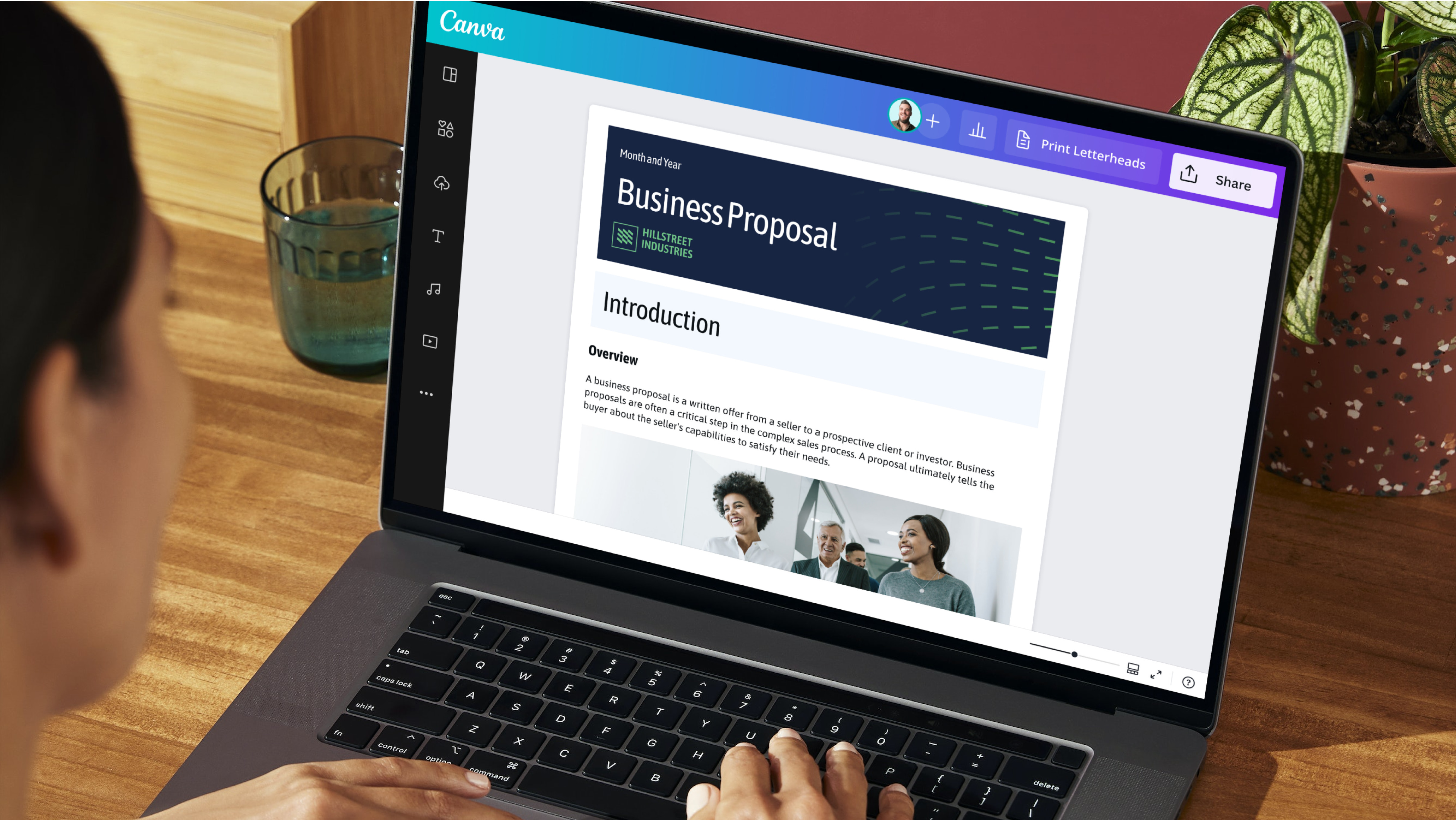
Source: Canva
guide business proposal template pdf
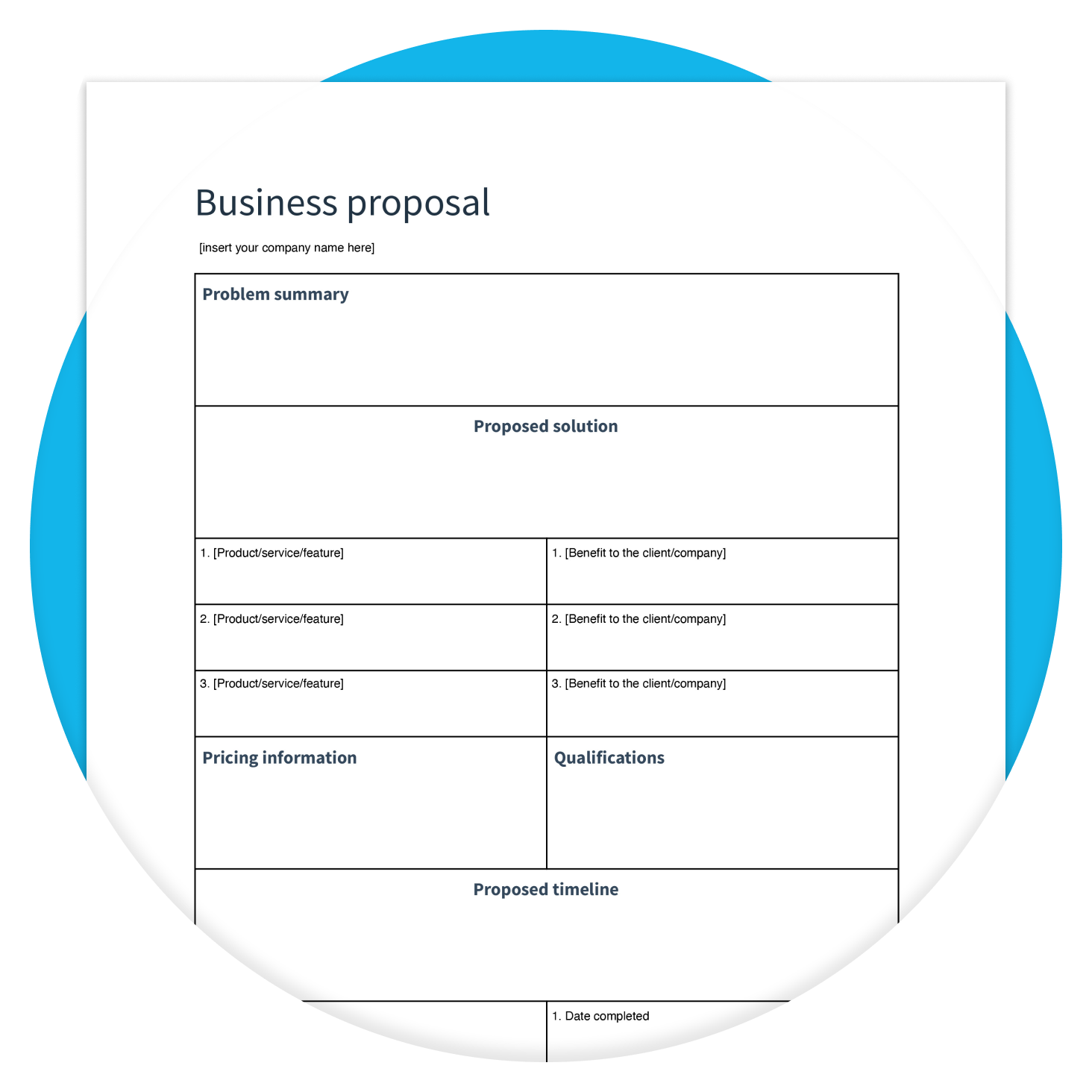
Source: Xero
guide business proposal template free download
Source: Template.net
guide business proposal template google docs

Source: Template.net
guide business proposal template word

Source: HubSpot
guide business proposal template word free

Source: Template.net
business proposal pdf guide

Source: HubSpot
template for business proposal pdf editable

Source: Template.net
business proposal template pdf
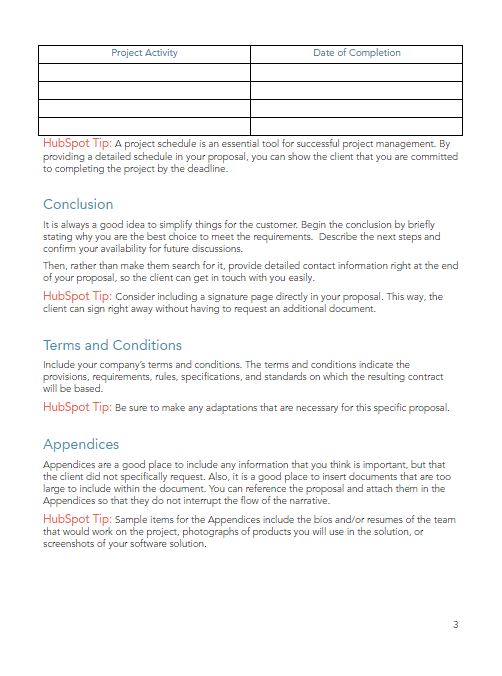
Source: HubSpot
template for business proposal pdf online
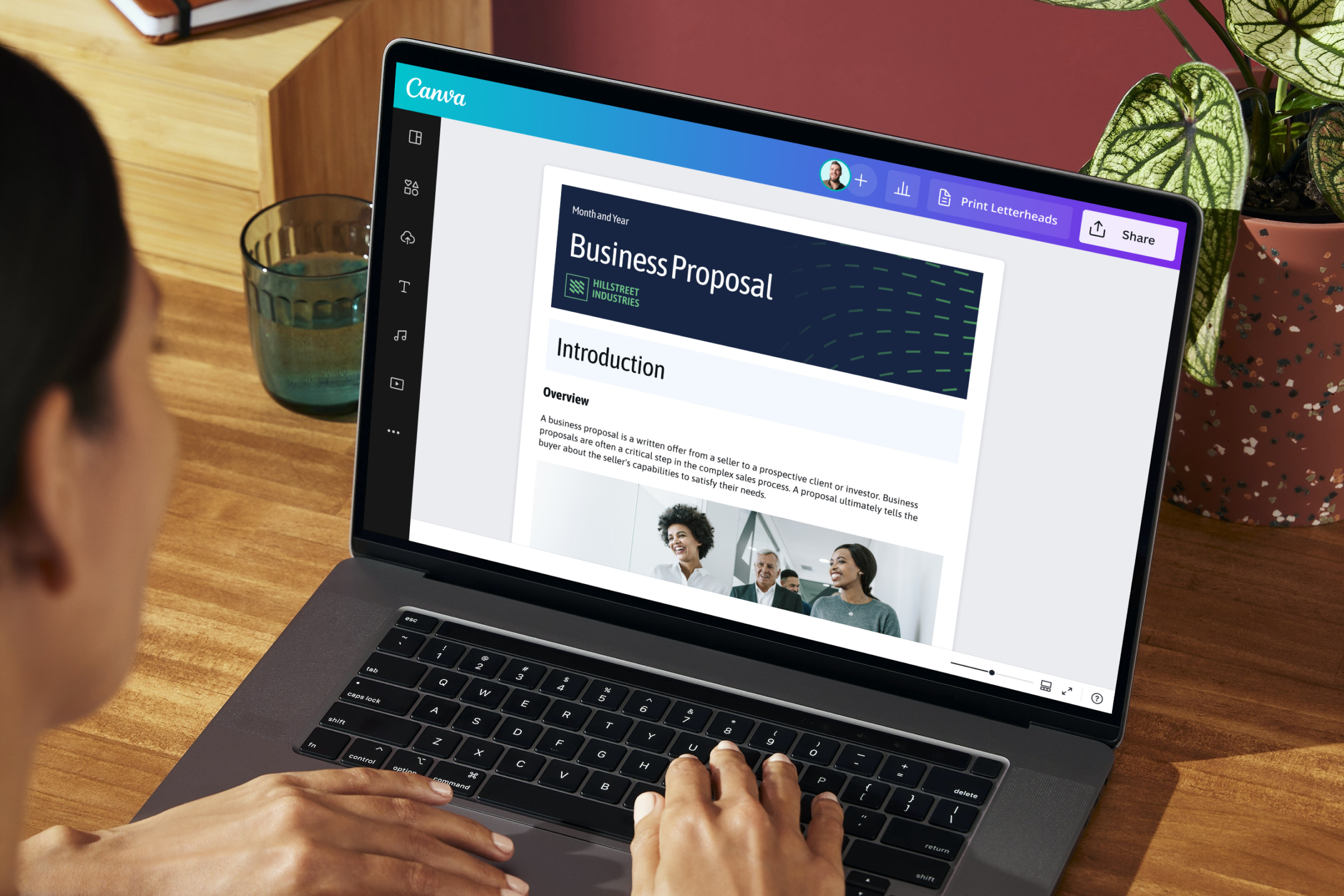
Source: Canva
template for business proposal pdf sample

Source: Template.net
guide to writing a business proposal pdf
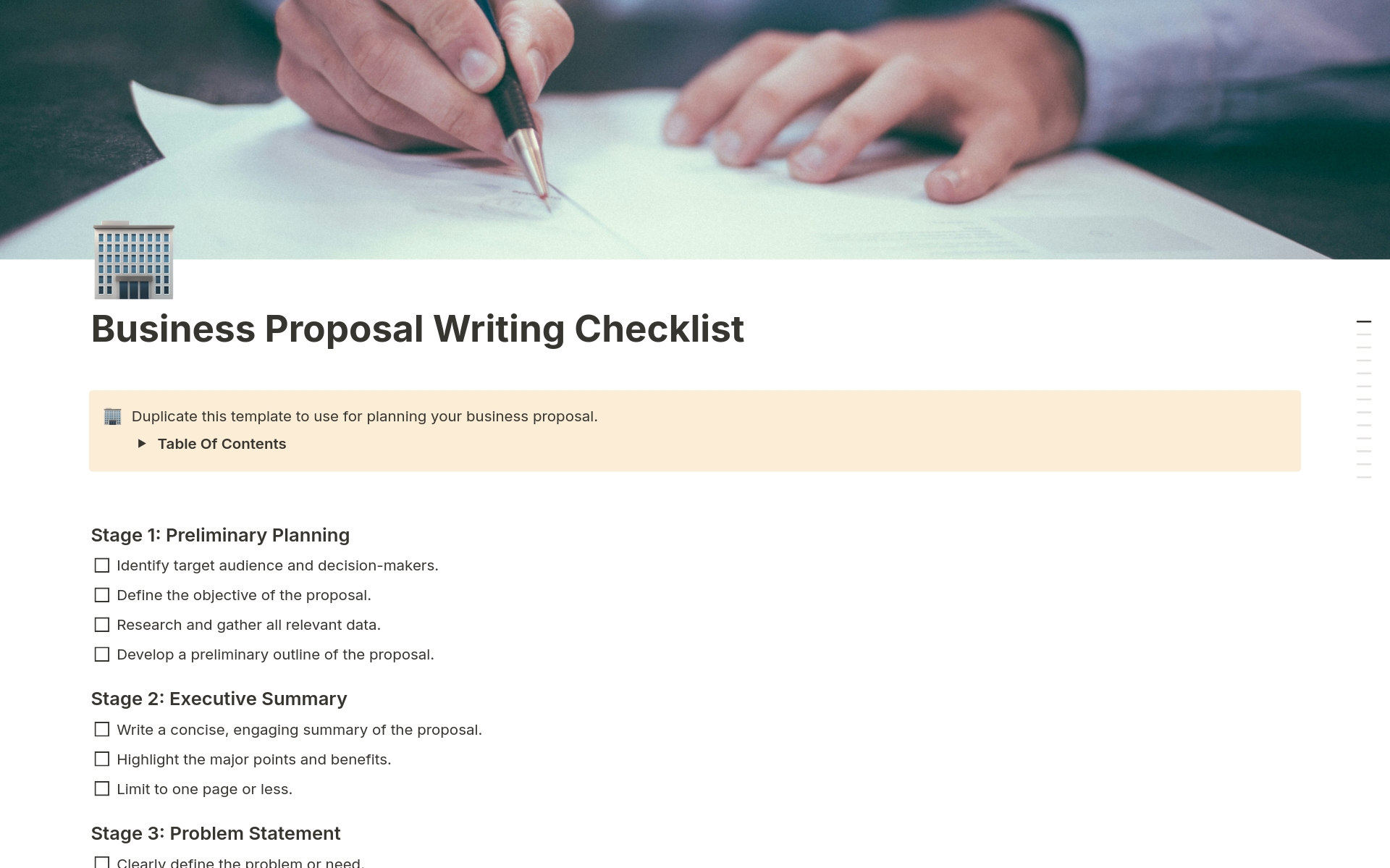
Source: Notion
Frequently Asked Questions
What should a business proposal template contain?
A practical template usually contains a cover page, executive summary, problem or need statement, proposed solution, scope, deliverables, timeline, pricing, qualifications, assumptions, terms, and next steps. The exact sections should be adjusted to the opportunity.
How long should a business proposal be?
There is no universal page count. A simple engagement may need only a few pages, while a complex procurement response can require substantially more detail. The useful rule is to include enough information for the decision without adding material that does not help the reader evaluate the opportunity.
Should I use a free template?
A free template can be a useful starting point when its structure fits your needs and you are permitted to use and modify it under its applicable terms. The important consideration is whether the template helps you produce accurate, client-specific content rather than whether it has a price tag.
Should the executive summary be written first?
It can be outlined early, but many writers get better results by completing the core proposal first and writing the final executive summary afterward. This ensures that the summary reflects the actual solution, scope, timeline, and commercial terms.
What is the best format for sending a proposal?
PDF is often useful for final distribution because it preserves the approved layout. Word or Google Docs can be better for collaborative drafting. The right choice depends on the client’s requirements, internal workflow, security rules, and whether the document needs further editing.
Should pricing appear in the executive summary?
When the investment is an important part of the decision, a concise pricing indication can help the reader understand the proposal quickly. The detailed pricing table can then provide the supporting breakdown, assumptions, payment schedule, and optional items.
How can I make a template feel less generic?
Replace generic statements with client-specific observations, requirements, outcomes, examples, deliverables, and terminology. Personalization should change the substance of the document, not merely the company name on the cover.
What should I do if the client has an RFP?
Treat the RFP as a set of requirements that must be mapped systematically. Build a compliance or requirement matrix, follow the requested structure where appropriate, answer every mandatory question, and verify submission rules before delivery.
Should assumptions and exclusions be included?
Yes when they materially affect scope, price, timing, responsibilities, or risk. Clear assumptions help both sides understand the conditions behind the proposal and reduce avoidable disputes later.
Can one template be used for every type of business proposal?
A master template can provide a common foundation, but it should have modular sections for different proposal types. A software implementation, consulting engagement, creative project, and recurring service may need substantially different methodology, deliverable, and commercial details.
Conclusion
A useful guide business proposal template should make the client’s decision easier, not simply make your document look polished. Start with the decision, research the client’s situation, define the problem precisely, present a solution that directly responds to that problem, and make scope, deliverables, timing, pricing, assumptions, and next steps clear.
Use templates to create consistency, not sameness. Reusable structures can save significant time, but every serious proposal should still reflect the particular opportunity. The strongest documents feel prepared specifically for the reader because their evidence, language, recommendations, and commercial boundaries are connected to the client’s circumstances.
Choose the working format based on the workflow. Word and Google Docs are useful for drafting and collaboration, while PDF is often appropriate for final distribution. Online editable formats can help when proposals are produced frequently. Whatever format you choose, keep an approved master version and establish a clear review process.
Before sending, audit the proposal for accuracy, consistency, scope clarity, pricing logic, assumptions, and the final call to action. A proposal should leave the reader with few unanswered questions about what you are recommending, why it matters, what they will receive, what they will pay, and what happens after approval.
The most effective template is ultimately the one that turns good discovery and sound business thinking into a clear decision document. When the structure supports the argument rather than distracting from it, a business proposal becomes more than a form to complete: it becomes a practical bridge between a client’s need and a mutually understood plan of action.
A well-built proposal therefore does not need unnecessary complexity or aggressive sales language. It needs relevance, evidence, clarity, credible commitments, transparent commercial terms, and a simple path forward. Those principles are the foundation on which any effective guide business proposal template can be adapted for real business opportunities.
