Understanding a fund project loan term is essential when financing a business project, expansion, construction plan, equipment purchase, or other investment initiative. Loan terms determine how much funding is available, how long the borrower has to repay it, what interest applies, and how payments are structured.
A clear project loan term can make financing easier to manage and help borrowers compare different funding options. It can also provide lenders with a structured overview of the project’s financial requirements, repayment capacity, and expected completion timeline. Whether you are preparing a loan proposal, reviewing financing conditions, or creating a project funding plan, documenting the key terms in an organized format can save time and reduce misunderstandings.
This guide explains the main components of a project funding loan term and how to prepare a practical loan-term document.
What Is a Fund Project Loan Term?
A fund project loan term refers to the conditions and duration associated with financing a specific project. It commonly includes the loan amount, interest rate, repayment period, payment schedule, fees, security requirements, and other conditions agreed upon by the borrower and lender.
Project financing may be used for activities such as:
- Business expansion and new facilities
- Construction and property development
- Equipment and machinery purchases
- Technology implementation
- Infrastructure improvements
- Working capital connected to a specific project
- Renovation, development, or modernization projects
Unlike informal borrowing arrangements, project financing typically requires clearly documented terms. The exact requirements vary depending on the lender, borrower, project type, jurisdiction, and overall risk profile.
Key Elements of a Project Loan Term
A useful project loan term template should make the most important financial information easy to identify. Although loan agreements can be highly detailed, several elements appear frequently in project funding arrangements.
Loan Amount
The loan amount identifies the total financing requested or approved for the project. Before specifying an amount, borrowers should prepare a realistic project budget that separates major costs from contingency reserves and other expenses.
A detailed budget can help demonstrate why the requested funding is appropriate and how the money will be allocated.
Loan Term and Maturity Date
The loan term describes the period over which the financing remains outstanding. Depending on the agreement, it may be expressed in months or years. The maturity date identifies when the outstanding balance is expected to become due, subject to the specific repayment provisions.
For a project loan, the repayment period should be considered alongside the project’s expected cash flow. A project that takes several years to generate revenue may require a different financing structure from a project that produces income shortly after launch.
Interest Rate
The interest rate represents the cost of borrowing. Depending on the financing arrangement, it may be fixed, variable, or subject to another agreed calculation method.
When comparing financing options, borrowers should look beyond the stated interest rate and consider fees, repayment frequency, potential rate changes, and other applicable costs.
Repayment Schedule
The repayment schedule explains when payments are due. Common schedules include monthly, quarterly, semi-annual, and annual payments.
A project loan may also include a grace period or an initial period with different payment requirements. The appropriate structure depends on the project’s cash-flow profile and the lender’s conditions.
Why Use a Fund Project Loan Term Template?
A structured template provides a consistent way to organize project financing information before it is incorporated into formal documentation. It can be particularly useful for business owners, project managers, finance teams, consultants, and lenders who need to review the same core information.
Using a template can help you:
- Organize borrower and project information
- Summarize the requested financing amount
- Document the proposed loan duration
- Clarify repayment frequency and methodology
- Record important project milestones
- Identify additional financing conditions
- Create a clear starting point for discussions with lenders
A template should support the financing process rather than replace professional legal, accounting, or financial advice.
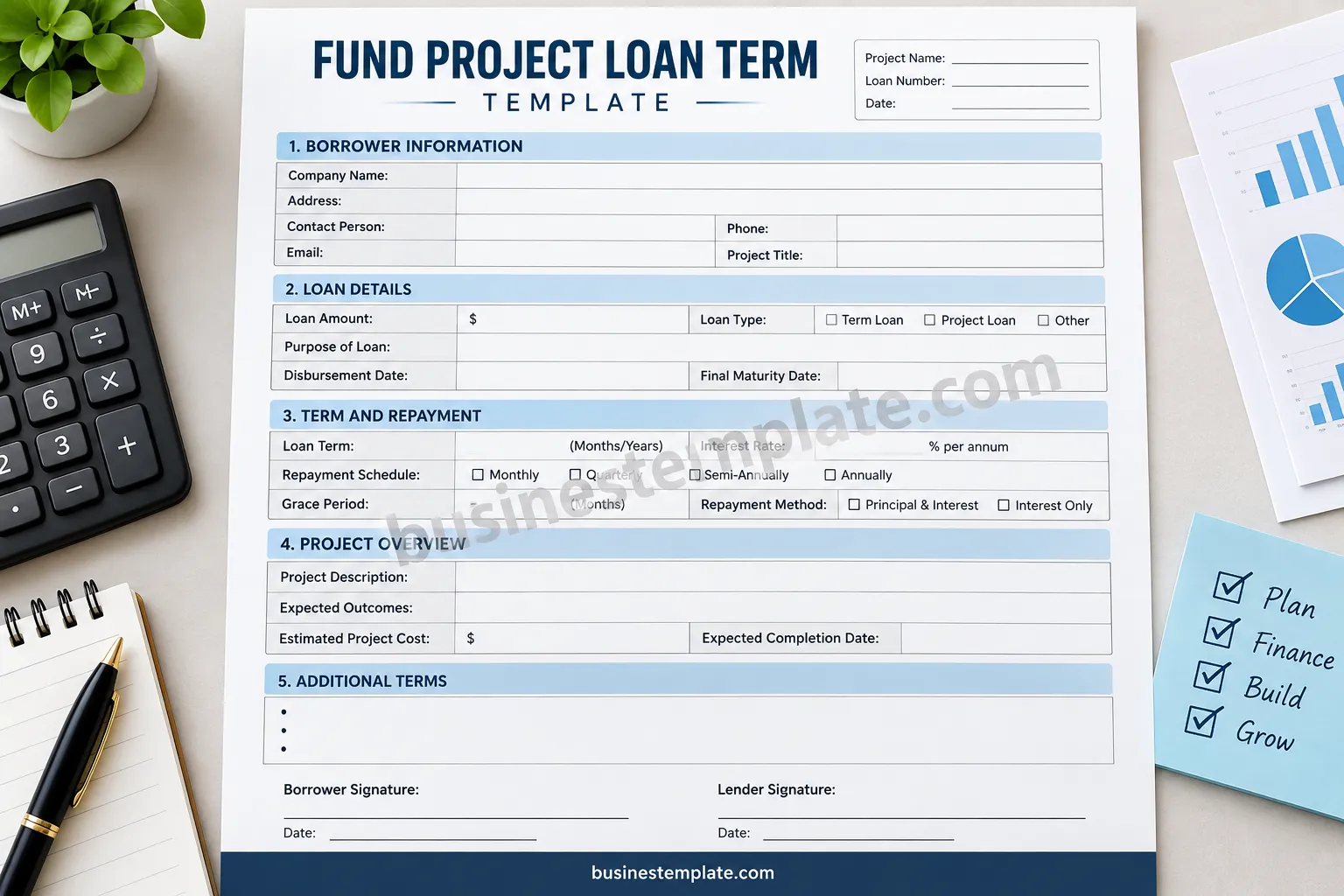
How to Complete a Project Loan Term Template
1. Enter Borrower Information
Begin with the basic details of the individual or organization receiving the financing. Depending on the document’s purpose, this may include the company name, address, contact person, phone number, email address, and project title.
Use consistent and accurate information so the document can be matched easily with supporting financial and project records.
2. Describe the Project
Provide a concise description of what the financing will support. Explain the project’s purpose, major activities, expected outcomes, and anticipated completion date.
A strong project description should make it easy for a reviewer to understand how the borrowed funds will contribute to the project’s objectives.
3. Specify the Financing Details
Record the requested loan amount, loan type, purpose of the loan, proposed disbursement date, and final maturity date. If funding will be released in multiple stages, the financing documentation should clearly explain the applicable disbursement conditions.
4. Document Repayment Terms
Record the proposed loan duration, interest rate, repayment frequency, grace period, and repayment method. Make sure these details are consistent with the actual financing agreement.
5. Add Special Conditions
Some projects require additional conditions relating to reporting, milestones, insurance, collateral, permitted use of funds, financial covenants, or other requirements. These provisions should be reviewed carefully and documented clearly.
6. Review and Sign
Before signing, review all financial figures, dates, repayment conditions, and project information. If the document is intended to become part of a legally binding agreement, obtain appropriate professional review before execution.
Tips for Choosing Appropriate Project Loan Terms
Choosing suitable financing terms requires more than selecting the longest or shortest repayment period. The terms should be evaluated against the project’s expected financial performance and the borrower’s ability to meet payment obligations.
- Match repayment to cash flow: Consider when the project is expected to generate revenue.
- Calculate the total borrowing cost: Include interest and applicable fees rather than focusing only on the headline rate.
- Review the maturity date: Ensure the proposed maturity aligns reasonably with the project’s timeline.
- Understand variable rates: If the rate can change, understand how adjustments are calculated.
- Allow for project delays: Consider how construction, procurement, approval, or implementation delays could affect repayment.
- Document assumptions: Keep key financial assumptions available for future review.
Common Mistakes When Preparing Project Loan Terms
Even a straightforward financing proposal can become difficult to manage when important details are unclear. Several common mistakes can be avoided with careful preparation.
Using an Unrealistic Project Budget
Underestimating project costs can create a funding shortfall later. Review major expenses, expected price changes, and reasonable contingency requirements before finalizing the requested amount.
Ignoring Cash-Flow Timing
A profitable project may still experience periods when cash is unavailable for debt service. Payment dates should therefore be evaluated against expected project cash inflows and operating expenses.
Overlooking Additional Fees
Interest is only one potential financing cost. Depending on the agreement, other charges may apply. Review the complete financing documentation rather than relying on a single quoted rate.
Leaving Important Terms Vague
Terms relating to repayment, maturity, disbursement, or special conditions should be expressed clearly. Ambiguous wording can create unnecessary questions during approval or implementation.
Fund Project Loan Term Checklist
Before finalizing a project funding document, use the following checklist:
- Borrower information is complete and accurate.
- Project name and description are clearly stated.
- Requested loan amount matches the project budget.
- Loan purpose is documented.
- Interest rate and calculation method are identified.
- Loan term and maturity date are recorded.
- Repayment frequency is specified.
- Grace-period provisions are documented when applicable.
- Project milestones and expected completion dates are clear.
- Additional conditions are identified.
- All parties understand the document before signing.
Conclusion
A well-organized fund project loan term provides a practical framework for documenting project financing requirements. By clearly recording the loan amount, interest rate, repayment schedule, maturity date, project purpose, and additional conditions, borrowers and lenders can work from a more consistent set of information.
A printable project loan term template can also simplify the initial planning process by putting essential financing details into one structured document. Use the template as a planning and communication tool, then ensure that any final loan agreement is reviewed against the lender’s actual terms and applicable professional or legal requirements.
