The best template is not necessarily the longest one. A useful management sales guide template should make important decisions easier, reduce administrative duplication, and create a common language between sales representatives, managers, sales operations, finance, and leadership. It should be detailed enough to support execution while remaining simple enough to update throughout the sales cycle.
This article explains how to build and use such a guide across different sales environments. It covers planning, pipeline management, forecasting, coaching, performance measurement, territory management, reporting, document formats, spreadsheet design, forms, business planning, and implementation. The goal is to provide a practical framework that can be adapted to a small sales team, a growing company, or a more established sales organization.
A strong guide should also distinguish between planning and forecasting. A plan describes the actions and resources required to achieve a desired result, while a forecast estimates what is likely to happen based on available evidence. Keeping those concepts separate prevents managers from treating an optimistic target as if it were a reliable prediction.
Whether you are starting with a blank document or improving an existing workbook, the principles below can help you create a management sales guide template that remains useful after the first planning meeting. The emphasis is on practical decisions, measurable actions, clean information, and a management rhythm that the team can actually maintain.
What Is a Management Sales Guide Template?
A management sales guide template is a structured document or workbook that helps sales leaders organize the recurring activities involved in managing a sales function. Depending on the organization, it may contain sections for goals, customer segments, pipeline stages, forecasts, quotas, territories, sales activities, coaching, reporting, risks, and action plans.
The word “management” is important because the document should go beyond a basic sales plan. A sales plan may describe where revenue should come from and which customers should be targeted. A management guide adds the operating layer: how the manager will review progress, coach people, investigate gaps, allocate resources, and respond when performance changes.
The guide can therefore function as a bridge between strategy and execution. Senior leadership can use it to understand priorities, while frontline managers can use it to run weekly and monthly routines. Sales representatives can benefit when expectations, definitions, ownership, and measurement rules are made visible rather than being communicated informally.
There is no single universal layout. A B2B account-based sales organization may need detailed opportunity reviews and account plans, while a transactional sales team may need activity metrics, lead response monitoring, and daily dashboards. A field sales organization may emphasize territory planning, whereas a SaaS team may emphasize recurring revenue, pipeline coverage, conversion, and renewal-related indicators.
The most effective approach is to build a common management core and then add only the sections required by the sales model. That keeps the guide useful instead of turning it into an oversized administrative file that nobody updates.
Why Sales Managers Need a Structured Guide
Sales management involves multiple time horizons at once. A manager may be dealing with an urgent deal today, a monthly target this week, a quarterly forecast, hiring needs for next quarter, and strategic market development for the following year. Without a structured guide, urgent issues can easily consume the time needed for important but less visible work.
A management guide creates a decision hierarchy. It can identify which activities must be monitored daily, which issues belong in weekly reviews, which strategic decisions should be evaluated monthly, and which assumptions should be revisited quarterly. This prevents every question from becoming an emergency.
It also improves consistency. If one representative is reviewed according to revenue while another is judged primarily on activity volume, the manager may unintentionally create different standards. A shared template allows the team to define common metrics while still leaving room for role-specific measures.
Another benefit is institutional memory. Sales decisions are often influenced by conversations that disappear into email threads, meeting notes, or individual spreadsheets. A maintained guide provides a central record of assumptions, actions, ownership, and outcomes. Over time, this makes it easier to learn from previous cycles instead of starting from scratch.
Finally, structure makes coaching more actionable. Rather than telling a representative to “improve pipeline quality,” a manager can identify the exact stage where opportunities are stalling, examine the evidence, agree on a behavior to change, assign a follow-up date, and measure whether the change produced a better result.

Core Components of a Management Sales Guide Template
The first section of a practical guide should define the management system itself. Start with the purpose of the sales function, the period covered, the primary revenue objectives, and the people responsible for managing the plan. This gives every subsequent section a clear context.
Next, define the commercial model. Document the products or services being sold, major customer segments, sales channels, geographic coverage, average deal characteristics, and typical sales-cycle stages. These details explain why certain metrics matter and help prevent generic management practices from being applied without adjustment.
Goals should then be separated into outcome goals and operating goals. Outcome goals may include revenue, bookings, gross margin, or new customer acquisition. Operating goals may include qualified opportunities created, account coverage, sales meetings, proposal activity, or other controllable behaviors that contribute to the desired outcome.
Every major goal should have an owner, measurement method, review frequency, baseline where available, target, and action threshold. The action threshold is particularly useful because it defines when a manager should intervene. For example, the guide might state that an opportunity without a documented next step requires attention during the next pipeline review.
Finally, include a change log or decision log. Sales environments change quickly, and a plan that cannot record important changes becomes misleading. A short log can capture what changed, when it changed, who approved the change, why it changed, and which metrics or activities are affected.
1. Executive Summary
The executive summary should fit on a page whenever possible. It should explain the sales objective, current position, major opportunities, principal risks, strategic priorities, and the actions management is taking. The reader should understand the current commercial situation without opening every worksheet.
A useful summary separates facts from assumptions. “Current qualified pipeline is $X” is a data statement, while “the team expects pipeline to grow by Y%” is an assumption or forecast. Keeping the two visually distinct makes management discussions more objective and reduces the temptation to treat projections as completed results.
Use a small number of high-value indicators rather than filling the summary with every available metric. Revenue versus target, pipeline value, forecast, conversion, sales-cycle movement, and a few leading indicators are usually more informative than dozens of disconnected numbers.
Include a short management commentary beside the numbers. The commentary should answer three questions: What changed? Why did it change? What are we doing about it? This turns a report from a passive record into a decision-making document.
The summary should also identify unresolved decisions. A sales manager may need approval for additional headcount, territory changes, promotional support, pricing exceptions, or technology investment. Listing those decisions explicitly prevents them from becoming invisible blockers.

2. Goals, Quotas, and Success Measures
A goal section should explain not only the desired number but how the number was established. Historical performance, capacity, market opportunity, seasonality, product mix, pricing, and expected conversion rates can all influence a reasonable target. The guide should make the logic visible enough for managers to challenge weak assumptions.
Individual quotas should be connected to the overall objective rather than created independently. If the company has a team target and several representatives have individual quotas, the relationship should be clear. The manager should be able to reconcile the individual plan with the team plan without manual interpretation.
Leading indicators deserve their own place in the guide. Revenue is a lagging measure because it records a result after the selling activity has occurred. Measures such as qualified opportunities, meetings, proposals, or stage progression may provide earlier signals, although the appropriate indicators depend on the sales process.
Targets should also include review rules. A manager should know when a target is fixed, when assumptions may be updated, and what evidence is required before changing a plan. Otherwise, teams can unintentionally move the goal whenever results become uncomfortable.
When targets are discussed with representatives, explain both the number and the mechanism for achieving it. A target becomes operational when the representative can translate it into the required customer segments, opportunity volume, sales activities, and time allocation.
3. Sales Pipeline Design
The pipeline section is the operational center of many sales management guides. Define each stage clearly and specify the evidence required to enter and leave the stage. A stage should represent a meaningful change in the buyer or seller process, not merely a subjective confidence label.
For example, a qualification stage might require a defined customer problem, an identifiable stakeholder, an agreed next step, and sufficient commercial fit. A proposal stage might require that the solution and commercial scope have been discussed with the appropriate buyer. The exact criteria should reflect the company’s selling motion.
The guide should capture opportunity value, expected close period, owner, current stage, next action, decision process, risks, and relevant stakeholders. Managers can then review opportunities based on evidence rather than relying solely on a representative’s confidence percentage.
Pipeline health should be examined at both team and individual levels. A team can have a large total pipeline while still being exposed to risk if too much value is concentrated in a small number of late-stage deals or if early-stage opportunity creation is slowing.
A practical pipeline review asks whether opportunities are moving, not merely whether they exist. Aging, stalled next steps, repeated close-date changes, missing decision makers, and unexplained stage progression are useful signals for coaching and management intervention.

4. Forecasting and Revenue Visibility
Forecasting should be treated as a disciplined management process rather than a number copied from a spreadsheet. The forecast should describe what the team currently expects to close within a defined period, using agreed evidence and assumptions.
A management sales guide template should distinguish pipeline from forecast. Pipeline represents potential opportunities, while a forecast is a judgment about which opportunities are likely to produce revenue within the relevant period. The two views answer different management questions.
Forecast categories should have clear definitions. If a team uses labels such as commit, best case, or upside, representatives and managers should agree on the evidence required for each category. Without definitions, the same label can represent very different levels of confidence.
Forecast reviews should also investigate movement. A forecast that rises because several opportunities were pushed into a later period may look healthy while actually indicating a growing execution problem. Managers should compare current expectations with previous forecasts and investigate material changes.
The guide should record forecast assumptions and known risks. Examples include procurement timing, legal review, customer budget approval, implementation capacity, product availability, or dependencies on another team. This creates a more useful conversation than simply asking whether a representative is “confident.”

How to Build the Template Step by Step
Start by interviewing the people who will actually use the guide. Ask sales representatives what information they already maintain, managers what decisions they need to make, operations teams where data is difficult to obtain, and leadership which outcomes matter most. This prevents the template from being designed around theoretical requirements.
Next, list recurring management decisions. Typical examples include where to focus prospecting, which deals require support, whether pipeline is sufficient, whether hiring is justified, whether a territory should change, which representatives need coaching, and whether the forecast is credible.
For each decision, identify the minimum information required. This is an important design discipline. If a manager needs to decide whether a stalled deal deserves executive involvement, the template may need deal value, strategic importance, blocker, customer timeline, next action, and requested support. It probably does not need twenty unrelated fields.
After defining the information, create a simple hierarchy: summary, strategy, operating metrics, pipeline, people, actions, risks, and review history. Keep raw data separate from management commentary when possible. This makes the workbook easier to maintain and reduces accidental changes to formulas or source information.
Finally, test the template with a real sales cycle. Ask a manager to use it during a normal review rather than a demonstration. Observe which fields are ignored, which questions remain unanswered, and which sections require duplicate entry. Simplify the design before rolling it out to the full team.

Choosing Between Excel, Word, PDF, and Google Docs
Format should follow the job the document needs to perform. A spreadsheet is usually strongest when the guide contains calculations, recurring data entry, comparisons, filters, formulas, or dashboards. A word-processing document is often better when the primary need is narrative explanation, policy, coaching guidance, or a formal management plan.
PDF is generally most useful as a distribution or presentation format. It can preserve a finalized layout for leadership reviews, onboarding materials, or printable reference documents. It is less convenient as the primary working format when the team needs to update numbers frequently.
Collaborative document platforms can be useful when multiple people need to edit narrative sections, add comments, or maintain a shared version. The important principle is to establish one authoritative working version. Having a spreadsheet, Word document, PDF, and cloud copy all containing different numbers creates more risk than using a simpler system.
For spreadsheet-based guides, protect formula cells, document the source of important data, use consistent date and currency formats, and keep input areas visually distinct from calculated areas. Avoid complex formulas that only one person understands.
For document-based guides, use a consistent heading hierarchy, short sections, tables for structured information, and clearly labeled owners and deadlines. The document should remain readable when printed or exported to PDF.

Using a Sales Management Excel Template Effectively
A sales management Excel template can be powerful for teams that need a flexible operating workbook without immediately building a specialized system. Excel is especially useful for small teams, temporary planning exercises, territory models, budgeting, scenario analysis, and management reports that combine data from several sources.
The main risk is uncontrolled complexity. A workbook that begins with a simple pipeline table can eventually accumulate dozens of tabs, manual overrides, inconsistent formulas, hidden assumptions, and duplicate customer records. Establishing a data structure at the beginning prevents this problem.
Use one consistent row structure for opportunity data. Common fields include opportunity ID, account, representative, segment, stage, value, probability, expected close date, next step, next-step date, source, and status. Additional fields should be added only when they support a recurring management decision.
Create separate calculation areas for weighted pipeline, coverage, conversion, velocity, and target attainment. Managers should be able to change assumptions without editing formulas. If probability assumptions are used, document what each percentage means and avoid presenting a mathematically weighted pipeline as a guaranteed forecast.
Use filters and conditional review rules carefully. Highlighting stale opportunities, missing next steps, overdue actions, or unusual close-date movement can make a workbook more useful than a visually elaborate dashboard with no clear management action attached to it.

Designing the Dashboard
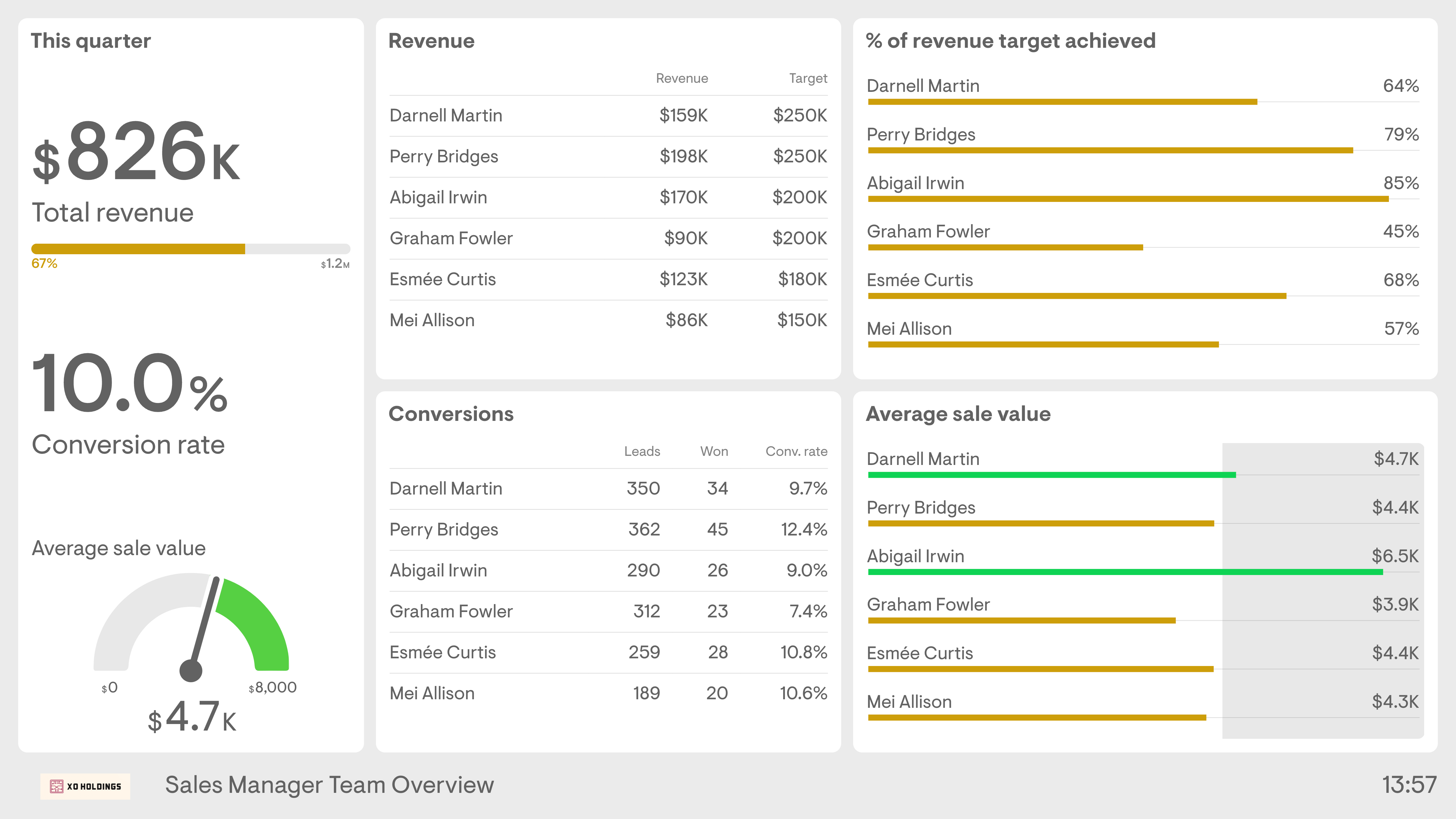
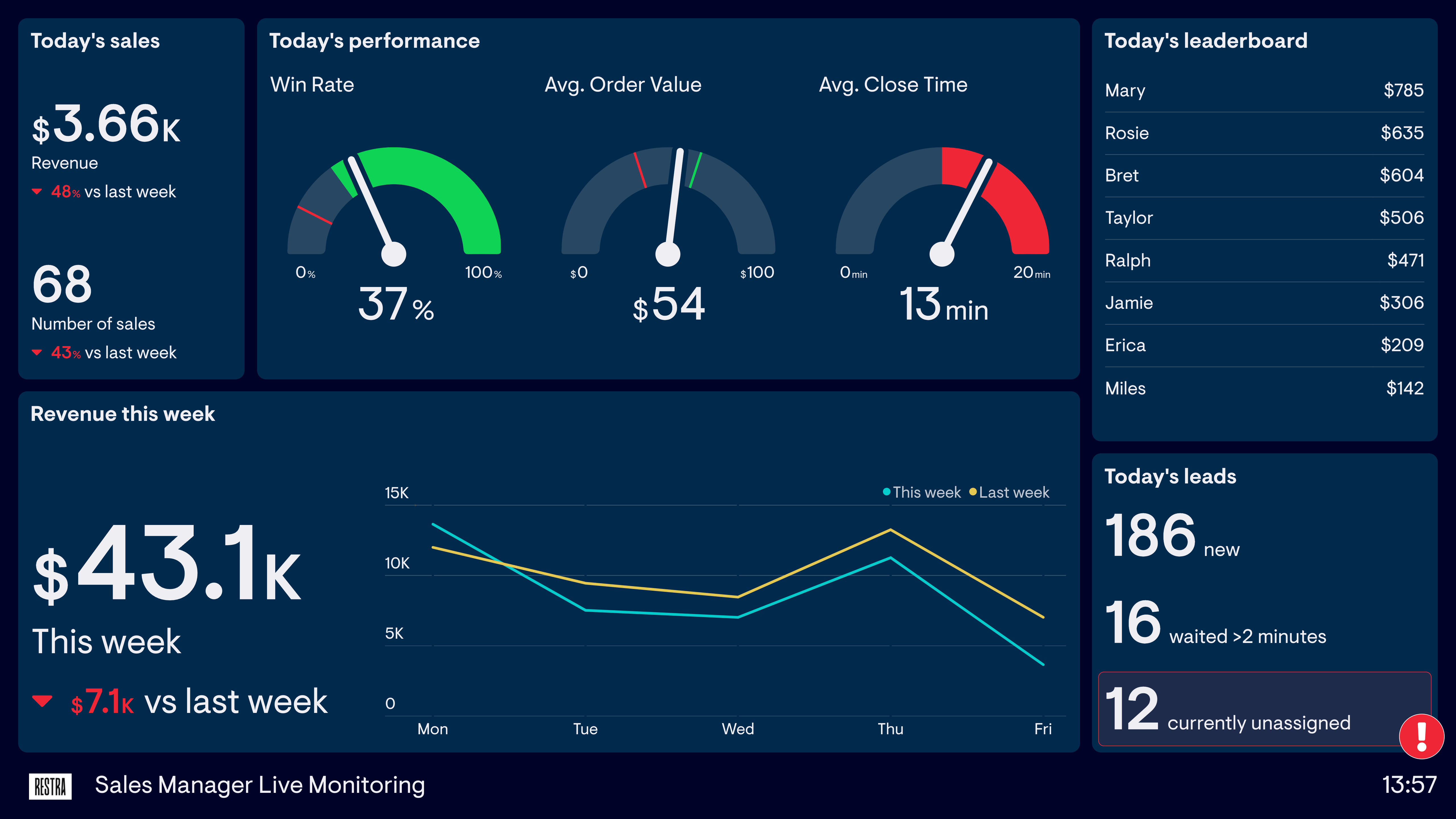
A dashboard should answer management questions quickly. A useful first screen might show target versus actual, current forecast, open pipeline, pipeline coverage, new opportunities, won and lost business, and a small set of team-level indicators.
The dashboard should not attempt to show every data point. A manager who sees twenty charts may still struggle to identify the one problem that requires intervention. Prioritize metrics according to decisions and review cadence rather than visual variety.
Use consistent time periods. If revenue is monthly while pipeline is quarterly and activity is weekly, label each clearly. Many reporting errors arise because people compare numbers that use different periods without noticing.
Separate leading and lagging measures visually or structurally. Leading measures help managers determine whether future performance is developing as expected. Lagging measures tell the team what has already happened. Both are useful, but they should not be interpreted in the same way.
Every dashboard metric should have a defined owner and a known source. If nobody is responsible for correcting a broken number, the dashboard eventually becomes decorative. A small number of trustworthy metrics is more valuable than a large dashboard that managers no longer believe.

Sales Activity and Performance Management
Activity management works best when activities are connected to outcomes. Calling more prospects is not automatically better if the calls are poorly targeted. Likewise, increasing the number of meetings may not improve revenue if qualification standards are weak. The guide should therefore connect activity measures to conversion and revenue results.
Choose a limited set of controllable indicators for each role. Prospecting representatives may need measures related to qualified conversations and opportunities created. Account executives may need opportunity progression, proposal activity, and forecast quality. Account managers may need renewal, expansion, retention, or customer engagement measures.
Performance comparisons should account for context. A representative handling a mature territory with many existing customers cannot always be compared directly with someone building a new territory. Differences in segment, geography, tenure, account potential, and sales-cycle length can materially affect activity and results.
The guide should also include an exception process. When a representative falls below a target, the first question should not automatically be “How do we increase activity?” Instead, examine whether the problem is skill, capacity, territory potential, lead quality, product fit, process friction, or execution.
Performance management becomes more constructive when the template records the problem, evidence, agreed action, support required, owner, and review date. That structure turns a difficult conversation into a documented improvement process rather than a vague warning.

Coaching and One-to-One Management
A strong management sales guide template should include a repeatable coaching framework. Coaching should not be limited to reviewing the scoreboard. The manager needs a way to identify specific behaviors, skills, or decision patterns that affect sales outcomes.
Begin each coaching cycle with evidence. Review selected opportunities, activity patterns, conversion points, customer feedback, or observed sales conversations. Then choose one or two development priorities. Too many simultaneous priorities make it difficult to determine whether coaching is producing a meaningful change.
A useful coaching record includes the skill or behavior, current evidence, desired behavior, practice method, manager support, representative commitment, and review date. The record should be short enough to update consistently.
Separate coaching from routine status reporting when possible. A one-to-one meeting should create space for problem solving and development rather than becoming a second pipeline report. The manager can use the guide to prepare targeted questions before the conversation.
Examples of coaching questions include: What evidence tells us this opportunity is qualified? Which stakeholder has not yet been engaged? What would cause the customer to delay? What part of the conversation felt weakest? What would you change if you ran the meeting again? These questions encourage diagnosis instead of simply demanding more effort.

Territory Planning and Resource Allocation
Territory management belongs in the guide when geography, account ownership, industry segments, or named-account assignments materially affect sales performance. The objective is to create a logical relationship between opportunity, capacity, and representative responsibility.
A territory plan can include account count, estimated opportunity, current revenue, whitespace, customer concentration, travel requirements, market characteristics, and representative capacity. These inputs help managers evaluate whether a territory is balanced rather than relying only on historical revenue.
Territories should not be changed casually. A change can affect customer relationships, pipeline ownership, commissions, representative morale, and forecast continuity. Establish criteria for reviewing territory design and document the rationale behind material changes.
Resource allocation can also cover marketing support, specialist involvement, customer-success resources, technical support, and executive sponsorship. The management guide should make clear which requests require approval and which resources the manager can allocate directly.
Review territory performance periodically rather than waiting until results become unacceptable. A territory that consistently produces weak results may have an execution problem, a capacity problem, or a market-potential problem. Those conditions require different solutions.

Reporting, Data Collection, and Analysis
Good reporting begins with reliable definitions. Before collecting data, define what counts as a lead, qualified opportunity, active opportunity, closed won, closed lost, new customer, expansion, and other important categories. Ambiguous definitions produce reports that appear precise but cannot be compared reliably.
Data collection should follow the natural workflow of the sales team. If representatives have to enter the same information in three systems, data quality will deteriorate. Whenever possible, capture information once and reuse it through formulas, integrations, or standardized reporting processes.
Analysis should move from description to diagnosis. “Revenue is below target” is descriptive. “Revenue is below target because qualified pipeline creation slowed in the first half of the period and proposal-stage conversion fell in the second half” is diagnostic. The second statement gives management something to act on.
Trend analysis is especially valuable. Compare current results with previous periods, targets, and relevant benchmarks. However, avoid making conclusions from very small samples. A single unusually large deal can distort average deal size, conversion, or monthly revenue.
Document the limitations of the data. If CRM records are incomplete, if historical definitions changed, or if a report excludes a sales channel, state that clearly. Transparency about limitations is more professional than presenting an apparently perfect number without context.

Sales Forms and Operational Checklists
Forms are useful when the same information must be captured repeatedly. Examples include opportunity review forms, coaching records, territory review forms, deal-support requests, sales meeting agendas, lost-deal reviews, and new-representative onboarding checklists.
A good form asks only for information that will be used. If a field never affects a decision, report, or follow-up action, consider removing it. Excessive fields create completion fatigue and encourage people to enter meaningless values just to finish the form.
Forms should use consistent terminology with the main management guide. If the pipeline uses one definition for a qualified opportunity but the deal-review form uses another, managers will spend time reconciling terminology instead of managing performance.
Checklists are particularly valuable for repeatable management processes. A weekly pipeline review, for example, might include data freshness, new opportunities, stalled opportunities, significant deal changes, forecast movement, required support, and action ownership.
Keep completed forms searchable. A manager should be able to look back at previous coaching actions, deal decisions, or territory reviews without relying on memory. This historical record becomes increasingly valuable as teams grow and responsibilities change.

Common Mistakes When Building a Sales Management Guide
The first common mistake is designing the template around everything the business can measure rather than what the manager needs to decide. Modern sales systems can generate enormous amounts of data. More data does not automatically create better management.
The second mistake is confusing activity with effectiveness. A high number of calls, emails, or meetings can look productive while producing weak opportunities. Activity should be interpreted in relation to quality, progression, conversion, and customer outcomes.
The third mistake is creating a forecast that is simply a copy of the pipeline. Pipeline and forecast serve different purposes. A large pipeline may contain opportunities that are early, unqualified, stalled, or unlikely to close in the relevant period.
The fourth mistake is failing to define ownership. A template can identify a problem perfectly and still produce no improvement if nobody is responsible for the next action. Every significant action should have an owner and a review date.
The fifth mistake is making the document difficult to maintain. If updating the guide requires extensive manual formatting every week, the process will eventually be abandoned. Automate calculations where appropriate, standardize inputs, and keep the management narrative concise.
Best Practices for Management Reviews
Set a predictable review rhythm. Daily reviews should focus on urgent execution and exceptions. Weekly reviews can cover pipeline movement, forecast changes, activity trends, and coaching. Monthly reviews can examine territory performance, resource allocation, and strategic progress. Quarterly reviews can revisit assumptions and larger structural decisions.
Prepare before meetings. The manager should review the numbers and identify the few questions that require discussion. Representatives should know what information they are expected to provide. This reduces the amount of meeting time spent reading reports aloud.
Use evidence before opinion. When a representative says a deal is highly likely, ask what changed in the customer process. When a territory appears weak, examine account potential and coverage. When activity is high but revenue is low, analyze conversion rather than simply requesting more activity.
End each review with decisions and actions. A meeting without assigned actions becomes another reporting ritual. The guide should capture the decision, owner, deadline, and expected outcome.
Review the management system itself. If the same problem appears every month, the issue may not be individual execution. The process, data, incentives, territory structure, product positioning, or management cadence may need to change.
Practical Examples of Using the Guide
Consider a hypothetical B2B software team with five representatives and a quarterly revenue target. The manager notices that total pipeline appears adequate, but most opportunities are concentrated in early stages. Instead of assuming the forecast is safe, the manager uses the guide to examine stage progression and opportunity creation by representative.
The analysis shows that two representatives have enough late-stage opportunities, while three have a shortage of qualified opportunities. The manager therefore avoids applying one solution to the entire team. The first two receive deal coaching, while the other three receive targeted prospecting support and account-prioritization assistance.
In another hypothetical example, a field sales team consistently misses monthly targets despite having strong pipeline values. The guide reveals that many opportunities have projected close dates that move repeatedly from month to month. The manager introduces stricter next-step and close-date criteria rather than simply increasing the pipeline target.
A third example involves a growing company with uneven territory performance. Historical revenue suggests that one representative owns the strongest territory, but account-potential analysis shows that another territory contains substantially more untapped accounts. Management uses the guide to evaluate capacity, coverage, customer potential, and existing relationships before making a territory adjustment.
These examples demonstrate why a management guide should support diagnosis. The purpose is not to generate attractive reports. It is to help managers determine which problem exists and select a response that matches the cause.

How to Keep the Template Useful as the Team Grows
A template that works for three representatives may not work unchanged for thirty. As the team grows, standardization becomes more important, but excessive detail can also create bureaucracy. The solution is to preserve the core management logic while separating team-level and representative-level information.
Use summary views for leadership and detailed views for managers. A senior executive usually needs target, forecast, pipeline health, major risks, and strategic actions. A frontline manager may need opportunity-level details, activity signals, coaching notes, and territory information.
Establish a data dictionary as the organization becomes more complex. The dictionary should define important fields, calculation methods, ownership, update frequency, and source system. This prevents different teams from calculating the same metric differently.
Review the guide after major organizational changes. New products, new markets, changes in compensation, acquisitions, revised sales stages, and new CRM processes can all make an old template obsolete. A short quarterly design review can prevent gradual deterioration.
Finally, measure adoption. If representatives regularly skip a section, determine why. The problem may be poor design, lack of training, duplicate data entry, or lack of perceived value. A management template succeeds when it becomes part of the team’s operating behavior rather than a document used only before executive meetings.

Practical Solution: Build a Working Management Sales Guide in One Cycle
Start with a one-page management brief. Write the sales objective, period, target customers, revenue target, current forecast, major pipeline risks, strategic priorities, and three management actions. Do not begin by building complicated spreadsheets. First make the management logic understandable.
Next, create a pipeline table with only the fields required to manage opportunities. Add clear stage definitions and a next-action requirement. Make stale or incomplete records easy to identify. This creates a practical foundation for forecasting and weekly pipeline reviews.
Then create a performance section containing a small number of outcome and leading indicators. For each metric, record its definition, source, owner, frequency, and management threshold. If the metric changes significantly, the manager should know what question to ask next.
Add a coaching and action section. Every recurring coaching priority should have an observable behavior, a development action, a responsible person, and a review date. Keep the record concise so it can be maintained without turning coaching into administration.
Finally, establish the review cadence. Decide what happens daily, weekly, monthly, and quarterly. Assign ownership for updating the guide and specify which version is authoritative. After the first complete cycle, remove fields that were not used and strengthen sections that helped managers make better decisions.
Reference Examples
The following reference examples illustrate the types of sales plans, spreadsheets, forms, and management documents that can inform the design of a practical guide. Availability, licensing, and file formats can change, so a reference image should be treated as an example of structure rather than a promise that a specific downloadable resource remains available.
management sales guide template pdf

Source: Gong
management sales guide template free

Source: HubSpot
management sales guide template free download

Source: HubSpot
management sales guide template excel
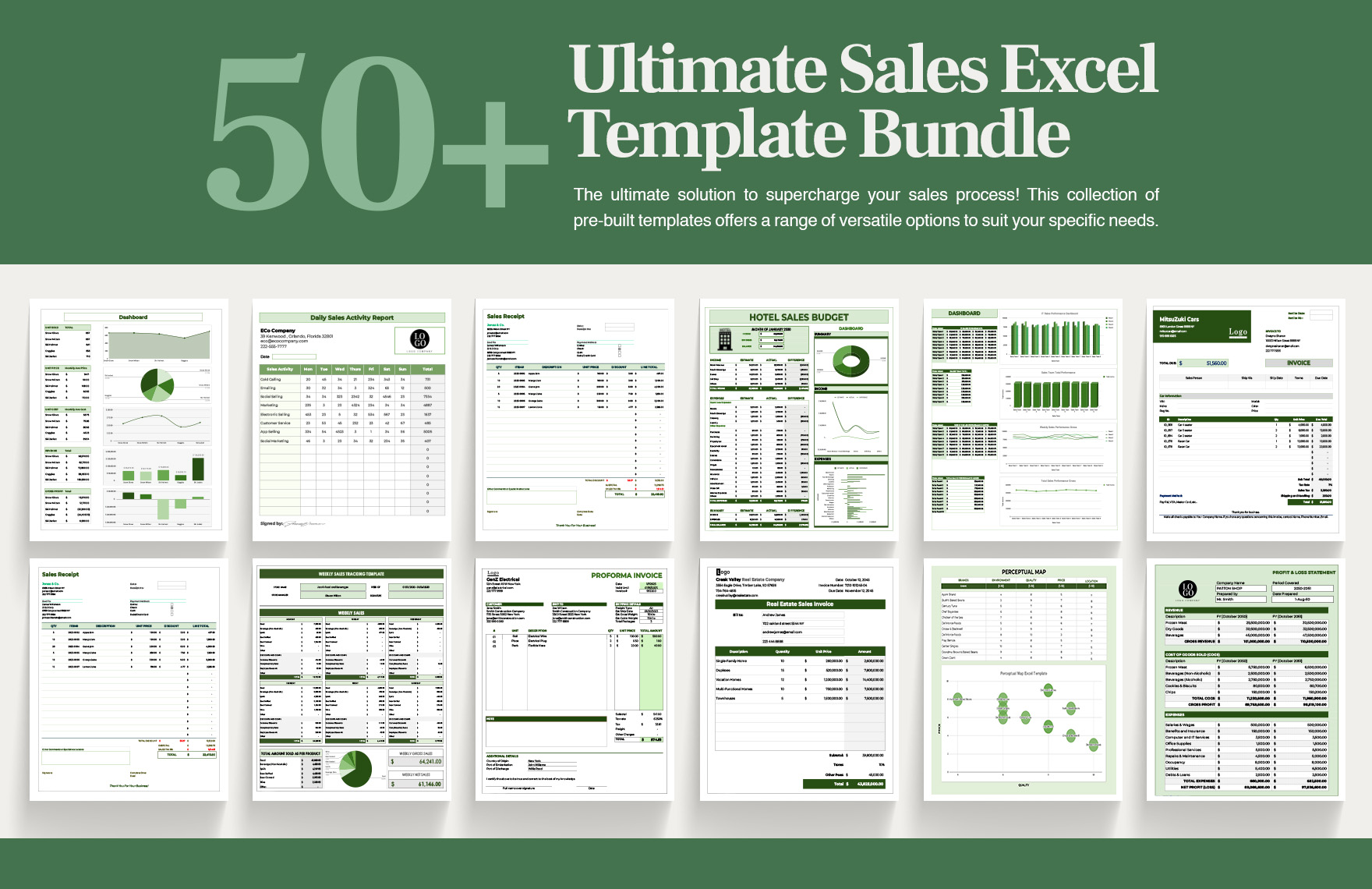
Source: Template.net
management sales guide template word

Source: HubSpot
management sales guide template download

Source: Leadfeeder
management sales guide template google docs

Source: HubSpot
sales management excel template

Source: Template.net
best sales manager templates

Source: Template.net
sales management forms templates

Source: Jotform
top sales manager offering templates

Source: HubSpot
sales manager business plan template

Source: HubSpot
Frequently Asked Questions
What should a management sales guide template contain?
A practical guide usually contains objectives, customer segments, sales strategy, quotas, pipeline definitions, forecasting, performance measures, coaching routines, territory information, action plans, risks, and review schedules. The exact sections should reflect the sales model rather than copying a generic structure.
Is a sales management guide the same as a sales plan?
No. A sales plan primarily explains what the sales organization intends to achieve and how it intends to achieve it. A management guide adds the operating routines used to monitor execution, coach people, review opportunities, manage resources, and respond to performance changes.
Can a small sales team use a management sales guide template?
Yes. Small teams often benefit because a lightweight guide can prevent important information from being scattered across personal spreadsheets and notes. The template should be simplified rather than eliminated. A one-page summary, pipeline table, action tracker, and coaching section may be enough.
Should the template be built in Excel or Word?
Use Excel when calculations, structured records, filtering, comparisons, and dashboards are important. Use Word when narrative planning, policies, coaching guidance, or formal documentation is more important. Many organizations use both, provided there is a clearly defined authoritative source for key numbers.
How often should a sales management guide be updated?
Operational information may need weekly or even daily updates, while strategic sections may only require monthly or quarterly review. The important principle is to assign a frequency to each section rather than treating the entire document as something that must be rewritten at the same interval.
What is the biggest mistake managers make with sales templates?
The biggest practical mistake is building a template that records information without supporting decisions. Every major field should exist for a reason. If the information does not help a manager diagnose performance, make a decision, assign an action, or monitor progress, it may not belong in the working template.
How can managers improve forecast quality?
Define forecast categories clearly, separate pipeline from forecast, require evidence for material opportunities, review changes in expected close dates, investigate stalled deals, and document major assumptions. Forecast quality improves when the process rewards accurate information rather than optimistic numbers.
Should sales representatives complete the entire management guide?
Usually not. Representatives should provide the information they own, while managers are responsible for management analysis, coaching decisions, resource allocation, and strategic commentary. Dividing responsibilities keeps the guide useful without transferring management work to the people who need to spend their time selling.
Conclusion
A management sales guide template works best when it is designed around real management decisions rather than around document length. It should connect goals to activities, pipeline to forecast, performance data to coaching, and problems to clearly assigned actions. The most useful templates create consistency without forcing every sales organization into the same process.
The practical foundation is straightforward: define the sales model, establish measurable objectives, standardize pipeline stages, separate forecasts from potential pipeline, track a limited set of meaningful indicators, document coaching, manage territories deliberately, and maintain a clear review cadence.
Format is secondary to usability. Excel can be effective for calculations and structured tracking, Word can support narrative planning, PDF can distribute finalized material, and collaborative documents can support shared editing. The best choice is the format that the team can maintain accurately and use during normal sales operations.
Most importantly, treat the guide as a living management system rather than a static file. Review what managers actually use, remove unnecessary fields, improve definitions, record decisions, and update the framework as the sales process changes. A simple system that is consistently used will usually outperform a sophisticated system that nobody trusts or maintains.

When built around clear decisions, reliable information, practical coaching, and disciplined follow-through, a management sales guide template becomes more than a planning document: it becomes the operating framework that helps sales managers turn strategy into measurable execution.
