That distinction matters because a special power of attorney and a sale and purchase agreement perform completely different legal functions. A power of attorney delegates authority; a purchase agreement records contractual commitments between parties. A document that combines the two concepts without clearly separating them can create confusion about who is authorized to act, what that person may do, and whether the document actually satisfies the requirements of the relevant institution or jurisdiction.
This guide focuses primarily on the Special Power of Attorney meaning of SPA while also explaining property-sale applications, state-specific considerations, employment-related forms, and Philippine practice. A current Philippine Land Registration Authority template, for example, illustrates a conventional SPA structure containing the principal, attorney-in-fact, specific acts, authority clause, signatures, and acknowledgment. :contentReference[oaicite:0]{index=0} The goal here is not to provide a substitute for legal advice, but to show how a sound template should be organized and checked before use.
Readers searching for a template usually want one of three things: a starting document, an explanation of what each section means, or a way to adapt a general form to a particular transaction. The safest approach is to treat a template as a drafting framework rather than as a universal legal form. State, country, transaction type, signing location, property details, notarization rules, and the requirements of the receiving organization can all affect the final document.
The most useful template therefore balances simplicity with specificity. It should identify the people involved, define the exact authority being delegated, describe the property or transaction when relevant, establish dates or duration, provide appropriate signature and witness blocks, and leave enough room for required acknowledgment or notarization language. The sections below explain how to build that structure and how to avoid the most common mistakes.
What Is a Special Power of Attorney?
A Special Power of Attorney is a legal authorization that allows a principal to appoint another person to act for the principal in a defined matter. Unlike a broad general authorization, a special or limited authorization is intended to identify the particular act, transaction, property, account, or administrative task for which the agent has authority. A U.S. legal-document provider similarly describes a special power of attorney as authority granted for specified legal or financial affairs, such as signing contracts or handling real estate matters. :contentReference[oaicite:1]{index=1}
The principal is the person giving the authority. The attorney-in-fact or agent is the person receiving it. The agent does not become the owner of the principal’s property merely because an SPA has been signed. Instead, the agent receives authority to perform the acts described in the document, subject to the limitations written into it and the law governing the transaction.
A useful template should therefore avoid vague language such as “handle all my affairs” when the intention is limited to one transaction. If the purpose is to authorize someone to sell a particular parcel of land, the document should identify the property as precisely as practical and describe the acts the agent may perform, such as negotiating within stated limits, signing specified instruments, receiving documents, and completing required filings.
Specificity is especially important when the receiving institution has its own document-review process. Banks, registries, consulates, title companies, government offices, and other organizations may reject a document that does not clearly establish the agent’s authority. The question is not merely whether the document sounds formal; it is whether the document clearly demonstrates the authority needed for the actual transaction.
A strong SPA template is consequently a controlled authorization document rather than a generic letter. It should answer five questions quickly: Who is granting authority? Who is receiving authority? What exactly may the agent do? When and where does the authority apply? What formalities are necessary for the document to be accepted?

Why the Wording of an SPA Matters
The wording determines the practical scope of the agent’s authority. If the document authorizes an agent to “sell my property,” but the transaction requires the agent to sign a deed, execute disclosures, receive a deposit, communicate with a broker, or submit documents to a registry, uncertainty may arise over whether those related acts are covered. The drafter should therefore distinguish between the primary act and reasonably necessary supporting acts.
At the same time, an authorization should not become unnecessarily broad. Giving an agent authority over every financial account, every property, and every contractual matter when the actual need concerns one property transaction increases risk without providing a corresponding benefit. A narrow authorization can make review easier and reduce the possibility of unintended use.
Another important drafting principle is consistency. The names in the introductory paragraph should match the names in the signature blocks and identification documents. Property identifiers should match the underlying title, deed, tax record, or transaction paperwork. Dates should be consistent throughout. If a document says the authority expires on a certain date, later clauses should not imply an unlimited duration.
Templates are particularly helpful for consistency because they create a predictable sequence of information. However, they can also encourage users to leave irrelevant clauses in place. A good editing process removes provisions that do not apply rather than simply filling every blank. A shorter document that precisely matches the transaction is often more useful than a longer document filled with unnecessary powers.
Finally, formalities should never be treated as decoration. A signature line, witness block, notarial acknowledgment, consular certification, or supporting identification requirement may have a practical purpose. Requirements differ by jurisdiction and transaction, so the final version should be checked against the law and the receiving institution’s current instructions.
Core Components of a spa legal statement Template
1. Document title
The title should clearly identify the document as a Special Power of Attorney. If the authority is limited to a property sale, property purchase, document collection, banking matter, or another defined purpose, a descriptive subtitle can improve clarity. The title should not imply a broader authority than the body actually grants.
2. Principal information
The principal section normally identifies the person granting authority. Depending on the jurisdiction and transaction, this may include the person’s full legal name, address, citizenship, civil status, identification information, and other details required by the receiving institution. The information should be copied carefully from reliable identity documents rather than entered from memory.
3. Attorney-in-fact information
The agent should be identified with comparable precision. Include the full legal name and relevant address or identifying details required for the transaction. If an institution will verify the agent’s identity, the name should match the agent’s government identification exactly.
4. Specific authority
This is the heart of the document. The drafter should state what the agent is authorized to do. For a property transaction, the clause might authorize the agent to negotiate, sign specified documents, submit filings, communicate with professionals, receive documents, and complete the transaction. The exact wording should be adapted to the applicable law and transaction.
5. Property or transaction description
For property matters, include the physical address and, where appropriate, legal description, title number, parcel number, registry information, or other identifier. The purpose is to make it clear which property is covered. An image of a property power-of-attorney template can be useful during drafting because it demonstrates how the document can distinguish property authority from general authority.
Property authority should be especially precise because a mistaken description can cause delays even if every other part of the document is correctly completed. Compare the description against the authoritative property record before signing rather than relying on a previous contract or informal description.
When a template contains placeholders such as “[Property Address]” or “[Title Number],” those placeholders should be replaced everywhere they occur. A final review should search the document for brackets, underscores, generic names, sample dates, and instructional language so that no drafting artifacts remain.
The document should also distinguish between authority to negotiate and authority to finalize. If an agent may accept an offer but may not sign the final deed without further approval, the limitation should be explicit. If the agent may sign all documents necessary to complete a particular sale, the authorization should be drafted accordingly and checked against local requirements.
Good drafting also considers related professionals. Depending on the transaction, the agent may need authority to communicate with a broker, lawyer, tax professional, lender, title company, or government office. That does not mean every SPA needs a long list of professional powers. It means the drafter should identify the actual workflow and ensure that necessary acts are covered.
Essential Clauses to Review Before Signing
An effective template should include a clear appointment clause stating that the principal appoints the named person as attorney-in-fact. It should then identify the specific acts authorized. A ratification clause may also appear, stating in substance that the principal confirms lawful acts performed within the granted authority. The precise wording should be reviewed for the applicable jurisdiction rather than copied mechanically.
The duration clause deserves careful attention. An SPA can be designed around a specific transaction, a defined period, or another termination event, depending on the governing law. If the purpose is completed, there may be no practical reason to maintain a broad authorization. A document that remains outstanding should be monitored and revoked when appropriate.
Revocation language is another useful feature. A template may explain how the principal can withdraw authority, although the legal effect and procedure can vary. A revocation may also need to be communicated to third parties who are relying on the original document. Users should not assume that simply writing “revoked” on a copy automatically resolves every third-party reliance issue.
Signature and acknowledgment provisions should correspond to the place and manner of execution. A document intended for use in another country may require additional authentication, consular processing, or apostille procedures. A Philippine embassy or consular form may use a specific acknowledgment structure, while a U.S. state document may follow a different notarial format.
Before signing, read the completed document as if you were the institution receiving it. Ask whether a reviewer who has never spoken with the principal could determine the identity of the parties, the exact authority granted, the property or transaction involved, the duration, and the authenticity of the signatures. If the answer is no, the document probably needs revision.
SPA for Property Transactions
Property transactions are among the most important situations in which a special power of attorney may be considered. An owner may be abroad, physically unavailable, unable to attend a closing, or otherwise unable to complete the transaction personally. The SPA can allow a trusted representative to perform defined acts on the owner’s behalf.
A property-focused document should identify the property with enough precision to distinguish it from other assets. The description might include the street address, parcel or tax identifier, title number, legal description, or registry information. Which identifiers are appropriate depends on the jurisdiction and the receiving institution.
The authority should also reflect the transaction’s real workflow. If the agent will sign a purchase agreement, deed, disclosure, escrow instruction, or closing document, the authorization should be reviewed to make sure those acts are covered. If the agent may receive sale proceeds, that power should be addressed expressly rather than assumed.
For a property sale, it is also useful to consider price limitations. A principal may want the agent to sell only above a stated minimum price or under specified conditions. If such a limitation is important, it should be drafted clearly. A vague instruction given outside the document may be difficult for a third party to verify.
Official and professional examples show that property-related authority is commonly separated from other categories of power. U.S. special-power-of-attorney forms can include real-property transactions as a defined category, while Philippine forms may expressly authorize an attorney-in-fact to sell, transfer, or acquire a described property. :contentReference[oaicite:2]{index=2}
How to Draft a Property-Focused SPA Step by Step
Start by identifying the transaction. Write a one-sentence internal description such as “authorize Agent A to complete the sale of Property B while Principal C is outside the jurisdiction.” This sentence is not necessarily part of the final document; it is a drafting control that keeps the authorization focused.
Next, collect authoritative information. Obtain the principal’s legal name from identification, the agent’s legal name from identification, the property details from the title or official property record, and the transaction details from the relevant agreement. Avoid copying details from informal messages when a primary document is available.
Then determine the precise acts required. Create a checklist covering negotiation, signing, submission, receipt of documents, communication with professionals, payment or receipt of funds, and registration. Remove any item that is not actually necessary. This creates a practical bridge between the business workflow and the legal authorization.
After that, select the appropriate jurisdictional format. A generic template may be a useful starting point, but state-specific or consular forms can contain different acknowledgment blocks, statutory language, or execution requirements. Current requirements should be checked before the final document is signed.
Finally, proofread the completed document against the transaction checklist. Every authorized act should be traceable to an actual need, every identity should match the supporting documents, and every property identifier should be checked. Only then should the signing and notarization process begin.

SPA and Sale and Purchase Agreements Are Not the Same Document
Search behavior can make SPA terminology confusing because “SPA” is also commonly used for “sale and purchase agreement.” A sale and purchase agreement is a contract between buyer and seller that establishes the agreed transaction terms. A special power of attorney instead establishes authority for an agent to act on behalf of another person.
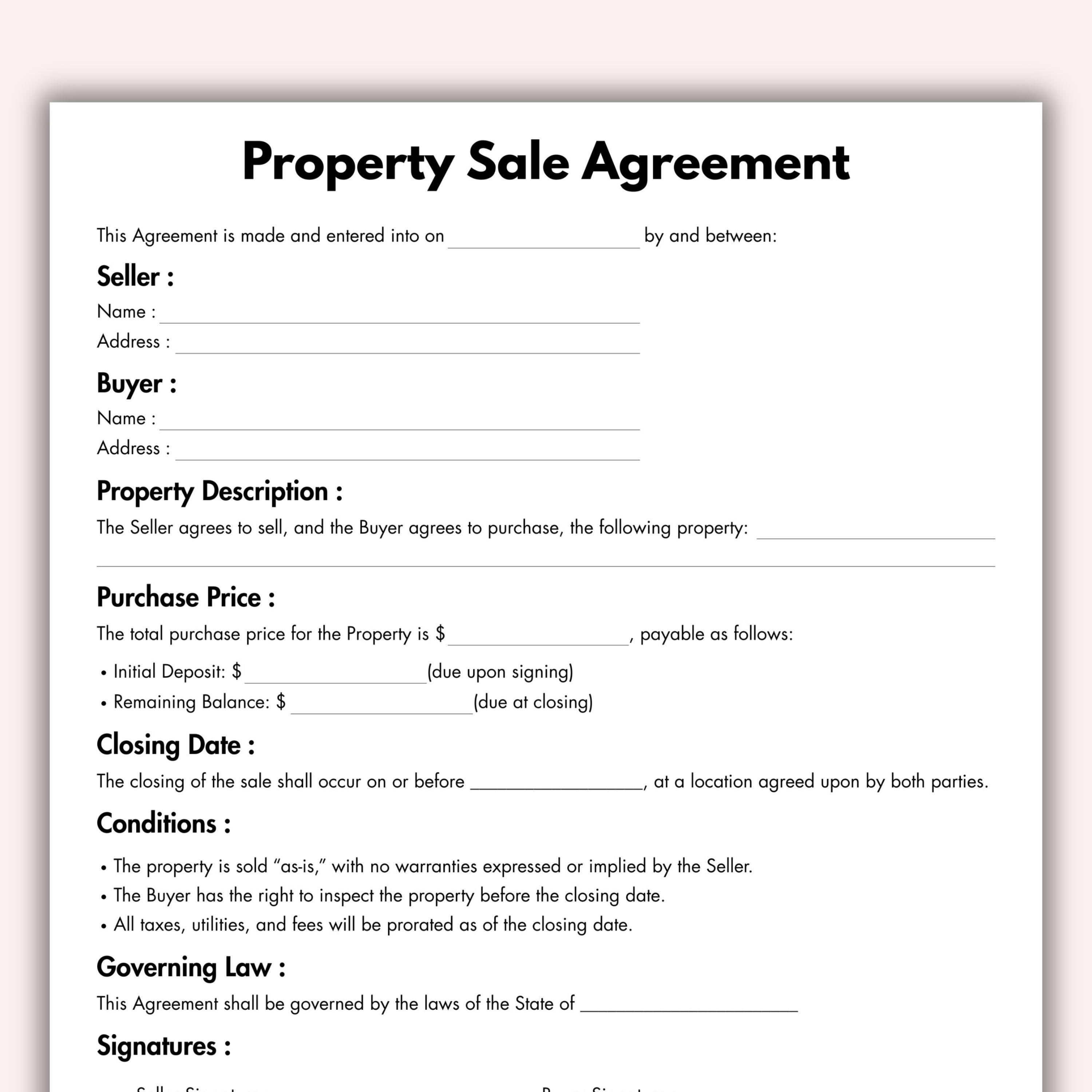
A sale and purchase agreement usually focuses on the parties, property or goods, purchase price, payment terms, conditions, representations, contingencies, closing or completion, default, and governing law. A special power of attorney focuses on the relationship between principal and agent and the scope of delegated authority.
The two documents can interact. For example, an owner could grant an agent authority to sign a sale agreement on the owner’s behalf. The SPA does not replace the sale agreement. It provides evidence that the agent has authority to sign the contractual document for the principal.
This distinction becomes particularly important when searching online for templates. A purchase-agreement template can look highly formal and still be completely unsuitable when the real need is an authorization document. Conversely, a power-of-attorney template cannot substitute for the contractual terms required between buyer and seller.
A useful drafting workflow therefore begins with the legal function, not the abbreviation. Ask whether the document is meant to authorize someone, establish a transaction, record employment terms, or serve another purpose. Once that function is clear, select the corresponding template category.

State-Specific Considerations in the United States
A common mistake is assuming that one generic U.S. form will automatically satisfy every state’s execution requirements. Power-of-attorney laws and notarial requirements can differ by jurisdiction, and the transaction itself may impose additional requirements. A reputable template provider therefore organizes limited power-of-attorney forms by state, including California, Florida, Texas, and Virginia. :contentReference[oaicite:3]{index=3}
For someone searching for a spa legal statement template california, the key question is not simply whether a California-branded form exists. The user should determine what authority is being granted, where the document will be signed, where it will be used, and whether a particular institution requires a specific format or acknowledgment.
The same principle applies to a spa legal statement template florida. A Florida-specific template may provide a useful starting structure, but the user should still verify current statutory and notarial requirements for the intended transaction. A template title alone does not guarantee acceptance.
Someone looking for a spa legal statement template texas should pay particular attention to the difference between general, durable, and limited powers and to the transaction-specific authority being granted. Some publicly available examples contain detailed powers covering real property, financial accounts, business affairs, and other categories, demonstrating why the scope must be deliberately selected rather than accepted wholesale. :contentReference[oaicite:4]{index=4}
For a spa legal statement template virginia, the same drafting discipline applies. Verify the current law and receiving institution’s requirements, particularly when the document will be used for property, financial, or other high-value transactions. State-specific language is useful, but it should not discourage an independent review of the completed document.
Free, PDF, and Word Template Formats
Many users search for a spa legal statement template free because they want a drafting starting point without purchasing document software or a premium legal service. A free template can be useful for understanding structure, preparing information, or discussing the intended authorization with a lawyer or notary.
A spa legal statement template free download can be convenient when a user needs an editable document for offline preparation. However, “free” describes the availability or cost of the template, not the legal sufficiency of the completed document. A free generic form may still require substantial customization before it is appropriate for a real transaction.
People searching for a spa legal statement template pdf often want a stable printable version for signing or recordkeeping. PDF is useful for preserving layout, but a PDF can be harder to edit safely. If the document will be customized extensively, an editable source may be more practical before converting the final version to PDF.
A spa legal statement template word is attractive when the user needs to change names, dates, property details, authority clauses, or signature blocks. Word processing can make revision easier, but it also makes accidental changes possible. The final document should therefore be proofread after editing and converted or printed only after all fields have been checked.
Regardless of format, the correct workflow is draft, verify, review, sign, notarize or authenticate if required, and retain a final copy. The file format should support that workflow rather than determine it. A visually polished document is not necessarily a legally appropriate document.

When Notarization or Authentication May Matter
Notarization is often a critical practical step for powers of attorney, but the exact requirement depends on the governing jurisdiction and intended use. A notary generally verifies execution-related matters according to the applicable notarial procedure; the notary does not automatically determine whether every substantive clause is appropriate for the transaction.
International use adds another layer. A document signed in one country and presented in another may require notarization followed by authentication or apostille, depending on the countries involved and the applicable international framework. Consular offices may also publish their own procedures for documents executed abroad.
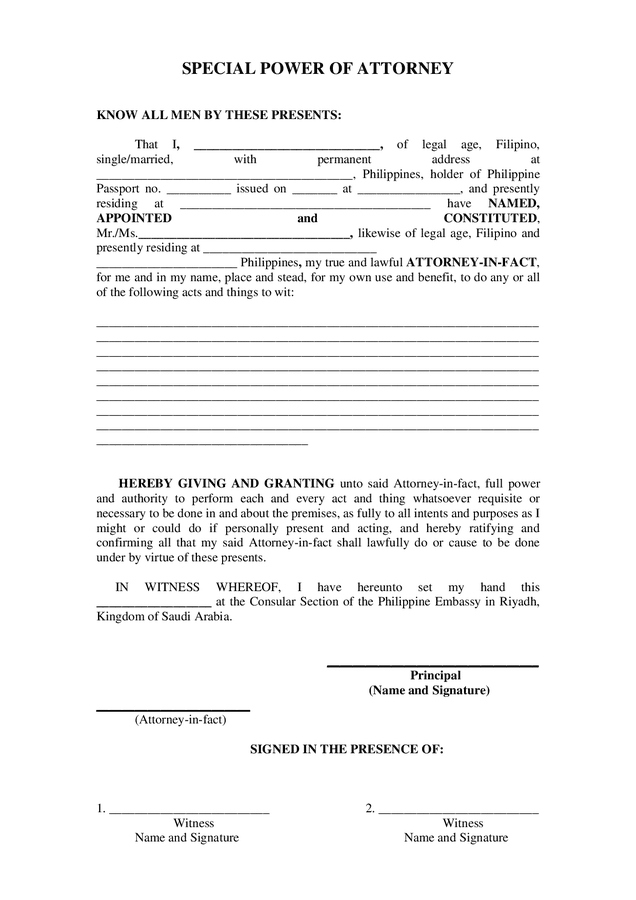
Philippine practice illustrates why this should be checked carefully. Philippine consular and land-registration materials use formal SPA structures with principal and attorney-in-fact information, specific acts, signatures, witnesses where applicable, and acknowledgment or consular execution provisions. :contentReference[oaicite:5]{index=5}
A template should therefore leave enough space for the applicable acknowledgment and certification. Do not remove the notarial block simply because it appears repetitive or because a different template uses a shorter signature section. The receiving authority may depend on the correct execution format.
When an SPA will be used internationally, verify the requirements before the principal signs. Fixing an incorrectly executed document after the principal has left the signing location can be much more difficult than preparing the correct version in advance.

Philippine Special Power of Attorney Forms
A Philippine SPA is commonly used when a person needs another person to perform defined acts on their behalf. Examples can include property transactions, document processing, banking matters, government transactions, and other situations in which personal appearance or signature is not practical.
Philippine templates commonly identify the principal and attorney-in-fact and then enumerate the authorized acts. This structure is valuable because it puts the actual authority at the center of the document rather than relying on a broad statement that the agent may “do anything necessary.”
The Philippine Land Registration Authority publishes an SPA template that specifically illustrates authority involving property, including language for selling, transferring, conveying, or mortgaging property and signing related documents. :contentReference[oaicite:6]{index=6} This is a useful example of why property authority should be tied to identifiable property and transaction documents.
Users searching for a spa philippines legal form should also distinguish between a general online sample and a current form required by a specific Philippine government office, bank, consulate, registry, or other institution. The fact that a form is described online as “Philippine” does not automatically mean that every institution will accept it.
For transactions involving land or other substantial assets, professional review is particularly sensible. The exact authority, marital or ownership circumstances, property description, signing location, notarization, and documentary requirements can materially affect whether an SPA can be used successfully.

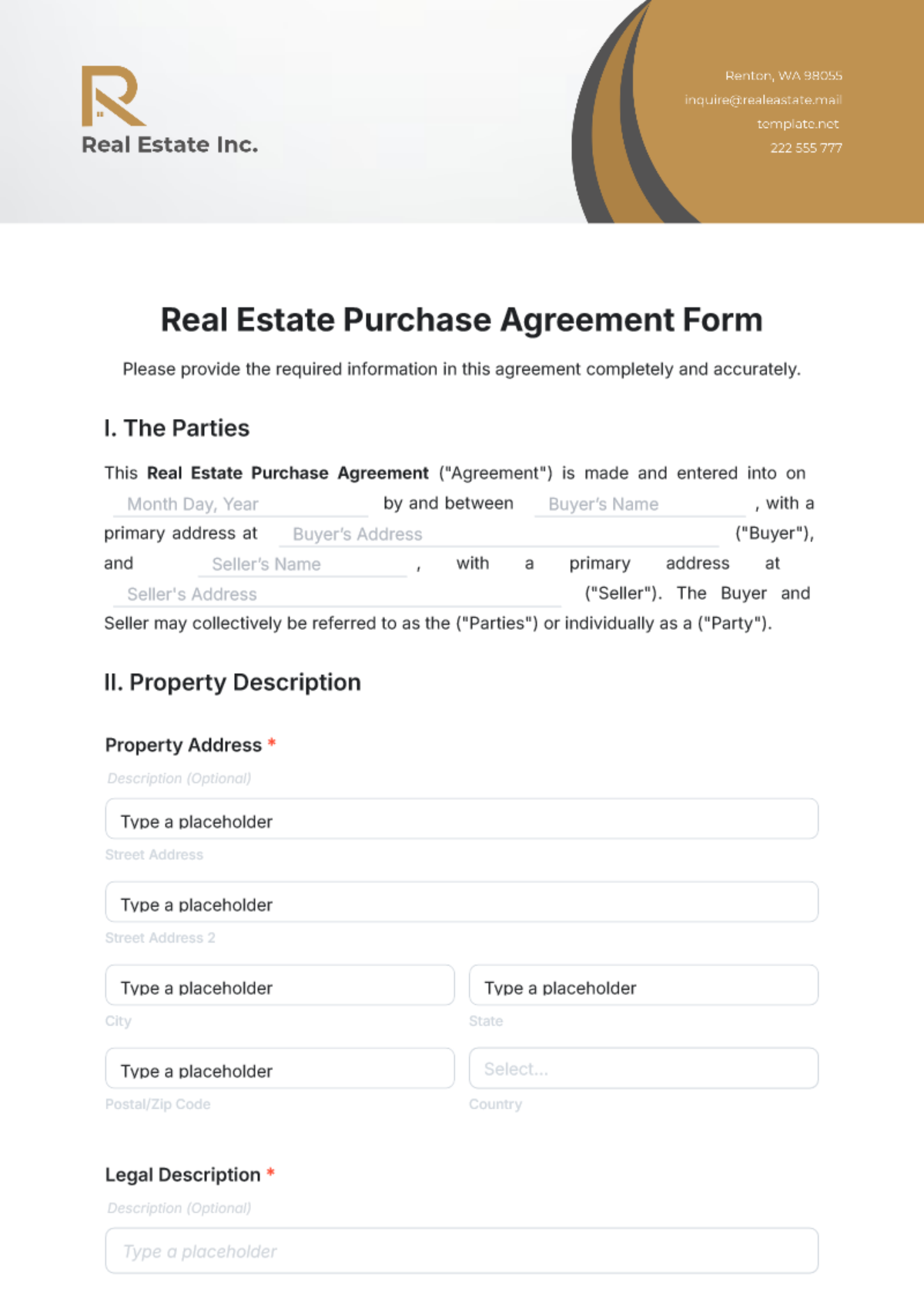
Sample Structure for a Property SPA
A practical property SPA can begin with the title “SPECIAL POWER OF ATTORNEY,” followed by an introductory identification of the principal and attorney-in-fact. The document should then state that the principal appoints the named person to act on the principal’s behalf for specifically described property-related acts.
The property clause should identify the asset with the strongest available identifiers. A simple street address may be adequate for an internal instruction but may not be enough for a formal property transaction. Include title, parcel, registry, or legal-description information where the applicable process calls for it.
The authority clause can then be organized as numbered powers. For example, the agent may be authorized to negotiate a sale subject to a minimum price, execute the purchase or sale agreement, sign the deed, submit registration documents, receive official notices, and communicate with specified professionals.
Any financial authority should be explicit. If the agent may receive a deposit, purchase price, refund, or other funds, say so clearly and define any relevant limitations. If the agent may not receive funds, that limitation can also be documented to reduce ambiguity.
The document should finish with the duration, ratification, signature, witness, and acknowledgment provisions applicable to the transaction. This structure mirrors the practical logic found in many formal SPA examples: identity first, authority second, execution formalities last.

Using a Property Sale Letter or Authorization Letter
A sample of spa letter for property can be useful when the reader is trying to understand how a property-related authorization should be described. However, a letter of authorization and a formal SPA are not automatically interchangeable. The institution receiving the document determines what form of authority it will accept, subject to applicable law.
An informal letter may work for a routine administrative task if the receiving organization accepts it. A formal property transaction generally deserves greater precision because the consequences can include transfer of ownership, execution of deeds, receipt of funds, tax documentation, and registration.
For a property transaction, avoid language such as “I authorize my representative to take care of the property.” That wording does not tell a reviewer whether the representative may sell, mortgage, lease, sign, receive money, or merely obtain documents.
A better approach is to identify the exact property and list the acts the representative may perform. The list should be neither artificially broad nor so narrow that the agent cannot complete the intended transaction.
When the property is owned jointly, subject to a mortgage, held through an entity, or affected by marital-property rules, additional legal issues may arise. The SPA should be reviewed in the context of the ownership structure rather than treated as an isolated form.
Employment and Business Forms That Should Not Be Confused With an SPA
Search results for legal templates often overlap because people use similar terms for different business documents. An SPA authorizes an agent, while an employment application collects information from a job applicant. An employment contract establishes the terms of an employment relationship. Neither document should be substituted for a power of attorney merely because both contain names, signatures, and legal language.
A spa employee application template is therefore a different document category from a Special Power of Attorney. An employee application normally gathers applicant information, employment history, education, availability, references, and position-related information. It is part of recruitment administration rather than delegation of legal authority.
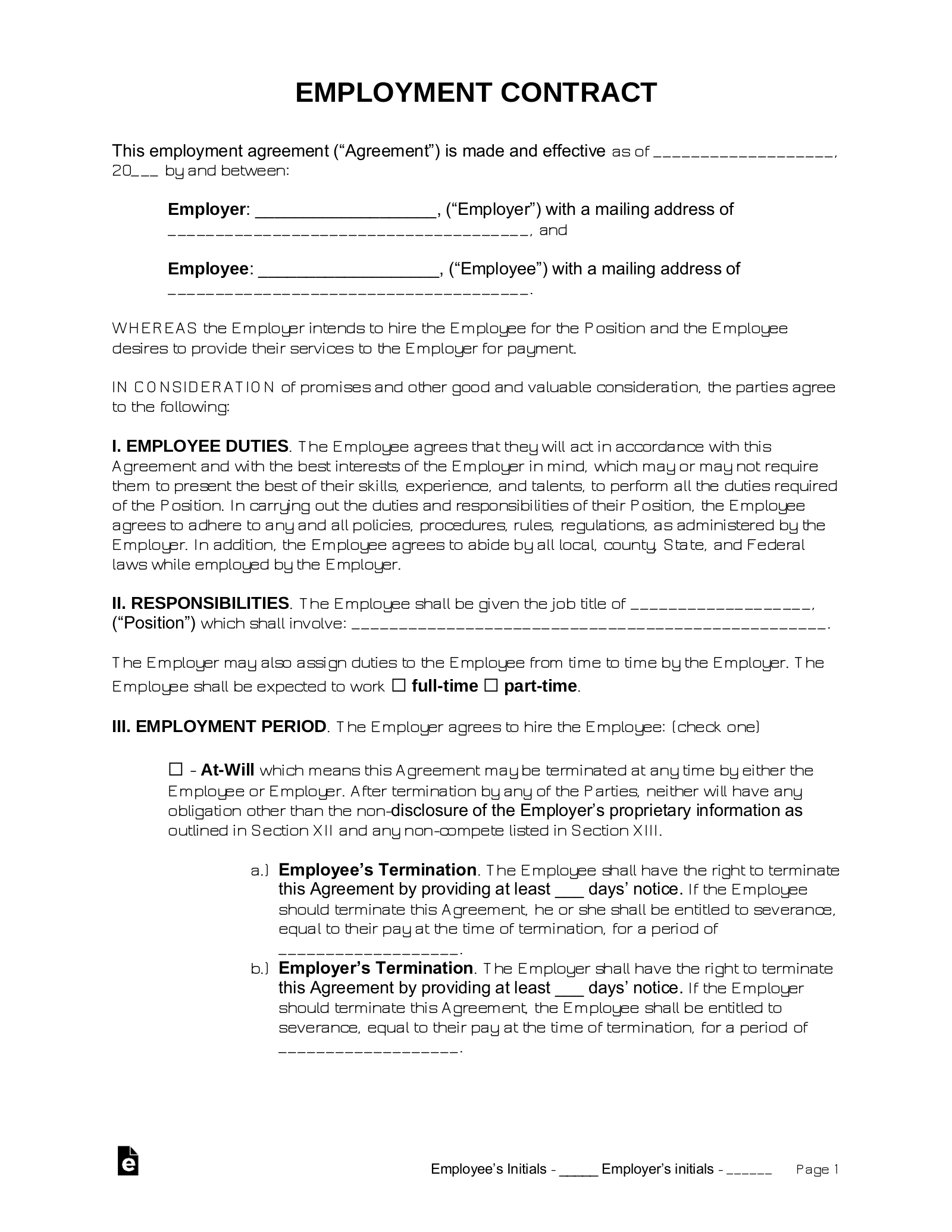
An employment agreement or contract is similarly distinct. It normally addresses the employer and employee, duties, compensation, benefits, working conditions, confidentiality, intellectual property, termination, and other employment terms. A current employment-contract example shows how these subjects are organized in a structured agreement. :contentReference[oaicite:7]{index=7}
Businesses should keep these documents in separate workflows. Recruitment forms belong in human-resources processes, employment contracts belong in hiring and employment compliance processes, and powers of attorney belong in authorization and transaction processes.
This separation is useful for document management as well. Each document should have its own naming convention, approval process, retention period, access controls, and review responsibility. Combining unrelated documents simply because they use the same word “form” can make records harder to manage.

Employment Contracts and the Phrase spa employment contract template
The phrase spa employment contract template can arise when users search for employment documents associated with a business or organization called SPA, or when search engines combine unrelated template terminology. It should not be interpreted automatically as a Special Power of Attorney for employment.
An employment contract should identify the employer and employee and establish the terms under which services will be performed. Typical sections include job title, duties, compensation, working hours, benefits, confidentiality, intellectual property, leave, termination, and applicable policies.
The contract should also reflect the law of the employment relationship. Employment law can be highly jurisdiction-specific, and mandatory employee protections cannot necessarily be waived simply by inserting a clause into a template.
For that reason, an employment template should be used as an organizational tool rather than as a guarantee of compliance. The employer should check current employment rules, industry requirements, wage obligations, privacy requirements, and any mandatory notices relevant to the location and worker classification.
The same principle applies to every legal template discussed in this article: structure is useful, but the legal effect comes from the applicable law, facts, execution, and transaction. A template is the beginning of a drafting process, not the end.

How to Research the Right Template
Template research should begin with the transaction rather than a broad internet search. Write down the intended action, the parties, the jurisdiction, the location of signing, the location of use, and whether the document concerns property, money, employment, government paperwork, or another subject.
Next, prioritize authoritative sources. Government agencies, courts, land registries, consulates, universities, established legal publishers, and recognized professional organizations are generally more useful for determining official requirements than generic template aggregators.
Then compare at least two versions of the document structure. Look for differences in identification requirements, authority clauses, signature blocks, witness provisions, acknowledgment language, duration, and revocation provisions. A difference is not necessarily evidence that one template is wrong; it may indicate a difference in jurisdiction or transaction type.
After identifying a suitable structure, verify it against the receiving institution. This step is frequently overlooked. A document can be legally plausible and still be rejected by a bank, consulate, registry, title company, or government office because that institution requires a particular certification or supporting document.
Finally, keep a record of the source and date on which the requirements were checked. Legal and administrative forms can change. A documented review process is especially valuable for businesses that use the same type of authorization repeatedly.

Data Collection and Verification Checklist
Before drafting, collect the principal’s full legal name exactly as shown on identification. If the principal uses different names in different records, resolve the discrepancy before execution rather than trying to explain it after signing.
Collect the attorney-in-fact’s full legal name and address. If the receiving institution requires identification information, record it accurately and consistently. Do not include unnecessary sensitive personal information simply because a template has a blank for it.
For property matters, obtain the property address, legal description, title or deed information, parcel or tax identifier where applicable, and the names of all relevant owners. Compare these details against authoritative records.
For financial transactions, identify the account, institution, transaction limit, payment destination, and any other information necessary to define the authority. If the agent is not supposed to have access to unrelated accounts, make that limitation clear.
For international transactions, record the intended signing country, destination country, and receiving institution. These facts can affect whether notarization, authentication, apostille, or consular processing will be needed.

Document Review and Quality Control
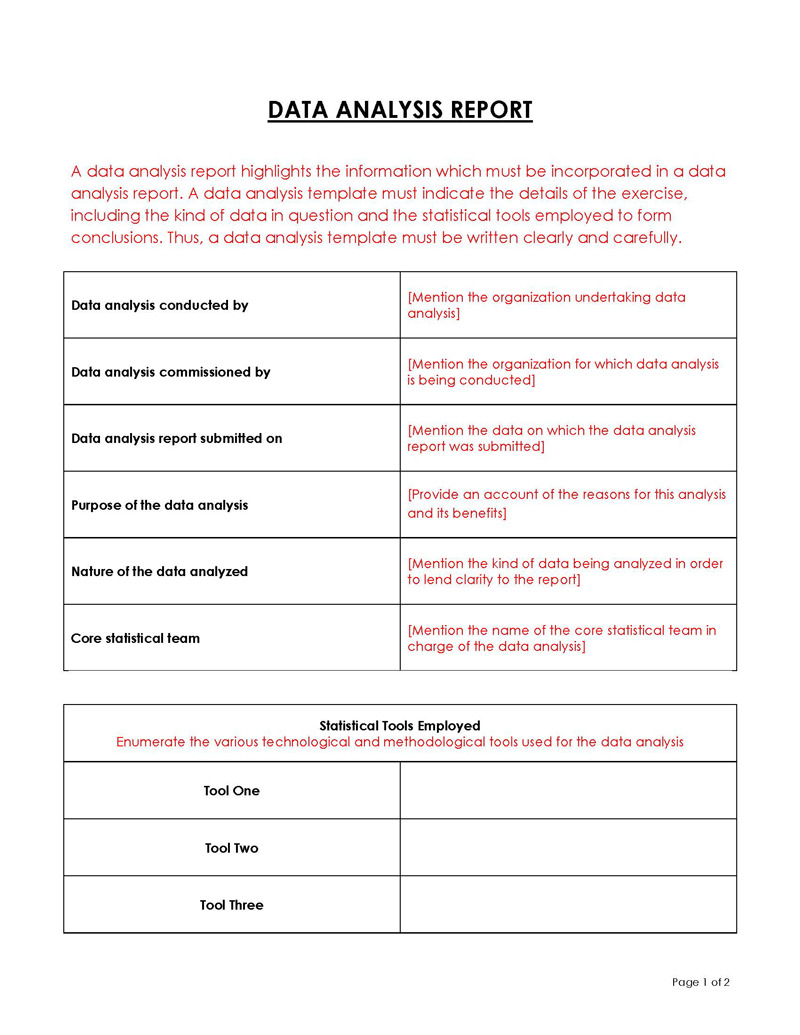
A document review should begin with a visual inspection. Check headings, page breaks, signature lines, numbering, and spacing. A signature block should not be separated awkwardly from the clause it relates to, and an acknowledgment section should not be accidentally deleted during formatting.
Perform a content inspection next. Search for every placeholder, including bracketed instructions, sample names, generic dates, dummy addresses, and unfinished clauses. A document should never be signed while instructional text remains.
Perform a consistency check after that. Compare the names, dates, property identifiers, authority limits, and duration against the source records. One wrong digit in a title number or one inconsistent spelling of a legal name can create unnecessary problems.
Then review scope. For every authority granted, ask whether it is necessary. For every important act required by the transaction, ask whether it is actually authorized. This two-way review is more reliable than simply checking whether the template “looks complete.”
Finally, have an appropriate professional review the document when the transaction is significant, the law is unfamiliar, or the consequences of error are substantial. A lawyer can assess legal scope; a notary can explain applicable execution formalities within the notary’s role; and the receiving institution can confirm its documentary requirements.
Common Mistakes to Avoid
The first common mistake is using a generic form without identifying the jurisdiction. A document may be structurally sound but still fail to meet the requirements of the place where it is signed or used.
The second is granting excessive authority. If the principal only needs an agent to complete one property sale, a broad power covering banking, gifts, investments, business operations, and unrelated assets may create unnecessary exposure.
The third is using vague property descriptions. A property address alone may not always distinguish the asset adequately. When formal property identifiers are available and relevant, use them.
The fourth is forgetting the receiving institution. Users sometimes focus on what the principal wants the agent to do but never ask what the institution needs to see before recognizing the agent’s authority.
The fifth is failing to update the document after changing the transaction. If the sale price, property, agent, duration, or authorized acts change, do not simply hand-edit a signed copy. Prepare the appropriate revised document and complete the required execution process again.

Practical Examples
Example: Owner abroad authorizes a property sale
Suppose an owner lives outside the country where a property is located and wants a trusted relative to complete a sale. The drafting process would identify the owner as principal, the relative as attorney-in-fact, and the property through its authoritative identifiers. The authority might cover negotiation subject to a minimum price, signing the sale agreement and deed, submitting registration documents, and receiving transaction documents.
The example is hypothetical. It does not establish that those exact powers are sufficient in every jurisdiction. The appropriate authority must be checked against the local law and the requirements of the land registry, notary, title professional, or other receiving institution.
Example: Agent authorized only to collect documents
Suppose a person cannot attend a government office and only wants a representative to collect a specified document. A limited authorization can identify the document, the office, the agent, and the permitted collection act. There may be no reason to grant authority to sell property, operate bank accounts, or sign unrelated contracts.
This illustrates the central advantage of a special authorization: the document can be designed around the actual task. The smaller the legitimate task, the less reason there is to use a broad authorization.
Example: Business owner delegates one transaction
A business owner might authorize a manager to sign a particular commercial agreement while the owner is unavailable. The SPA should identify the transaction and the permitted signing authority rather than giving the manager unrestricted power over every company contract.
For recurring business use, the company should also confirm whether corporate resolutions, officer authority, internal policies, or other governance documents are required. A personal SPA is not necessarily the correct instrument for every corporate authorization.
These examples demonstrate why the drafting process should begin with the actual workflow. Templates are most effective when they translate a clearly defined business or personal need into a controlled legal document.
Practical Solution
The most practical way to use a spa legal statement Template is to create a short document-production workflow rather than filling in blanks immediately. First define the transaction, then identify the jurisdiction, then collect authoritative information, then draft the authority clause, and only afterward finalize the formatting and execution provisions.
Step 1: Define the purpose. Write down exactly what the agent must accomplish. If the answer contains several unrelated tasks, determine whether one SPA is appropriate or whether separate authorizations would create a safer and clearer structure.
Step 2: Identify the jurisdiction. Determine where the principal signs, where the agent will act, and where the document will be presented. If multiple countries or states are involved, check the requirements for each relevant stage.
Step 3: Gather primary records. Use government identification, property records, existing contracts, account information, or other authoritative documents as the source for names, addresses, numbers, and descriptions.
Step 4: Write the powers as actions. Replace vague phrases with specific verbs such as sign, submit, receive, negotiate, execute, register, collect, or communicate, but only where those acts are genuinely required and legally appropriate.
Step 5: Add limitations. Consider minimum prices, maximum amounts, expiration dates, specific properties, restricted accounts, prohibited actions, or other boundaries that matter to the principal.
Step 6: Check execution requirements. Determine whether witnesses, notarization, authentication, apostille, consular execution, identification copies, or additional supporting documents are required.
Step 7: Review the completed document. Conduct a name check, date check, property check, authority check, scope check, formatting check, and placeholder check. The completed version should contain no sample data.
Step 8: Confirm acceptance. When the transaction is important, contact the receiving institution before signing if possible. Ask whether it accepts the proposed format and whether it has a preferred or mandatory form.
Step 9: Execute correctly. Sign only after the final version has been reviewed. Follow the applicable notarial or consular procedure and retain the executed original or certified copy as appropriate.
Step 10: Control the final record. Store the executed document securely, provide copies only to appropriate parties, and track its expiration or revocation status. For businesses, maintain a document register so outdated authorizations are not accidentally reused.
This workflow is more reliable than searching for the “perfect” template because it treats the template as a controlled starting point. The same approach works whether the desired file is free, editable in Word, printable as a PDF, intended for property, or designed for use in another country.
Reference Examples
The following reference examples are visual starting points for comparing document structure, layout, and subject matter. They are examples rather than universal legal forms, and their appearance should not be treated as proof that a particular version satisfies the requirements of a specific jurisdiction or institution.
spa legal statement template california
Source: Template.net
spa legal statement template free
Source: Template.net
spa legal statement template free download

Source: Template.net
spa legal statement template pdf
Source: Template.net
spa legal statement template florida
Source: Template.net
spa legal statement template word
Source: Template.net
spa legal statement template virginia

Source: Template.net
spa legal statement template texas
Source: Template.net
sample of spa letter for property
Source: Etsy
spa employee application template
Source: Winkworth
spa philippines legal form
Source: DexForm
spa employment contract template
Source: eForms
Frequently Asked Questions
What should a spa legal statement Template contain?
A useful template should identify the principal, attorney-in-fact, purpose, specific powers, property or transaction when relevant, duration, limitations, signatures, and applicable acknowledgment or notarization provisions. The exact requirements depend on the jurisdiction and intended use.
Is a free SPA template automatically legally valid?
No. A free template is simply a drafting resource. Legal effectiveness depends on the applicable law, accurate information, appropriate authority, correct execution, and acceptance by the relevant institution.
Can an SPA authorize someone to sell property?
In appropriate circumstances, a special power of attorney can authorize an agent to perform defined property-sale acts. Property transactions should receive careful legal review because the authority, property description, execution formalities, and supporting documents may be subject to specific requirements.
Can I use one SPA template in every U.S. state?
You should not assume that. State law and execution requirements can differ. A state-specific form may be a better starting point, but the completed document should still be checked against the actual transaction and receiving institution.
What is the difference between an SPA and a sale and purchase agreement?
An SPA in the Special Power of Attorney sense delegates authority from a principal to an agent. A sale and purchase agreement establishes contractual terms between buyer and seller. One does not automatically replace the other.
Should a property SPA include the title number?
When the applicable property system uses title numbers or similar identifiers, including the authoritative identifier can make the property easier to distinguish. Whether it is required depends on the jurisdiction and transaction.
Can an SPA be prepared in Word and saved as PDF?
Yes, when the jurisdiction and receiving institution permit that workflow. Word is useful for editing, while PDF can preserve the final layout. The document should be finalized and proofread before signing or conversion to the final record format.
Does an SPA always need notarization?
Not necessarily in every situation, but many significant transactions and institutions require formal execution. The correct requirement depends on the applicable jurisdiction, transaction, and receiving institution.
Can I revoke an SPA?
Revocation is often possible, but the legal procedure and effect on third parties can vary. If an agent or institution is already relying on the authority, appropriate notice and documentation may be necessary.
What makes a Philippine SPA different from a generic international template?
Philippine forms may use jurisdiction-specific wording, acknowledgment, consular, witness, or documentary requirements. Official Philippine sources provide examples that demonstrate a more formal structure for specific transactions. :contentReference[oaicite:8]{index=8}
Conclusion
A strong spa legal statement Template is best understood as a structured drafting framework for a specific authorization rather than a one-size-fits-all legal document. The most important work happens before the template is completed: identifying the transaction, jurisdiction, parties, property, authority, limitations, duration, and execution requirements.
For property matters, precision becomes especially important. The document should connect the agent’s authority to identifiable property and clearly defined acts. For U.S. transactions, state-specific requirements should be checked. For Philippine transactions, current government or consular materials can provide valuable guidance, while significant property or financial matters may warrant professional review.
Format should be treated as a practical choice rather than a legal shortcut. A free template can be useful for research, a Word version can simplify editing, and a PDF can preserve a finalized layout. None of those formats alone determines whether the document is appropriate or accepted.
The best final document is one that a third-party reviewer can understand without guessing: the principal is clearly identified, the agent is clearly identified, the authority is specific, the property or transaction is identifiable, the limits are understandable, and the execution requirements have been satisfied. That standard provides a much stronger foundation than simply choosing the most polished template found online.
Before relying on any completed spa legal statement Template for a high-value, international, property, financial, or otherwise consequential transaction, verify the current requirements that apply to the exact situation. A template can organize the document, but careful research, accurate information, proper execution, and appropriate professional review are what make the resulting authorization useful in practice.

The safest approach is therefore simple: define the purpose, identify the jurisdiction, gather authoritative information, draft narrowly and clearly, verify execution requirements, and confirm acceptance before the document is relied upon. Used this way, a carefully prepared spa legal statement Template can provide a practical foundation for clear delegation of authority while reducing avoidable drafting and document-processing problems.
