A sample rental reference letter Template is useful when a tenant needs a professional record of previous rental history and a landlord wants to communicate relevant facts clearly. A strong letter does more than say that someone was a “good tenant.” It identifies the tenancy, explains the writer’s relationship with the renter, addresses payment and property care, and gives the prospective landlord enough context to understand the recommendation. The best letters are factual, concise, personalized, and easy to verify. They should also avoid unnecessary personal information and should never exaggerate the writer’s experience.
Rental references can serve several purposes. A former landlord may use one to confirm a tenant’s payment habits and care of the premises, while a tenant may request one before applying for another property. In some situations, a property manager, employer, colleague, or other appropriate reference may provide supporting information when a conventional landlord reference is unavailable. The exact information requested varies by market and by the person reviewing the rental application, so the letter should be adapted rather than copied without checking its details.
Research from rental-reference resources consistently points to a small group of useful facts: tenancy dates, property information, payment history, compliance with the rental agreement, property condition, conduct, and contact information. Zillow, for example, describes these as common elements of a landlord reference and advises writers to stay focused on information relevant to the tenancy. Australian renter guidance also notes that personal and work references may form part of a rental application and can help demonstrate reliability and responsibility. :contentReference[oaicite:0]{index=0}

What a Rental Reference Letter Actually Does
A rental reference letter provides a third-party account of a renter’s previous tenancy. Its value comes from the writer’s direct knowledge of the rental relationship rather than from broad claims about the tenant’s personality. A prospective landlord can use the information to compare the renter’s account with other records or references. The letter is therefore strongest when it answers practical questions: When did the tenant live at the property? What was the rental arrangement? Did payments generally arrive as agreed? Was the property maintained? Were there relevant complaints or lease issues?
The document is usually written from a previous landlord or property manager to a prospective landlord or property manager. However, the appropriate writer depends on the circumstances. If a tenant has a long rental history, a former landlord who directly observed the tenancy is generally more relevant than a friend who knows the tenant socially. Where rental history is limited, other references may help demonstrate responsibility, but they should be described honestly rather than presented as if they were landlord references.
The purpose is not to create an elaborate character profile. A prospective landlord usually needs relevant evidence, not a lengthy personal narrative. A short statement such as “paid rent as agreed throughout the tenancy” is useful when the writer can support it with records. Likewise, a statement about property care is more credible when it refers to observed maintenance, reporting of repairs, cleanliness at inspection, or the condition at move-out. A reference should be persuasive because it is specific, not because it is dramatic.

Who Should Write the Reference?
The strongest writer is normally someone with firsthand knowledge of the tenancy. A former landlord can verify the property, rental period, payment record, lease compliance, and condition of the premises. A property manager may be equally appropriate when the tenancy was managed by an agency or professional management company. The writer should be sufficiently familiar with the renter’s records to make factual statements without guessing.
A tenant may sometimes need a sample rental reference letter template for tenant when asking a former landlord for help, but the tenant should not write fictional statements for the landlord to sign. A useful approach is to provide the writer with the property address, tenancy dates, recipient details, and any specific questions that need to be addressed. The landlord can then verify the facts and decide what they are comfortable confirming.
A sample rental reference letter template for landlord should therefore be treated as a structure rather than a script. Landlords can adapt the wording to match their records and their actual experience. If the relationship was mixed or there were significant tenancy issues, the writer should not manufacture praise. It is better to provide an accurate, limited reference or politely decline than to create a statement that cannot be supported.

Essential Information to Include
The opening portion should establish who is writing and why. Include the writer’s name, role or relationship to the tenant, contact details, date, and the recipient when known. If the recipient is unknown, a neutral professional salutation may be appropriate. A subject line such as “Rental Reference for [Tenant Name]” can make the purpose immediately clear without adding unnecessary wording.
The next part should identify the tenancy itself. State the tenant’s full name, the rental property or unit, the start and end dates when known, and the rental arrangement. The rent amount can be included when relevant and when the writer is comfortable confirming it. These details make the reference concrete and allow the prospective landlord to understand exactly which tenancy the writer is discussing.
The body should focus on behavior that matters to renting. Payment history, property care, timely reporting of maintenance issues, adherence to relevant lease terms, and interactions with neighbors or property staff are common subjects. Zillow similarly recommends keeping the reference tied to tenancy-related facts and notes that records can help support statements about payment history or lease violations. :contentReference[oaicite:1]{index=1}

How to Describe Payment History Accurately
Payment history is often one of the most useful parts of a rental reference because it addresses a practical concern for the prospective landlord. The writer should state only what the records support. If rent was consistently paid on time, say so directly. If there were occasional late payments, identify them accurately when appropriate rather than using an absolute statement that could later conflict with the rent ledger.
Precision is especially important when describing exceptions. A sentence such as “There were two late payments during the tenancy, both resolved afterward” communicates more useful information than either an exaggerated endorsement or a vague criticism. The writer can also explain whether the issue was recurring, isolated, resolved promptly, or associated with another documented circumstance, provided that the explanation is relevant and appropriate to disclose.
Tenants should also avoid asking a writer to make a stronger payment claim than the evidence supports. A prospective landlord may verify information independently, and inconsistencies can undermine confidence in both the reference and the rental application. The goal is not to make the tenant appear perfect; it is to give an accurate picture that can be understood and verified.

How to Address Property Care and Maintenance
Property condition is another central topic because the prospective landlord is evaluating how the renter treated a previous home. A useful reference can mention whether the tenant kept the premises reasonably clean, reported maintenance problems promptly, followed relevant property rules, and returned the premises in an appropriate condition. These observations are more useful than vague descriptions such as “excellent person” because they connect directly to the rental relationship.
Maintenance reporting deserves careful wording. A tenant who reported a leaking tap, damaged appliance, or other issue promptly was not necessarily responsible for fixing the problem personally. The reference should distinguish between the renter’s responsibility to report an issue and the landlord’s or property manager’s responsibility to arrange repairs. This keeps the letter factual and avoids assigning responsibility that does not belong to the tenant.
When discussing move-out condition, the writer should rely on inspection records, photographs, condition reports, or direct observations when available. Do not claim that a property was returned in perfect condition simply because that sounds favorable. A balanced statement can still be positive while acknowledging ordinary wear or a minor issue that was documented and resolved.

Lease Compliance and Tenant Conduct
A reference can explain whether the tenant followed important terms of the rental agreement. Relevant examples might include compliance with noise rules, occupancy conditions, pet provisions, smoking restrictions, or other documented requirements. Only include matters that are genuinely connected to the tenancy and that the writer can verify. A reference is not the right place for speculation about behavior outside the rental relationship.
Conduct toward neighbors and property staff can also be relevant, especially in multi-unit housing. A landlord may want to know whether there were documented complaints, repeated disputes, or positive evidence of considerate behavior. The language should remain neutral. Instead of describing someone as universally “wonderful,” a writer can state that no relevant complaints were received during the tenancy, if that is accurate.
Legal and privacy considerations matter here. Rental references should not become a vehicle for discriminatory or irrelevant personal information. Zillow cautions that landlord-tenant laws can vary by jurisdiction, while landlord-reference guidance commonly recommends keeping the document focused on tenancy-related facts and avoiding protected personal characteristics. The safest editorial principle is simple: include information because it is relevant to the rental relationship, not because it reveals something personal about the tenant. :contentReference[oaicite:2]{index=2}

A Practical Structure for the Letter
A professional reference can normally be organized into five functional parts: identification, tenancy history, performance, recommendation, and contact details. The first part identifies the writer and recipient. The second confirms the rental relationship. The third explains payment, property care, compliance, and relevant conduct. The fourth gives a clear recommendation or a factual statement about whether the writer would rent to the tenant again. The fifth provides a way to verify the information.
This structure works whether the final document is a simple business letter or a formatted reference template. A tenant may encounter a sample rental reference letter template word format, a PDF-oriented layout, or a plain text letter. The file format is less important than the accuracy of the content. The recipient should be able to read the letter quickly and locate the key rental facts without navigating decorative elements.
A sample rental reference letter template pdf can be useful as a visual model for page structure, but readers should distinguish between a reference example and an official form. Unless a landlord, property manager, agency, or authority has specifically supplied a required format, a reference letter generally functions as correspondence rather than a universal standardized document. The writer should follow any instructions supplied by the recipient.

Example: A Strong Landlord Reference
Consider a hypothetical tenant named Jordan Lee who rented an apartment for two years. The former property manager has records showing that Jordan generally paid rent on time, reported maintenance problems through the normal process, complied with the building’s rules, and left the apartment in good condition. A useful reference would summarize those verified facts rather than inventing personal qualities that the manager could not reasonably assess.
For example, the central wording might say that Jordan occupied the property from March 2024 through February 2026, paid the agreed rent during the tenancy, reported maintenance concerns promptly, and complied with the relevant lease conditions. The writer could then state that, based on the tenancy experience, they would be comfortable recommending Jordan to another landlord. This is a hypothetical example, not a statement about a real tenant.
The example demonstrates why specificity matters. The recommendation is supported by observable rental behavior, while the conclusion remains appropriately limited. It does not promise that Jordan will behave exactly the same way in another property, and it does not claim that the tenant has no weaknesses whatsoever. It simply records what the writer actually knows from the tenancy.

Example: A Reference With a Minor Issue
A useful reference does not have to hide every imperfection. Suppose a hypothetical tenant made one late payment during an otherwise long tenancy. If the landlord’s records confirm the event, the reference can acknowledge it without turning the letter into a negative character assessment. A balanced statement might explain that there was one delayed payment, that the matter was resolved, and that the remainder of the tenancy was conducted according to the agreement.
This approach can be more credible than claiming there were no problems at all. Prospective landlords understand that ordinary tenancies can include occasional issues. What matters is whether the writer presents them accurately and gives enough context for the reader to understand their significance. If an issue was serious, repeated, unresolved, or legally significant, the writer should take extra care before making statements and should consider the applicable local rules.
The same principle applies to property condition. A tenant may have left one minor repair issue while otherwise maintaining the home carefully. The writer can describe the actual condition without using exaggerated language. A reference becomes stronger when its positive statements are credible enough that a reader can trust the rest of the document.

When a Tenant Has Limited Rental History
Not every renter has a long record of previous leases. A first-time renter, recent graduate, person moving out of a family home, or someone returning to the rental market may have limited landlord references. In these circumstances, the tenant can ask the prospective landlord or property manager what alternative evidence they accept. Australian renter guidance, for example, identifies personal and work references as documents that may be used in rental applications, alongside rental records and proof of income. :contentReference[oaicite:3]{index=3}
A reference from a colleague or employer should be described honestly as such. It may demonstrate reliability, responsibility, or stability, but it does not prove the same facts as a former landlord. The writer should therefore avoid statements about rent payments or property maintenance unless they genuinely have firsthand knowledge of those matters.
A tenant with limited rental history can also organize other factual records, such as previous rental details or payment evidence, where the relevant landlord or agency requests them. The important principle is consistency: names, dates, addresses, and financial information should match across the rental application and supporting material.

How to Write a Rental Reference Letter Step by Step
Anyone searching for how to write a rental reference letter can begin by collecting the facts before drafting the prose. Review the tenancy agreement, rent ledger or payment records, inspection notes, relevant notices, and correspondence. Confirm the tenant’s full name, property address, tenancy period, and the name of the intended recipient. This preparation reduces the risk of copying outdated information from memory.
Next, decide which facts are genuinely relevant. Separate verified information from personal impressions. For example, “the tenant reported maintenance issues promptly” is a factual observation if supported by records, while “the tenant is the most trustworthy person I have ever met” is a subjective judgment with little rental-specific value. A strong letter favors the first type of statement and uses positive judgment sparingly.
Finally, draft the letter in a professional sequence, review every placeholder, check names and dates, and confirm that the contact information is correct. Read the finished document as if you were the prospective landlord. Ask whether the letter answers the practical questions that person is likely to have. If the answer is yes, the document probably does not need additional decoration or length.

What to Avoid in a Rental Reference
The first mistake is exaggeration. Statements such as “never had a single problem” should be used only when the writer can genuinely support them. Absolute language can create problems when a recipient later discovers a late payment, documented complaint, or minor repair. Specific wording is safer and more useful because it describes the writer’s actual knowledge rather than making an impossible promise about the tenant’s future behavior.
The second mistake is including irrelevant personal information. A landlord reference should not become a biography of the renter. Information about protected characteristics, private family matters, health, beliefs, or other unrelated subjects may be inappropriate and can create legal or ethical concerns depending on the jurisdiction. Keep the focus on tenancy facts, rental conduct, and information that the recipient reasonably needs.
The third mistake is leaving placeholders or inconsistent details in the final letter. A template is only a framework. Check every bracketed field, property address, date, amount, name, pronoun, signature, and contact detail. Zillow specifically recommends checking for typos and ensuring that template fields are completed correctly before a reference is sent. :contentReference[oaicite:4]{index=4}

Adapting the Letter for Apartment Rentals
A sample reference letter for apartment rental should emphasize the issues that matter in shared residential buildings. In addition to rent and property care, the writer may address noise complaints, interactions with neighbors, compliance with building rules, and appropriate use of common areas when those matters are within the writer’s knowledge. The purpose is to give the next property manager a practical picture of the renter’s previous residential conduct.
Apartment references can also be especially useful when the former property was managed by a professional building manager rather than an individual owner. In that situation, the reference may focus on records maintained by the management office. The writer should identify their role clearly so that the prospective landlord understands whether the information comes from a property owner, manager, leasing office, or another source.
Keep the document proportionate to the request. A one-page professional reference is often easier to review than a long personal essay. If the recipient asks specific questions, answer those questions directly. If a formal reference form is supplied, follow its requested structure rather than replacing it with a generic letter unless the recipient says a letter is acceptable.

Rental References in Australia
People searching for a rental reference letter template australia should be careful about assuming that one format applies everywhere in the country. Rental rules and application practices can vary between states and territories, and a reference letter is only one part of a broader rental application process. Australian renter guidance from the Tenants’ Union of NSW identifies personal and work references, previous rental records, proof of income, and other material as possible components of an application. :contentReference[oaicite:5]{index=5}
For an Australian reference, use locally familiar terminology and provide accurate information about the tenancy. A reference may identify the property, tenancy dates, rent amount, payment history, condition, and contact details, but the writer should not claim that a particular format is legally required unless the relevant state or territory authority or recipient has confirmed that requirement.
An Australian example visible in rental-reference material shows why localization can matter: it uses fields such as suburb, state, postcode, tenancy dates, rental amount, neighborhood conduct, and contact details. The layout is useful as an example of organization, but readers should still check the current requirements of the relevant state or territory and the specific property manager before relying on any document format.

Using a Reference Letter With Other Rental Records
A reference letter works best when it complements other evidence rather than attempting to replace it. A landlord may want to see a rental ledger, tenancy details, proof of income, identification, or other material depending on the application process. The reference provides context from another person, while the supporting records provide documentation that can confirm dates and financial information.
The tenant should make sure the information is consistent. If the reference says the tenancy ended in February but the rental application says March, the discrepancy may create unnecessary questions. Similarly, the property address, rent amount, and tenant name should be checked carefully. A quick consistency review can prevent a small administrative error from becoming a credibility issue.
Landlords should also retain their own records according to their normal record-keeping practices. A reference should not be based entirely on memory when records are available. Reviewing the tenancy history before writing helps distinguish between what the writer remembers, what the records establish, and what should not be asserted at all.

Practical Solution
The most practical solution is to build the reference from verified rental facts first and polished wording second. Start with a five-point checklist: writer identity, tenant and property identity, tenancy dates and rental terms, relevant performance, and contact details. Gather the information from reliable records, then decide which facts directly answer the prospective landlord’s likely questions. This approach prevents the common problem of beginning with persuasive language and only later discovering that important factual details are missing.
Once the facts are assembled, draft three core paragraphs. The first establishes the relationship and tenancy. The second summarizes payment behavior, property care, compliance, and any material issues. The third gives the recommendation and explains how the recipient can contact the writer. This compact structure is usually enough for a professional reference, although additional detail can be added when the recipient requests it or when the tenancy history genuinely requires clarification.
Before signing, perform a final factual review. Compare names and dates against the tenancy records, verify the property address, check any stated rent amount, remove unsupported superlatives, and make sure the reference does not contain irrelevant personal information. If the tenant is asking for the letter, provide the writer with the recipient’s instructions but allow the writer to decide what they can truthfully confirm. A good reference is not the longest one; it is the one that is accurate, relevant, readable, and credible.

Choosing Between Different Template Styles
Different template styles can serve the same basic purpose. A simple one-page format is useful when the recipient wants a concise reference. A more structured design can make it easier to identify dates, payment history, and contact information. A letterhead-style format may suit a professional property management business, while a plain document can be more appropriate for an individual landlord.
Visual design should never obscure the factual content. A professional reference benefits from clear headings, readable typography, logical spacing, and consistent formatting. Decorative elements are optional and should not make the letter look like advertising. The prospective landlord should be able to identify the tenant, tenancy period, payment history, and recommendation without effort.
When comparing templates, focus on completeness rather than appearance. A visually attractive layout that omits the tenancy period is less useful than a simple layout containing the necessary facts. This is also why a letter for rental reference should be customized to the actual circumstances rather than selected solely because its design looks polished.

Final Quality Check Before Sending
Review the opening carefully. The writer should be identifiable, the tenant should be named correctly, and the purpose should be immediately understandable. If the reference is addressed to a named landlord or property manager, check the spelling of that person’s name and the organization’s name. If the recipient is unknown, use a professional neutral greeting rather than guessing.
Review the factual body next. Check the tenancy dates, property address, rental amount where included, payment history, property condition, lease compliance, and any relevant incidents. Remove claims that cannot be verified. If the letter mentions a late payment or complaint, ensure that the wording accurately reflects the records and does not exaggerate the event.
Finish by checking the recommendation, signature, and contact details. The reader should know whether the writer recommends the tenant, whether the writer would consider renting to the tenant again, or whether the writer is limiting the reference to factual verification. That clarity is especially valuable when a tenant presents a reference letter for renters sample as part of a broader rental package.
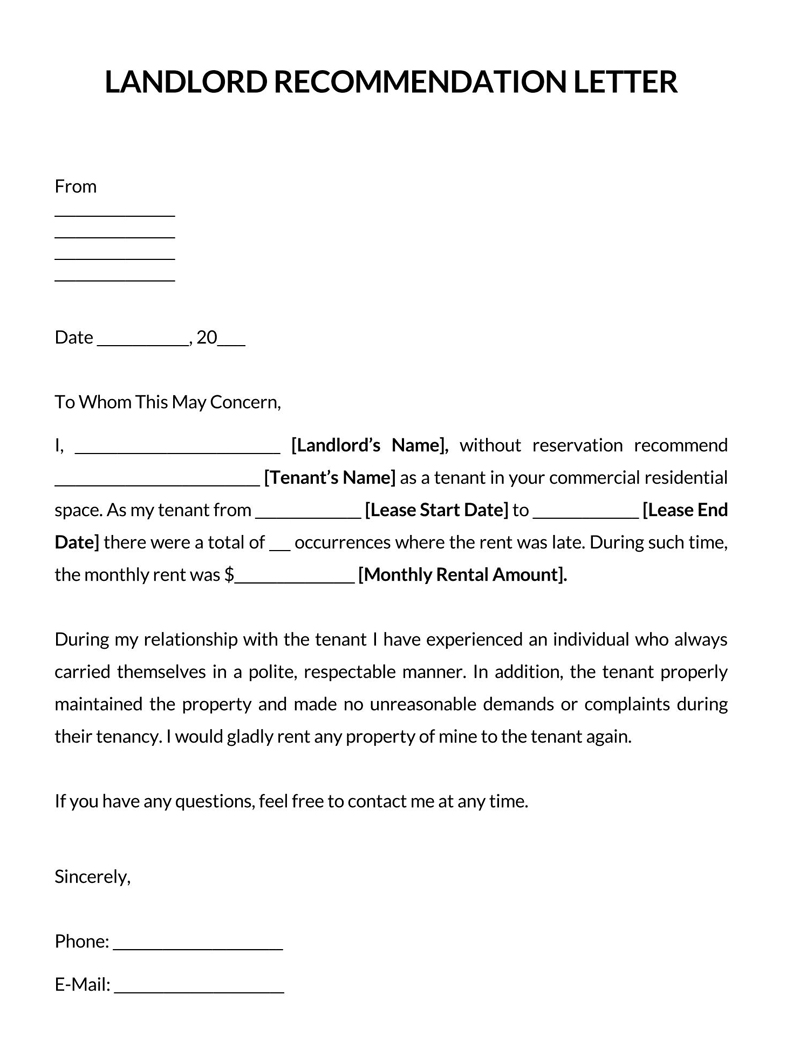
Sample Wording for a Professional Reference
A practical example can be built around verified information without becoming overly promotional. For instance, a hypothetical landlord might write: “I am writing to confirm that Alex Morgan rented the property at [address] from [date] to [date]. During the tenancy, Alex paid rent according to the agreed schedule and maintained the premises appropriately. Maintenance concerns were reported through the normal process, and I received no material complaints concerning the tenancy.” The wording is deliberately factual and can be adjusted to reflect the actual records.
The recommendation can then be equally direct: “Based on my experience during this tenancy, I would be comfortable recommending Alex as a prospective renter. Please contact me if you require clarification regarding the tenancy.” This avoids promising future behavior while still giving the prospective landlord a clear indication of the writer’s view.
A landlord should never copy this hypothetical wording and leave the facts unchanged. Names, dates, payment statements, property descriptions, and recommendations must be replaced with information that is actually true. A reference becomes valuable because it represents a real tenancy, not because it resembles a polished sample.
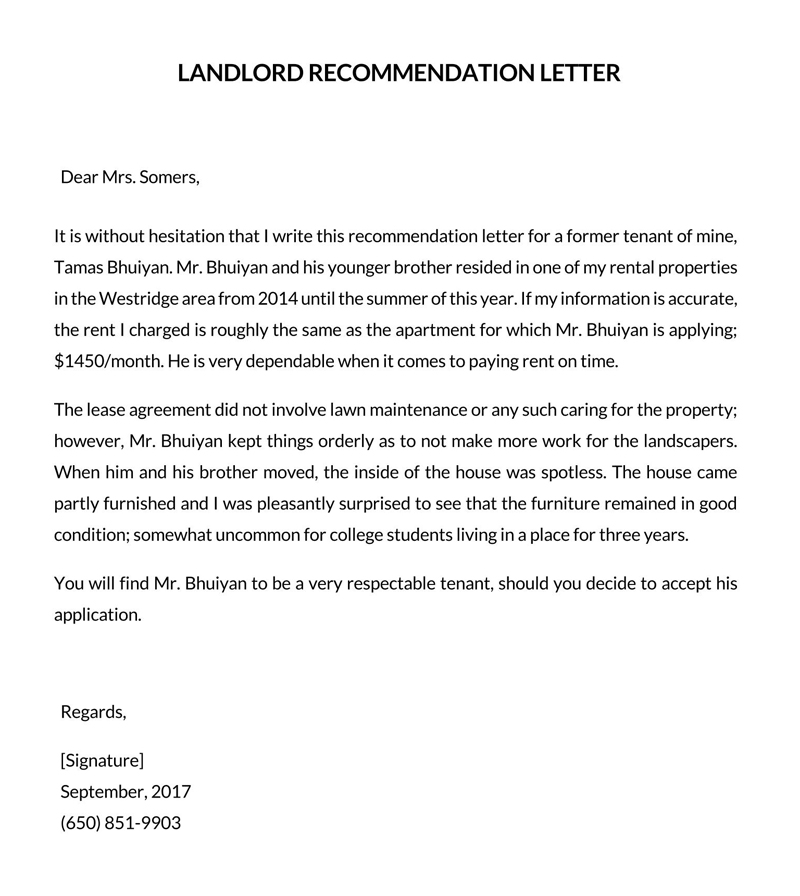
Reference Examples
A sample rental reference letter Template is easiest to evaluate when readers can compare several real document layouts and writing approaches. The examples below show different ways a rental reference can present tenancy history, payment behavior, property care, conduct, and recommendations. Some are highly structured while others use a simple business-letter format. The differences are useful because there is no single visual style that automatically makes a reference credible. What matters most is whether the document identifies the tenancy accurately, uses relevant facts, and gives the recipient a practical way to verify the writer’s statements.
These visual references also demonstrate how the same core information can be organized for different situations. A landlord may prefer a formal recommendation format, while a property manager may use a more concise verification layout. Some examples emphasize payment history, others focus on maintenance and conduct, and several combine all three. Use the visuals to recognize useful structural patterns, but adapt the content to the actual tenancy, recipient instructions, jurisdiction, and records. The examples are references for structure and presentation rather than universal legal forms or mandatory formats.
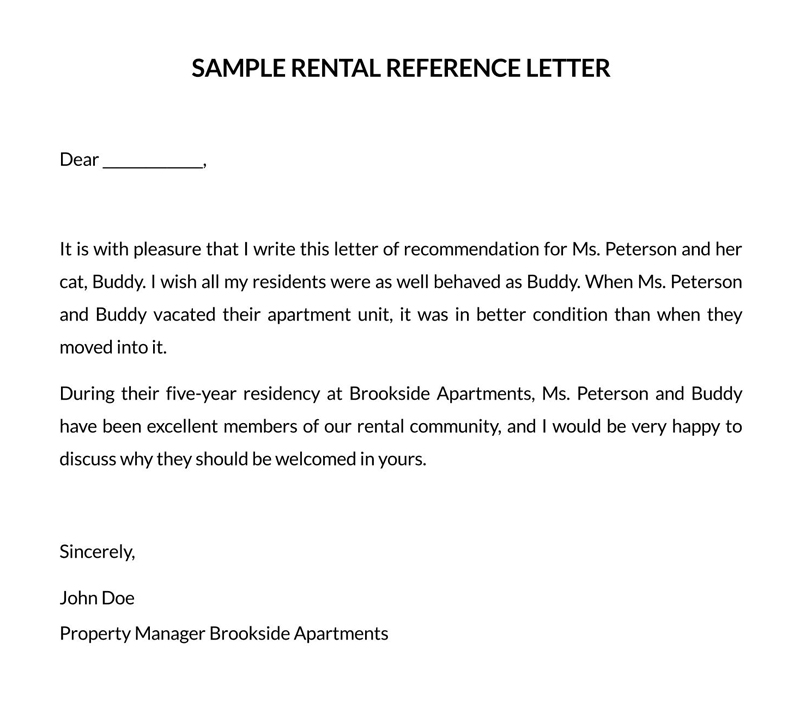
Sample Rental Reference Letter
Source: WordTemplatesOnline.net
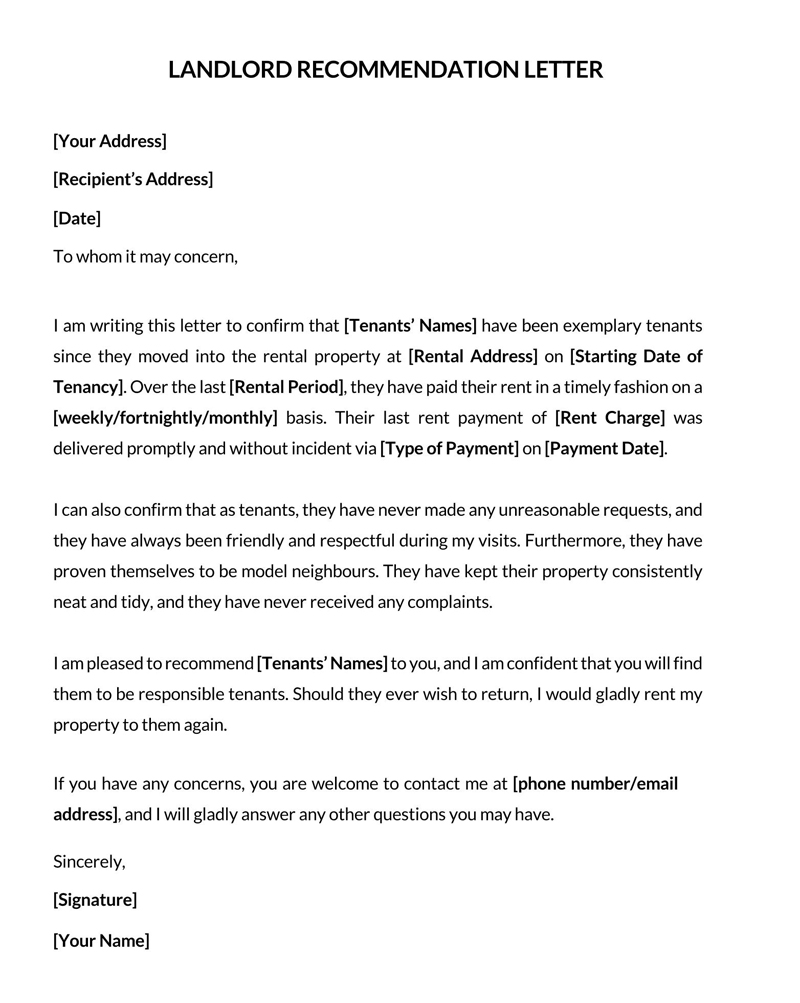
Landlord Recommendation Letter
Source: WordTemplatesOnline.net
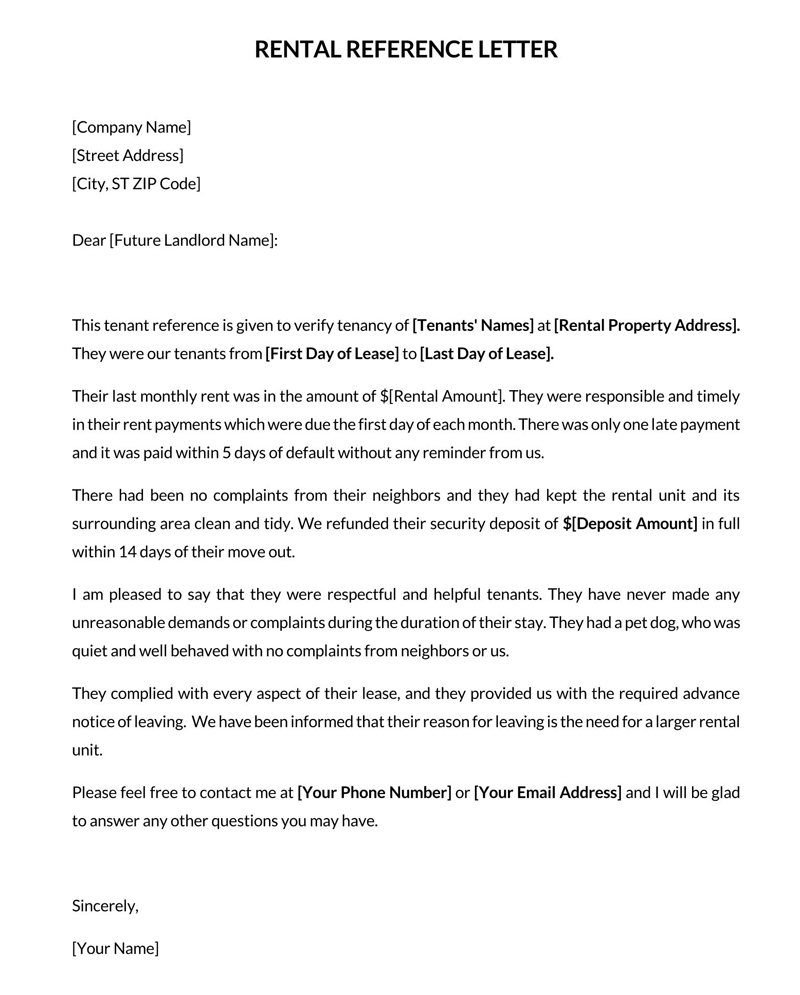
Rental Reference Letter
Source: WordTemplatesOnline.net
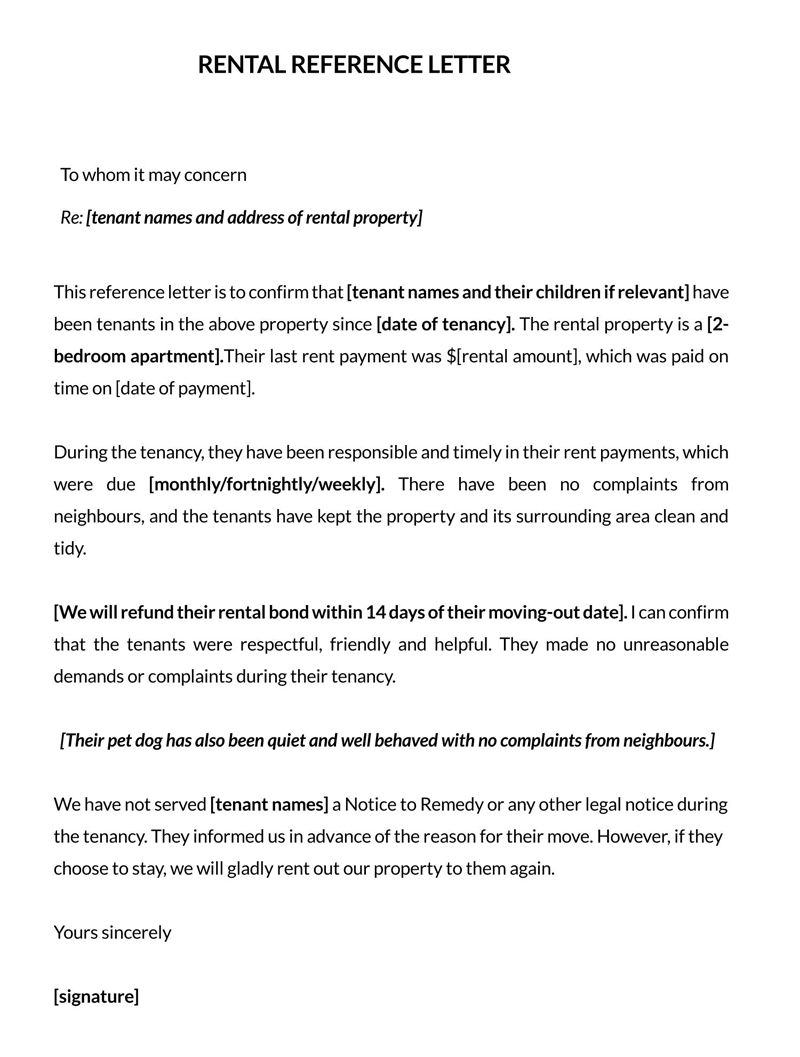
Rental Reference Letter With Tenancy Details
Source: WordTemplatesOnline.net
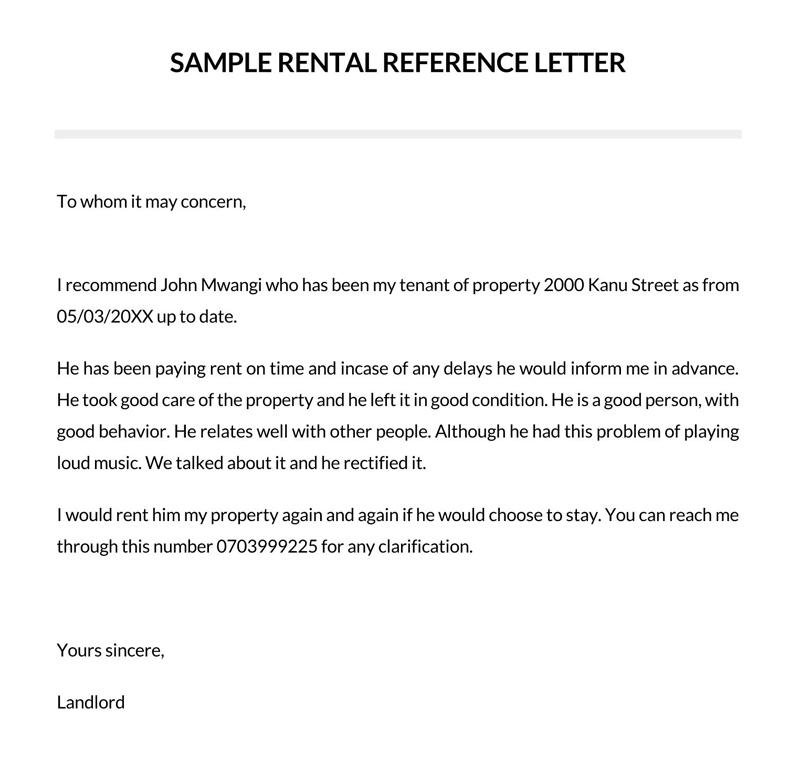
Sample Rental Reference Letter
Source: WordTemplatesOnline.net
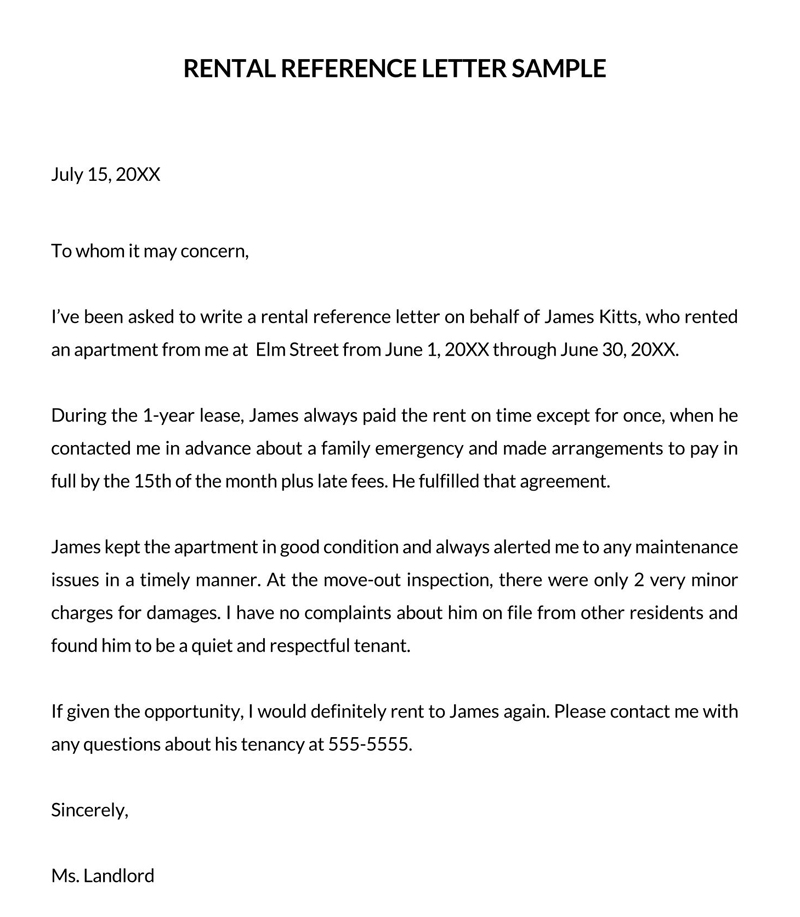
Rental Reference Letter Sample
Source: WordTemplatesOnline.net
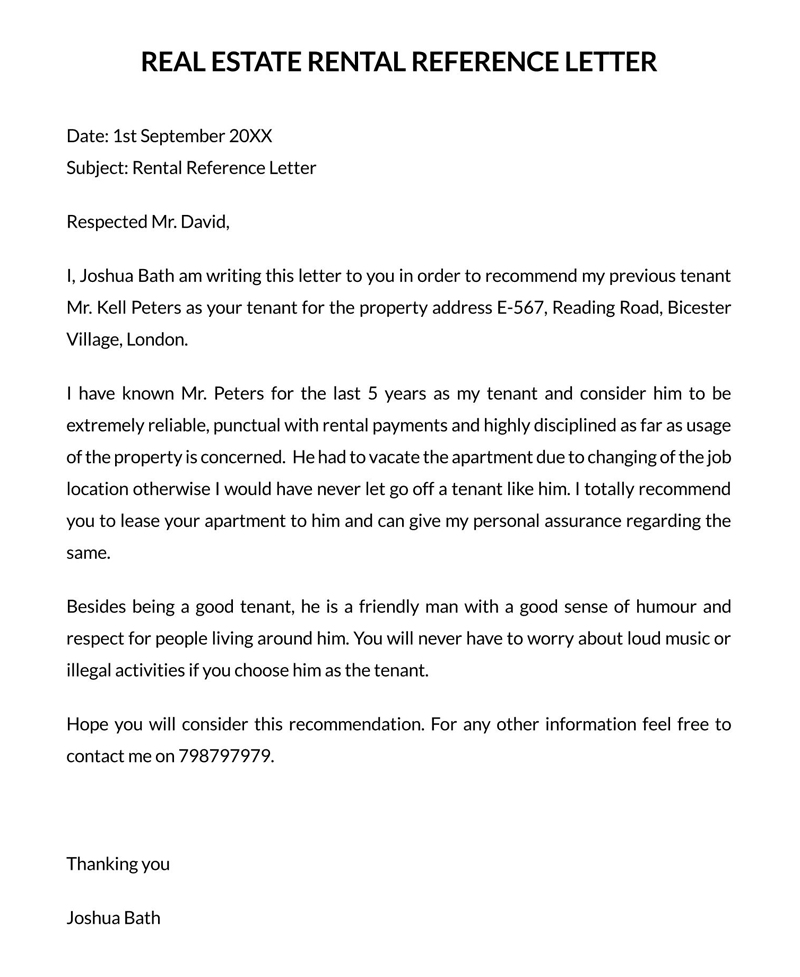
Real Estate Rental Reference Letter
Source: WordTemplatesOnline.net

Landlord Reference Letter Example
Source: WordTemplatesOnline.net

Landlord Reference Letter Example
Source: WordTemplatesOnline.net
