The best template is not simply a checklist of rules. It is a working management system that connects a marketing objective to a risk, a control activity, an owner, supporting evidence, a review frequency, and a remediation action when something goes wrong. This structure makes controls easier to understand and much easier to test.
For marketing departments, controls should cover more than accounting. They may include campaign approvals, budget authorization, purchase orders, agency invoices, access to advertising platforms, customer-data handling, promotional claims, influencer disclosures, creative version control, website publishing, lead management, and the accuracy of marketing performance reports.
A useful template should also work at different organizational sizes. A small business may need a simple spreadsheet with twenty carefully selected controls, while a multinational organization may need separate registers for advertising, procurement, privacy, technology, content governance, and financial reporting. The underlying logic can remain the same.
This guide explains how to build and use an internal controls for marketing Template, how to select the right format, what fields to include, how to evaluate risks, how to collect evidence, and how to turn the resulting register into an actionable control program rather than another document that nobody maintains.
What Are Internal Controls for Marketing?
Internal controls are policies, procedures, responsibilities, checks, approvals, system configurations, and monitoring activities designed to help an organization achieve its objectives while managing risk. In marketing, the objectives can involve spending accurately, protecting information, publishing truthful claims, maintaining brand standards, operating campaigns as approved, and producing reliable management information.
The COSO Internal Control—Integrated Framework describes five integrated components: control environment, risk assessment, control activities, information and communication, and monitoring activities. It also emphasizes that internal control supports operations, reporting, and compliance rather than being limited to financial reporting. That broader perspective is particularly useful for marketing because many important marketing risks are operational or compliance-related.
A marketing control might therefore be preventive, such as requiring approval before a campaign is launched, or detective, such as reconciling advertising-platform spend to accounting records. It could be manual, such as a documented legal review, or automated, such as a system restriction preventing an unauthorized user from publishing a campaign.
The distinction between a policy and a control is important. A policy may say that advertising claims must be supported by appropriate evidence. The control explains how that requirement is operationalized: for example, the campaign owner attaches substantiation to the approval record and an authorized reviewer confirms that the claim is supported before publication.
A strong internal controls for marketing Template captures this operational detail. It should tell a reader what the control is, why it exists, who performs it, how frequently it occurs, what evidence is produced, who reviews that evidence, and what happens when the expected control does not operate.
Why Marketing Needs a Dedicated Control Structure
Marketing activity crosses organizational boundaries. A single campaign can involve marketing, finance, procurement, legal, sales, information technology, data protection, an external agency, and multiple technology platforms. Without defined responsibilities, a task that appears to belong to everyone can effectively belong to nobody.
Marketing also moves quickly. Campaigns may be planned and launched under tight deadlines, which creates pressure to bypass approval steps. A control framework should therefore be designed around the actual workflow instead of imposing a theoretical process that the team cannot realistically follow.
Another challenge is the volume of evidence. A campaign may generate contracts, invoices, creative files, approval messages, audience definitions, performance reports, platform exports, testing results, and screenshots. A useful control template gives each control an evidence expectation so the team knows what should be retained.
Finally, marketing risk changes rapidly. New advertising channels, artificial intelligence tools, tracking technologies, influencers, data sources, and automated bidding systems can introduce new risks. A template must be treated as a living register rather than a document completed once and forgotten.
The objective is not to slow marketing down. Good controls should make routine decisions faster by clarifying who can approve what, what evidence is needed, and when escalation is required. The result should be controlled speed, not bureaucracy.
Core Components of an Internal Controls for Marketing Template
1. Control ID and Process
Every control should have a unique identifier. A simple structure such as MKT-001, MKT-002, and MKT-003 makes it easier to discuss controls in meetings, testing records, audit requests, and remediation plans.
The process field should identify where the control operates. Examples include campaign planning, paid media, content publishing, agency management, marketing procurement, customer-data management, events, social media, email marketing, and reporting.
Process naming should be consistent. If one control says “digital advertising” and another says “paid media,” users may not know whether they describe the same process. A short process taxonomy prevents unnecessary duplication.
The control ID should remain stable even if the wording changes. If a control is substantially redesigned, the organization can decide whether to retain the ID with a new version or create a new control, but that decision should be governed by documented conventions.
A stable identifier is particularly valuable when a marketing control is referenced by a risk assessment, policy, audit test, corrective action, or management report. It creates a common language across departments.
2. Risk and Objective
The risk statement should describe what could go wrong rather than merely naming a topic. “Advertising spend” is a topic. “Unauthorized or inaccurate advertising spend is committed and not detected promptly” is a risk statement.
The objective describes the desired outcome. For a campaign-budget control, the objective might be that spending is authorized, accurately recorded, and monitored against approved limits.
A good template separates inherent risk from the control itself. First ask what could happen without the control. Then document the activity intended to reduce the likelihood or impact of that event.
Risk descriptions should be specific enough to support testing. If the risk is too broad, the control may become vague. If it is too narrow, the register can become overloaded with minor variations of the same issue.
Marketing leaders should prioritize risks that could materially affect financial results, regulatory compliance, customer trust, data protection, brand reputation, or management decisions. Not every marketing activity requires the same control intensity.
3. Control Description
The control description should explain the action that reduces the stated risk. Avoid vague phrases such as “management reviews marketing” or “the team checks campaigns.” Instead describe the actual activity and the decision criteria.
For example, a stronger control could state that the campaign owner submits the final creative, budget, audience, landing page, and substantiation file for approval before activation. The designated reviewer checks the required fields and records approval in the campaign management system.
Control descriptions should make clear whether the activity is preventive or detective. Preventive controls attempt to stop an error before it occurs. Detective controls identify an error after it occurs so corrective action can be taken.
It is also useful to identify whether a control is manual, automated, or dependent on both people and technology. This classification helps determine how the control should be tested and what evidence should exist.
The description should be concise enough to maintain but detailed enough that a trained reviewer could understand the expected activity without asking the original author for an explanation.
4. Owner, Reviewer, and Frequency
Every control needs an accountable owner. The owner is responsible for ensuring that the control operates as designed, while the person performing the activity may be someone else.
A reviewer can provide an independent check where the risk justifies one. For example, the campaign manager may prepare a budget reconciliation while a finance business partner reviews significant variances.
Frequency should reflect the control’s trigger. Some controls occur daily or continuously, while others happen monthly, quarterly, annually, or only when a campaign or vendor is initiated.
Do not make every control monthly simply because monthly reviews look tidy in a spreadsheet. A monthly review is inappropriate if the risk requires approval before each campaign goes live.
Ownership should also survive personnel changes. A role-based designation such as “Marketing Operations Manager” may be more durable than a personal name, although the operating system should still identify the current individual responsible for the role.
5. Evidence and Testing
Evidence is what allows an organization to demonstrate that a control actually operated. Depending on the process, evidence may include approval records, system logs, invoices, reconciliations, screenshots, contracts, review notes, campaign exports, or dated checklists.
The template should identify where evidence is stored and what minimum evidence is expected. This reduces the common problem of discovering during a review that a control supposedly occurred but nobody can prove it.
Testing should distinguish design effectiveness from operating effectiveness. A control can be well designed but poorly performed, or consistently performed but incapable of addressing the underlying risk.
Test procedures should be proportionate. A high-risk control may require sampling and independent verification, while a low-risk administrative control may need only periodic confirmation.
Evidence should not contain unnecessary personal or confidential information. The control register should point to secure evidence repositories rather than becoming a second uncontrolled database of sensitive marketing information.
How to Build the Template Step by Step
Step 1: Map the Marketing Lifecycle
Begin with the end-to-end marketing lifecycle rather than starting with a blank checklist. Map how an idea becomes an approved campaign, how money is committed, how creative is produced, how data is used, how the campaign is launched, and how results are reported.
Typical stages include planning, budget allocation, vendor selection, contracting, creative development, legal or compliance review, campaign configuration, launch approval, monitoring, reconciliation, reporting, and post-campaign evaluation.
For each stage, identify important inputs and outputs. A campaign approval process may take a brief, creative assets, budget, audience definition, landing-page details, and claim substantiation as inputs and produce an approved campaign record as an output.
This process view makes it easier to spot handoff risks. Controls are often weakest where responsibility moves from marketing to finance, from an internal team to an agency, or from a content creator to a publishing platform.
Document the current process before designing the ideal process. Otherwise the template may describe a control that looks good on paper but does not reflect how work is actually performed.
Step 2: Identify Risks
For each process step, ask what could go wrong, what would cause it, what the consequence would be, and how quickly the organization would need to detect it.
Marketing-specific risks can include unauthorized spending, duplicate invoices, incorrect campaign settings, unsupported claims, missing disclosures, inappropriate data access, outdated creative, accidental publication, inaccurate reporting, vendor conflicts, and weak record retention.
Risk assessment should consider both likelihood and impact. A low-likelihood event can still deserve a strong control when the potential consequence is severe.
Do not automatically classify every compliance-related risk as high. Consistent scoring requires defined criteria and management judgment. The template should include a short scoring guide so different reviewers interpret ratings consistently.
Risk assessment should be revisited after major changes such as a new advertising platform, new agency, new data source, major campaign type, significant organizational restructure, or new regulatory requirement.
Step 3: Design Controls
Once risks are identified, determine whether an existing control addresses each risk. Avoid creating a new control where an existing activity already provides adequate coverage.
Controls should be placed as close as practical to the risk. If the primary risk is unauthorized campaign activation, a control immediately before publication is generally stronger than a quarterly review that discovers the issue afterward.
Where possible, combine preventive and detective controls. Approval before launch can prevent unauthorized activity, while post-launch reconciliation can identify errors that escaped the approval process.
Consider automation when a repetitive control is rules-based and high-volume. For example, access restrictions, mandatory fields, approval workflows, and system-generated logs may provide stronger consistency than informal manual checks.
Automation does not eliminate the need for human oversight. Automated controls require configuration management, access governance, exception monitoring, and periodic confirmation that the underlying rules still reflect business requirements.
Step 4: Assign Responsibilities
Use clear roles for preparation, approval, review, and escalation. A RACI-style structure can help where multiple teams participate in a control.
Segregation of duties is especially important for financial activities. The person requesting a purchase should not automatically be the only person approving the purchase, receiving the service, approving the invoice, and reconciling the resulting expense.
Small teams may not have enough staff for complete separation. In that situation, compensating controls can include management review, periodic independent reconciliations, system restrictions, or documented exception reviews.
Access to marketing platforms should follow least-privilege principles. NIST defines least privilege as restricting access to the minimum necessary to perform assigned tasks. That principle is useful for advertising accounts, analytics systems, customer databases, content-management systems, and marketing automation platforms.
Responsibilities should be reviewed whenever roles, systems, agencies, or organizational structures change. An outdated owner field is not merely an administrative problem; it can mean that a control has no effective owner.
Step 5: Define Evidence
For every control, specify the evidence that proves performance. “Approval documented” is less useful than “approved campaign record containing final creative, budget, reviewer identity, approval date, and campaign ID.”
Evidence requirements should be practical. If collecting the required evidence takes longer than performing the control, staff may begin treating documentation as optional.
Use consistent naming conventions for evidence. A campaign identifier, control ID, reporting period, and document version can make retrieval much easier.
Retention periods should follow the organization’s legal, regulatory, contractual, and records-management requirements. A marketing control template should not invent a universal retention period because requirements differ by jurisdiction and data type.
Evidence should be protected against unauthorized alteration. Where feasible, use systems with access controls and version history rather than relying on uncontrolled local copies.
Step 6: Test and Improve
Testing asks whether the control is present, properly designed, consistently performed, and supported by evidence. It should not simply confirm that a row in the spreadsheet says “complete.”
A simple test may involve selecting a sample of campaigns and checking whether the required approval occurred before launch. A more complex test may compare budget records, invoices, platform exports, contracts, and accounting entries.
Record exceptions precisely. Instead of writing “approval missing,” document what was missing, which population was tested, when the issue occurred, what the potential consequence was, and what corrective action is required.
Repeated exceptions can indicate a design problem rather than isolated employee mistakes. If the same control fails repeatedly because the workflow is too difficult, redesigning the process may be more effective than retraining employees.
Control testing should feed back into the template. Failed controls, changes in risk, new systems, and recurring exceptions should lead to revisions of control descriptions, ownership, evidence requirements, or frequency.
What Should an Internal Controls Template Contain?
A practical register can be built as a table with fields such as Control ID, Process, Objective, Risk, Risk Rating, Control Description, Control Type, Frequency, Owner, Reviewer, Evidence, Evidence Location, Testing Method, Last Test Date, Result, Exception, Remediation Owner, Due Date, and Status.
The template may also include separate sheets for risk definitions, control classifications, responsible roles, evidence standards, testing guidance, and management dashboards.
A control register should remain readable. Too many fields on one sheet can discourage maintenance, so supporting information can be placed on secondary tabs while keeping the main register focused on decision-useful fields.
Drop-down lists can standardize recurring values such as Preventive, Detective, Manual, Automated, Daily, Monthly, Quarterly, Effective, Needs Improvement, and Ineffective.
Conditional formatting can make overdue testing, high-risk controls, failed tests, and missing evidence easier to identify. Visual features should highlight exceptions rather than turn the register into a decorative dashboard.
Using Excel, Google Sheets, Word, and PDF Formats
The right format depends on the purpose of the document. Spreadsheet formats are generally better for registers, control matrices, risk scoring, testing schedules, and dashboards because they support structured rows, filtering, calculations, and status tracking.
Document formats are more useful for policies, procedures, narrative control descriptions, approval forms, and formal statements. A Word document can explain why a control framework exists and how employees should use it, while a spreadsheet can maintain the operational register.
PDF is useful for controlled distribution and finalized records, but it is usually less convenient for active control administration. A PDF version can be produced after approval of a policy or completed assessment without replacing the working spreadsheet.
Cloud spreadsheets can improve collaboration, but they also introduce sharing and access considerations. The organization should define who can edit the master register, who can view it, and how versions or changes are controlled.
There is no universal best format. The strongest solution often uses a small set of coordinated documents: a policy in a document format, a live control register in a spreadsheet, and finalized records in PDF or a controlled document repository.
Marketing Budget and Spend Controls
Budget controls should connect approved marketing plans to actual commitments and payments. A basic control may require budget owner approval before a purchase order, contract, or significant commitment is created.
The control should define thresholds where appropriate. For example, management may establish different approval levels for routine spend, nonstandard purchases, strategic vendors, and unusually large commitments.
Marketing teams should reconcile planned spend with actual spend using consistent categories. The reconciliation should explain material variances rather than simply calculating a difference.
Agency invoices deserve particular attention because they can contain multiple campaigns, media costs, service fees, production expenses, and pass-through charges. A review may compare the invoice to the contract, purchase order, media statement, and approved work.
A strong budget control does not prevent legitimate overspending in every circumstance. Instead, it makes exceptions visible, establishes who can authorize them, and preserves evidence of the decision.
For visual reference, the following marketing-budget example shows how planned and actual categories can be organized in a spreadsheet-style layout.
When adapting a budget worksheet, separate committed amounts from actual cash or invoiced amounts where the distinction matters. Otherwise management may interpret an apparently favorable variance as available budget when obligations already exist.
Use a consistent period definition. Monthly, quarterly, campaign-level, and fiscal-year reporting can produce different interpretations of the same spend data.
Document the source of actuals. If one dashboard uses advertising-platform figures while finance uses accounting figures, explain the reconciliation relationship rather than presenting the numbers as interchangeable.
Finally, make exception thresholds explicit. A control is stronger when a reviewer knows exactly when a variance requires investigation or escalation.

Approval Controls for Campaigns and Creative
Campaign approval should confirm that the right version of the creative, audience, budget, destination, claims, disclosures, and targeting configuration has been reviewed before publication.
Approval requirements should be proportional to risk. A routine brand post may require fewer approvals than a campaign involving regulated claims, sensitive audiences, large budgets, or extensive personal-data processing.
Version control matters because approval of one creative does not necessarily mean approval of a later revision. A change to wording, pricing, imagery, offer terms, or audience may require renewed review.
The approval record should identify the exact asset or campaign version. Linking approval to a generic folder or campaign name may not be sufficient if several versions exist.
Where external agencies are involved, contracts should clarify who has authority to approve, who may publish, what records must be retained, and how changes are communicated.
Data, Privacy, and Access Controls
Marketing teams often use customer and prospect information for segmentation, personalization, measurement, lead management, and campaign automation. Controls should therefore cover who can access data, what data can be used, and how data moves between systems.
Access should be based on business need. A person responsible for campaign reporting may not need permission to export an entire customer database, and a creative contributor may not need publishing rights.
Access reviews should be triggered by role changes, departures, agency changes, and system migrations. Periodic reviews can also identify accounts that retain permissions they no longer need.
Data transfers to agencies and technology providers should be governed by appropriate contracts and organizational requirements. The control register should identify the relevant approval or verification step without storing sensitive information unnecessarily.
Marketing controls should also distinguish between access to a system and access to the data within it. A user may need access to a platform while still being restricted from exporting, deleting, or modifying certain records.
Advertising Claims, Endorsements, and Content Compliance
Advertising controls are important because marketing communications can create legal and reputational exposure. The FTC states that advertising claims must be truthful, not deceptive or unfair, and evidence-based. Its advertising substantiation policy also emphasizes that advertisers should have a reasonable basis for objective claims before disseminating them.
A practical control can require claim owners to identify the evidence supporting objective claims and attach or reference that evidence before approval. The reviewer should confirm that the evidence supports the actual wording used in the campaign rather than a stronger or different claim.
Endorsements and influencer marketing require additional attention. The FTC’s guidance emphasizes clear disclosure of material connections between endorsers and brands. A marketing control can therefore require a documented disclosure review before sponsored content is published.
Reviews and testimonials should also be governed by documented rules. Marketing teams should know how genuine customer feedback is collected, selected, presented, and modified, and who reviews unusual or high-risk practices.
These controls should be adapted to the jurisdictions and industries in which the organization operates. A general template can establish the workflow, but legal or compliance specialists should determine requirements that are specific to a particular market, product, or claim.
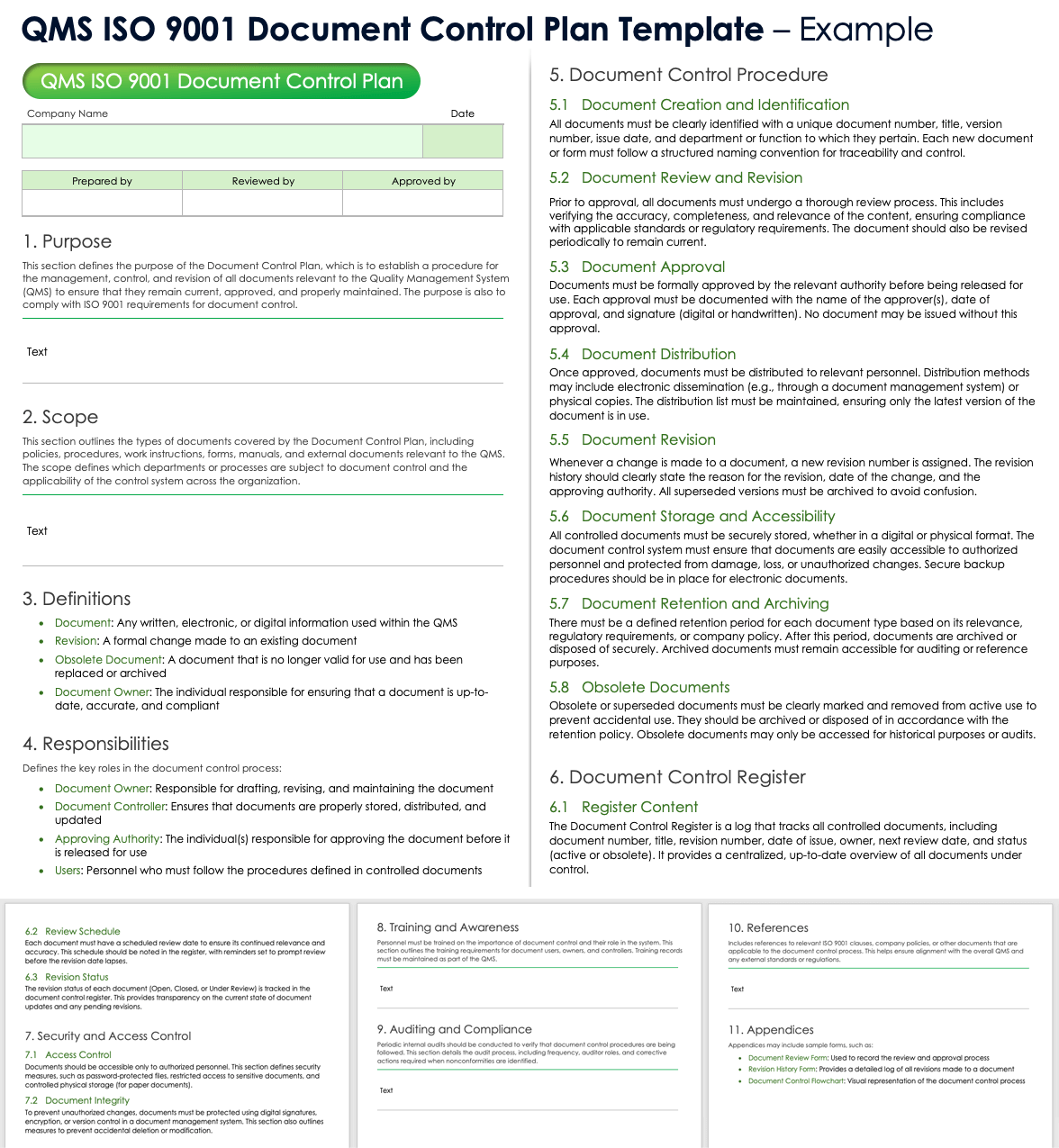
Document Control and Version Management
Marketing teams frequently maintain multiple versions of campaign briefs, brand guidelines, contracts, creative files, reports, policies, and approval records. A document control process reduces the risk that an outdated or unapproved version is accidentally used.
A document register can record the document name, owner, version, effective date, reviewer, approval date, status, and next review date. This is especially useful for marketing policies and repeatable operating procedures.
Version numbering should be predictable. Organizations may use major and minor numbering or another documented convention, but the method should make meaningful changes distinguishable from minor formatting updates.
Obsolete versions should be retained when required for audit or records purposes but clearly separated from active documents. Employees should have an obvious way to identify the current approved version.
The control should also define who can approve changes. A document that affects legal requirements, customer communications, or financial controls should not be changed by an unauthorized editor simply because the file is technically accessible.

Vendor and Agency Controls
External marketing suppliers can introduce financial, operational, security, privacy, and reputational risks. Controls should therefore begin before a vendor is engaged and continue through contract execution, performance monitoring, invoice review, and renewal.
Vendor onboarding may include due diligence, conflict checks, contract review, data-processing considerations, security assessment, pricing approval, and confirmation of authorized services.
Contracts should define deliverables, pricing, ownership of creative assets, confidentiality, data handling, approval responsibilities, and required records where those matters are relevant to the relationship.
Performance monitoring should use objective measures. A vendor review might assess delivery against scope, budget accuracy, campaign quality, reporting timeliness, issue resolution, and compliance with agreed procedures.
Renewal decisions should not be automatic. A simple control can require documented review of performance, unresolved issues, pricing changes, and continuing business need before a significant contract is extended.
Reporting and Management Information Controls
Marketing reports influence budget allocation, campaign decisions, forecasts, and executive communication. Controls should therefore address the accuracy, completeness, consistency, and timeliness of important metrics.
Define the source system for each key metric. If “conversion” is calculated differently in an advertising platform, CRM, and analytics platform, the reporting template should document which definition is used for management reporting.
Formula-based spreadsheets should be protected where appropriate, and critical formulas should be periodically reviewed. A dashboard can appear polished while still producing incorrect results if formulas, ranges, or source data change unexpectedly.
Changes to reporting logic should be documented. When a metric definition changes, management should be able to distinguish a genuine business change from a reporting-method change.
Reports should also have a clear owner. Someone should be accountable for checking that the data is complete, anomalies are investigated, and significant corrections are communicated to decision-makers.

Risk Assessment and Control Prioritization
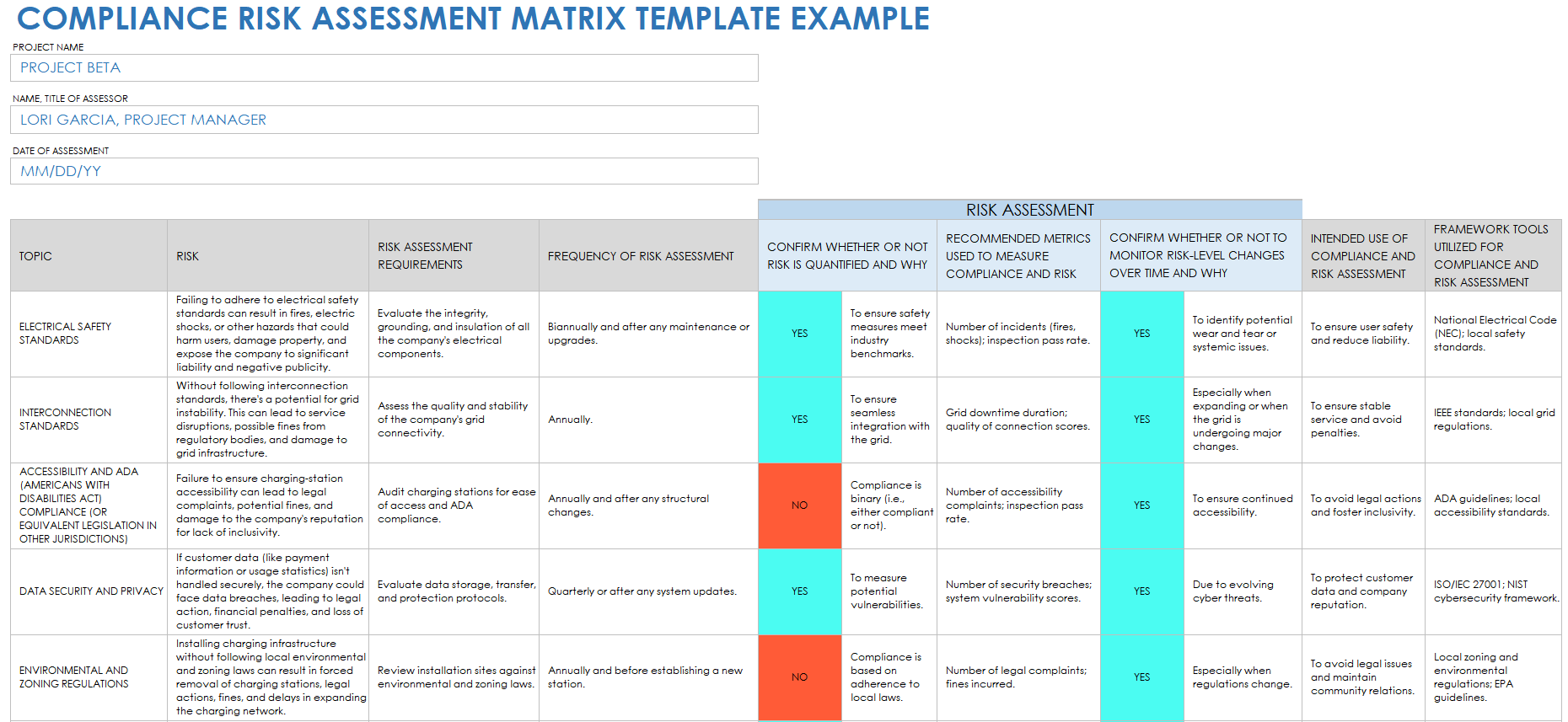
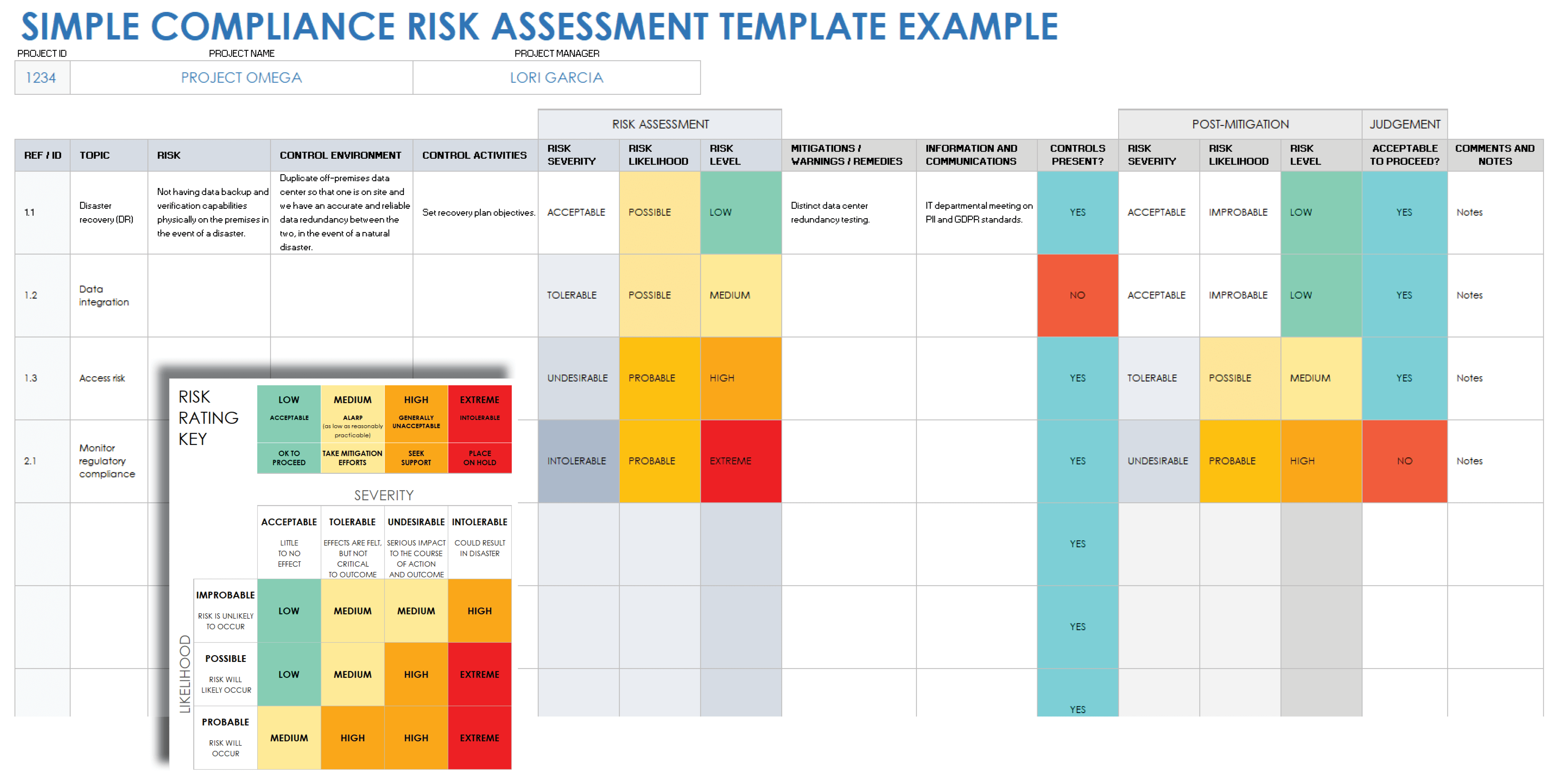
A risk matrix helps marketing teams focus resources on the controls that matter most. Likelihood and impact can be scored using a simple scale, provided that the organization defines what each rating means.
For example, an impact score may consider financial exposure, customer impact, regulatory exposure, operational disruption, and reputational consequences. The criteria should be adapted to the organization rather than copied without context.
Likelihood can reflect frequency, process complexity, historical exceptions, dependence on manual intervention, and exposure to external changes. A control that depends on many manual handoffs may have a higher inherent likelihood of failure.
After evaluating the inherent risk, consider the residual risk after controls operate. A strong control should reduce risk, but the organization may still accept some residual exposure.
Risk ratings should inform testing frequency. High-risk controls may require more frequent monitoring or stronger evidence requirements, while low-risk controls can often be reviewed less intensively.

Testing the Operating Effectiveness of Controls
Testing begins by defining what successful operation looks like. If the control requires approval before launch, the test should establish whether approval existed, whether it came from an authorized reviewer, and whether it occurred before activation.
Sampling should reflect the control frequency and risk. For a recurring monthly reconciliation, a reviewer may select several periods. For an event-driven campaign approval, the sample may focus on representative campaigns across different risk categories.
Exceptions should be categorized. A missing signature, late approval, incorrect reviewer, incomplete evidence, and fundamentally ineffective control are different problems and may require different remediation.
Testing should also consider whether the control is operating consistently across channels. A process may work well for email campaigns but be weak for paid social advertising or agency-managed campaigns.
The final test result should lead to a decision: effective, effective with improvement, ineffective, or another clearly defined status. Whatever terminology is used, it should be explained in the template.

Remediation and Exception Management
A control framework becomes useful when failures result in action. Every significant exception should have an owner, due date, corrective action, and status.
Remediation should address the root cause where practical. If approvals are repeatedly late because the workflow is unclear, simply reminding employees to approve earlier may not solve the problem.
Corrective actions can include process redesign, additional system controls, access changes, revised documentation, training, stronger monitoring, or changes to vendor responsibilities.
Due dates should reflect the severity of the issue. A high-risk weakness affecting active customer data may require immediate containment, while a low-risk documentation improvement may be scheduled for the next review cycle.
Management should be able to see open issues without reading every control record. A dashboard showing overdue actions, high-risk exceptions, and repeated failures can make the control program more actionable.

Practical Marketing Control Examples
Consider a hypothetical paid-media campaign with an approved budget of $50,000. A suitable preventive control could require the marketing manager and finance reviewer to approve the budget before the media plan is activated.
A detective control could compare platform spend with accounting records each month and investigate material differences. The evidence could include the platform export, accounting report, reconciliation worksheet, and reviewer sign-off.
For a customer-email campaign, the control may require validation of the audience, suppression rules, subject line, destination links, creative version, and approval status before the campaign is scheduled.
For influencer content, the control may require confirmation that the relationship with the brand has been disclosed appropriately and that the content does not contain unsupported objective claims.
For an agency invoice, the control may require the invoice to be matched against contractual rates, approved work, purchase orders, and supporting media documentation before payment authorization.
How to Use a Marketing Control Matrix
A control matrix is often the most useful working view of the program because it puts risks, controls, owners, frequency, and evidence expectations into one structured record.
Each row should represent a meaningful control rather than every tiny operational step. Excessively granular rows make the matrix difficult to maintain and can obscure the most important risks.
Group controls by process or risk category. For example, campaign approvals, budget controls, data-access controls, vendor controls, reporting controls, and content-compliance controls can each form logical groups.
Use filters to support different management questions. A marketing director may want to see high-risk controls, while finance may want budget-related controls and compliance may want controls involving claims, disclosures, or data.
The matrix should remain synchronized with policies and procedures. If the policy changes but the control matrix does not, employees may follow conflicting instructions and reviewers may test against obsolete requirements.
Spreadsheet Design Tips
A spreadsheet-based control register should use one row per control and consistent columns. Freeze the header row, enable filtering, use clear date formats, and avoid merged cells inside the main data table.
Keep input fields distinct from calculated fields. Users should know which cells they are expected to edit and which values are generated by formulas or lookup tables.
Use validation lists for standardized fields. This prevents variations such as “Monthly,” “monthly,” and “Mthly” from fragmenting reporting.
Protect formulas and reference tables where the spreadsheet platform allows it. Editing permissions should be assigned according to role rather than convenience.
Include a simple instructions sheet explaining definitions, rating scales, ownership rules, evidence expectations, and update frequency. This can significantly reduce inconsistent use by different teams.
Data Collection and Evidence Management
Data collection for a control assessment should begin with the control population. Determine which campaigns, vendors, invoices, reports, or user accounts are in scope before selecting evidence.
Evidence should be collected from authoritative systems wherever possible. A screenshot can be useful, but a system-generated approval record may be stronger evidence when it contains identity, date, status, and version information.
Maintain a clear relationship between the evidence and the control being tested. File names, IDs, reporting periods, and campaign identifiers can make this relationship easier to establish.
Avoid copying sensitive customer information into the control register merely because it appears in supporting evidence. The register should document that evidence exists and where it can be accessed securely.
For recurring controls, consider maintaining a standard evidence checklist. This makes it easier for owners to prepare evidence before the review date instead of reconstructing activity after the fact.

Analyzing Control Data
Once control data is collected, analyze it for patterns rather than simply counting completed rows. The most useful questions are often about exceptions, overdue tests, recurring failures, and concentration of risk.
For example, if most control failures occur in one campaign channel, the organization should investigate whether the workflow or platform configuration differs from other channels.
Trend analysis can also reveal whether remediation is working. A reduction in overdue actions may indicate improved ownership, while repeated exceptions after training may suggest that the process itself needs redesign.
Management dashboards should avoid presenting too many metrics. A small set of meaningful indicators—such as high-risk controls, overdue testing, open remediation, and recurring exceptions—can be more useful than dozens of decorative measures.
Performance metrics should also be interpreted in context. A high completion rate does not prove that controls are effective if teams are checking boxes without producing adequate evidence.
Reporting to Marketing Leadership
Control reporting should translate operational information into decisions. Leaders usually need to know which risks matter, which controls are failing, what remediation is underway, and whether management needs to make a decision.
A concise report can include the number of controls by risk category, high-risk controls without recent testing, open remediation items, repeated exceptions, and material changes since the previous reporting period.
Reports should distinguish between control design weaknesses and execution weaknesses. The corrective action can be very different depending on whether the control itself is inadequate or employees are not following a workable process.
Management reporting should also identify significant changes. New marketing technology, agency relationships, data sources, or campaign types may change the risk profile even if no control has formally failed.
Where a control issue could affect financial reporting, regulatory compliance, customer data, or significant reputational exposure, escalation should follow the organization’s established governance process.
Common Mistakes to Avoid
The first common mistake is creating a template that is too generic. A control such as “review marketing activity” does not tell an owner what to do, what evidence to retain, or how success is evaluated.
The second mistake is documenting controls without confirming that they exist in practice. Interviews and walkthroughs should be used to understand the real workflow before the final control design is approved.
The third mistake is treating every control as equally important. Risk-based prioritization helps teams focus attention on controls where failure could cause significant consequences.
The fourth mistake is failing to maintain ownership. A control with an outdated owner can silently become ineffective even when the spreadsheet still shows it as active.
The fifth mistake is relying on a policy without operational evidence. A written requirement is not the same as proof that employees followed it.
Best Practices for Maintaining the Template
Review the control register on a defined schedule, but also trigger reviews when major changes occur. A calendar review alone may not be enough for a rapidly changing marketing environment.
Keep the register owned by a function with enough authority to coordinate marketing, finance, compliance, technology, and other stakeholders. A control register maintained in isolation can quickly become incomplete.
Use version control for the template itself. Changes to rating definitions, control requirements, ownership structures, or testing methods should be documented.
Archive prior versions when required. Historical versions can be valuable when investigating why a control existed, how a process changed, or what management knew at a particular time.
Train control owners on the purpose of the register. People are more likely to maintain it properly when they understand that it supports decisions, evidence, and risk management rather than merely creating administrative work.

Practical Solution
To implement an internal controls for marketing Template without creating unnecessary bureaucracy, start with the ten to twenty marketing processes that create the greatest financial, compliance, data, operational, or reputational exposure. Do not begin by documenting every minor task.
For each process, write one clear objective and two or three realistic risks. Then identify the controls that already exist. This prevents the organization from creating duplicate controls and reveals where existing practices are undocumented rather than absent.
Next, assign a named role to each control, define the frequency, specify the evidence, and document how the control will be tested. If the owner cannot explain what evidence the control produces, the control description probably needs improvement.
Build the register so that management can filter high-risk controls, overdue tests, failed controls, and open remediation. A template should make exceptions visible without requiring a separate manual report every month.
Finally, establish a review rhythm. A quarterly management review can examine major risks and exceptions, while control owners can update operational records more frequently. The exact cadence should reflect the organization’s risk profile and operating environment.
The following control-design worksheet illustrates how fields for risk, control type, purpose, ownership, and findings can be structured in a spreadsheet-style format.
Use the worksheet as a design reference rather than copying its sample values. The correct fields for a marketing organization should be determined by its processes, systems, risk appetite, regulatory environment, and governance structure.
A practical implementation can begin with campaign approval, budget control, vendor management, access control, advertising-claim review, reporting reconciliation, and document version control. These areas often provide a useful foundation because they connect marketing activity with measurable risks.
Once the first control set is operating, expand only when evidence shows a genuine gap. This keeps the framework usable and prevents the control register from becoming so large that owners stop maintaining it.
Use management feedback to refine the template. If users repeatedly struggle to provide evidence, simplify the evidence requirement. If a control produces too many false exceptions, clarify the threshold or redesign the process.

Reference Examples
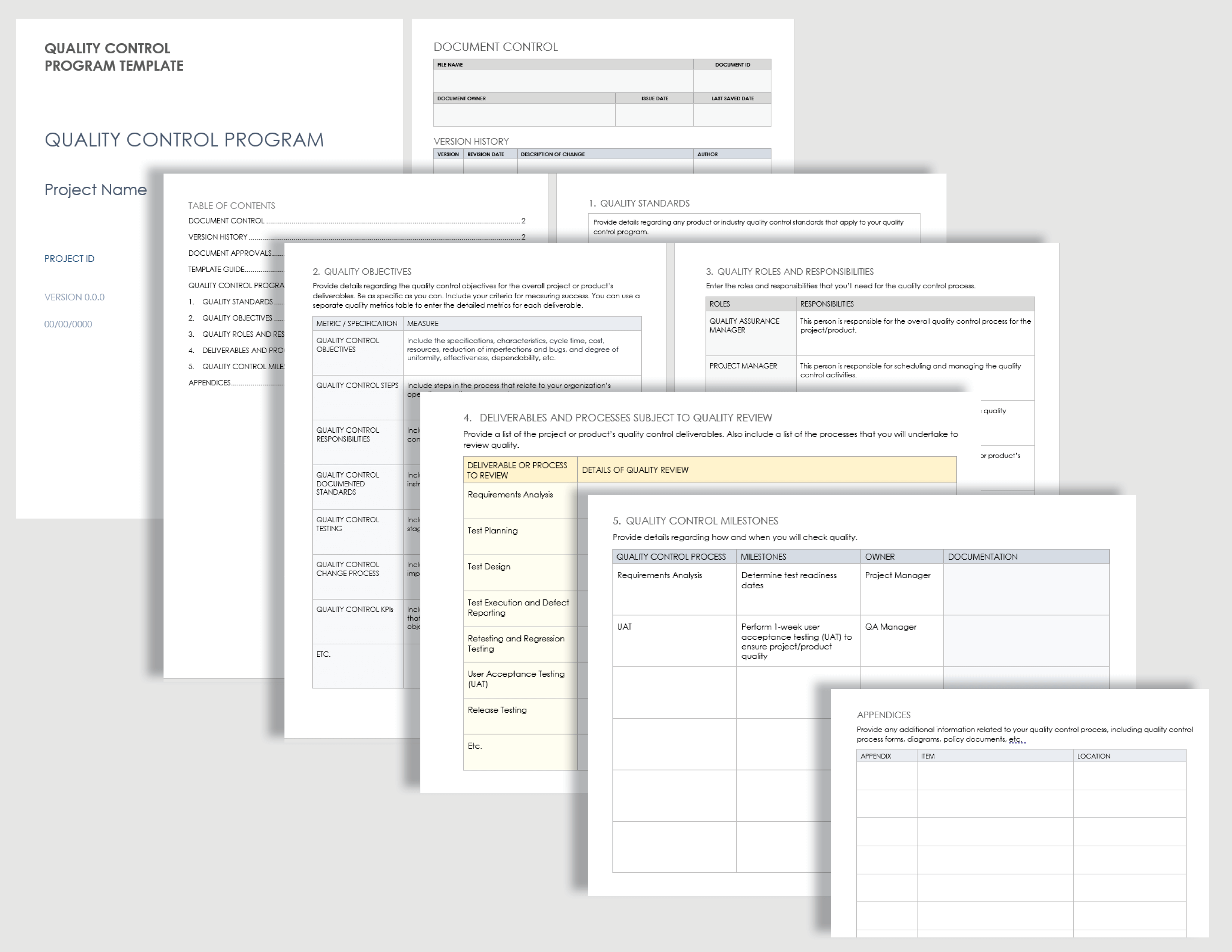
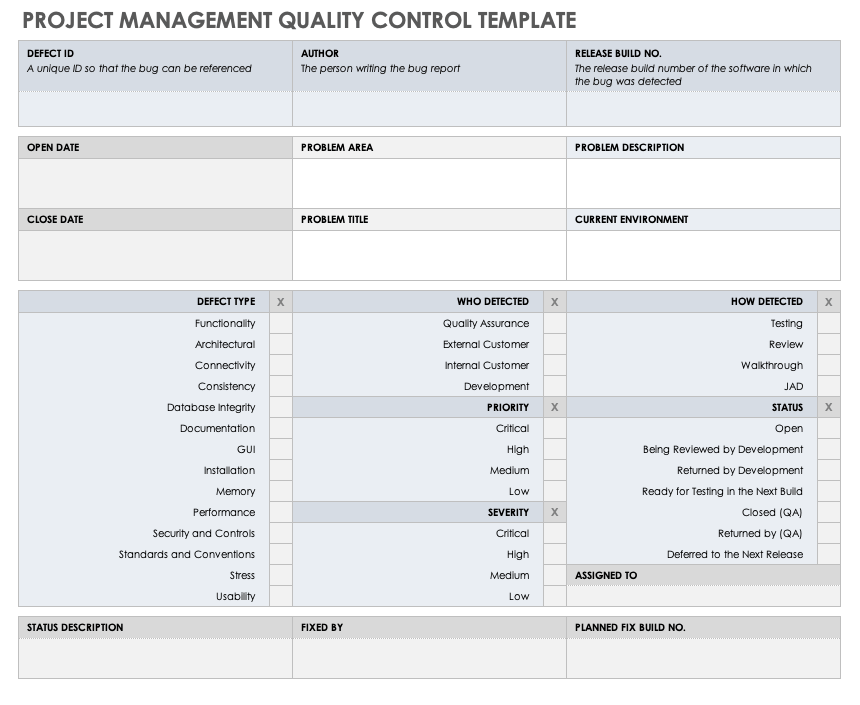
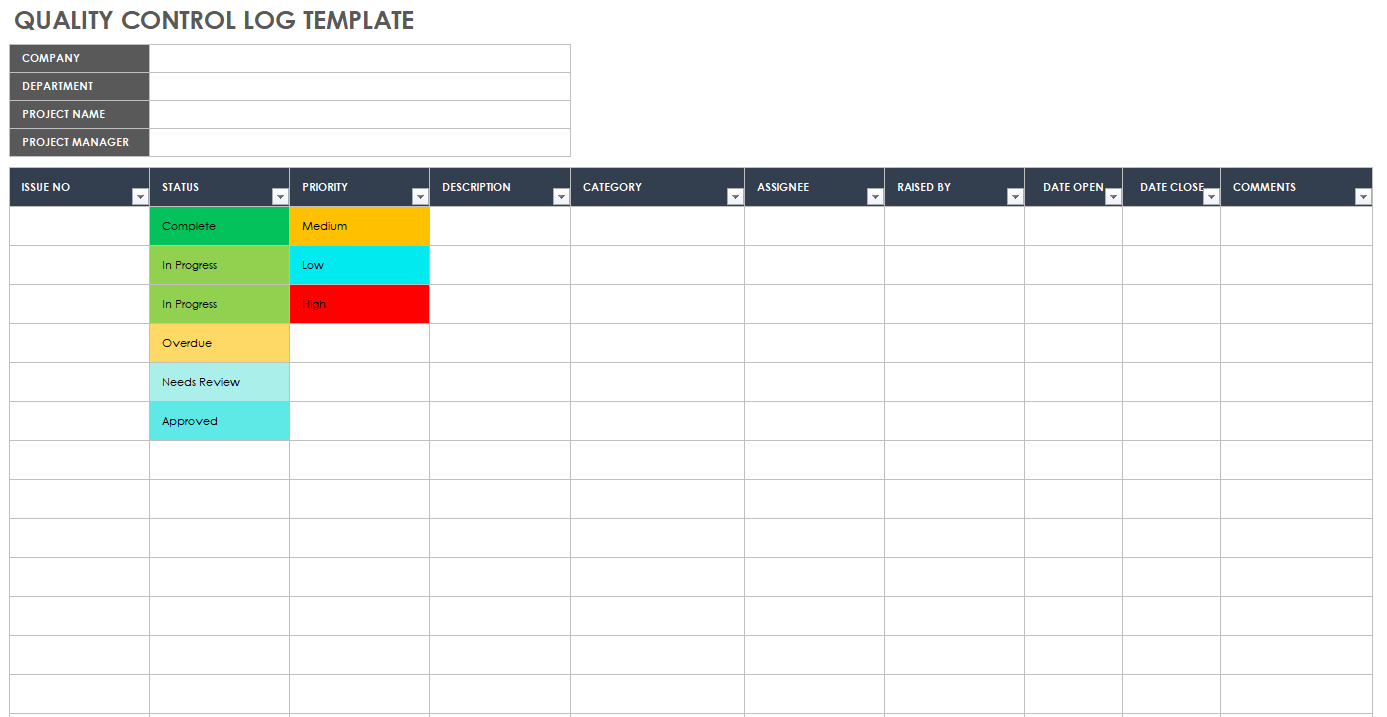
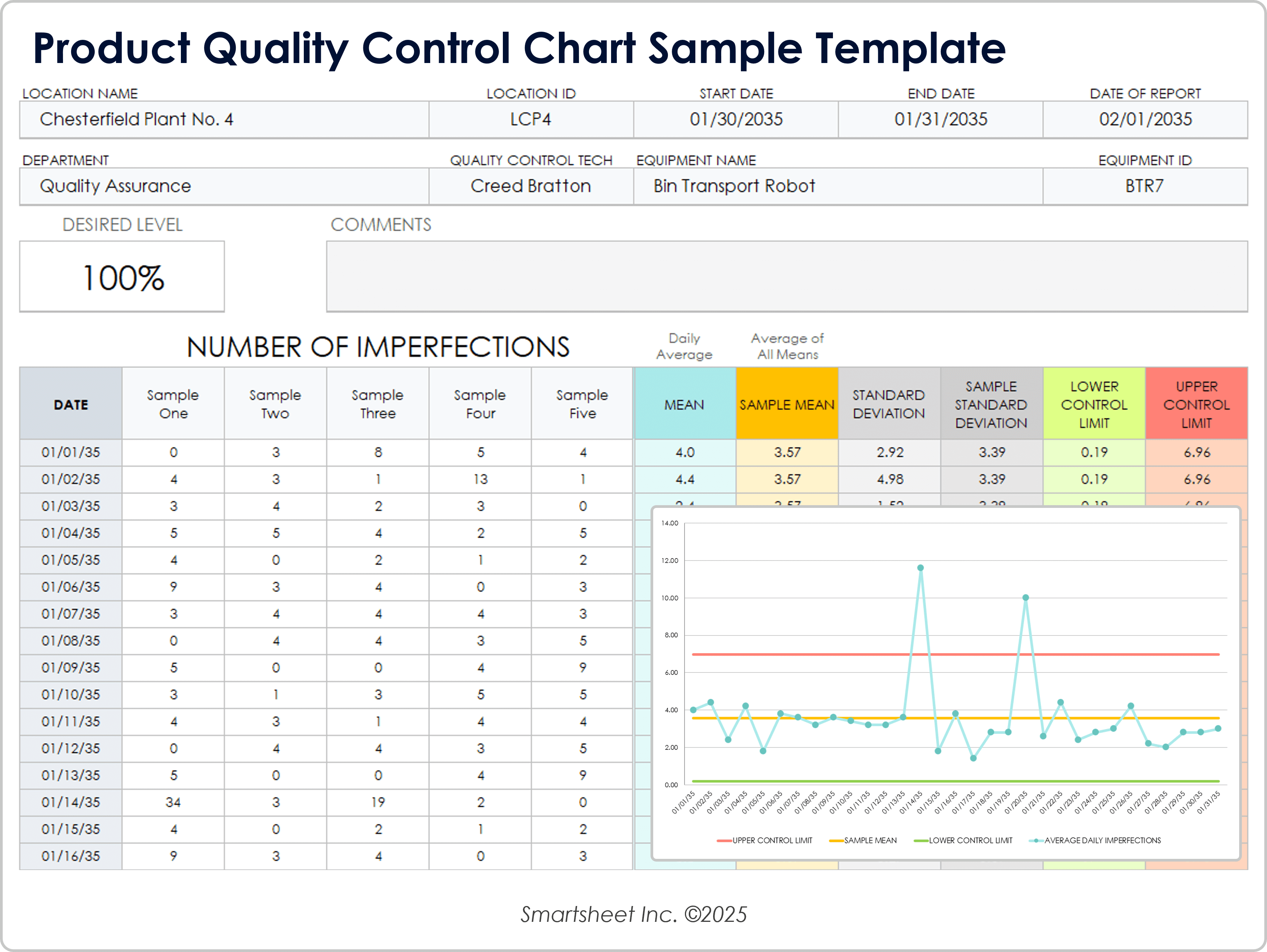
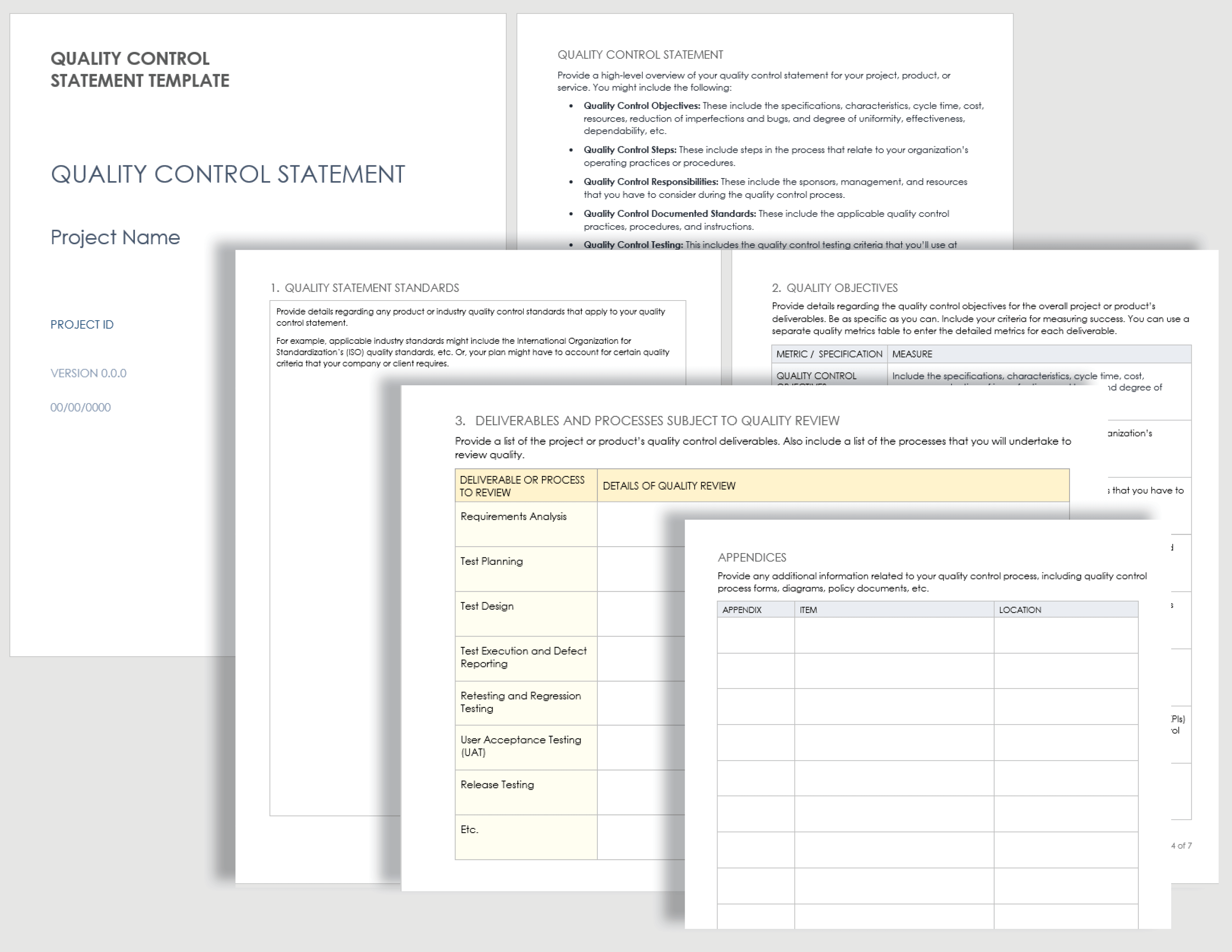
The following reference examples show publicly accessible template and document layouts that can help when designing a marketing control register. They illustrate different formats and structures; they are not presented as universal regulatory requirements or as a substitute for an organization’s own approved documentation.
internal controls for marketing template excel

Source: Smartsheet
internal controls for marketing template free download

Source: HubSpot
internal controls for marketing template free
Source: Smartsheet
internal controls for marketing template pdf
Source: Smartsheet
internal controls for marketing template google sheets

Source: Neotech Navigators
internal controls for marketing template word
Source: Smartsheet
internal controls for marketing template excel free

Source: PK: An Excel Expert
internal controls for marketing template google docs
Source: Smartsheet
internal control plan template
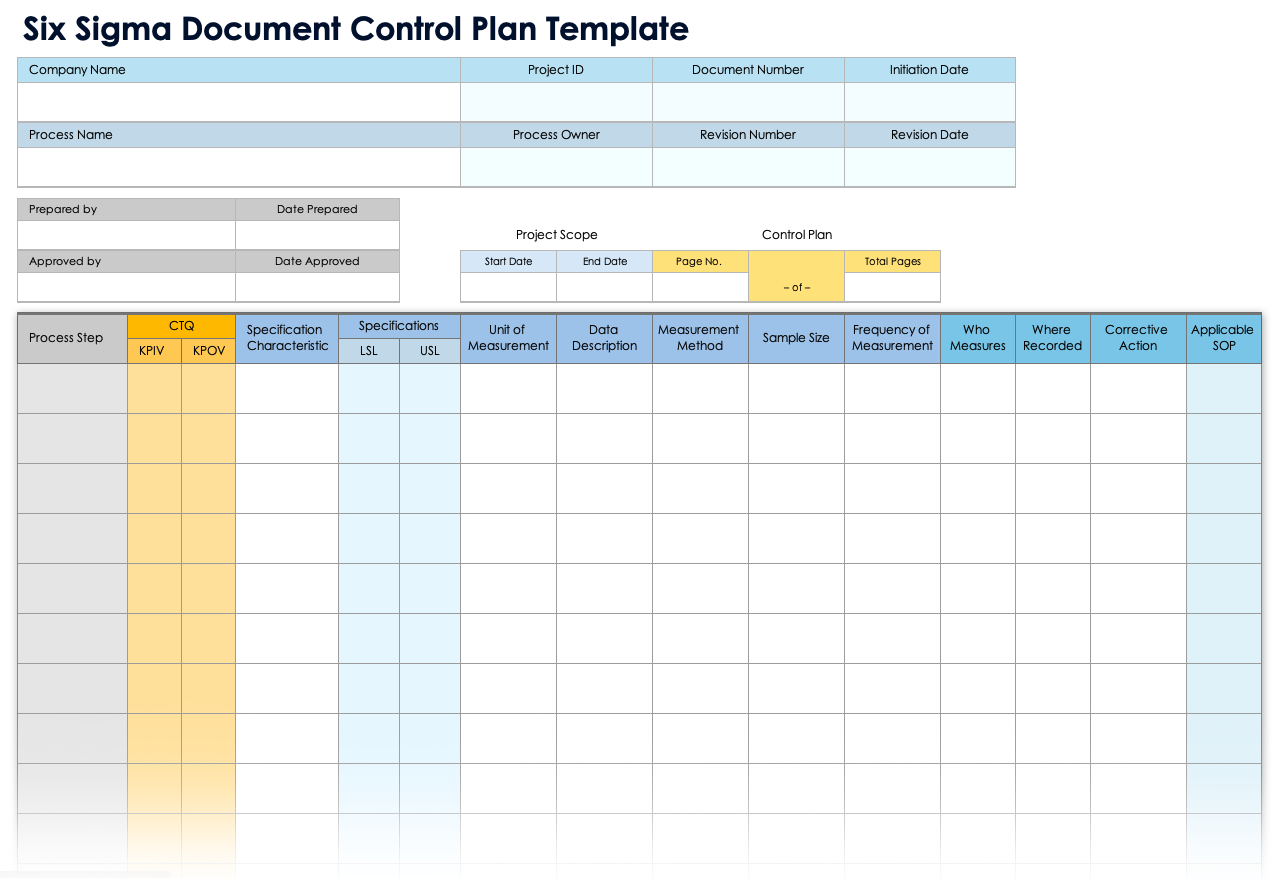
Source: Smartsheet
internal control template excel
Source: Someka
internal controls documentation template

Source: Smartsheet
sample internal controls policy

Source: Smartsheet
Frequently Asked Questions
What is an internal controls for marketing Template?
An internal controls for marketing Template is a structured framework for documenting marketing risks, objectives, control activities, owners, evidence, testing procedures, exceptions, and remediation. It can be implemented as a spreadsheet, document, or coordinated set of files.
What should the template cover?
At minimum, consider campaign approvals, budget and purchasing controls, vendor management, access permissions, advertising claims, customer-data handling, reporting accuracy, document version control, and monitoring. The exact scope should reflect the organization’s risks.
Is Excel a good format for marketing controls?
Excel is often useful for control registers because it supports structured tables, filters, formulas, risk scoring, testing schedules, and dashboards. It should be protected and governed appropriately when it contains sensitive information or serves as an official record.
Can Google Sheets be used for internal controls?
Yes. Google Sheets can be practical for collaborative control registers when sharing permissions, editing rights, version history, and evidence access are appropriately governed. A cloud format does not remove the need for access controls.
Should every marketing campaign require the same approvals?
No. Approval requirements should be risk-based. Campaigns involving significant spending, sensitive data, regulated claims, unusual audiences, or higher reputational exposure may require stronger review than routine low-risk activity.
How often should marketing controls be tested?
There is no universal frequency. Testing should reflect the control’s risk, frequency, history of exceptions, degree of automation, and importance to management objectives. High-risk controls generally warrant more frequent or more rigorous monitoring.
What is the difference between a policy and a control?
A policy states an organizational expectation or rule. A control is the specific activity that helps enforce or demonstrate that expectation. For example, a policy may require campaign approval, while the control requires documented approval before campaign activation.
How should failed controls be handled?
Document the exception, assess its significance, identify the root cause, assign an owner, establish a due date, and track remediation. Repeated failures should trigger consideration of whether the control itself needs redesign.
Conclusion
An effective internal controls for marketing Template should make marketing operations safer, clearer, and easier to manage without creating unnecessary friction. The strongest approach connects objectives to risks, risks to practical controls, controls to accountable owners, and controls to evidence that can be reviewed.
The most useful templates are living management tools. They evolve when campaigns, systems, agencies, regulations, data practices, or organizational responsibilities change. They also distinguish between preventive and detective controls, manual and automated activities, design effectiveness and operating effectiveness, and isolated exceptions and systemic weaknesses.
For most marketing teams, a sensible starting point is a risk-based control register covering campaign approvals, budgets, vendors, access, advertising claims, reporting, data handling, and document management. From there, testing results and management feedback can determine which areas require deeper documentation or stronger controls.
Use the format that best fits the work: spreadsheets for structured registers and analysis, documents for policies and procedures, and finalized files for controlled distribution or records. Whatever format is selected, ownership, evidence, version control, and periodic review are more important than the software used.
A well-maintained internal controls for marketing Template ultimately gives marketing leaders something more valuable than a checklist: a practical view of where risk exists, how it is being managed, whether controls are working, and what needs attention next.

When the template is built around real marketing workflows and maintained as part of normal management practice, internal control becomes an enabler of disciplined growth rather than an administrative burden. It helps teams move quickly with clearer authority, stronger evidence, better accountability, and greater confidence in the decisions their marketing activity supports.
