The search intent behind an app development services business Template is broad. Some readers need a proposal they can customize for a prospective client. Others want a scope-of-work structure, cost-estimation worksheet, project plan, contract outline, or a document that can move between Word, Excel, Google Docs, Google Sheets, and PDF. The strongest approach is not to treat these formats as interchangeable copies. Each format has a different job in the commercial and delivery workflow.
This guide explains how to build and use a professional template from the first discovery conversation through requirements, solution design, pricing, development, testing, launch, and support. It also explains what should be standardized, what should remain customizable, how to avoid scope creep, how to present estimates responsibly, and how to adapt the same core information for different business sizes.
Current template examples from established document and project-management platforms commonly organize app proposals around project goals, scope, deliverables, schedules, investment, assumptions, and approval. Some also include technical requirements, testing, support, intellectual property, and acceptance criteria. Those recurring elements are useful because they reflect the practical questions clients and development teams need answered before work begins.
The goal of this article is therefore not to provide a decorative document. It is to show how to create a reusable commercial system. A good template should help a buyer decide, help a developer estimate, help a project manager coordinate, and help both parties recognize when a requested change falls outside the agreed scope.
A useful template begins with the business problem rather than the technology stack. Clients generally care about outcomes before they care about whether a project uses a particular framework, database, or programming language. The opening should therefore state what the application is expected to accomplish, who will use it, and why the proposed investment makes sense.
The next layer is scope. A proposal should identify the major features, platforms, integrations, administrative functions, design work, testing responsibilities, deployment activities, and post-launch services that are included. Equally important, it should identify exclusions. Explicit exclusions reduce the chance that an informal assumption becomes an unpaid requirement later.
A commercial template also needs a pricing structure that can be understood without a technical meeting. A client should be able to see whether the estimate is fixed price, milestone based, time and materials, or a hybrid. The estimate should distinguish development effort from third-party costs, infrastructure, subscriptions, store fees, optional services, and ongoing maintenance.
Finally, the document should define the path from approval to delivery. A proposal that ends with a price but does not explain what happens next creates unnecessary friction. The final sections should identify approval, deposit or initial payment, discovery activities, access requirements, kickoff, milestone reviews, acceptance, launch, and support.
That structure is what makes an app development services business Template reusable. Instead of rewriting the entire proposal for every lead, the development business changes the client-specific variables while keeping its proven commercial architecture intact.

What an app development services business Template actually does
A template is a repeatable framework for capturing information that appears in many similar engagements. In app development, the framework usually connects a client’s business objectives to a proposed product, delivery plan, commercial estimate, and agreement process. It is not necessarily a contract, and it should not be treated as legal advice, but it can become the commercial foundation for a later statement of work or development agreement.
The best templates separate information that rarely changes from information that changes with every project. Your company description, general service categories, standard methodology, quality philosophy, and support principles can usually be standardized. The client’s objectives, application features, platforms, integrations, milestones, dates, assumptions, pricing, and acceptance criteria should remain project-specific.
This distinction makes the document easier to maintain. If a company changes its standard support policy, the master template can be updated once. If one client needs iOS and Android while another needs a browser-based internal tool, the project-specific sections can be changed without rewriting the commercial framework.
A template also creates consistency across sales staff. Without a standard structure, one salesperson may emphasize design while another emphasizes technical architecture, and a third may forget to state what is excluded. Consistency does not mean every proposal looks identical. It means every important business question has a deliberate place in the process.
For clients, consistency can make a development firm appear more mature because the proposal demonstrates that the team has a defined way of thinking about discovery, delivery, testing, and change management.
The document should be long enough to remove ambiguity but short enough that a decision-maker can understand the commercial offer without reading a technical textbook. A complex application may require detailed appendices, while a small project may need only a concise proposal followed by a separate scope document.
A strong template therefore functions as a bridge between sales and delivery. The sales team uses it to explain the offer, while the delivery team uses the approved information as a starting point for planning. That continuity is valuable because misunderstandings often arise when promises made during sales are not transferred accurately into project execution.
One practical test is to ask whether a project manager who was not present during the sales call could understand the intended outcome from the document. If the answer is no, the template needs stronger requirements, assumptions, or deliverable definitions.
The template should also make uncertainty visible. If a payment gateway has not been selected, say so. If final API documentation is unavailable, say so. If store approval timing is outside the development team’s control, say so. Good commercial documentation does not pretend that unknowns are known.
That approach produces a proposal that is persuasive because it is credible. Clients are more likely to trust a development provider that explains dependencies and decisions instead of presenting every estimate as guaranteed.

Why businesses need a standardized development proposal
App projects contain many moving parts, and each one can create a misunderstanding if it is not documented. A standardized proposal gives the client a single reference point for what the project is intended to accomplish and gives the development company a consistent method for communicating its commitments.
The first advantage is speed. Once the company has a reliable structure, the team can spend less time formatting documents and more time analyzing the client’s actual business problem. Standardization is especially valuable for agencies handling several opportunities at the same time.
The second advantage is completeness. A well-built template acts as a checklist. It prompts the writer to consider scope, platforms, integrations, design, testing, deployment, pricing, support, ownership, and assumptions instead of relying on memory.
The third advantage is comparability. When a company receives several project opportunities, consistent proposals make it easier internally to compare effort, margin, risk, and expected delivery complexity.
The fourth advantage is accountability. When a milestone has a named deliverable and acceptance condition, both sides have a clearer understanding of what completion means. That reduces vague statements such as “finish the app” or “make the application ready.”
A standardized document can also improve change management. If a client asks for an additional feature, the project team can compare the request with the approved scope. If the feature is outside that scope, the team can explain why a change order or revised estimate is appropriate.
There is also a financial benefit. Many development businesses lose margin not because their hourly rate is too low but because their proposals fail to account for meetings, revisions, testing, deployment support, third-party integrations, project management, and post-launch obligations.
A template can force those costs into the estimation process. That does not mean every proposal should charge separately for every conversation. It means the provider should understand the total delivery effort before presenting a commercial commitment.
For smaller firms, the template can also act as a credibility tool. A concise, well-organized proposal can demonstrate operational maturity even when the development team is small.
However, standardization should never become bureaucracy. If a client needs a two-week prototype, sending a forty-page document full of irrelevant sections may reduce confidence rather than increase it. The master template should therefore support short, medium, and complex engagement versions.

Core components of a professional template
The cover page should establish the identity of the proposal. It normally contains the project name, client name, development company, submission date, and document title. If confidentiality is important, the proposal can also contain a simple confidentiality statement.
The executive summary should answer four questions quickly: what problem exists, what solution is being proposed, what major outcome is expected, and what decision is being requested. It should be readable by a business executive who may not read the technical sections.
The project background explains why the application is being considered. This may include an existing process, a customer problem, an operational inefficiency, a new business opportunity, or the limitations of an existing application.
The objectives section converts the background into measurable or observable goals. Examples include launching a customer portal, reducing manual order entry, creating a subscription workflow, centralizing internal information, or enabling customers to complete a process digitally.
The target-user section identifies the audiences that matter. A business application may have administrators, employees, managers, customers, vendors, or other roles. Different roles often require different permissions and workflows, so documenting them early can expose hidden complexity.
The scope section is the operational center of the proposal. It should describe what will be designed, developed, tested, configured, integrated, documented, and deployed.
The technology section should be appropriately detailed. It may identify mobile platforms, web components, backend services, APIs, databases, authentication, analytics, notifications, hosting, or integrations. Avoid committing to a technical choice that has not yet been evaluated.
The delivery section describes the phases and milestones. A typical structure might include discovery, UX and UI design, technical setup, core development, integration, quality assurance, user acceptance, deployment, and post-launch support.
The commercial section presents investment and payment terms. It should distinguish one-time project costs from recurring services and pass-through costs where appropriate.
The final sections cover assumptions, exclusions, responsibilities, acceptance, change requests, ownership, and next steps. Legal terms should be reviewed for the relevant jurisdiction rather than copied blindly from another project.

How to build the template step by step
Step 1: Start with the client problem
Begin by writing the problem in plain business language. “The company needs a mobile application” is not a sufficient problem statement. A stronger description might explain that customers currently place orders by phone, staff manually enter those orders, and management wants a digital ordering experience with centralized status information.
The problem statement should not overstate facts that have not been validated. If the client has not measured the current process, describe it as the client’s reported situation rather than inventing a performance statistic.
Next, identify the intended business outcome. An app can support revenue, efficiency, customer service, internal coordination, data collection, compliance, or a new product. The proposal becomes stronger when the application is connected to a business result.
After that, identify the primary users. A consumer application and an internal operations application can have radically different requirements even if both are called mobile apps.
Finally, identify the proposed product at a high level. The solution statement should explain what the development team intends to build without pretending that every technical decision has already been finalized.
Once the problem, outcome, users, and proposed solution are clear, the remaining sections become easier to construct.
Step 2: Convert the idea into requirements
Requirements should be written in a form that can eventually be tested. Instead of saying “the app needs secure login,” specify the expected authentication behavior, supported account types, password or identity-provider approach, session behavior, and relevant recovery flow where those decisions are known.
Functional requirements describe what the application does. Non-functional requirements describe qualities or constraints such as performance expectations, accessibility, security, compatibility, availability, or maintainability.
Each requirement should have enough detail to support estimation. A feature such as “payments” may involve checkout, payment-provider integration, failed transactions, refunds, receipts, webhooks, subscription logic, tax considerations, and administrative reconciliation.
Breaking a broad feature into smaller components reduces estimation risk. It also makes the proposal easier to review with the client.
Requirements should be prioritized. A simple classification such as must-have, should-have, and later-phase can help separate the minimum viable release from optional enhancements.
The template should provide a consistent place for these requirements so they can later become user stories, development tasks, test cases, and acceptance criteria.

Step 3: Define scope and exclusions
Scope should describe the boundaries of the engagement. It is not enough to list features because a feature may include many hidden activities. For example, “push notifications” may require permission handling, token management, backend triggers, message templates, deep links, testing, and platform-specific configuration.
For each major capability, consider the user action, system behavior, data involved, integrations, administrative controls, and testing requirement.
Exclusions are equally important. If the client wants a marketing website, brand redesign, copywriting, data migration, advanced analytics, or ongoing content management, the proposal should state whether those items are included, optional, or excluded.
Scope should also identify platform coverage. iOS and Android are not simply two labels on the same deliverable. Device differences, operating-system behavior, store submission, permissions, and testing requirements can affect effort.
Third-party integrations should be listed individually where they materially affect the project. An integration with an established API is different from an integration requiring a custom interface or incomplete documentation.
The most useful scope language is specific enough to prevent ambiguity while flexible enough to accommodate technical implementation decisions discovered during development.

Step 4: Build a realistic delivery schedule
A timeline should be based on work rather than optimism. Start by identifying major phases, then estimate the activities inside each phase.
Discovery may include workshops, requirements analysis, technical investigation, information architecture, and project planning. Design may include flows, wireframes, visual design, prototypes, design review, and design-system preparation.
Development can be divided into backend, frontend, mobile, web, integrations, data, administration, and infrastructure activities. Some work can happen in parallel, but dependencies should be recognized.
Testing should not be treated as a single day at the end. Functional testing, integration testing, device testing, regression testing, security review, and user acceptance may occur at different stages.
Client feedback is another timeline dependency. If the client must approve designs or supply content, the proposal should state that delays in required inputs can affect the schedule.
Milestones should have tangible outputs. “Development phase complete” is weaker than “core ordering workflow implemented and available for acceptance testing.”
A schedule is an estimate, not a guarantee, unless the commercial agreement explicitly creates a fixed delivery commitment with appropriate conditions.
Use milestone gates so that unresolved decisions do not silently move into the next phase.
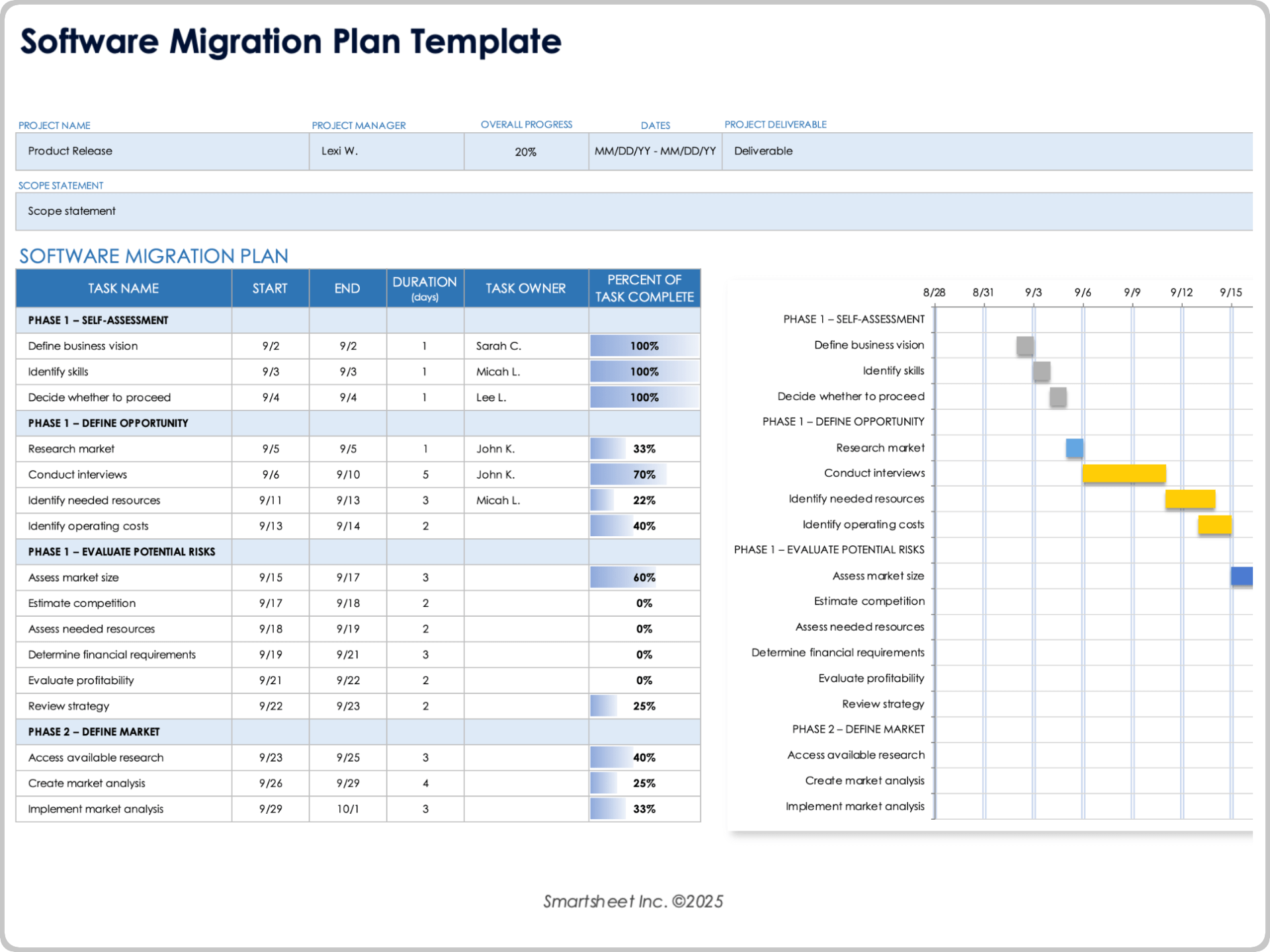
When the project is large, a Gantt-style view can help clients understand dependencies without forcing them to read a task-by-task engineering plan.
For small projects, a compact milestone table may be more appropriate than a detailed project schedule.

Step 5: Estimate cost without creating false precision
Cost estimation is one of the most sensitive parts of an app development proposal. A number can look authoritative even when the underlying assumptions are uncertain, so the template should make the basis of the estimate visible.
Start with the work categories: discovery, product management, UX, UI, development, backend services, integrations, quality assurance, deployment, documentation, and support.
Then identify external costs that may not be included in professional service fees. These can include hosting, software subscriptions, payment-provider charges, developer-program fees, specialized services, domains, messaging, maps, or other third-party services.
For fixed-price work, define the assumptions that make the fixed price possible. A fixed estimate becomes risky when the client can change the requirements without changing the commercial agreement.
For time-and-materials work, define rates, roles, billing frequency, approval procedures, and any limits or reporting mechanisms.
Milestone billing can be useful when the project has clearly defined stages. Each payment can correspond to an approved deliverable or development phase.
Do not use invented market averages as if they were universal app-development prices. Application complexity varies dramatically by platform, feature set, integrations, security needs, design requirements, team location, and support expectations.
A better template explains the variables that drive cost. That gives the client a way to understand why the estimate changes when requirements change.
Contingency should also be considered internally, especially when technical unknowns exist. Whether contingency is shown as a separate line item depends on the commercial model and client expectations.
The proposal should make optional features easy to identify. This allows the client to reduce the initial release without forcing the team to rewrite the entire estimate.

Choosing between Word, Excel, Google Docs, Google Sheets, and PDF
Different file formats solve different problems. A Word-style document is useful for narrative proposals, statements of work, contracts, and detailed descriptions. It is especially useful when the client expects a conventional business document.
Excel is better suited to calculations, resource estimates, cost models, schedules, task tracking, and structured data. A spreadsheet can help a development company calculate totals without manually editing every figure in a narrative proposal.
Google Docs is useful when multiple people need to review and edit the same document. It can simplify collaboration between a client and a development team during the proposal stage.
Google Sheets is useful for shared estimates, requirements matrices, schedules, feature lists, and project tracking. Its value increases when the information changes frequently.
PDF is usually best for the approved presentation copy. It preserves the appearance of the document and reduces accidental editing after approval. A PDF should generally be created from an editable master rather than maintained as the only working source.
The most effective workflow may use several formats together. For example, the team can prepare a proposal in a document editor, maintain the estimate in a spreadsheet, collaborate on requirements in a shared sheet, and issue the approved commercial version as PDF.
Format selection should follow the purpose of the information, not a preference for one software package.
A mature app development services business Template can therefore be a family of coordinated templates rather than a single file.
The master document should define the commercial narrative, while supporting worksheets contain calculations and detailed project data.
That separation makes updates safer and reduces the chance that a manual calculation error appears in the final proposal.

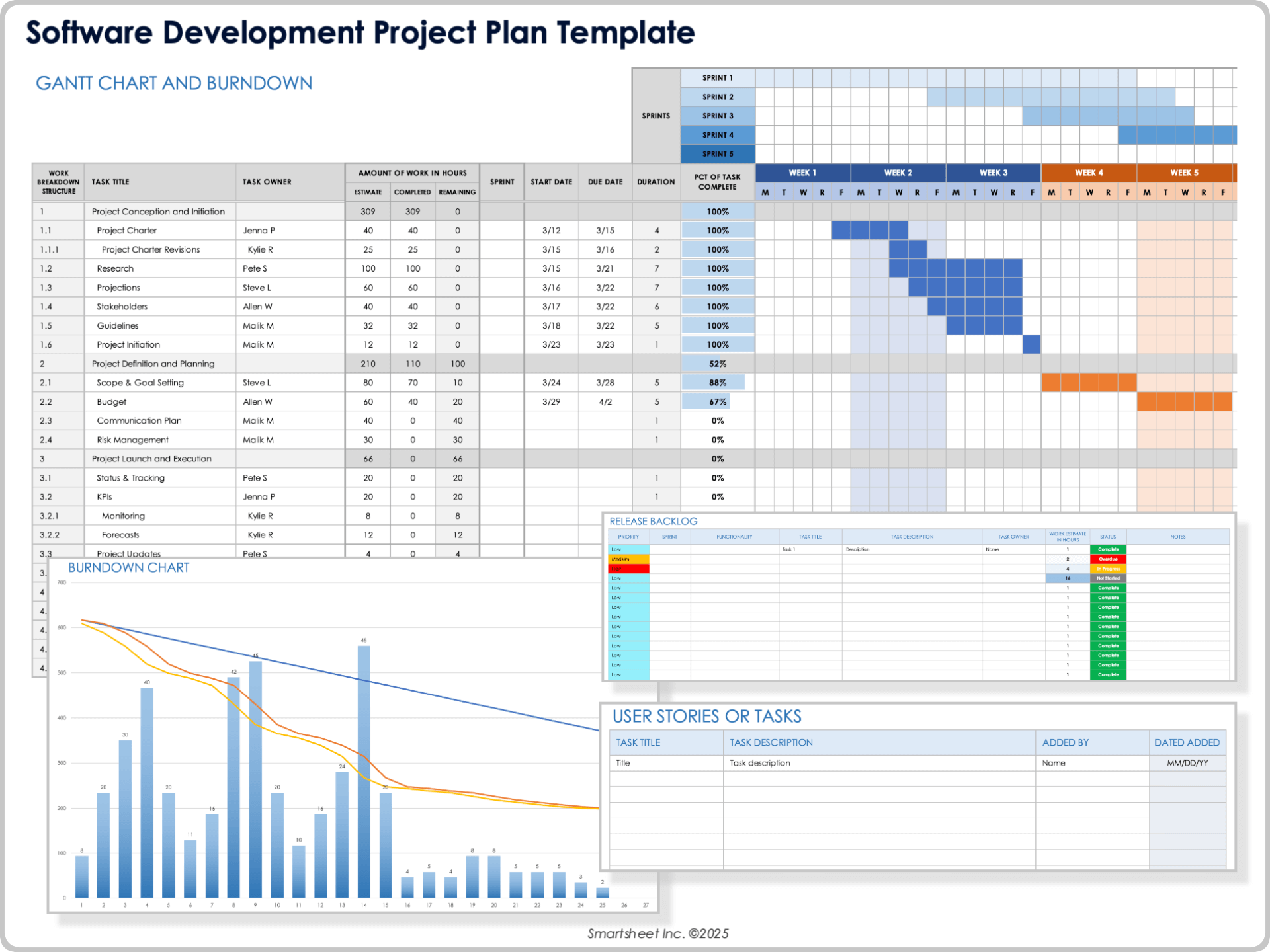
Using spreadsheets for scope, resources, and project planning
A spreadsheet can become the quantitative companion to the main proposal. Instead of writing cost figures manually, the team can maintain line items for each work package, estimated effort, rate, subtotal, and optional service.
A useful worksheet begins with a project identifier and version date. This matters when estimates are revised multiple times during negotiation.
Feature rows can include a description, priority, platform, dependency, estimated effort, owner, status, and notes. These fields make the spreadsheet useful beyond the sales process.
A resource worksheet can group work by role. For example, a project might require product management, UX design, UI design, mobile development, backend development, QA, and deployment support. The exact roles depend on the project.
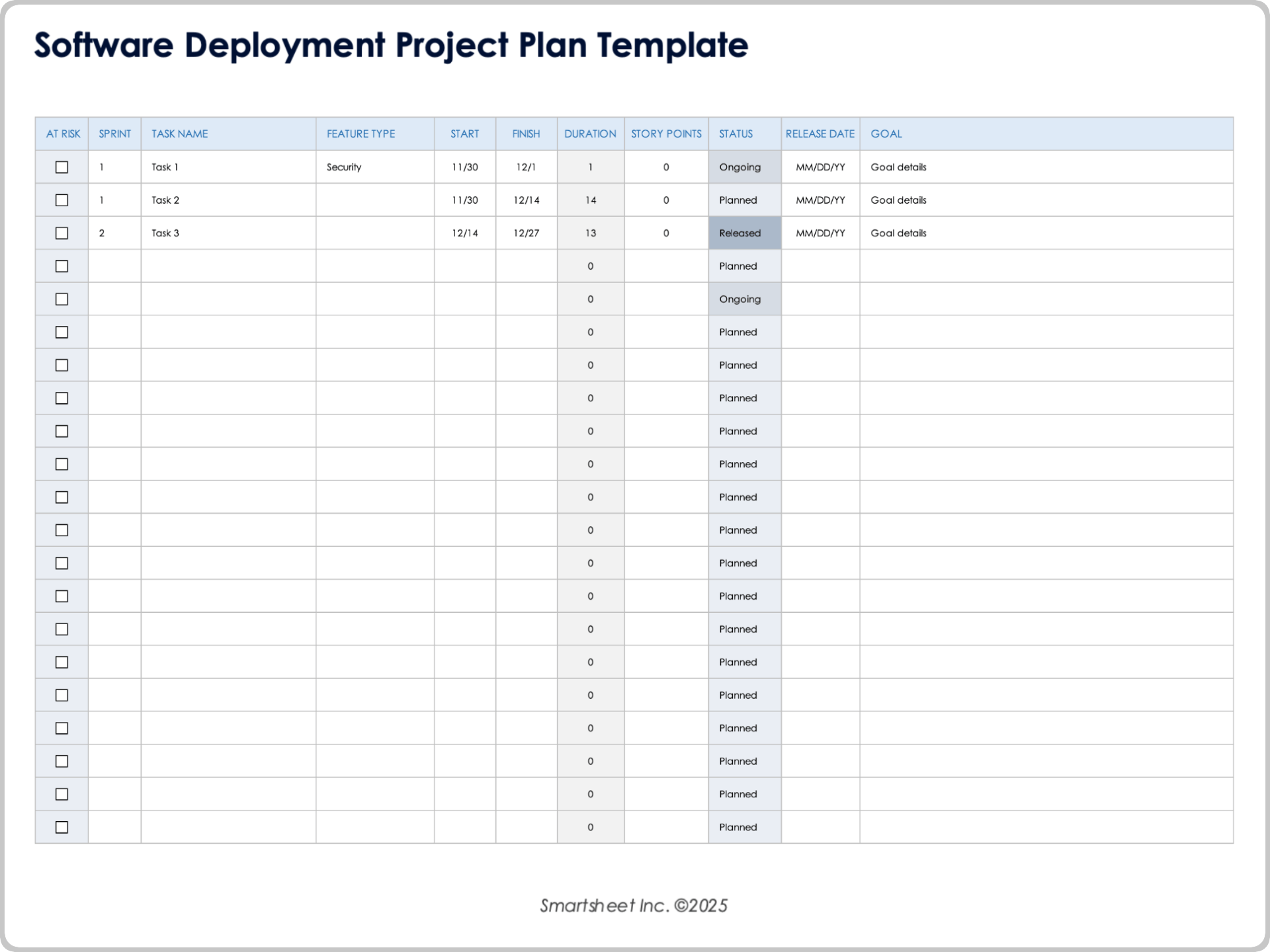
A schedule worksheet can track planned start dates, planned end dates, duration, dependencies, and milestone status.
Another useful sheet can track assumptions. Each assumption receives a short description, its impact if incorrect, and the action needed to validate it.
Risk tracking is also valuable. Risks can be categorized by probability, impact, mitigation, owner, and current status. This turns risk management into an operational activity instead of a paragraph that is forgotten after signing.
For larger projects, a burndown or progress chart can help communicate whether the amount of remaining work is changing as expected.
The spreadsheet should remain understandable to business stakeholders. Excessive engineering jargon can make a useful model difficult to review.
Use formulas for totals and calculations wherever possible, but verify the formulas before the document is shared externally.
Turning requirements into a usable app development application template
An app development application template should capture more than a list of screens. It should help the team understand how users move through the application and what the system must do at each stage.
Start with user roles. A customer, administrator, manager, operator, and guest may have different permissions. A role matrix can reveal requirements that were not obvious in the initial conversation.
Next, document primary journeys. Examples include registration, onboarding, search, booking, ordering, checkout, messaging, approval, reporting, and account management.
For each journey, describe the normal path and important exceptions. What happens when an internet connection fails? What happens when a payment fails? What happens when a user does not have permission? What happens when an external API is unavailable?
Data requirements should be considered alongside user actions. A feature that stores customer information may create requirements for validation, access control, retention, export, deletion, and auditability.
Acceptance criteria translate requirements into observable outcomes. A criterion might state that an authorized customer can complete a booking, receive confirmation, and see the booking in their account.
Good acceptance criteria are testable. Avoid vague statements such as “the application should be user-friendly” unless the project defines a measurable usability requirement.
Wireframes and prototypes can supplement written requirements, but they should not silently expand the scope. A prototype is often exploratory, while an approved scope defines the commercial commitment.
The application template should have a version number. Requirements evolve, and version control makes it easier to determine which scope was approved.
This structure also makes later QA planning easier because each requirement can be connected to one or more test cases.
Design, UX, and technical planning
Design should be represented as a defined deliverable rather than a vague promise to make the app attractive. The template can distinguish research, information architecture, user flows, wireframes, visual design, prototype development, and design-system work.
For an established brand, the proposal can identify existing guidelines that the design team will follow. For a new product, the project may require additional branding decisions.
Technical planning should begin with constraints. The team should identify supported platforms, required integrations, data sources, authentication, infrastructure, and known compatibility requirements.
The template should distinguish technical assumptions from confirmed decisions. For example, “payment provider to be selected during discovery” is more accurate than naming a provider before the client has made a decision.
Architecture can be documented at a level appropriate to the proposal. A simple diagram can show the application, backend, database, external APIs, authentication service, and administrative interface.
Security should be considered early. The proposal can identify authentication, authorization, encryption expectations, secret management, logging, dependency management, and testing responsibilities without turning the sales document into a security manual.
Performance expectations should also be discussed when they are important to the business. If the application is expected to support high transaction volume or large media assets, those requirements may affect architecture and cost.
Accessibility should be considered as part of product quality rather than a last-minute checklist. The exact requirements depend on the target audience, jurisdictions, platforms, and product type.
Technical documentation should be included in the deliverables when the client needs to operate or maintain the application after launch.
The template should make clear which technical decisions remain subject to discovery so the development company does not accidentally guarantee an architecture before investigating the constraints.

Testing, acceptance, and quality assurance
Quality assurance should be visible in the template because testing consumes real project time. A proposal that lists development but says little about testing can create unrealistic expectations about the delivery date.
Functional testing checks whether features behave according to requirements. Integration testing checks interactions between components and external services. Regression testing checks whether new changes have broken previously working behavior.
Device testing matters for mobile applications because users may have different operating-system versions, screen sizes, permissions, network conditions, and hardware characteristics.
Acceptance testing is the client’s opportunity to confirm that the agreed deliverables satisfy the defined requirements. The proposal should explain who provides acceptance, what review period applies, and how defects are distinguished from new feature requests.
A defect is generally a failure to meet an agreed requirement. A new feature is a request for behavior that was not included in the agreed scope. The distinction is critical for project economics.
Testing evidence can include test cases, issue records, screenshots, release notes, or acceptance sign-offs. The exact level of documentation should match the project’s risk and complexity.
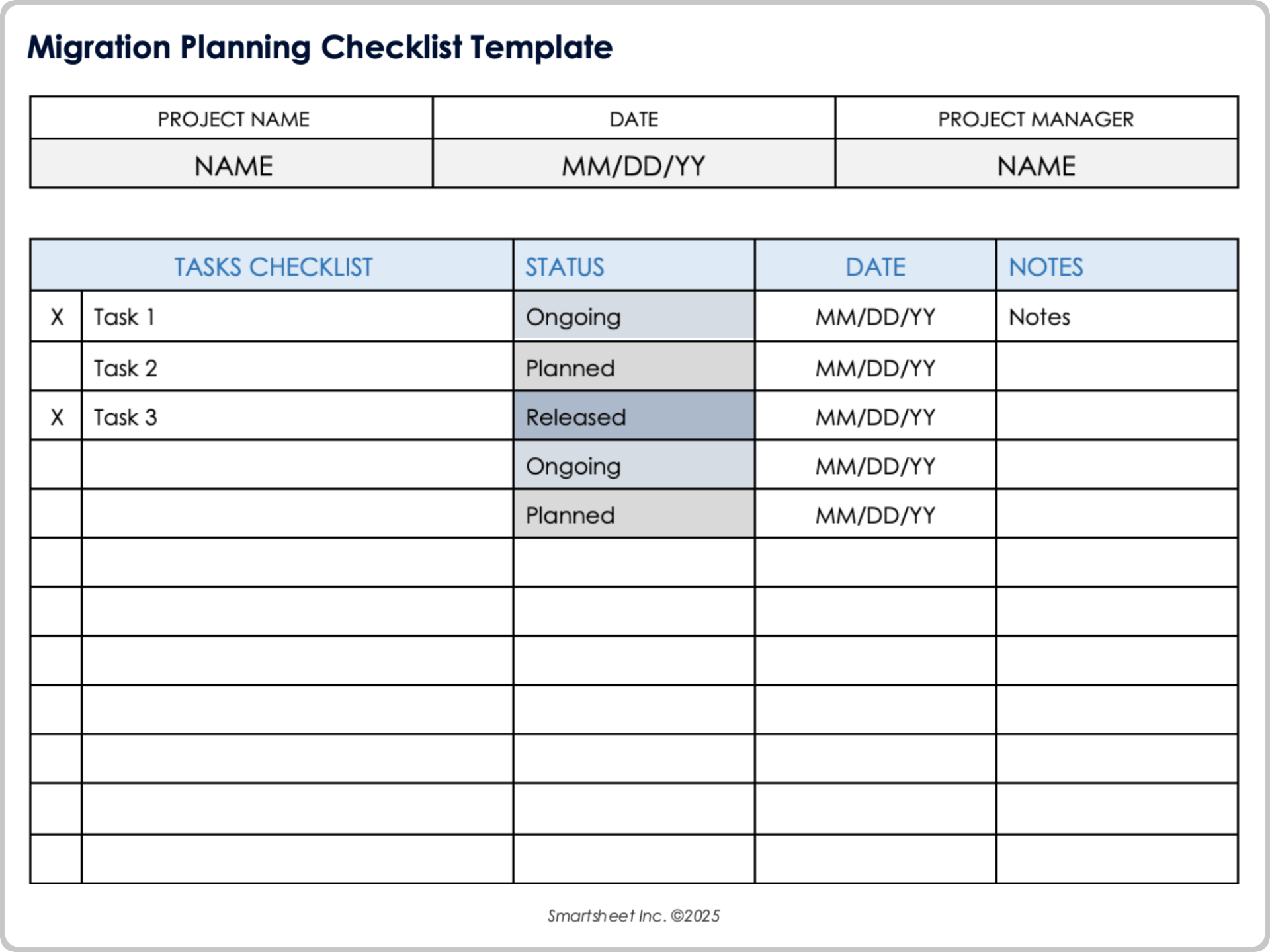
Production deployment should also have a checklist. Environment configuration, database changes, backups, monitoring, store submission, credentials, and rollback procedures may need attention.
Post-launch support should be defined separately from development. Bug-fix warranties, maintenance subscriptions, response times, and new feature work are different commercial concepts.
A strong quality section increases confidence because it demonstrates that delivery means more than writing code.
It also gives the client a clear understanding of how the final product will be evaluated before launch.

Risk management and change control
App projects contain uncertainty, especially when they involve new products, external systems, unfamiliar business processes, or complex data. A template should provide a practical way to identify and manage those risks.
Common risks include unclear requirements, delayed client approvals, unavailable APIs, third-party service changes, underestimated data migration, device compatibility issues, store-review delays, and expanding feature requests.
Each important risk can be recorded with a description, likelihood, impact, mitigation, owner, and status. The purpose is not to predict every problem but to make meaningful uncertainty visible.
Change control should define how new requirements are evaluated. A change request can describe the requested feature, reason, impact on scope, estimated effort, effect on schedule, additional cost, and approval status.
Not every small adjustment needs a formal change order. The contract or SOW can define a threshold for minor revisions and a separate process for material changes.
Scope control should never be used to prevent legitimate clarification. Sometimes a client request simply clarifies something already included. The team should compare the request with the agreed requirement before treating it as new work.
A good template therefore supports fair conversations. It gives both sides a shared reference rather than forcing the project manager to make a subjective argument.
Version control is useful here as well. Approved scope documents should be archived so the team can determine what changed and when.
Risk management is particularly important for fixed-price projects because the development company carries more financial exposure when estimates are wrong.
The template should make dependencies visible early enough that they can be resolved before they become schedule-critical.

Business apps development services and the small-business use case
Business apps development services are often different from consumer app projects because the application may need to fit an existing operational process. The development team must understand not only what users want to do but also how the organization currently works.
A small business might need an app for appointment scheduling, customer records, inventory, field service, ordering, internal approvals, loyalty, reporting, or a specialized workflow.
For smaller organizations, the template should avoid unnecessary enterprise complexity. The goal is to document the decisions that matter without forcing a small project into an oversized governance process.
An app development services small business proposal should emphasize practical outcomes, manageable scope, transparent pricing, and a realistic support model. Small businesses often need to understand what they must continue paying after the initial project.
The template can include a simple operating-cost section covering hosting, software subscriptions, messaging, payment services, maintenance, and other recurring expenses where applicable.
It should also explain who will manage accounts. For example, the client may need ownership of application-store accounts, domains, cloud resources, analytics accounts, or third-party subscriptions.
Training can be important when employees will use an administrative interface. The proposal should specify whether training is included and what form it takes.
Data migration deserves special attention. Moving information from spreadsheets or legacy systems can require cleanup, mapping, validation, and reconciliation that are not obvious when the client initially says, “We already have the data.”
A smaller business may also benefit from a phased approach. Instead of funding every desired feature, the team can define a focused first release and a documented future roadmap.
This makes the template more useful because it supports business decisions rather than simply selling technical work.

How to use an app development services business Template for sales
The template should be introduced after enough discovery has taken place to understand the client’s problem. Sending a generic proposal before understanding the project usually produces generic language and weak estimates.
After discovery, the writer should populate the executive summary using the client’s terminology. This demonstrates that the provider understood the conversation.
The scope should then be reviewed internally before pricing is finalized. A developer or technical lead should challenge assumptions that may have been missed during sales.
The commercial model should be selected deliberately. A small, well-defined project may fit a fixed price. A product with evolving requirements may be better suited to iterative delivery with time-and-materials billing or milestone-based pricing.
Before sending the proposal, check every date, subtotal, platform reference, feature, and client responsibility. A single inconsistent figure can reduce confidence in the entire document.
The presentation meeting should focus on decisions, not reading the document aloud. Walk the client through the problem, proposed outcome, scope, timeline, investment, assumptions, and next steps.
Questions should be captured and incorporated into the document when they materially change the offer. Avoid relying on verbal clarification for important commercial commitments.
Once the client approves the proposal, convert the agreed scope into the appropriate contract or statement of work. The legal structure depends on the parties, jurisdiction, and engagement.
The approved proposal should be stored with a version identifier. The project team should receive the same approved version so implementation begins from the commercial truth.
This workflow makes the template part of the business process instead of merely a document that looks professional.

Practical examples of template structures
Consider a hypothetical restaurant ordering application. The proposal could begin with the business problem: customers currently order through phone calls and staff manually enter orders. The proposed application would provide menu browsing, cart management, checkout, order status, notifications, and an administrative interface.
The first release could exclude loyalty rewards, advanced personalization, delivery-route optimization, and multi-location analytics. Those exclusions do not mean the business can never add them. They simply prevent them from silently becoming part of the first commercial commitment.
A hypothetical field-service application might focus on work orders, technician assignment, job status, photos, signatures, customer notifications, and reporting. Offline behavior could become a major technical requirement if technicians regularly work in areas with unreliable connectivity.
A hypothetical internal employee application might include authentication, announcements, document access, leave requests, approval workflows, and administrative reporting. The proposal would need to pay particular attention to permissions and data access.
A hypothetical booking application could require customer registration, availability search, reservation creation, cancellation rules, payments, reminders, and calendar integration. The pricing model should recognize that external booking or payment integrations can add uncertainty.
Each example uses the same template architecture even though the actual scope is different. That is the main benefit of standardization.
The template should make it easy to swap the problem statement, user groups, feature table, technology assumptions, schedule, estimate, and acceptance criteria without rebuilding the entire document.
Examples should be clearly identified as hypothetical when numbers or outcomes are not based on actual client data. This prevents illustrative content from being mistaken for a case study.
A case study, by contrast, should use genuine project information that the company is authorized to publish.
Keeping those two categories separate protects credibility and reduces the risk of presenting invented evidence as a real result.

Research and data collection before completing the template
Research should begin before the final proposal is written. The development company needs enough information to distinguish a genuine business requirement from a feature idea that may not solve the underlying problem.
Client interviews can reveal existing workflows, bottlenecks, manual tasks, approval rules, and exceptions. Existing documents and spreadsheets can reveal how information is currently structured.
Competitor research can help identify common user expectations, but competitors should not automatically determine the product scope. Copying every visible feature often creates a larger and more expensive product than the business needs.
Technical research may be needed when an integration, hardware capability, data source, or platform requirement is unfamiliar. A short technical spike can sometimes prevent a large estimation error.
Data collection should also include the information needed to estimate. Number of user types, expected transaction volume, number of integrations, supported platforms, number of screens, administrative complexity, and data-migration requirements can all influence effort.
The template can contain a discovery checklist that prompts the team to collect this information consistently.
Market assumptions should be labeled as assumptions unless they have been verified through reliable evidence.
Internal notes can be more detailed than the client-facing proposal. The sales team may need an internal risk assessment that is not appropriate to present in the same language to the client.
After research, the team should revisit the original problem statement. New evidence may reveal that the proposed application needs to solve a different or narrower problem.
A good proposal is therefore the output of research, not a substitute for research.

Reporting and progress communication
Once the project begins, the same principles used in the proposal can support reporting. A project report should connect completed work to the agreed scope.
A useful status report can show overall status, completed milestones, current work, upcoming work, risks, decisions required, and changes since the previous report.
For business stakeholders, the report should emphasize outcomes rather than raw engineering activity. “Checkout workflow passed acceptance testing” is generally more informative than “developers merged twelve pull requests.”
Progress should be measured against an agreed baseline. If the scope changes, the report should make that visible instead of quietly changing the definition of completion.
Decision logs can be useful for projects with many stakeholders. A decision entry can record the decision, date, owner, reason, and affected scope.
Risk reports should highlight only risks that require attention. A long list of trivial issues can obscure the risks that actually threaten delivery.
Financial reporting can compare planned and actual effort when the engagement model makes that relevant. For fixed-price work, internal effort tracking remains valuable even when the client sees only milestone amounts.
Release reporting can include build version, supported platforms, known limitations, resolved defects, and deployment status.
After launch, support reports can separate defects, maintenance, requests, and future enhancements.
This continuity means the template becomes the beginning of a documentation lifecycle rather than an isolated sales artifact.
Common mistakes to avoid
The first common mistake is writing a proposal that talks almost entirely about the development company. A client needs enough information about the provider to establish confidence, but the document should primarily explain how the proposed solution addresses the client’s needs.
The second mistake is using vague scope. Phrases such as “complete application development” or “full-featured mobile app” do not define a deliverable.
The third mistake is hiding assumptions. If a required API, data source, design asset, or third-party account is not available, the proposal should acknowledge the dependency.
The fourth mistake is providing a price without explaining what drives it. A transparent estimate helps clients understand how a change in requirements affects the investment.
The fifth mistake is ignoring post-launch work. Applications require releases, bug fixes, dependency updates, monitoring, store submissions, and sometimes ongoing feature development.
The sixth mistake is treating every requested revision as included. The proposal should establish a reasonable review and change process.
The seventh mistake is making unsupported promises about security, performance, accessibility, or delivery dates. Claims should match what the team can actually verify and commit to.
The eighth mistake is failing to define acceptance. Without acceptance criteria, a project can reach a technically functional state while the client still believes something is missing.
The ninth mistake is maintaining the final proposal only as an editable file. Once approved, preserve a final version that can be referenced later.
The tenth mistake is making the template so rigid that it no longer reflects the actual project. Standardization should remove repetitive work, not remove judgment.
Best practices for maintaining the master template
Keep one controlled master version. If several employees maintain separate copies, improvements can become fragmented and outdated language can remain in circulation.
Review the template periodically. Service offerings, technology practices, payment terms, support packages, and internal processes can change.
Use clear placeholders. A field such as “[CLIENT NAME]” is less ambiguous than a generic blank space because the person editing the template knows what information belongs there.
Separate reusable language from project-specific language. This reduces the chance of accidentally leaving one client’s name, price, feature, or assumption in another client’s proposal.
Use version identifiers for major revisions. A version history can explain when the template structure changed and why.
Build review checkpoints into the workflow. A technical reviewer should check scope and feasibility, while a commercial reviewer should check pricing and terms.
Keep calculations in controlled spreadsheets. If a narrative proposal contains manually typed totals, errors become more likely.
Maintain a library of approved examples. Examples can help new team members understand the expected level of detail without copying client-specific information.
Track which sections generate the most negotiation. If clients repeatedly question the same clause or scope boundary, improve the template instead of answering the same question from scratch every time.
The master template should evolve based on real delivery experience. The best improvements often come from discovering where proposals failed to predict a project problem.
Practical Solution
The practical solution is to treat the app development services business Template as a connected workflow rather than a single proposal file. Build a small template system with one client-facing proposal, one cost-estimation worksheet, one requirements matrix, one project plan, and one change-request structure.
Start by creating the master proposal with sections for client information, problem, objectives, target users, proposed solution, scope, deliverables, technology assumptions, timeline, investment, payment terms, responsibilities, exclusions, acceptance, support, and next steps.
Create a companion spreadsheet that contains every billable work package. Include estimated effort, role, rate, subtotal, external cost, optional cost, and notes. Make totals formula-driven and review the spreadsheet before transferring numbers into the proposal.
Create a requirements matrix with columns for requirement ID, feature, user role, description, priority, platform, dependency, acceptance criteria, and status. This becomes the bridge between sales scope and engineering work.
Create a project-plan sheet with phases, tasks, owners, dates, dependencies, milestones, and status. The project plan should be generated from the approved scope rather than from a generic list of development activities.
Create a change-request form that captures the requested change, reason, scope impact, effort impact, cost impact, schedule impact, and approval. Use it whenever a request materially changes the agreed work.
For small engagements, keep the system lightweight. A short proposal, simple estimate, and milestone table may be enough. For larger engagements, add detailed requirements, risk registers, acceptance matrices, and technical appendices.
Before sending any proposal, run a five-minute commercial audit: confirm the client name, project name, platform, major features, exclusions, total price, payment schedule, dates, support terms, and next step.
Before signing, run a delivery audit: confirm that every promised deliverable can be converted into a project task and that every major assumption has an owner or validation step.
After signing, freeze the approved scope and create the delivery baseline. This is the point at which the template stops being a sales document and becomes a project reference.
For a practical commercial workflow, the most important rule is simple: every promise in the proposal should have a corresponding deliverable, assumption, acceptance condition, or explicit exclusion. That one discipline can prevent a surprising amount of confusion later.
For a small provider, the system can be implemented with ordinary document and spreadsheet tools. The value comes from the structure, not from using an expensive platform. A reusable document can handle narrative content while a spreadsheet handles calculations and structured project data.
The template should also be easy for clients to review. Avoid excessive technical detail in the executive sections, explain specialist terms when they matter, and keep commercial decisions visible rather than burying them in appendices.
When the project is uncertain, use discovery to reduce uncertainty before making a large fixed commitment. When the project is well defined, use precise scope and acceptance criteria to support a clearer estimate.
This approach produces a practical template that supports both sales and delivery instead of creating a polished document that becomes irrelevant immediately after signature.
It also makes the development business easier to scale because new proposals can be built from a proven framework and improved through lessons learned from previous projects.
Templates should never replace professional judgment. A complex application may require legal review, security expertise, accessibility expertise, financial analysis, or technical discovery beyond what a standard proposal can provide.
The strongest template is therefore modular. It provides a reliable foundation while allowing the provider to add the sections required by a particular client, industry, product, or risk profile.
Once the master template is established, the company can create tailored versions for fixed-price projects, discovery engagements, retainers, maintenance services, MVPs, internal business applications, and larger enterprise programs.
That modular approach is the most sustainable way to turn a document into an actual business process.
Reference Examples
The following examples correspond to the requested formats and discovery channels. They are references for visual structure rather than claims that every resource is free, legally sufficient, or appropriate for every project.
app development services business template free

Source: Template.net
app development services business template free download

Source: Template.net
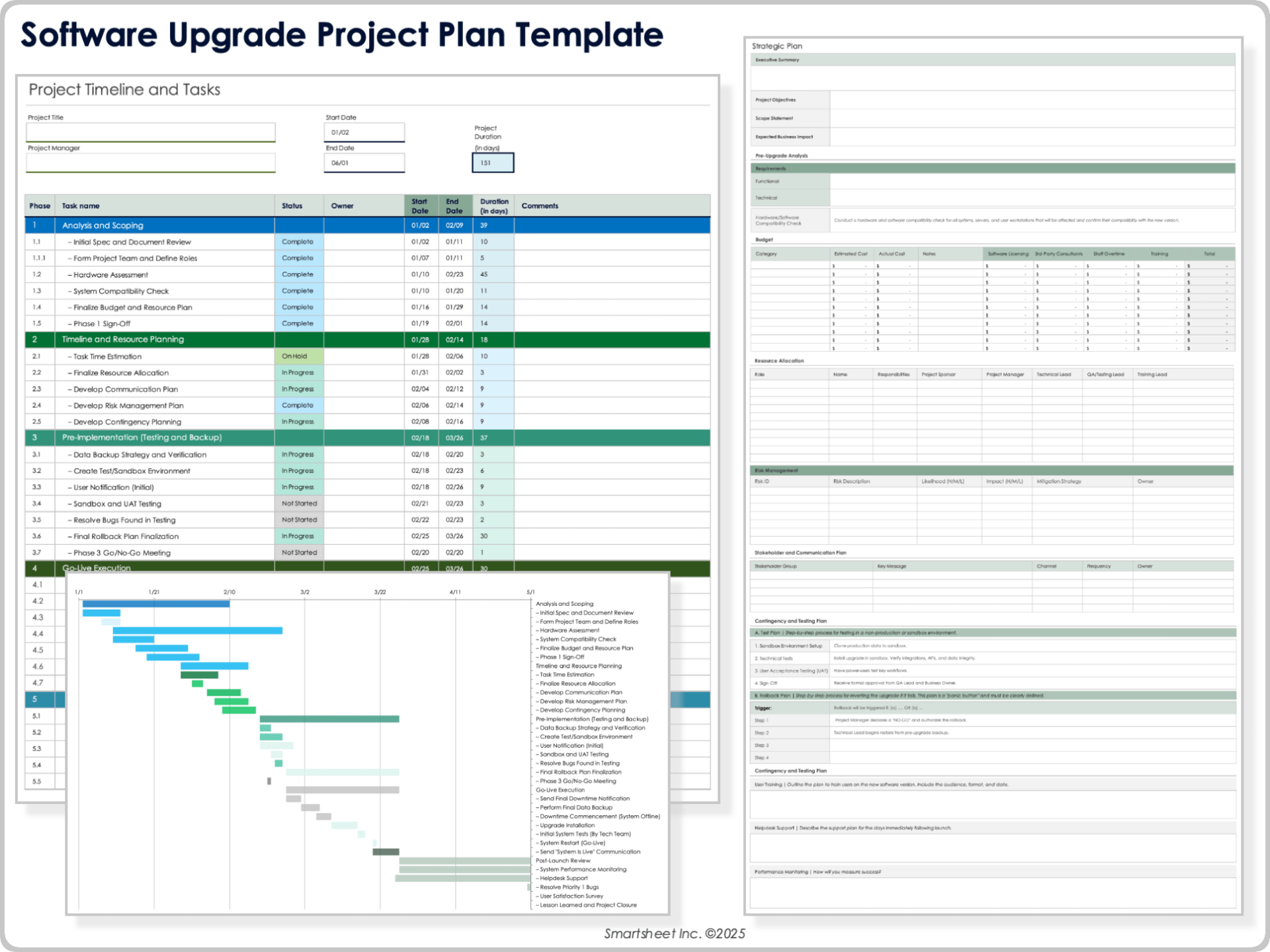
app development services business template excel
Source: Smartsheet
app development services business template word
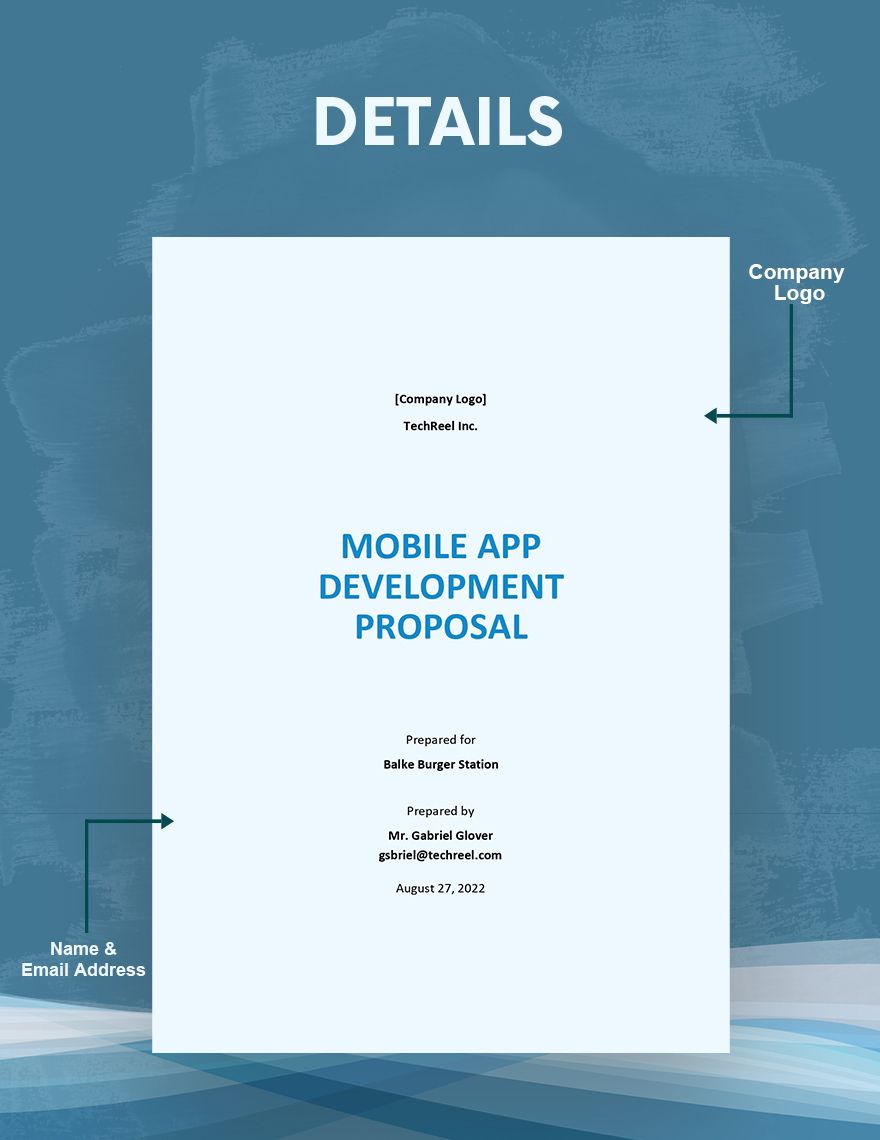
Source: Template.net
app development services business template google sheets
Source: Smartsheet
app development services business template reddit

Source: Scribd
app development services business template pdf

Source: pdfFiller
app development services business template google docs

Source: Letterin
Frequently Asked Questions
What is an app development services business Template?
It is a reusable structure for presenting and managing app development engagements. It can cover the client problem, objectives, scope, deliverables, schedule, investment, assumptions, acceptance, support, and next steps. In practice, it is often supported by separate spreadsheets and project documents.
What should an app development services business Template include?
At minimum, include the business problem, proposed solution, project objectives, target users, scope, deliverables, timeline, pricing, assumptions, exclusions, responsibilities, acceptance process, support terms, and next steps. Add technical, security, compliance, or legal sections when the project requires them.
Should the template be a proposal or a contract?
It can be a proposal without being a contract. The commercial document may later be incorporated into or accompanied by a statement of work, development agreement, master services agreement, or other legally appropriate document. The legal effect depends on the actual wording and circumstances.
Is Excel useful for app development proposals?
Yes. Excel is particularly useful for cost estimation, resource planning, task lists, schedules, and calculations. It is usually better as a quantitative companion to a narrative proposal than as the only client-facing document.
When should a PDF be used?
PDF is useful when the proposal has been reviewed and needs to be presented as a stable version. It is generally better to maintain the editable source separately and generate the PDF from the approved version.
Can a small business use the same template as a large agency?
The core structure can be shared, but the level of detail should change. A small project may need a concise proposal and milestone table, while a large project may require extensive requirements, risk, technical, security, acceptance, and governance documentation.
How does a template help prevent scope creep?
It establishes a written baseline. When a new request appears, the team can compare it with the approved scope and determine whether it is clarification, defect correction, or additional work. This makes change conversations more objective.
Should pricing be fixed or hourly?
There is no universally correct model. Fixed pricing can work when scope and assumptions are sufficiently defined. Time-and-materials or iterative models may be more appropriate when requirements are expected to evolve. The commercial model should match the project’s uncertainty.
What is the most important part of the template?
Scope is usually the most important operational section because it defines what the provider is actually committing to deliver. However, scope only works properly when it is connected to requirements, assumptions, acceptance criteria, pricing, and change control.
How often should the master template be updated?
Review it periodically and update it whenever delivery experience exposes a recurring problem. Changes in services, technology, support policies, commercial models, or legal requirements can also justify a revision.
Conclusion
A strong app development services business Template should do much more than make a proposal look professional. It should create a reliable connection between a client’s business problem, the proposed application, the agreed scope, the estimated investment, the delivery schedule, and the responsibilities of everyone involved. The best templates are clear enough for a business decision-maker, detailed enough for a project manager, and structured enough for a development team to turn into actual work.
The practical approach is to build a modular system rather than depend on one oversized file. Use a narrative proposal for the commercial story, a spreadsheet for calculations, a requirements matrix for scope, a project plan for execution, and a change-request process for controlled evolution. Choose Word, Excel, Google Docs, Google Sheets, or PDF according to the job each format needs to perform.
For app development agencies, consultants, freelancers, and app development services small business teams, consistency can save time while improving clarity. More importantly, a well-maintained template can capture lessons learned from real projects and gradually turn those lessons into a stronger sales and delivery process.
The most valuable template is ultimately the one that helps both sides make better decisions before development begins. By documenting the problem, users, requirements, scope, assumptions, investment, risks, acceptance conditions, and next steps with care, an app development services business Template becomes a practical foundation for building projects that are easier to estimate, easier to manage, and easier for clients to understand.
