An approval of business Template is a structured document used to present a request, explain why it should be accepted, identify the people responsible for reviewing it, and record the final decision. A well-designed format can support project proposals, spending requests, contracts, operational changes, vendor decisions, policy updates, and other internal business decisions. The strongest formats do more than collect a signature: they make the decision itself easier to understand by putting the purpose, scope, financial impact, risks, supporting information, and approval authority in a consistent structure.
Searches for an approval of business Template usually reflect a practical need. Someone has a business request that needs authorization and wants a reliable way to present it. That request may begin as an informal email, spreadsheet, proposal, or business case, but a formal approval record gives the organization a clearer audit trail. Common approval documents include request forms, sign-off sheets, business case records, approval registers, letters, and structured workflow forms. The right format depends on the complexity of the decision and the number of people who must review it.
Current examples from template publishers show a recurring structure: requester information, request details, scope or purpose, financial information, supporting material, review comments, decision status, and authorization. Project approval formats commonly capture project summaries, desired outcomes, schedules, budgets, resources, benefits, and signatures. :contentReference[oaicite:0]{index=0} A useful business approval document follows the same principle while adapting the fields to the specific decision rather than forcing every request into an oversized form.

What an approval of business Template is designed to accomplish
The primary purpose of an approval template is to create a common decision structure. Instead of asking an approver to reconstruct the situation from several messages and attachments, the document gives the reviewer a concise record of what is being requested, who owns the request, what the expected outcome is, and what decision is required. This is especially useful when several departments participate in the same process or when a decision may need to be reviewed later.
A good template also separates facts from recommendations. The requester should identify the underlying need, describe the proposed action, and provide relevant evidence. The approver then has a clear basis for accepting, rejecting, or returning the request for clarification. This distinction matters because an approval record should document a decision rather than simply restate the requester’s preferred outcome.
Another important purpose is consistency. If every department creates its own approval document from scratch, key information can be omitted and approval thresholds can become difficult to interpret. A standardized structure creates a common language for managers, finance teams, procurement staff, legal reviewers, project sponsors, and operational owners. It also makes it easier to compare similar requests and identify incomplete submissions before they reach the final reviewer.

Essential sections to include
1. Request identification
Begin with enough information to identify the request without ambiguity. Useful fields include request title, reference number, requester, department, business owner, submission date, and proposed effective date. If the organization already uses project, procurement, contract, or cost-center identifiers, those identifiers can be included as well. The purpose is simple: a reviewer should be able to connect the approval record with the underlying business activity.
The title should describe the decision rather than merely naming the department. “Approval for supplier contract renewal” is more useful than “Procurement request,” because the first title immediately tells the reviewer what authorization is being requested. A reference number can then connect the form to related correspondence, estimates, proposals, or supporting records.
Ownership should also be explicit. The requester is not necessarily the person accountable for implementation. A business owner may be responsible for the outcome, while a finance reviewer verifies budget information and another manager provides final authorization. Separating these roles prevents uncertainty about who prepared the request and who owns the resulting decision.

2. Business purpose and requested decision
The next section should explain why approval is being requested. Keep the description focused on the business problem, opportunity, requirement, or change. A strong request answers three questions: what is happening now, what is being proposed, and what decision is needed from the approver.
For example, a department requesting a new supplier could explain that an existing arrangement is ending, identify the proposed supplier, summarize the commercial rationale, and state the authorization being sought. The form does not need to reproduce the entire procurement analysis if a detailed proposal is attached. Instead, it should give the approver enough context to understand the decision and locate the supporting evidence.
This is where an approval of business template word format can be particularly useful for narrative-heavy requests. A document-based format allows the requester to provide a concise explanation while retaining a formal approval area. For more structured data, a spreadsheet-oriented format may be better, especially when multiple amounts, line items, dates, or approval stages must be tracked.

3. Scope, deliverables, and expected outcome
Approvers need to understand what their decision will authorize. Describe the scope of the requested action and identify important inclusions and exclusions. For a project, this might mean listing major deliverables, milestones, resources, and expected completion dates. For a contract, it may mean describing the services, term, supplier, and commercial boundaries.
Expected outcomes should be specific enough to support later review. Instead of stating that a proposal will “improve operations,” describe the intended operational change, customer result, financial objective, or compliance outcome. This makes the approval record more useful after the decision has been made because the organization can compare the approved expectation with what actually happened.
Scope is also an important control against approval drift. If a request is approved for a defined purpose and later expands substantially, the organization may need another approval. The template should therefore make significant boundaries visible at the time of authorization.

Financial information and business case evidence
Many business approvals involve money, so financial information should be presented in a way that can be checked quickly. Depending on the request, this may include estimated cost, recurring cost, one-time cost, budget source, expected benefit, financial risk, or variance from an approved budget. The template should not imply that every request needs the same financial analysis; the appropriate level of detail depends on the decision.
A business case approval template is most useful when the financial section is connected to the underlying business rationale. Cost alone does not explain whether a request makes sense. The reviewer may also need expected benefits, alternatives considered, timing, dependencies, risk exposure, and consequences of not proceeding. A compact summary can appear in the approval form while detailed calculations remain in supporting material.
For investment decisions, the business case can include assumptions and evaluation criteria. For routine purchases, a simpler cost-and-budget section may be enough. The principle is proportionality: the approval document should contain the information necessary for the decision without burying a straightforward request beneath unnecessary analysis.

A visual process map can also help clarify where financial authorization sits in the wider workflow. This is particularly valuable when a request passes through a requester, department manager, finance reviewer, procurement team, and final authority. The document itself can remain simple while the process map explains the surrounding control structure.

Approval levels, roles, and responsibilities
An approval form should clearly identify who is expected to review the request. A useful structure may include requester, line manager, budget owner, subject-matter reviewer, finance reviewer, legal reviewer, procurement reviewer, and final approver, but only roles relevant to the specific organization should be included. Adding unnecessary approval stages can slow decisions without improving control.
The distinction between review and approval is important. A reviewer may confirm that information is accurate or that a requirement has been considered. An approver has the authority to authorize the requested action. A template should therefore avoid labeling every signature as an “approval” when some signatures represent review, acknowledgement, or recommendation.
The phrase dept approval required template reflects a common operational need: identifying departmental authorization before a request moves to a higher authority. A practical form can include a department field, required reviewer, review date, decision, comments, and escalation path. That makes missing approvals visible before the request reaches the final decision-maker.

Approval status and decision history
Every approval record benefits from an explicit status. Typical statuses include pending review, approved, rejected, returned for revision, and withdrawn. The exact labels should match the organization’s workflow. More important than the wording is consistency: users should know what each status means and what action follows it.
Decision history becomes especially important when a request is revised. A reviewer may approve one version while a later version changes the budget, scope, supplier, timeline, or commercial terms. Including a version number, decision date, and reviewer comments helps prevent an outdated approval from being treated as authorization for a materially different request.
A structured register can provide the overview that individual forms cannot. A business approval register template can record request ID, subject, requester, department, approver, status, submission date, decision date, and comments. The register should point to the underlying approval record rather than attempting to store every detail in one large worksheet.

Choosing the right format
The best format depends on the information being approved. A Word-style document works well when the request requires narrative explanation, formal wording, signatures, or a printable record. An approval form template word structure is therefore appropriate for many internal requests, particularly when the form needs explanatory sections rather than extensive calculations.
A spreadsheet is more suitable when the approval involves line items, calculations, several cost categories, status tracking, or repeated records. An approval of business template excel approach can support approval registers, budget reviews, purchasing requests, and recurring authorization records. Spreadsheet designs should still include clear ownership and status fields rather than becoming an unstructured data dump.
A PDF is useful when the organization needs a stable presentation of an approved record. An approval of business template pdf can preserve the appearance of the completed document, but the underlying editable record should remain controlled elsewhere when future revisions are expected. A PDF should represent an approved or review-ready version, not become the only place where changing business information is maintained.

Approval letters and email-based decisions
Not every approval needs a multi-section form. A formal letter can be appropriate when communicating a clear decision to a customer, supplier, partner, or internal stakeholder. An approval of business template letter should normally identify the request, state the decision, specify relevant conditions, and identify the effective date or next action.
The letter should not introduce new conditions that were absent from the reviewed request unless those conditions are intentionally part of the decision. If approval is conditional, the conditions should be explicit. For example, an approval could be subject to a revised quotation, a completed compliance check, or confirmation of a budget allocation.
Email can be appropriate for lower-risk or routine decisions when organizational policy permits it. An approval of business template email should use a descriptive subject, summarize the request, state the decision, identify any conditions, and preserve the relevant supporting record. For important decisions, relying solely on a long email chain can make later retrieval difficult, so the final decision should be recorded in the organization’s controlled record system.

Using checklists to improve approval quality
Checklists are useful when approval depends on a predictable set of conditions. A sample approval form template can include checks for scope, budget, supporting documents, risk, policy review, ownership, and required signatures. The checklist should be short enough to complete consistently and specific enough to identify missing information.
For more formal review processes, the checklist can be divided into preparation checks and approval checks. Preparation checks confirm that the request is complete. Approval checks confirm that the authorized reviewer has considered the relevant criteria. This separation prevents a form from implying that completion of administrative fields automatically means the underlying business decision is sound.
A checklist can also improve handoffs between departments. For example, procurement may verify supplier information, finance may verify funding, legal may review contract terms, and the business owner may confirm the operational need. Each role can record its own review without obscuring who has final authority.

Designing a practical approval workflow
A strong workflow begins before the form is submitted. The requester should know what information is required, which attachments are needed, and who has authority to decide. This reduces back-and-forth and helps the first reviewer determine whether the request is ready for consideration.
After submission, the workflow should follow the organization’s actual approval sequence. Sequential approval is appropriate when one decision depends on another. Parallel review can be useful when finance, legal, and technical teams can evaluate the same request independently. The choice should reflect the real dependency structure rather than simply reproducing the organizational hierarchy.
The final stage should capture the decision and preserve the approved version. If the request is rejected or returned, the reason should be recorded where practical. If it is approved with conditions, those conditions should be visible to the people responsible for implementation. The approval process is complete only when the decision can be connected to the action that follows it.

How to create an effective approval document
Start by defining the decision rather than designing the page. Write down what the approver must decide, what information they need, and what evidence supports the request. Then remove fields that do not contribute to that decision. This approach produces a shorter and more useful form than starting with a generic template and adding fields whenever someone asks for another piece of information.
Next, establish the approval criteria. If a request should be accepted only when it fits the budget, meets a technical requirement, or passes a compliance review, make those criteria visible. Criteria should be understandable to the people completing the form and reviewing it. Where thresholds vary by organization, the template should leave room for the organization’s approved values rather than presenting an invented universal threshold.
Finally, test the form with a realistic example. Ask someone unfamiliar with the request to review it and identify what they still cannot understand. If the reviewer must search through several attachments to discover the requested decision, the form needs improvement. If the reviewer can understand the request, evaluate the relevant evidence, and identify the correct decision field quickly, the structure is doing its job.

Practical Solution
The most practical solution is to build one core approval structure and then create controlled variations for the organization’s most common request types. The core should contain request identification, business purpose, scope, financial or resource impact, risks, supporting records, reviewers, decision, conditions, and authorization. Variations can then add fields for projects, procurement, contracts, expenses, policy changes, or operational requests without changing the fundamental decision logic.
Use the document as a decision brief, not as a replacement for every supporting record. Put the information needed for the decision in the approval record and reference detailed estimates, contracts, technical assessments, or business cases separately. This keeps the approval document readable while preserving the evidence needed for a more detailed review. It also makes version control easier because the approved decision can be associated with the exact supporting material considered.
For implementation, define the workflow in five practical stages: prepare, validate, review, decide, and record. During preparation, the requester completes the form and attaches evidence. During validation, an assigned coordinator checks completeness. During review, responsible departments evaluate their areas. During decision, the authorized person records the outcome. During recording, the final version and decision history are retained. This structure can be implemented on paper, in a document workflow, or through a structured business system.

A practical approval package should also include a clear exception path. If the request is incomplete, the reviewer should be able to return it rather than rejecting it outright. If a request exceeds the normal scope or requires a higher authority, the workflow should identify the escalation route. If requirements change after approval, the organization should determine whether the change is minor or significant enough to require renewed authorization.
For teams that manage many requests, combine individual approval records with a central register. The register can show what is pending, who currently owns the decision, when the request was submitted, and whether the final decision has been recorded. This creates operational visibility without forcing managers to read every document to understand the current workload.
The final quality check should ask whether a different person could understand the request six months later. If the answer is no, add missing context, dates, identifiers, version information, or decision rationale. A durable approval record should make sense without relying on the memory of the original requester.

Common mistakes to avoid
One common mistake is creating an approval form that asks for too much information. Long forms discourage careful completion and can hide the information that actually matters. Another mistake is using vague fields such as “details” or “comments” when the reviewer needs a specific explanation of cost, scope, risk, or expected outcome.
A second problem is unclear authority. A document can contain several signatures while still failing to identify who actually approved the request. Each approval role should have a defined purpose, and the final authorization should be distinguishable from supporting reviews or acknowledgements.
A third problem is poor version control. If a proposal changes after approval, the organization needs a way to distinguish the approved version from later revisions. A simple combination of version number, decision date, approver, and change description can prevent significant confusion.

When a simple form is better than a detailed business case
Not every decision needs a lengthy business case. Routine, low-risk requests can often be handled with a concise form containing the request, reason, amount, budget owner, approval status, and signature. Adding several pages of analysis to every minor decision creates administrative work without necessarily improving decision quality.
A detailed business case becomes more appropriate when the decision involves substantial investment, strategic change, material risk, multiple alternatives, or significant dependencies. In that situation, the approval document should summarize the recommendation and point the reviewer toward the detailed analysis.
The important distinction is not document length but decision complexity. A short request can still require careful approval, while a long proposal may contain little information that is actually relevant to authorization. The template should therefore scale with the decision.
Maintaining the template over time
Approval formats should be reviewed when the underlying business process changes. New departments, revised responsibilities, different record systems, or changed review criteria can make an old template misleading. A template owner should periodically confirm that every required field still serves a purpose and that the named roles still have appropriate authority.
Feedback from actual users is especially valuable. If requesters repeatedly leave a field blank because they do not understand it, the wording may need improvement. If approvers repeatedly ask for the same missing information, that information probably belongs in the standard form. If a department creates its own unofficial version, the official structure may not be meeting its needs.
Keep the template itself separate from completed approval records. This helps prevent accidental changes to the standard structure and makes it easier to identify which version was used for a particular decision. A controlled naming convention can include document type, version, and effective date without making the filename unnecessarily complicated.

Practical examples of approval structures
A project request can use sections for project name, sponsor, business objective, expected outcome, scope, milestones, estimated cost, resources, risks, supporting documents, and approval. This structure aligns the decision with the information project sponsors commonly need before authorizing work.
A purchasing request can instead focus on supplier, item or service, quantity, estimated amount, budget code, business purpose, procurement review, and approval authority. A contract request may add supplier criticality, contract term, renewal provisions, legal review, and budgetary controls. These are different documents, but they share the same underlying pattern: identify, explain, evaluate, decide, and record.
An expense request can be shorter still. It may require employee or requester information, department, expense date, business purpose, amount, supporting evidence, manager review, and final status. The best template is the one that captures the decision-critical information without forcing unrelated controls into a simple transaction.

Reference Examples
An approval of business Template is easiest to evaluate when its structure can be seen rather than described only in words. Useful visual references typically show a request heading, identifying fields, business justification, financial or operational details, review areas, decision fields, and authorization records. Looking at several formats side by side helps reveal which elements are essential and which are merely design choices. The examples below include approval forms, business case records, workflow records, checklists, registers, and related authorization layouts that illustrate different ways a business decision can be documented.
These visual references also demonstrate why there is no single universal approval format. Some requests benefit from a narrative document, while others work better as structured forms or registers. The most useful reference is the one whose information architecture matches the decision being made. When reviewing an example, pay particular attention to how it identifies the requester, separates review from authorization, records dates and statuses, handles supporting evidence, and preserves the final decision. Those principles can then be adapted to the organization’s own process and authority structure.
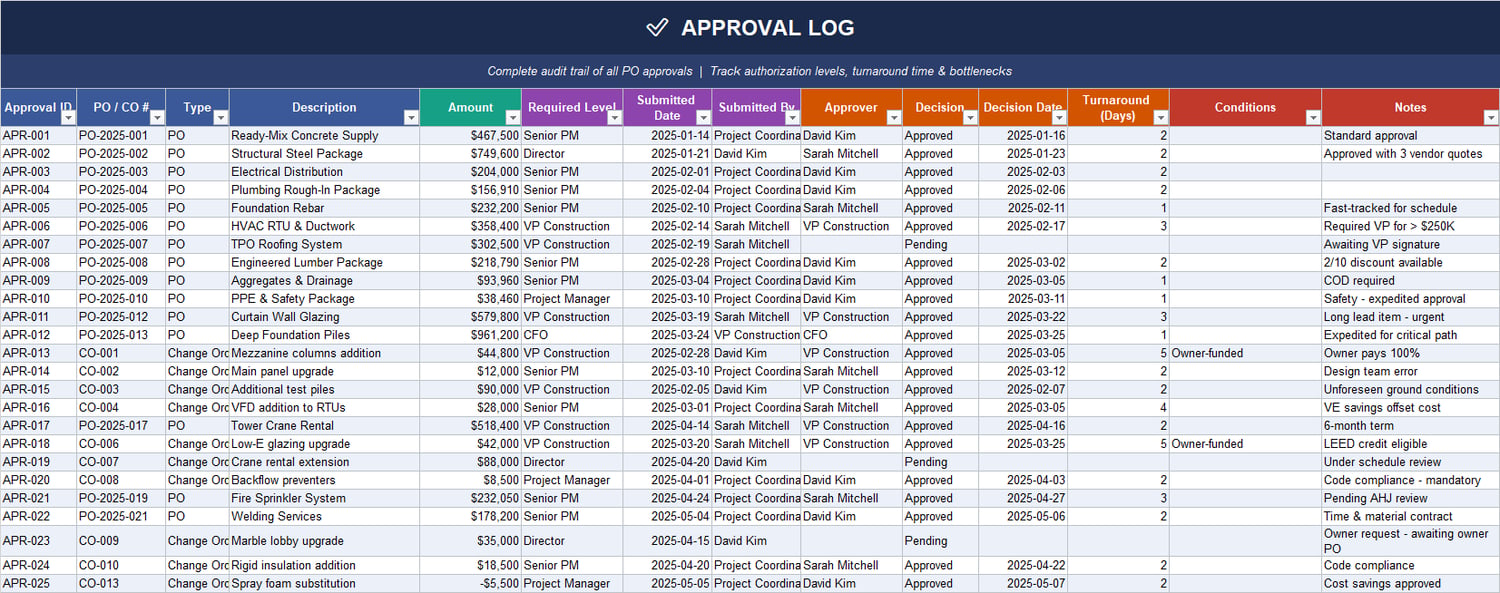
Construction Procurement Approval Log
Source: Templgate
ICT Investment Approval Second Pass Template

Source: Scribd
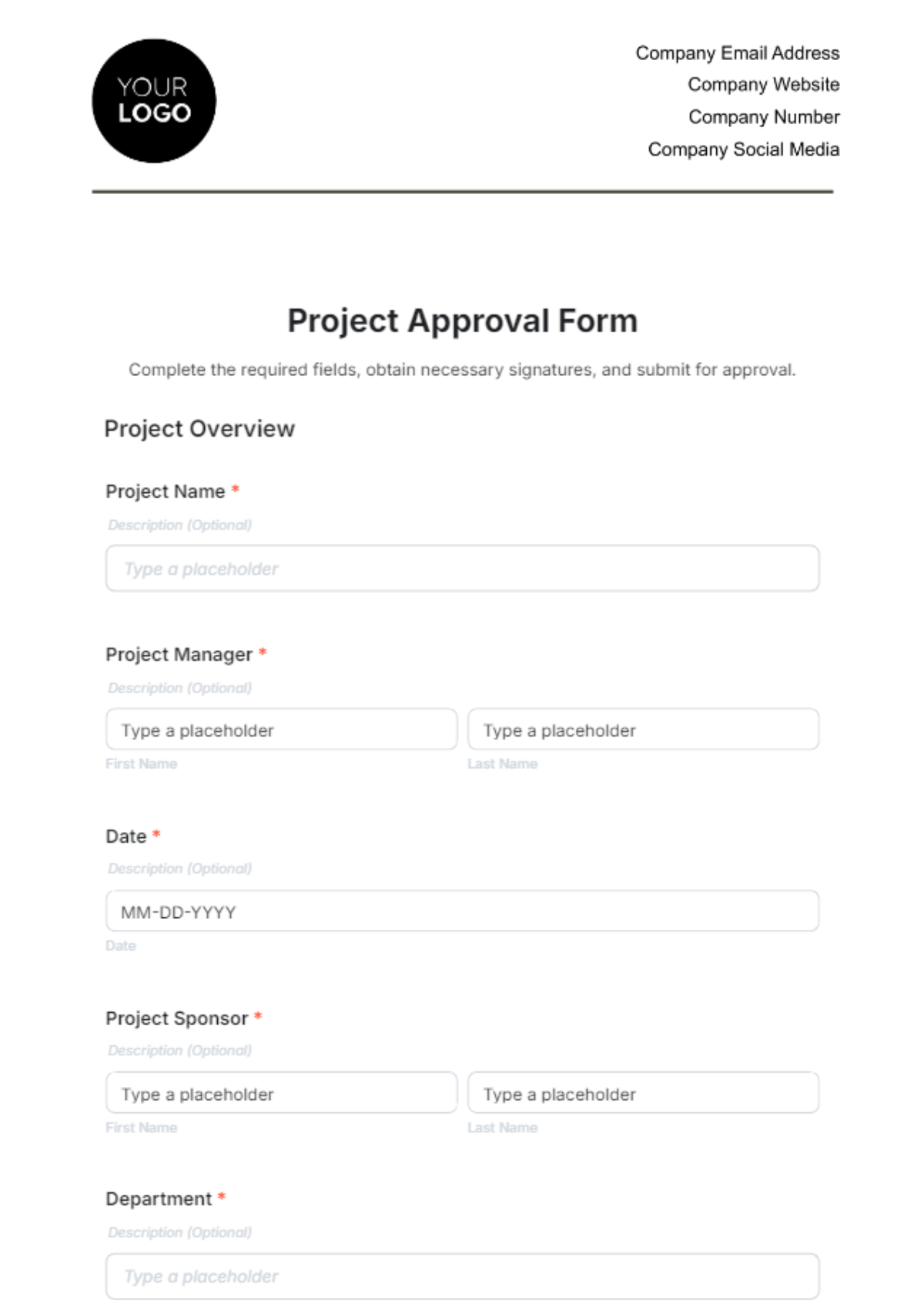
Project Approval Form Template
Source: Template.net

Contract Approval Form
Source: Gatekeeper
Budget Approval Form Template
Source: Lumin

Finance Expense Approval Form Template
Source: Template.net

Business Approval Checklist
Source: TestMatick
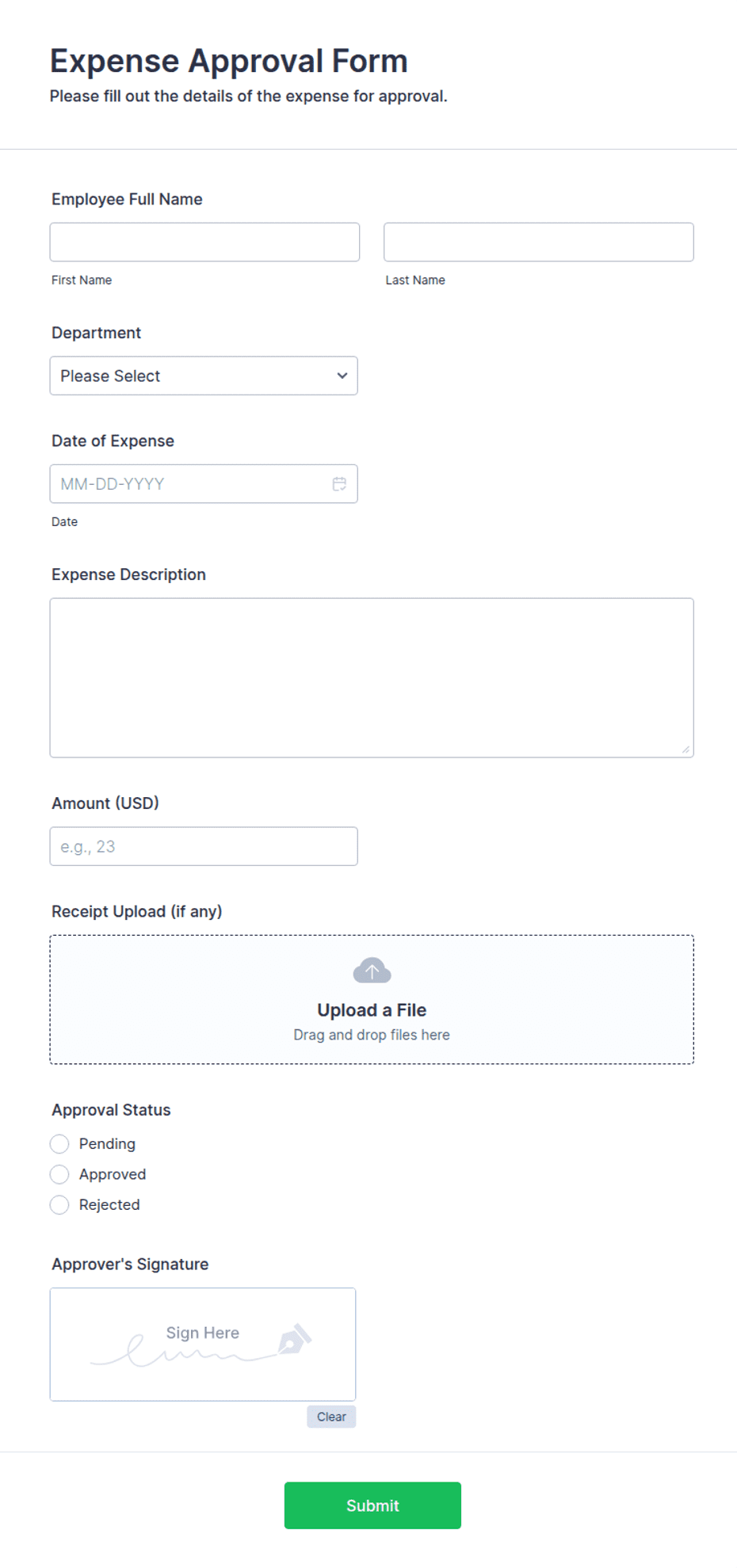
Expense Approval Form Template
Source: Jotform
Project Business Case Proposal Template

Source: Value Generation Partners
