An acknowledgment for financial deals Template is useful when a transaction needs a clear written record showing what was received, who received it, why the money or obligation exists, and what happens next. In practical terms, the document can function as evidence that a party recognized a payment, debt, deposit, loan, settlement, or other financial commitment. A well-structured record reduces ambiguity because the important facts are presented in one place rather than being scattered across messages, invoices, bank references, and informal notes.
The most useful format is not necessarily the longest one. It should match the transaction being recorded. A simple payment acknowledgment may need only the payer, recipient, amount, date, purpose, payment method, reference number, and signature. A debt acknowledgment may need considerably more detail because the document is confirming an outstanding obligation and potentially establishing a repayment schedule.
Readers searching for a financial acknowledgment format are usually looking for something practical: what information belongs in the document, how the wording should work, which format is appropriate, and how the finished record should be stored. The guidance below focuses on those questions while distinguishing a basic acknowledgment from contracts, promissory notes, invoices, receipts, and other documents that can have different functions.

What an acknowledgment for a financial deal actually does
A financial acknowledgment primarily confirms a fact about a transaction. The fact may be that money was received, a debt was recognized, a deposit was made, an installment was paid, or a financial document was delivered. The wording should therefore identify the event precisely instead of using broad language such as “payment received” without explaining what the payment relates to.
That distinction matters because several financial documents can appear similar while serving different purposes. An invoice normally requests or records an amount owed, whereas an acknowledgment confirms receipt or recognition. A loan agreement establishes the terms of borrowing, while an acknowledgment may confirm that the borrower received the funds or recognizes an existing debt. A receipt can confirm payment, but a more detailed acknowledgment may connect that payment to an underlying agreement.
A strong document also creates a useful audit trail. Someone reviewing the transaction later should be able to determine the parties, transaction date, amount, currency, purpose, payment method, related agreement or invoice, and remaining balance without reconstructing the history from separate records. This is especially valuable when a deal involves installments, deposits, advances, settlements, or multiple payment references.

The phrase acknowledgement for financial deals template free appears in searches because people often want a ready structure rather than a blank page. The important point is to treat any sample as a starting framework, not as a universal legal instrument. The correct wording can depend on the transaction, jurisdiction, agreement already in place, and purpose of the acknowledgment.
A document can be professionally useful without pretending to create rights that it does not actually create. For example, a statement saying that a payment was received is different from a release stating that all claims have been satisfied. Likewise, acknowledging a debt does not automatically mean that every term of a loan contract has been rewritten. The document should state exactly what the signer is confirming.
For significant transactions, the acknowledgment should be consistent with the underlying agreement. Amounts, dates, account references, repayment schedules, and party names should match the source records. If there is a conflict, the parties should resolve the discrepancy rather than silently modifying one document to make it agree with another.

Essential fields to include
The first essential field is identification of the parties. Use the legal or business name appropriate to the transaction and provide enough contact or identifying information to distinguish the parties from similarly named individuals or organizations. Where relevant, include an address, business identifier, customer reference, account reference, or other identifier already used in the underlying transaction.
The second group of fields describes the financial event. State the amount in figures and, for significant transactions, consider stating it in words as well. Identify the currency, date received, payment method, transaction reference, and purpose. If the acknowledgment concerns an installment, specify the installment number and the balance remaining after the payment.
The third group covers authorization. The recipient should normally sign or otherwise authenticate the acknowledgment when the purpose is to establish that the recipient personally confirmed receipt. Include the printed name and role where the signer acts for an organization. A signature block should not be decorative; it should make clear who is confirming the information.

A useful acknowledgement for financial deals template free download search result may show a one-page layout, but the best format depends on the transaction. A one-page acknowledgment is often appropriate for a straightforward payment. A debt restructuring or settlement acknowledgment may require additional clauses, schedules, supporting references, and signature sections.
The document should also distinguish between the amount received and the amount originally owed. These are not always the same. A partial payment may reduce a larger balance, while a settlement may involve an agreed amount that differs from the original claim. Recording both figures can prevent later confusion about whether the acknowledgment concerns the entire obligation or only one payment event.
When the payment is made electronically, the transaction reference can be particularly valuable. It creates a bridge between the written acknowledgment and the financial institution’s record. The reference should be copied carefully, because a single incorrect character can make later reconciliation difficult.

Choosing the right wording
Good wording is direct and factual. A typical opening might state that the recipient acknowledges receipt of a specified amount from a named payer on a particular date, for a defined purpose. The document can then identify the method and reference number before stating any remaining balance or related obligation.
Avoid vague expressions such as “all financial matters are settled” unless that is genuinely what the parties intend and the statement has been reviewed for the transaction. Such broad language can carry consequences beyond simply confirming receipt. A narrower statement such as “the recipient confirms receipt of the payment described above” is clearer when the purpose is only to record the payment.
Where a financial acknowledgment relates to an existing contract, identify that contract by date, title, invoice number, account number, or another reliable reference. This creates context without requiring the acknowledgment to reproduce the entire underlying agreement. The document should not accidentally contradict the agreement it references.

A common search phrase is acknowledgement for financial deals template pdf because PDF files are useful for preserving a finalized layout. A PDF is best treated as a final record after the transaction details have been reviewed. If the document is still being negotiated, a working editable format may be more practical, followed by a final locked record once both sides approve the contents.
For organizations, document naming should be systematic. A useful internal convention might combine the transaction reference, party name, document type, and date. The exact naming convention is an organizational choice, but consistency makes records easier to retrieve and compare.
Do not rely on the file format to establish authenticity. A PDF can contain incorrect information just as an editable document can. The important controls are accurate data, authorized review, a reliable signature or authentication process, and appropriate retention of the underlying transaction evidence.

Debt acknowledgments versus payment acknowledgments
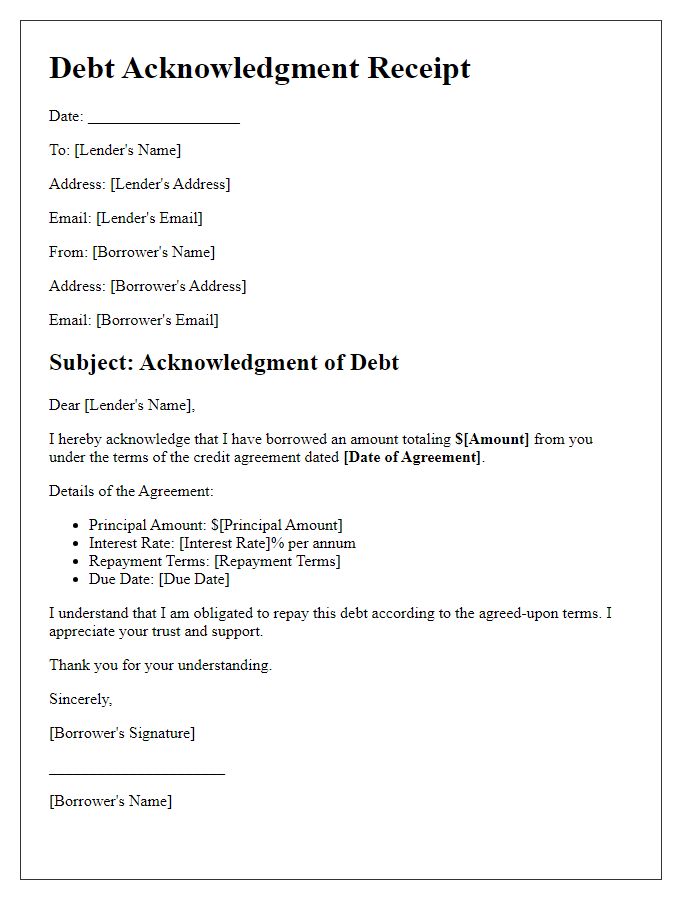
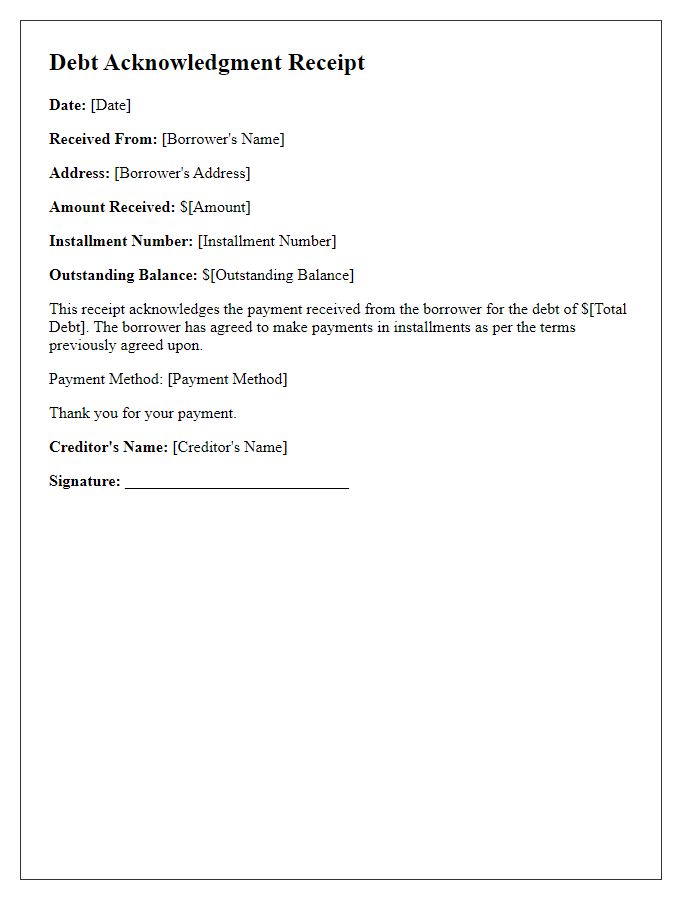
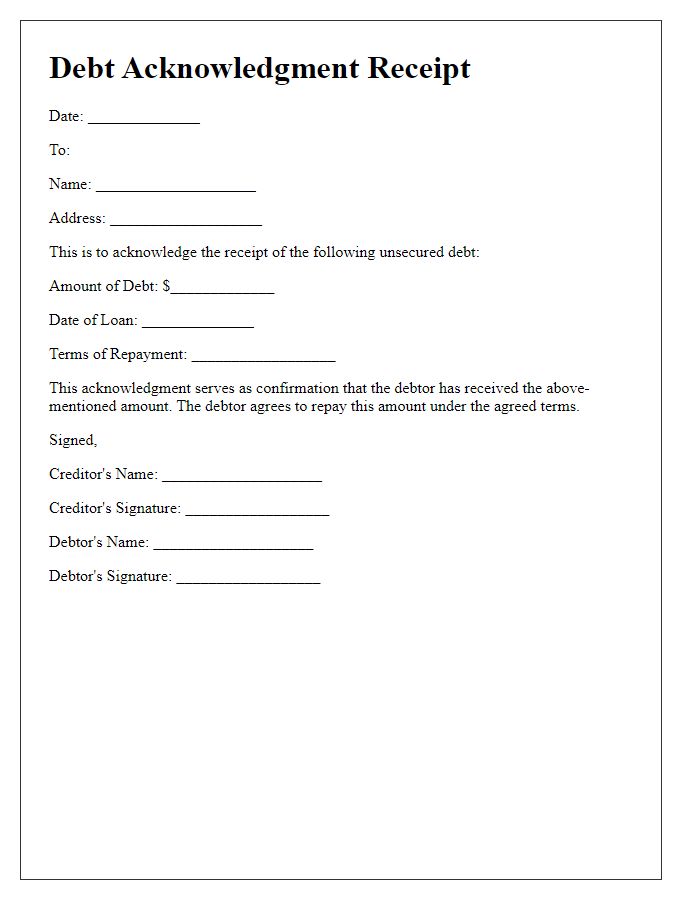
An acknowledgment of debt template serves a different purpose from a simple payment acknowledgment. It generally records that a debtor recognizes an amount owed to a creditor. The document may identify the source of the debt, the amount outstanding, the repayment terms, and the date by which payment is expected.
A debt acknowledgment should not be confused with a comprehensive loan agreement. A loan agreement may contain detailed provisions concerning interest, defaults, representations, security, notices, governing law, dispute resolution, and other matters. A debt acknowledgment may be much narrower, although parties can choose to include additional terms when appropriate.
Debt documents deserve particular care because the consequences of wording can be more significant than those of an ordinary receipt. The parties should verify the amount, explain how the debt arose, identify the creditor and debtor, and ensure that any repayment schedule matches the parties’ actual agreement.
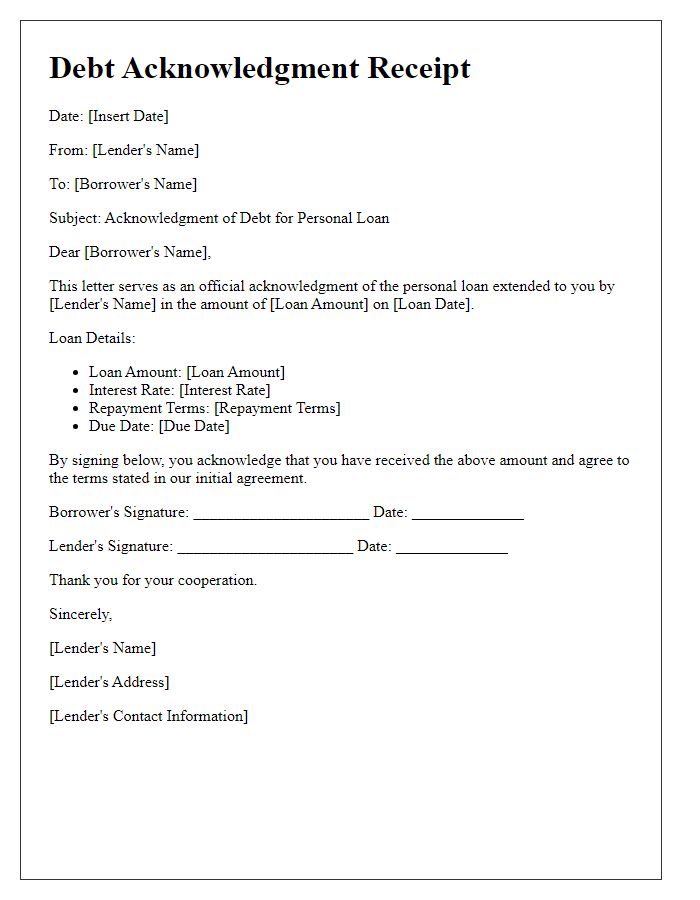
A personal loan acknowledgment normally identifies the lender and borrower, the loan amount, the date of the loan, and the repayment terms. If interest applies, the applicable rate and calculation method should be consistent with the governing agreement and relevant law.
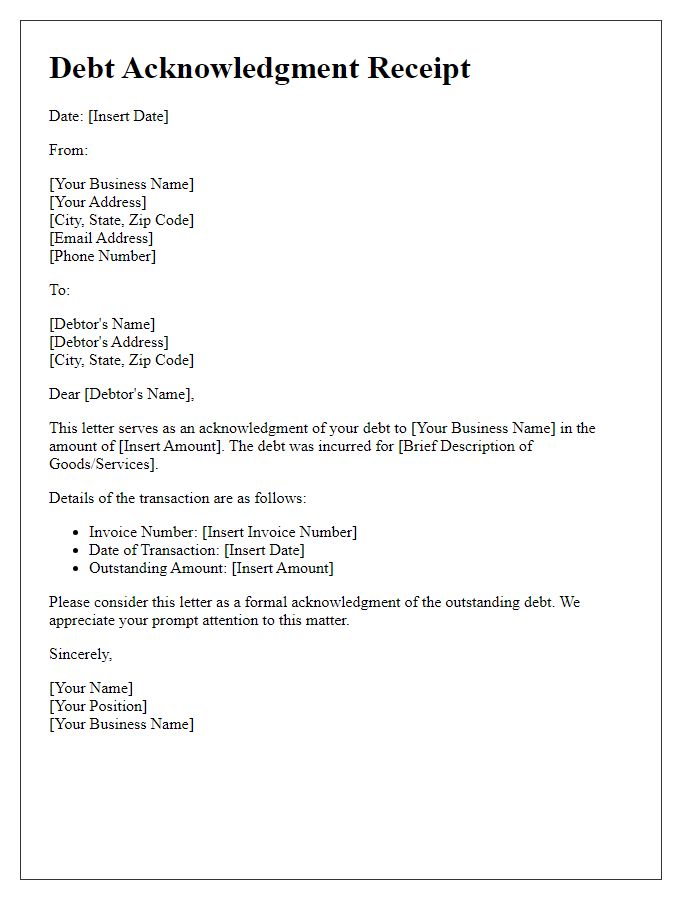
Business debt acknowledgments can require more accounting detail. An outstanding invoice, for example, may need the invoice number, original amount, credits or payments already received, current balance, and agreed settlement date. This makes the acknowledgment useful for both parties’ records.
Family or informal loans should not be treated as less important simply because the parties know one another. A clear written record can prevent memory differences later. The tone can remain straightforward and respectful while still identifying the financial obligation precisely.
Installments, partial payments, and balances
Installment acknowledgments should state which installment has been received. This can be expressed as a sequence number, scheduled date, or other reference. The document should also show the amount received and the resulting balance when a balance remains.
For example, a hypothetical acknowledgment might state that a borrower made installment four under a previously signed repayment agreement. It could record the amount received, the date, the payment method, and the remaining principal. The figures in this example are illustrative rather than a recommendation for any particular transaction.
Partial payment language should be equally precise. If a payer makes only part of an invoice or debt payment, the acknowledgment should not accidentally describe the obligation as fully satisfied. A clear statement that the payment is partial can prevent an otherwise avoidable misunderstanding.
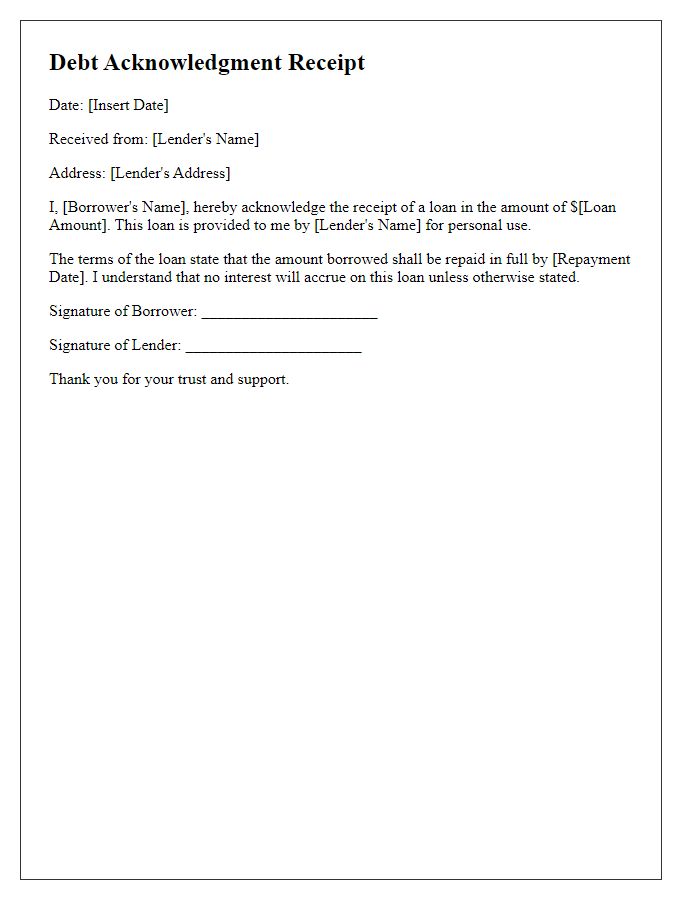
The phrase acknowledgement for financial deals template word commonly reflects the need to edit fields before finalizing a record. An editable document is particularly convenient during drafting because names, dates, amounts, and transaction references can be checked before finalization.
When using an editable document, protect the integrity of the final version. After approval, the parties should know exactly which version was signed. Keeping several unsigned drafts with similar names can make later recordkeeping unnecessarily difficult.
A final record should also be checked against independent evidence. For a bank transfer, compare the acknowledgment with the transfer reference. For a check, compare the check details. For an invoice payment, compare the invoice and ledger entry. The purpose is not merely administrative; reconciliation helps catch errors before the document becomes part of the permanent record.
Payment receipts and acknowledgments
An acknowledgement of payment template is generally centered on a completed payment event. It should identify the payer, recipient, amount, date, purpose, and payment method. Depending on the transaction, it may also reference an invoice, contract, account, purchase, loan, or settlement.
The purpose of a payment acknowledgment is often narrower than the purpose of a settlement agreement. If the parties intend the payment to release claims, terminate an obligation, or settle a dispute, the document should say so clearly and should be reviewed according to the relevant legal context.
Payment acknowledgments can also be useful for deposits and advances. In those situations, the document should identify what the deposit or advance is for and whether it is intended to be credited against a future obligation. This prevents a deposit from being confused with full payment.
Another related search is for a template for acknowledgement of documents. Although that phrase can concern non-financial records, it becomes relevant when financial deals involve delivery of contracts, invoices, security documents, statements, certificates, or other transaction records. The acknowledgment should identify exactly which document was received.
For document receipt, include a document title, date, reference number, version if applicable, and recipient. If several documents are transferred together, a numbered list can be clearer than a broad statement saying that “documents were received.”
This approach is especially useful when a financial transaction has several stages. For example, a party may acknowledge receipt of an agreement first, receipt of funds later, and receipt of a final statement after settlement. Keeping each event distinct creates a clearer chronology.
Secured transactions and collateral references
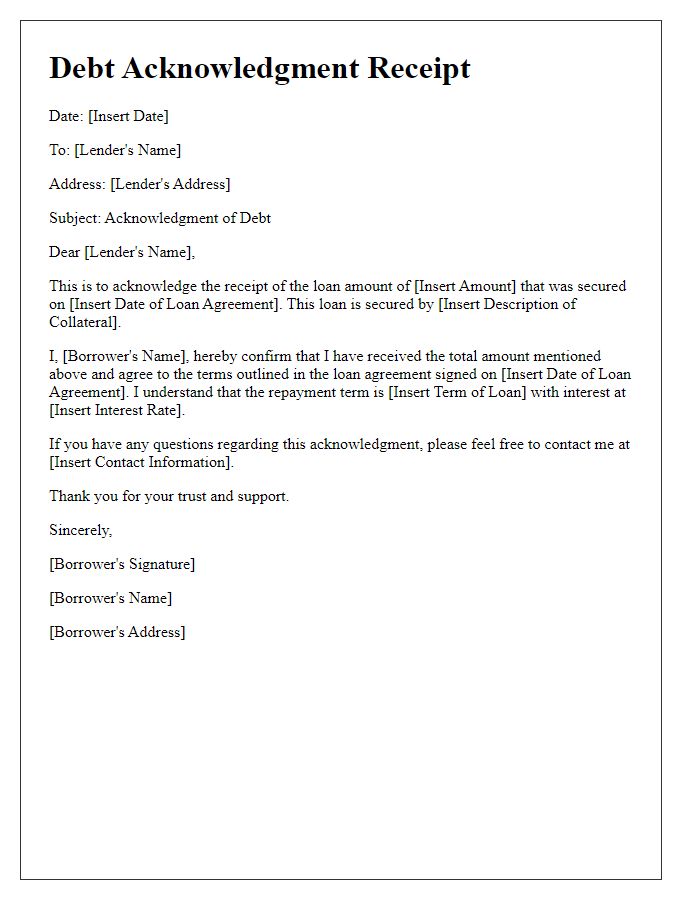
Where a financial obligation is secured by collateral, the acknowledgment can identify the relevant security arrangement without attempting to replace the security agreement. The description should be specific enough to connect the acknowledgment with the correct underlying transaction.
A secured loan acknowledgment may identify the loan date, amount, collateral description, repayment term, and related agreement. The document should not casually state that collateral has been transferred, released, or perfected unless that event has actually occurred and the appropriate legal documentation has been completed.
For transactions involving property or other significant assets, accuracy in descriptions is especially important. A vague reference can create uncertainty when several assets or agreements exist between the same parties.
An acknowledgement for financial deals template word free search may lead to simple examples that contain only a few fields. Such a structure can work for a basic transaction, but it should be expanded when the underlying deal has multiple obligations or special conditions.
Do not add clauses merely because another template contains them. Every additional statement should have a reason. A document that is short but accurate is generally more useful than one filled with provisions that do not match the transaction.
For high-value or legally sensitive deals, professional review can be appropriate. The purpose is not to make every receipt complicated, but to identify situations where a seemingly simple acknowledgment could affect a larger contractual or legal relationship.
Financial acknowledgments for different transaction purposes
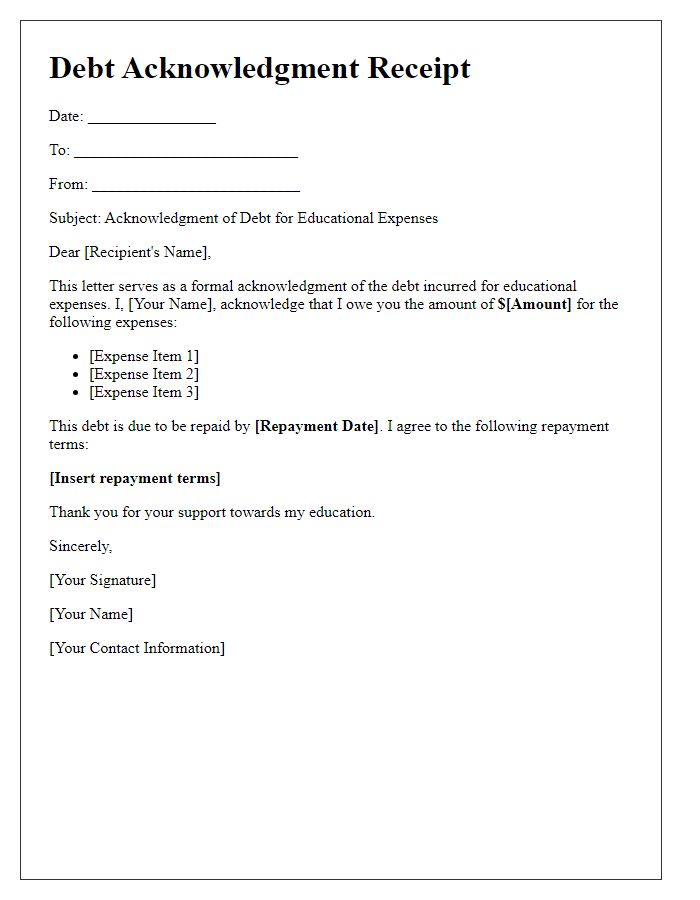
Financial acknowledgments can be adapted to loans, invoice payments, deposits, service fees, settlements, asset purchases, advances, reimbursements, and other monetary events. The central structure remains similar, but the purpose statement changes according to the transaction.
For an invoice payment, identify the invoice. For a loan disbursement, identify the loan agreement. For a deposit, identify what the deposit secures or funds. For a settlement, identify the settlement terms and explain whether the payment is intended to satisfy a particular obligation.
Industry context can also affect the supporting information. A professional service payment may need a service period or invoice reference. A property-related transaction may require an agreement or asset reference. A business loan may require a loan account number and repayment schedule.
An acknowledgment can also be used by employers when employees receive money connected with a legitimate financial transaction. The phrase acknowledgement for financial deals template for employees is most useful when the organization needs employees to confirm receipt of a specific payment, advance, reimbursement, or other documented financial item.
Employee-related records should clearly distinguish business payments from wages or other compensation. For example, an acknowledgment for a travel advance should state that the amount is a travel advance if that is its actual purpose. It should not use vague wording that could make the nature of the payment unclear.
Organizations should also align employee acknowledgments with their accounting and human-resources records. The document should not be treated as a substitute for payroll records, expense records, tax documentation, or other records required by the organization or applicable rules.
Digital records, spreadsheets, and document formats
The phrase acknowledgement for financial deals template excel reflects a need to manage transaction information in a structured spreadsheet. A spreadsheet can be useful for tracking multiple acknowledgments, especially where each record has a transaction number, date, payer, recipient, amount, payment status, and balance.
A spreadsheet should not automatically replace the signed acknowledgment itself. It is better viewed as an index or tracking record. The underlying acknowledgment can remain the formal transaction record while the spreadsheet provides a convenient way to monitor status and reconcile amounts.
Likewise, the phrase acknowledgement for financial deals template google docs points to collaborative drafting. Shared editing can make review easier, but organizations should establish who is authorized to change the document and how the final signed version is distinguished from earlier drafts.

A practical workflow is to draft the acknowledgment, compare the details with the underlying financial record, obtain review where necessary, secure the appropriate signature or authentication, and retain the final record together with supporting evidence.
For electronic records, version control is useful. A final filename can include the transaction reference and date, while the record system can retain the signed version separately from the working draft. Access should be limited according to the sensitivity of the financial information.
Spreadsheets and collaborative documents also introduce a risk of accidental edits. Once a transaction has been finalized, the organization should avoid treating a live working document as the only authoritative record. The final version should be preserved in a controlled recordkeeping system.

What should not be included casually
Do not include unnecessary personal information. A financial acknowledgment should contain enough information to identify the transaction and parties, but unrelated sensitive information can increase privacy and security risks without improving the record.
Avoid unsupported legal conclusions. Statements such as “this document is legally binding everywhere” or “this signature waives all future claims” should not be inserted simply because they sound formal. Legal effect depends on circumstances, wording, applicable law, and the surrounding transaction.
Do not change financial figures after signing without creating an appropriate correction or amendment record. Quietly editing a signed document undermines the reliability of the record. If a genuine mistake is discovered, the parties should follow a documented correction process.

Common mistakes to avoid
One common mistake is leaving the purpose field too vague. “Payment received” does not explain whether the amount relates to an invoice, loan, deposit, rent, service, purchase, or settlement. A short but specific purpose statement is much more useful.
Another mistake is recording only the amount received without the date or payment reference. A transaction amount alone can be difficult to reconcile when a party makes several payments of similar value.
A third mistake is failing to identify whether the payment is partial or final. If a balance remains, the acknowledgment should make that clear. If the parties intend full settlement, the wording should accurately describe the scope of that settlement rather than relying on an ambiguous phrase.

Practical Solution
Start by identifying the exact event you need to acknowledge. Ask whether the document confirms receipt of money, recognition of debt, receipt of a deposit, acknowledgment of an installment, or receipt of financial documents. This decision determines the structure. Do not begin by copying a generic format and then trying to force the transaction into it.
Next, gather the source information before drafting: names of the parties, transaction date, amount and currency, purpose, payment method, reference number, related invoice or agreement, and any resulting balance. Compare these details with the original financial record. If the transaction involves several stages, list the relevant references so the acknowledgment can be understood independently later.
Finally, write a narrow confirmation statement, review the document against the underlying records, obtain the appropriate authorization, and preserve the finalized record. If the document is intended to alter rights, establish a repayment arrangement, release claims, transfer security, or resolve a dispute, treat it as a legally significant document and obtain appropriate professional advice for the relevant jurisdiction.

A useful internal checklist can begin with five questions: Who paid or owes the money? Who received or is owed it? How much is involved? What transaction does it relate to? What exactly is being acknowledged? If those questions can be answered directly from the document, the basic record is likely to be understandable.
The next check should focus on reconciliation. Confirm that the amount in the acknowledgment agrees with the bank or accounting record, that the transaction reference is correct, and that any balance shown is mathematically consistent with the underlying obligation. For installment arrangements, verify the installment number and scheduled date as well.
The final check concerns authority and retention. Confirm that the person signing is the appropriate recipient or authorized representative. Then preserve the signed acknowledgment with the related agreement, invoice, payment evidence, and accounting record according to the organization’s recordkeeping practices.

How to make the document easier to review
Use clear headings within the document itself when the transaction is complex. Sections such as “Parties,” “Transaction Details,” “Payment Information,” “Balance,” and “Authorization” make it easier for another person to locate important information quickly.
Keep related information together. The amount should appear close to the currency and payment date. The transaction reference should be close to the purpose or invoice reference. Signature fields should be close to the statement being confirmed. Logical grouping reduces the chance that a reader will misinterpret a field.
Use consistent terminology. If the document calls one party the “payer,” do not switch later to “customer,” “borrower,” and “sender” unless those terms genuinely describe different roles. Consistent terminology is particularly important when a transaction contains multiple parties.

When a simple form is enough and when it is not
A simple form can be sufficient for a straightforward payment where the only purpose is to confirm that a stated amount was received. A concise receipt with identification, amount, date, purpose, method, and signature may provide all the information needed for routine recordkeeping.
A more detailed document is appropriate when there is an outstanding balance, repayment plan, security, settlement, disputed amount, multiple obligations, or a requirement to connect the acknowledgment with a larger contract. The greater the financial complexity, the more important it becomes to describe the transaction accurately.
If the parties want the document to create new obligations rather than merely confirm an existing fact, they should be careful about terminology. A document that changes payment dates or establishes a new settlement arrangement may function more like an agreement than a basic acknowledgment.

Reviewing a sample before using it
A sample should be evaluated by comparing its fields with the actual transaction. Check whether it identifies both parties, states the correct amount and currency, provides a date, explains the purpose, identifies the payment method, and provides an appropriate signature or authorization block.
Also inspect whether the sample accidentally contains assumptions that do not apply. A form designed for a loan may mention interest, repayment schedules, or a creditor and debtor. Those fields can be irrelevant to an ordinary invoice payment and may create confusion if copied without modification.
The best sample is therefore not necessarily the one with the most fields. It is the one whose structure can be adapted accurately to the financial event without introducing statements that the parties did not intend to make.

Using a form as part of a broader recordkeeping process
Acknowledgments become more valuable when they are connected to the rest of the financial record. The acknowledgment can reference the invoice, contract, loan account, settlement reference, or payment transaction while the accounting system maintains the broader financial history.
For recurring transactions, organizations can use a consistent structure so reviewers know where to find the amount, date, reference number, purpose, and authorization. Consistency also makes it easier to compare transactions and identify missing records.
Retention practices should reflect the importance of the transaction and the organization’s obligations. Sensitive financial records should be stored securely, with appropriate access controls and backups. The acknowledgment should remain readable and associated with the supporting evidence that explains the transaction.

Final drafting principles
A strong financial acknowledgment is specific, restrained, and traceable. It states what happened without overstating what the document accomplishes. It identifies the parties and transaction, records the financial details accurately, and connects the acknowledgment to any underlying agreement or accounting reference.
The most useful approach is to design the document around the transaction rather than around a particular file format. Whether the working record is a Word document, spreadsheet, collaborative document, or PDF, the substantive information remains the priority.
For routine transactions, a concise acknowledgment can be highly effective. For substantial debts, settlements, secured transactions, or arrangements that change contractual rights, the document deserves additional review. Accuracy at the drafting stage is easier to maintain than trying to reconstruct the transaction after a disagreement has already arisen.
Reference Examples
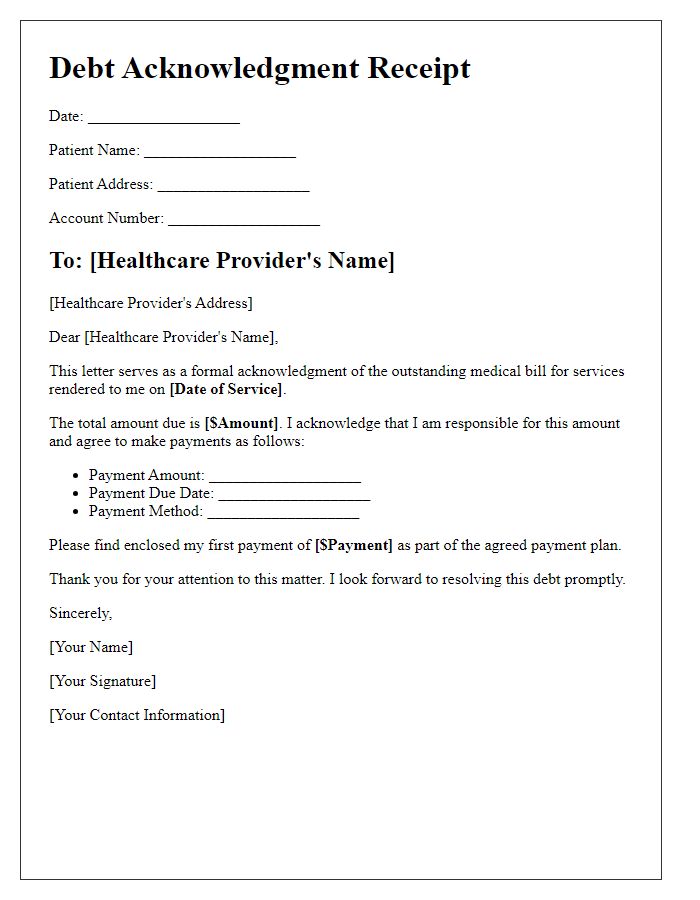
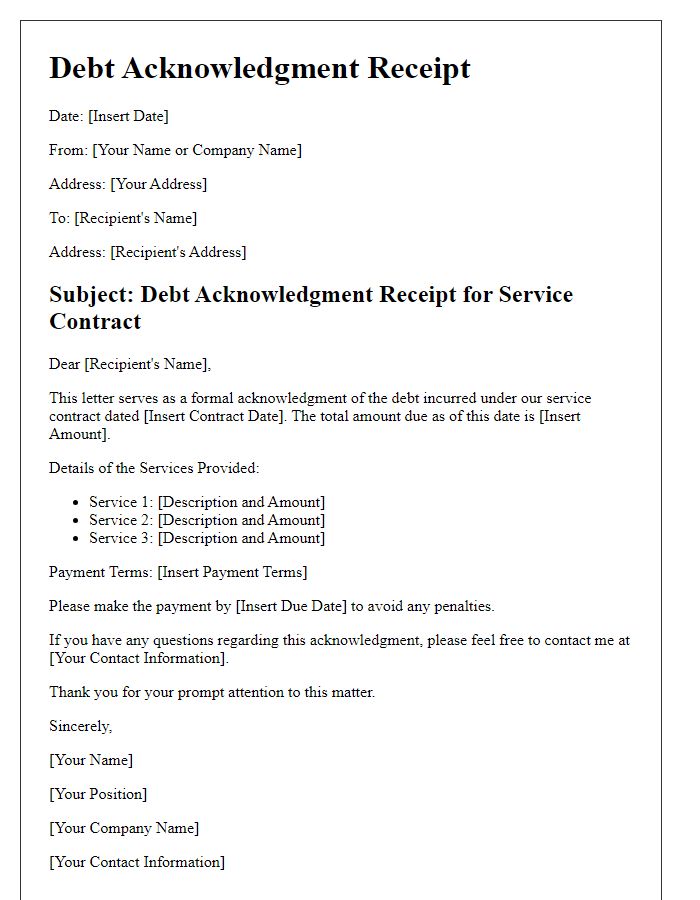
The following visual references show several ways an acknowledgment for financial deals Template can be structured around payment confirmation, transaction references, recipient details, and authorization. Some examples are short confirmation letters, while others use a more formal receipt-style structure. Together, they illustrate an important principle: the document should make the financial event easy to identify without adding unnecessary wording. The most useful elements are usually the parties, amount, date, purpose, payment method, reference number, and confirmation statement. These examples are visual references only and should be adapted to the actual transaction rather than copied without review.
Comparing these references can help readers recognize how the same basic acknowledgment concept changes according to the financial event being recorded. A payment receipt may emphasize the amount and transaction reference, while a payment confirmation letter may emphasize the relationship between the payment and an invoice or agreement. The examples also demonstrate different layouts for signature blocks and transaction details. Reviewing the structure before preparing an acknowledgment can help prevent omissions, especially when a payment is partial, recurring, linked to a debt, or associated with another financial document.

Payment Receipt Confirmation
Source: Letterin.net

Payment Acknowledgment Letter
Source: Letterin.net

Payment Receipt Verification
Source: Letterin.net

Payment Confirmation Notice
Source: Letterin.net

Acknowledgement of Payment Received
Source: Letterin.net

Payment Confirmation
Source: Letterin.net

Receipt Acknowledgment
Source: Letterin.net

Payment Acceptance Confirmation
Source: Letterin.net

Payment Receipt Notice
Source: Letterin.net

Payment Transaction Acknowledgment
Source: Letterin.net
