For freelancers, consultants, agencies, and in-house marketing teams, the best approach is to treat the quotation as a bridge between discovery and delivery. The document should translate a client’s business problem into a defined social media service. It should also make the commercial side easy to understand. The client should be able to answer four questions quickly: What are you proposing? What exactly is included? How much will it cost? What do we need to do next?
A reusable template helps answer those questions consistently. Instead of rebuilding every quotation from a blank page, you can keep a master structure containing your standard terms, service categories, approval process, reporting approach, and pricing logic. Each new quotation can then be customized around the client’s audience, platforms, objectives, campaign requirements, and budget.
This guide explains how to build a professional social media marketing quotation template from the ground up. It covers the purpose of a quotation, essential sections, pricing models, research, data collection, reporting, document formats, approval workflows, common mistakes, and practical examples. It also explains how to turn one successful quotation into a reusable business system without allowing the template to become generic or disconnected from the client’s actual needs.
The central principle is simple: use the template for structure, not for thinking. The structure should remain consistent, but the strategy, scope, language, pricing, and recommendations should be customized for every client.

What Is a Social Media Marketing Quotation Template?
A social media marketing quotation template is a reusable document framework for presenting social media services and their associated costs to a prospective or existing client. It normally combines client information, objectives, proposed services, deliverables, timelines, pricing, payment conditions, validity dates, exclusions, and approval information.
The quotation is usually more commercially focused than a full strategy document. A strategy may contain extensive audience research, competitor analysis, positioning, content pillars, campaign concepts, and measurement frameworks. The quotation should contain enough strategic context to explain why the proposed work is appropriate, but it should remain focused on the engagement being offered.
The document can also function as an early scope-of-work reference. If the client approves a monthly package containing a specific number of posts, videos, stories, community-management hours, and reports, those items provide a practical baseline for delivery. This makes the quotation useful after the sale rather than disposable once payment begins.
There is no single universally required format. A small local business might need a concise two-page quotation, while a larger organization may require a detailed document with multiple service options, a campaign timeline, governance rules, reporting requirements, and formal acceptance provisions. The right format depends on the complexity and risk of the engagement.
A strong template therefore balances consistency and flexibility. Standardize the information that should never be forgotten, such as payment terms and quotation validity. Customize information that should always reflect the client, such as business goals, platform selection, deliverable volume, campaign timing, and recommended strategy.
Why a Good Quotation Matters
Social media services can be difficult to compare because different providers may use the same words to describe very different workloads. “Social media management” could mean publishing a few posts each week, or it could include strategy, photography, video production, copywriting, community management, influencer coordination, paid advertising, analytics, and crisis response.
A quotation reduces that ambiguity by converting a broad service category into specific commitments. Instead of saying “monthly social media management,” a better document might state that the package covers two platforms, twelve feed posts, four short-form videos, eight stories, weekday community monitoring, one monthly report, and one strategy call. The exact figures should reflect the actual service rather than an arbitrary standard.
Clear scope also protects both parties from scope creep. If a client later asks for additional video shoots, weekend moderation, influencer negotiations, or a new platform, the quotation provides a reference point for determining whether the request is included or should be priced separately.
Professional quotations also improve decision-making. A client does not have to reconstruct your offer from an email conversation. They can compare the proposed scope with their goals, evaluate the investment, ask focused questions, and approve the work with fewer rounds of clarification.
Finally, a consistent quotation system saves the service provider time. Once the core document is carefully built, future quotes can be assembled from proven sections rather than written from scratch. The resulting efficiency can be significant when an agency handles multiple inquiries every week.
Core Components of a Social Media Marketing Quotation
1. Cover and Client Information
The first page should immediately establish what the document is and who it is for. Include the quotation title, client or company name, provider name, date issued, quotation reference if you use one, and a clear contact method.
A clean cover does not need elaborate graphics. A simple branded header, restrained typography, and sufficient white space often create a more professional impression than a crowded design. The client should be able to identify the document’s purpose within seconds.
Client information should be accurate. If the quotation is for a company, identify the relevant organization and contact person. If the project covers a particular brand, product line, or business unit, name it explicitly so the scope cannot later be confused with another account.
It is also useful to record the quotation validity period. For example, the document can state that pricing is valid for a specified number of days because staffing, production capacity, advertising conditions, or project availability may change. Do not use an arbitrary deadline simply to pressure the client.
The cover should create confidence rather than attempt to sell the entire project. Its primary purpose is orientation. The persuasive argument belongs in the summary and scope sections that follow.
2. Executive Summary
The executive summary should describe the client’s situation before describing your service. A prospect is more likely to engage with a quotation when the document demonstrates that the provider understands the business problem rather than simply presenting a standard package.
A useful summary can state the current challenge, the opportunity, the proposed approach, the principal outcomes being targeted, and the broad investment. Keep it concise enough to scan but specific enough to prove that the quotation was prepared for this client.
For example, a hypothetical local retailer might have inconsistent Instagram activity, limited short-form video, and no clear distinction between promotional and educational content. The summary could explain that the proposed engagement will establish a consistent publishing system, introduce platform-specific content themes, and use monthly performance reviews to refine the content mix.
Avoid guaranteeing outcomes that depend on factors outside the marketer’s control. Social media performance can be influenced by creative quality, audience demand, competition, platform changes, advertising budgets, seasonality, landing-page performance, product availability, and many other variables.
The executive summary should make the reader want to continue, but it should not make unsupported promises. Credibility is more valuable than exaggerated certainty.
Define the Scope Before You Set the Price
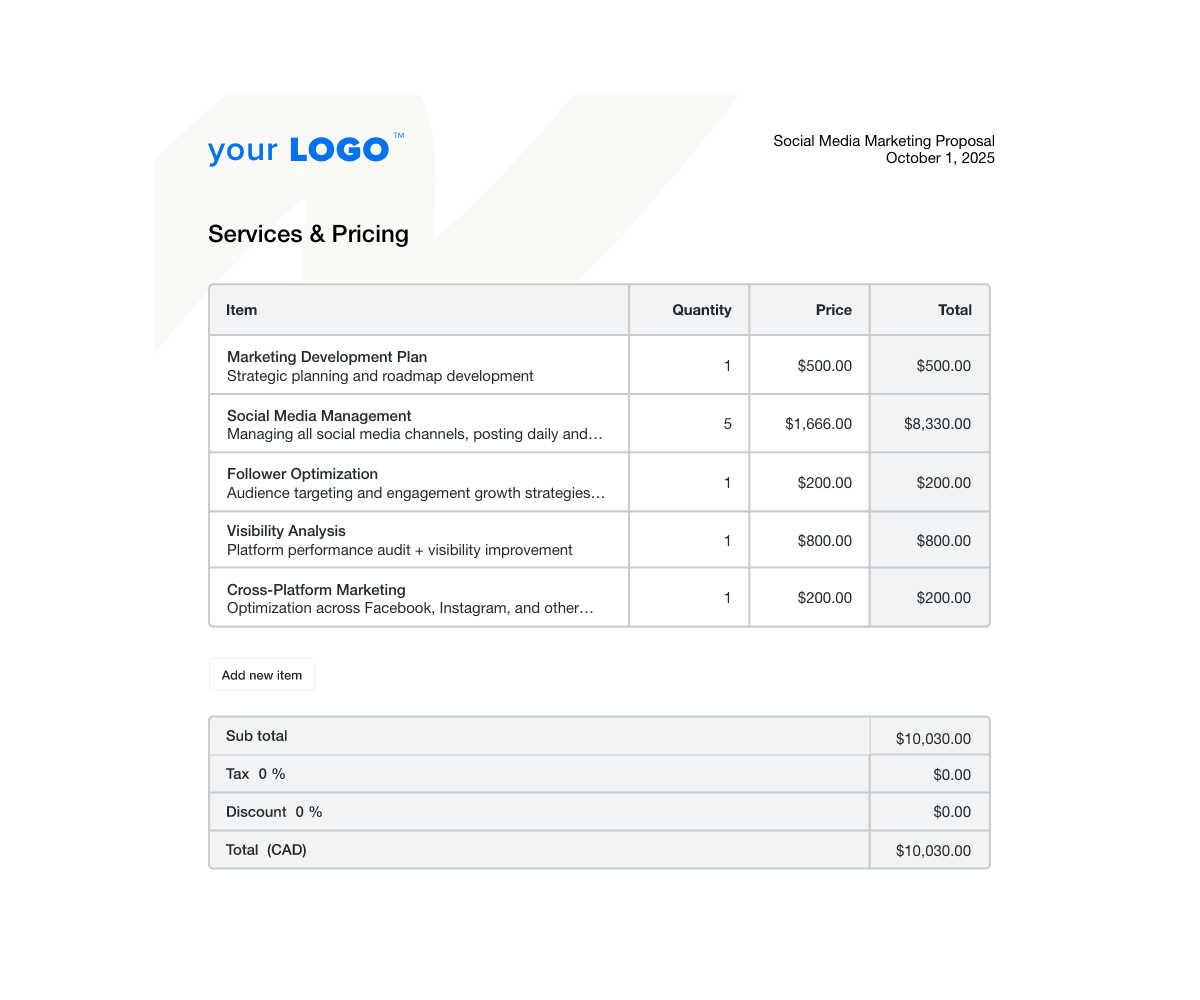
Pricing should follow scope rather than precede it. One of the most common quotation mistakes is selecting a convenient monthly price and then attempting to fit an undefined collection of services into that number.
Start by listing every activity required to deliver the proposed outcome. Strategy may include research, positioning, content pillars, audience definition, platform selection, and campaign planning. Production may include copywriting, static graphics, carousels, short-form videos, photography, editing, and captions.
Management can include scheduling, publishing, moderation, community engagement, direct-message handling, escalation, and coordination with other teams. Reporting may include dashboard preparation, monthly commentary, performance reviews, recommendations, and quarterly strategy sessions.
Paid media should normally be separated from the service fee. The quotation should state whether advertising spend is included, excluded, or billed as a separate client-funded budget. Mixing ad spend with management fees can make the actual service cost difficult to understand.
Once the activities are listed, convert them into measurable deliverables. “Create content” is difficult to price. “Produce eight static posts, four short-form videos, and twelve stories per month” is much easier to scope, resource, and review.
Example Scope Table
| Service | Deliverable | Frequency | Notes |
|---|---|---|---|
| Strategy | Content strategy and planning | Monthly | Includes KPI review |
| Content | Static posts and carousels | 12 per month | Copy and basic design included |
| Short-form video | Edited vertical videos | 4 per month | Client supplies raw footage unless production is quoted |
| Community management | Comments and messages | Weekdays | Escalation rules apply |
| Reporting | Performance report | Monthly | Includes recommendations |
This example is hypothetical and should not be copied as a universal package. The correct volume depends on the client’s objectives, resources, channels, production requirements, and budget.
The quotation should also identify exclusions. Exclusions might include photography, travel, influencer fees, paid advertising spend, website development, extensive video production, emergency weekend support, or major revisions beyond the agreed limit.
Exclusions are not an attempt to make the offer less attractive. They make the offer more credible because the client can see where the boundary of the service lies.

Research Before Preparing the Quotation
Good quotations are informed by research. You do not need a full consulting engagement before quoting, but you should know enough about the prospect to avoid proposing services that clearly do not fit.
Begin with the client’s existing social profiles. Review the active platforms, profile completeness, posting consistency, content formats, visual identity, calls to action, and apparent engagement patterns. Look for obvious gaps, but avoid pretending that a short public review is equivalent to a full audit.
Next, examine the client’s website and core commercial offer. Social media should connect to the broader customer journey. If the client wants lead generation, for example, the quotation should consider where social traffic will go and how those visitors can take the next step.
Competitor research can provide useful context. Compare a small number of relevant competitors rather than collecting dozens of accounts without a clear purpose. Look for differences in content themes, formats, posting frequency, offers, positioning, and audience conversations.
The research should influence the quotation. If the prospect already has a strong visual library, the proposed scope may emphasize strategy, distribution, and optimization. If the brand lacks usable creative assets, production may require a larger portion of the budget.

Data Collection and Analysis for Better Quotes
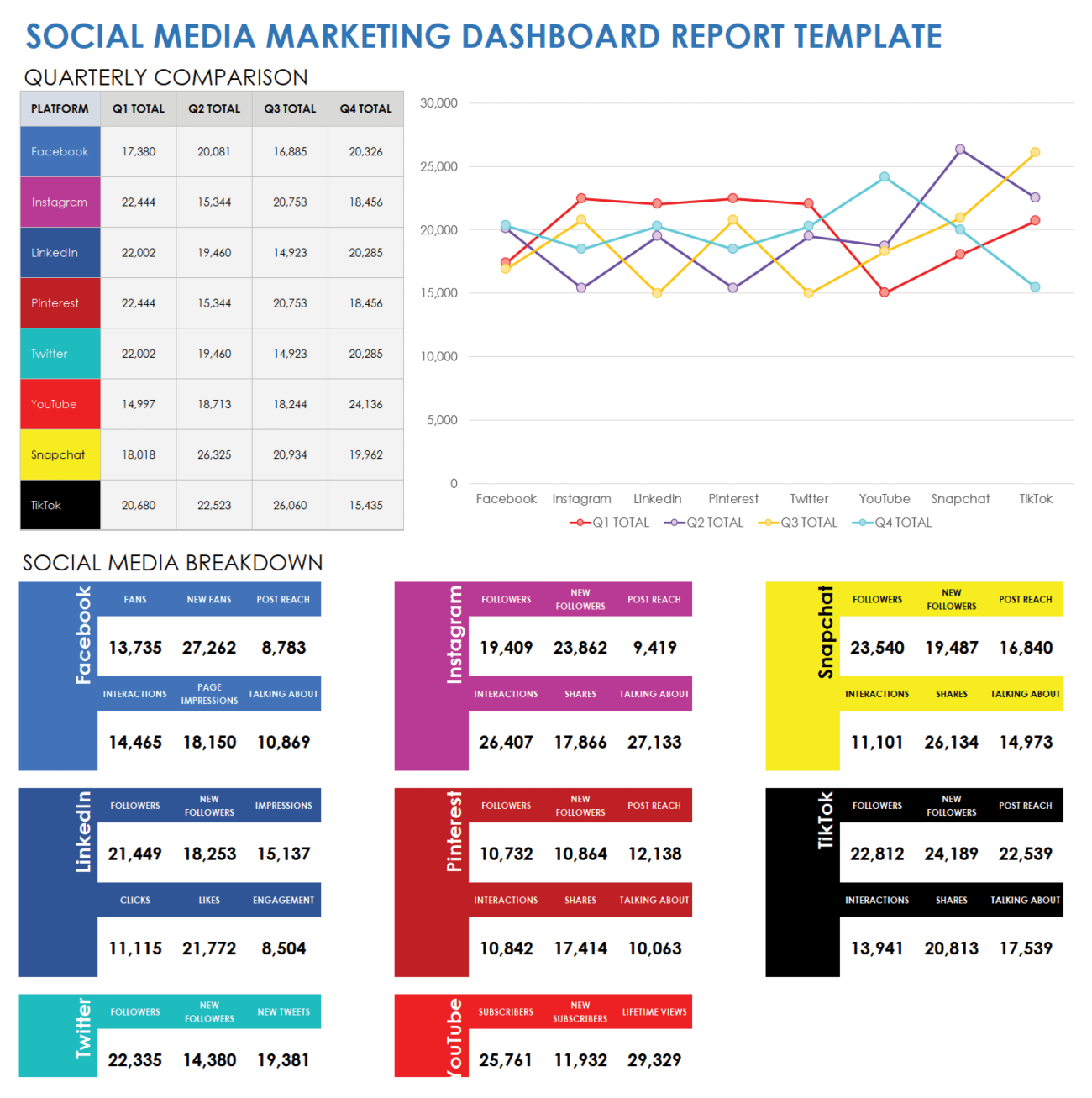
When the prospect can provide existing analytics, use those data to make the quotation more specific. Useful inputs may include recent reach, impressions, engagement, clicks, follower growth, website traffic from social channels, leads, conversions, advertising results, and top-performing content.
Do not collect data simply because it is available. Each metric should help answer a business question. If the goal is awareness, reach and qualified audience growth may be useful. If the goal is traffic, link clicks and website sessions may matter more. If the goal is lead generation, conversion events deserve greater attention than follower totals.
Historical data also helps establish realistic starting points. A quotation can describe a baseline and propose a measurement process without promising a specific future result. This distinction is important because the provider can control the work but cannot completely control audience response.
Data analysis should also inform resource allocation. A platform producing little strategic value may not deserve the same production investment as a channel with strong audience fit. The quotation can explain why particular platforms are included and why others are excluded or treated as secondary channels.
Where data is unavailable, state the limitation. A quotation can recommend an initial audit or discovery phase rather than presenting assumptions as facts. Transparent uncertainty is preferable to fabricated precision.

Choosing the Right Pricing Model
A social media quotation can use a monthly retainer, project fee, per-deliverable pricing, hourly pricing, or a hybrid model. The choice should reflect how the work is actually delivered and how predictable the workload is.
A monthly retainer works well for ongoing management because the client buys a defined service capacity over a recurring period. It is especially useful when content, publishing, community management, and reporting occur continuously.
A project fee can be more suitable for a campaign launch, account setup, social audit, strategy project, or one-time content production engagement. The quotation should define the start and end points clearly.
Per-deliverable pricing is useful when the client wants flexibility. A provider might quote individual rates for a static graphic, video, carousel, landing-page creative, or additional revision round. However, excessive line-item pricing can make the document difficult to read.
Hourly pricing is straightforward but may encourage clients to focus on time rather than outcomes. If used, explain what the hours cover and whether unused hours roll over. A hybrid model can combine a fixed management fee with separately billed production, advertising, travel, or specialist services.

How to Present Packages
Three service levels can make a quotation easier to understand when the client’s needs are not yet fixed. A basic package can establish consistency, a middle package can represent the recommended service, and a premium package can address larger production or management requirements.
Packages should differ in meaningful ways. Simply changing the price while keeping almost everything else identical creates confusion. Instead, vary platform coverage, content volume, creative formats, community management, strategic involvement, reporting depth, or production complexity.
A hypothetical structure might contain an Essentials package for two platforms and a limited content cadence, a Growth package with additional formats and monthly strategic reviews, and a Scale package covering more channels, short-form video, paid-media management, and deeper reporting.
Do not use package tiers to hide the recommended option. Explain which package best matches the client’s stated objective and why. The recommendation should be based on workload and business requirements, not simply on the package with the highest price.
Optional add-ons can provide flexibility without rebuilding the quotation. Examples include additional video production, influencer management, paid-media setup, photography days, extra platforms, additional revision rounds, or urgent publishing support.

Timeline, Approvals, and Workflow
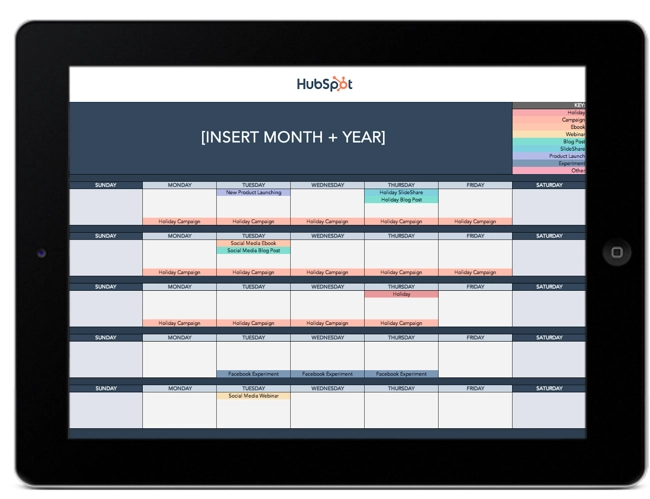
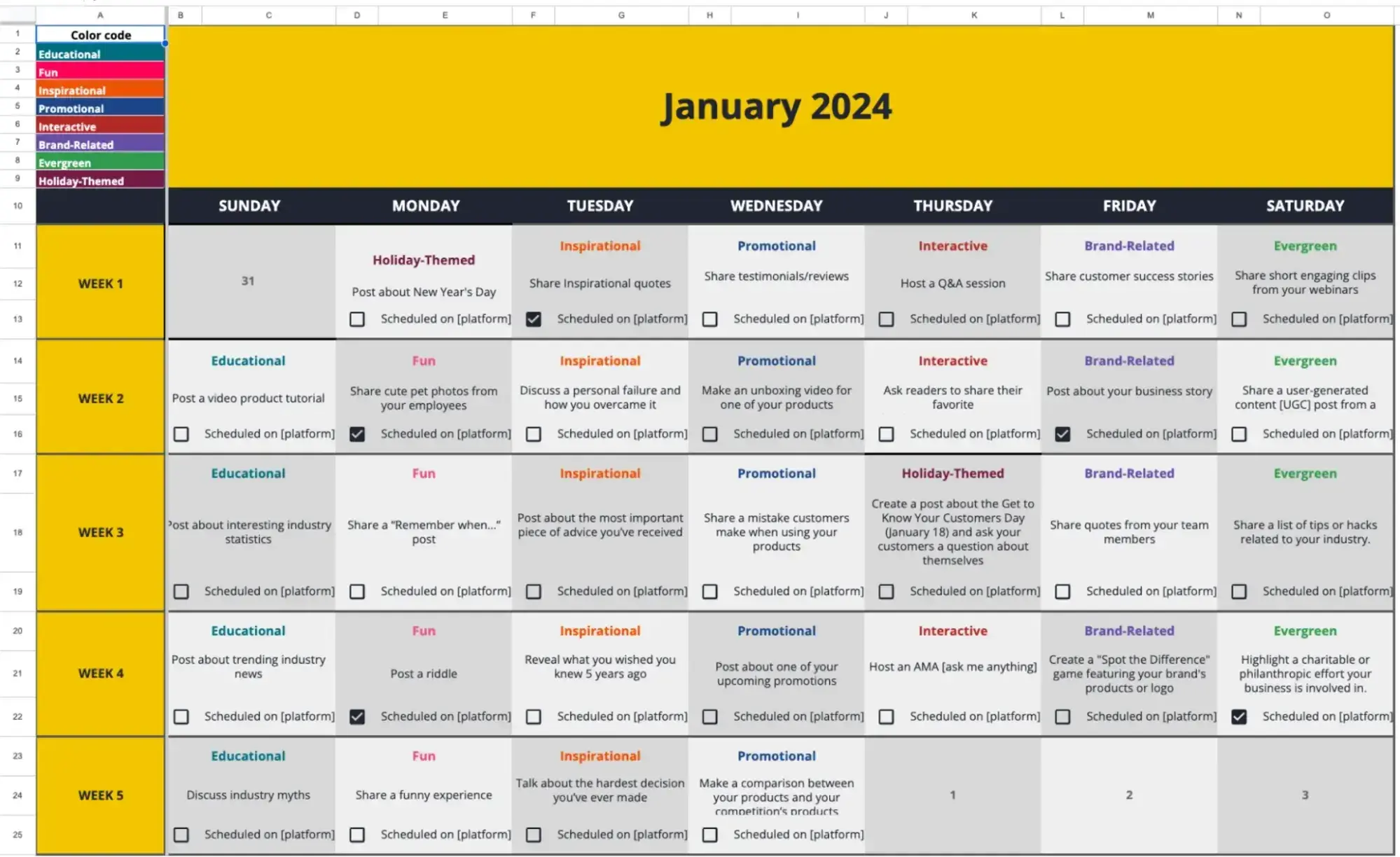
A quotation should explain when the work happens. A simple monthly workflow might begin with planning, followed by content development, client review, revisions, scheduling, publishing, community management, and reporting.
Approval timing deserves particular attention. If content must be approved before publishing, specify how much review time the client has. A delayed approval can affect the publishing schedule, so the quotation should make the operational dependency visible without using unnecessarily aggressive language.
Define the revision process as well. For example, a package might include one consolidated revision round per content batch. This is clearer than promising “unlimited revisions,” which can create substantial unplanned workload.
Client responsibilities should be listed. These may include supplying brand guidelines, product information, access credentials, approved claims, imagery, legal disclaimers, promotional details, and timely feedback.
The provider’s responsibilities should be equally clear. The quotation can state who handles strategy, production, scheduling, moderation, analytics, approvals, and escalation. A clear division of responsibilities prevents small administrative assumptions from becoming large delivery problems.
Document Formats: Word, PDF, and Editable Files
Different clients have different document preferences. An editable document is useful while the quotation is being customized, whereas a PDF is generally better for the final client-facing version because the layout is less likely to change between devices.
When someone searches for a social media marketing quotation template template word, they are usually looking for a structure that can be edited in Microsoft Word or a compatible document editor. Word is useful for text-heavy quotations with tables, headings, signatures, and terms.
A request for a social media marketing quotation template template pdf often reflects a desire for a finished, printable, shareable document. PDF is particularly suitable when the quotation needs to preserve page breaks, branding, tables, and signature areas.
Editable and final versions should be treated differently. Keep a controlled master document, create a client-specific working copy, proofread it, then export the final version. Avoid repeatedly editing the final PDF when a source document exists.
File naming should also be systematic. A practical convention can include the client name, document type, date, and version number. This reduces the risk of sending an obsolete quotation after revisions have been made.
Understanding Free Downloads and Template Licensing
Search intent around free templates is often straightforward: the user wants to start quickly without paying for document design. A social media marketing quotation template template free resource can be useful as a starting point, particularly for a new freelancer building a basic sales process.
However, “free” does not automatically mean unrestricted commercial use. Always review the licensing terms of a template before distributing it to clients, removing attribution requirements, selling it as part of a product, or using branded graphics commercially.
A social media marketing quotation template template free download can save time, but downloading a template is only the first step. Replace placeholder information, remove irrelevant sections, verify calculations, update the service descriptions, and make the document consistent with the actual business offering.
The same principle applies to resources described as a social media marketing quotation template template download. A downloaded template should be treated as a framework, not as a ready-made quotation that can be sent unchanged.
Templates become valuable when they are connected to a real operating process. The document should reflect how you actually sell, produce, approve, report, invoice, and manage client work.

When a DOC or Word-Based Template Makes Sense
A social media marketing quotation template template doc is particularly useful when your quotation includes detailed written explanations, tables, service descriptions, and terms. It is easy to update and can be converted to PDF when the final version is approved.
A document-based template is also practical for freelancers who need a lightweight workflow. A master file can contain reusable sections for organic social management, paid advertising, reporting, strategy, content production, and optional services.
Keep placeholders visually obvious while editing. Fields such as [CLIENT NAME], [START DATE], [PLATFORM], and [TOTAL FEE] make missing information easier to identify before the quotation is sent.
Tables should be tested for readability. Long service descriptions can create awkward page breaks, while overly narrow columns can make pricing difficult to scan. A quotation should remain readable when printed or viewed on a smaller screen.
Before sending, check every instance of the client name, company name, currency, tax treatment, dates, pricing totals, deliverable quantities, and validity period. A single leftover placeholder can make an otherwise excellent quotation look unfinished.

How to Handle Technical or Unusual Search Terms
Some searches combine business-document terminology with words that normally belong to software development. For example, the phrase social media marketing quotation template template sandbox may refer to a testing environment rather than a conventional quotation document.
If such terminology appears in a client’s request, do not automatically place the words into the visible quotation. First determine what the client actually means. A sandbox may refer to a demonstration environment, a staging document, or a software workflow used to generate quotations.
The phrase social media marketing quotation template template function overload is even more technical. Function overloading normally describes a programming concept involving multiple functions or methods that share a name while accepting different argument structures. It is not a normal component of a marketing quotation.
Similarly, social media marketing quotation template template parameters could refer to configurable fields in an automated document-generation system. In that context, parameters might include client name, currency, platform list, billing cycle, deliverable quantities, tax rate, and quotation expiry date.
The important business lesson is to distinguish the document itself from the system that generates it. If automation is involved, the quotation template can be treated as a structured document with variables, while the software layer controls how those variables are populated.

Links, Client Portals, and Roadmaps
A quotation may contain a social media marketing quotation template template link when the document is hosted online or shared through a proposal platform. The link should lead to a controlled, client-specific version whenever possible rather than an editable master document.
Online proposals can be useful because they may combine content, pricing options, approval controls, and electronic signatures. They can also make it easier to track whether a document has been opened or accepted, depending on the platform being used.
Be careful with sharing permissions. A quotation containing pricing, client information, or internal notes should not be publicly editable. Review access settings before sending the document and make sure the recipient can see only the information intended for them.
The word road may also appear in unusual search combinations such as social media marketing quotation template template road. In a practical marketing context, the more useful interpretation is often a roadmap: a visual sequence showing the major phases of the engagement from onboarding through strategy, production, launch, reporting, and optimization.
A roadmap can be included when the project is complex enough to benefit from a visual timeline. It should complement the quotation rather than replace the detailed scope. Dates, milestones, dependencies, and client approvals should remain understandable without relying solely on a graphic.
Practical Examples of Quotation Structures
Consider a hypothetical restaurant that wants Instagram and Facebook management. Its quotation might begin with a short description of the objective: establish a consistent presence, showcase menu items, promote seasonal offers, and encourage local discovery.
The scope could include a defined number of posts, short videos, stories, community-management hours, and a monthly performance review. Photography could either be supplied by the restaurant or priced as a separate production service.
Now consider a B2B software company. Its needs may be different. The quotation could prioritize LinkedIn thought leadership, customer stories, product education, employee advocacy, and lead-generation campaigns. A smaller number of highly researched posts may make more sense than a high-volume consumer content schedule.
A professional-services firm might instead require authority-building content, case-study promotion, executive content, and careful review of claims. The quotation should allow for subject-matter approval because technical or regulated content may require more review than ordinary promotional copy.
These examples demonstrate why a reusable template should not force every client into the same service package. The document structure can remain consistent while the actual strategy and deliverables change.
Reporting and Performance Measurement
Reporting should be connected to the objectives stated in the quotation. If the proposal focuses on awareness, the report might emphasize reach, impressions, audience growth, and content distribution. If the focus is traffic, clicks and website sessions may deserve greater attention.
Engagement should be interpreted rather than merely displayed. A report that says a post received a certain number of interactions is less useful than one that explains what made the post different, whether the audience was relevant, and what should be tested next.
For lead-generation work, connect social activity to the broader conversion path when reliable tracking exists. The quotation should state what the provider can measure and what depends on client-side systems such as analytics configuration, CRM attribution, landing-page quality, or sales follow-up.
Reporting frequency should also be defined. A monthly report may be sufficient for a recurring organic program, while active paid campaigns may require more frequent monitoring. The right cadence depends on the speed at which decisions need to be made.
A strong reporting section closes the loop between quotation and execution. The client can see not only what was purchased but also how performance information will influence the next cycle of work.
Common Mistakes to Avoid
One common mistake is using vague language. Terms such as “engagement,” “content creation,” “strategy,” and “management” can mean different things to different people. Every important service should be translated into a concrete activity or deliverable.
Another mistake is hiding advertising spend inside the management fee. The client should understand how much is being paid for professional services and how much is allocated to the advertising platforms.
Unlimited revisions are another risk. Unless the business has deliberately priced for unlimited feedback, define a reasonable review process. Consolidated feedback from one client contact can also reduce unnecessary production cycles.
Do not promise guaranteed follower growth, guaranteed reach, or guaranteed sales without a contractual and analytical basis for doing so. Social media outcomes are affected by variables beyond the provider’s direct control.
Finally, avoid sending a quotation that looks identical for every client. Reusable structure is efficient; generic strategy is not. Personalize the opening, goals, platforms, deliverables, recommendations, examples, and pricing rationale.
Best Practices for Professional Quotations
Keep the language plain. A client should not need specialist knowledge to understand what they are buying. Technical marketing terminology can be used when it is relevant, but define unfamiliar terms when they affect scope or pricing.
Use tables where comparison is important. Pricing tables, deliverable tables, and milestone tables are usually easier to scan than several paragraphs describing the same information.
Use consistent terminology throughout the document. If one section calls a service “community management” and another calls it “social engagement support,” the client may wonder whether they are different services.
Separate strategy from execution. The client should understand whether the quoted fee includes planning, content creation, publishing, optimization, and reporting. A lower price can otherwise appear attractive until the missing activities become apparent.
Finally, proofread the document as if you were the client. Ask whether the scope is understandable, whether the total is easy to find, whether exclusions are obvious, and whether the next step is unmistakable.
Practical Solution: Build a Reusable Quotation System
The most useful solution is not simply finding a social media marketing quotation template and filling it in repeatedly. Build a small quotation system that connects research, scope, pricing, approval, and delivery.
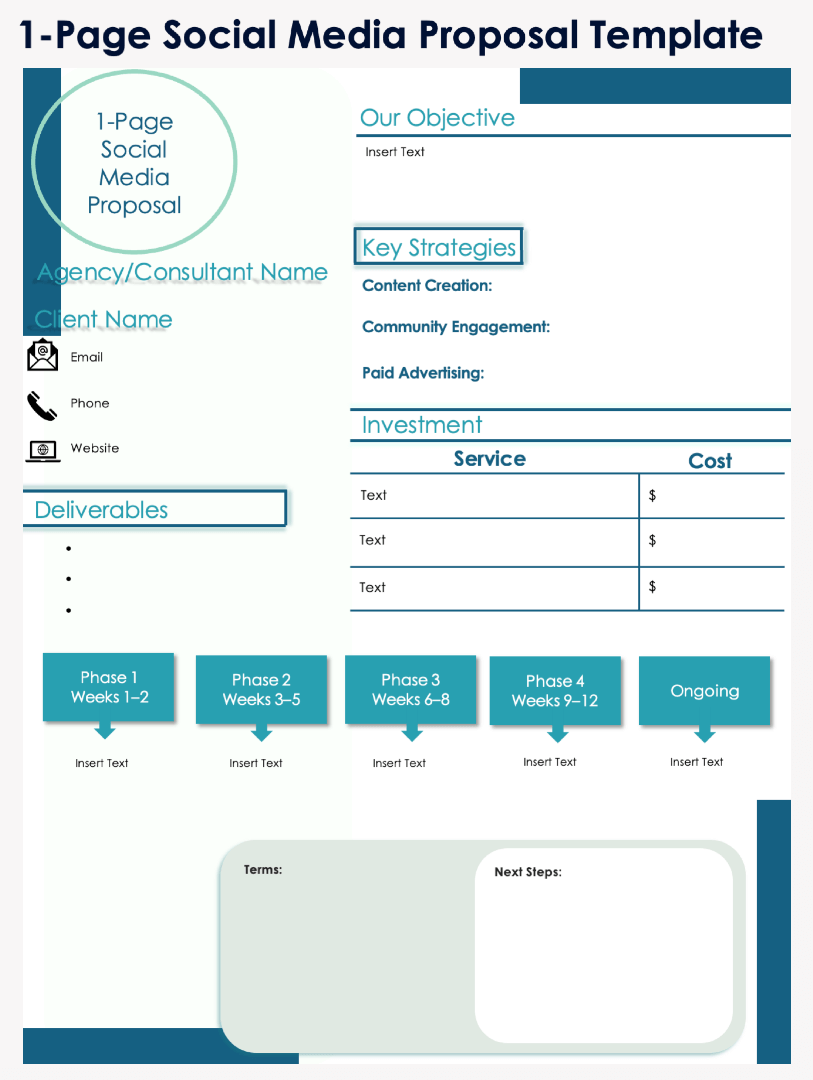
Start with a master document containing your standard sections: cover, executive summary, objectives, current situation, proposed strategy, scope, deliverables, timeline, reporting, investment, payment terms, exclusions, validity, and acceptance. Keep this master private and create a new client-specific copy for every quotation.
Next, create modular service blocks. Prepare reusable sections for organic social management, paid social, short-form video, community management, influencer campaigns, social audits, analytics reporting, and strategy consulting. Each block should describe deliverables, assumptions, exclusions, and pricing logic.
Create a pricing worksheet alongside the document. Calculate production time, account-management time, strategy time, software costs, subcontractor costs, overhead, and desired margin before deciding on the final client price. Do not rely on competitor pricing alone because two businesses can have completely different cost structures.
Then create a research checklist. Record the client’s current platforms, business goals, target audience, major competitors, existing content assets, apparent performance gaps, desired start date, approval contacts, and any known campaign dates. The checklist keeps discovery consistent without forcing every client into the same strategy.
Build an approval checklist as well. Before sending, verify client details, scope, quantities, platform names, pricing, taxes where applicable, payment schedule, validity period, exclusions, revision limits, and acceptance instructions. This catches administrative errors that can undermine an otherwise strong sales document.
Finally, connect the quotation to delivery. Once accepted, the scope should be transferred into a project plan or statement of work. Deliverables should become tasks, milestones should become deadlines, and reporting requirements should become recurring activities. This is how a quotation becomes part of a reliable operating system rather than a forgotten sales document.
A good master template should be reviewed periodically. Remove outdated services, update terminology, improve sections that repeatedly create questions, and incorporate lessons from completed projects. If clients regularly misunderstand a particular clause, rewrite it rather than explaining the same issue manually every time.
The objective is efficiency without loss of personalization. A strong system should allow a professional to produce a client-specific quotation quickly while preserving enough detail to make the offer genuinely useful and commercially defensible.
Reference Examples
The following reference examples illustrate different document layouts, quotation structures, proposal formats, planning sheets, and supporting business templates that can inform the design of a professional quotation.
social media marketing quotation template template free

Source: Template.net
social media marketing quotation template template word

Source: Template.net
social media marketing quotation template template pdf

Source: Template.net
social media marketing quotation template template free download

Source: Template.net
social media marketing quotation template template uk

Source: Template.net
social media marketing quotation template template download
Source: HubSpot
social media marketing quotation template template doc
Source: HubSpot
social media marketing quotation template template sandbox
Source: HubSpot
social media marketing quotation template template function overload
Source: HubSpot
social media marketing quotation template template parameters

Source: Asana
social media marketing quotation template template link
Source: AgencyAnalytics
social media marketing quotation template template road
Source: Sprout Social
Frequently Asked Questions
What should a social media marketing quotation template include?
It should normally include client information, objectives, proposed services, deliverables, platforms, timeline, pricing, payment terms, exclusions, quotation validity, approval instructions, and any important assumptions. The exact sections can be expanded or shortened according to project complexity.
Should a quotation and proposal be the same document?
They can be combined, but they do not have to be. A quotation is usually more focused on scope and commercial terms, while a proposal may contain more strategic detail. For smaller projects, combining both can reduce administrative work.
Is a free quotation template good enough for professional use?
A free template can provide a useful starting structure. Professional quality comes from how accurately you customize the scope, pricing, terms, branding, and client-specific strategy. Always check the licensing conditions of any template you did not create yourself.
Should social media advertising spend be included in the quoted service fee?
Usually, it is clearer to separate advertising spend from the professional management fee unless there is a specific reason to bundle them. The quotation should make clear who funds the advertising budget and whether the provider charges a separate management fee.
How many pages should a social media quotation be?
There is no universal page count. A straightforward recurring service may fit into two or three pages, while a complex campaign can require more. The document should contain enough detail to remove ambiguity without burying the important commercial information.
Should I provide several pricing options?
Several options can help when the client’s requirements or budget are uncertain. Keep the differences meaningful and explain which option you recommend. Too many options can make a simple buying decision unnecessarily difficult.
Can I use a social media marketing quotation template for recurring clients?
Yes. A reusable template is particularly valuable for recurring work. Update the client-specific scope, pricing, dates, and deliverables while keeping the underlying document structure consistent.
How should revisions be handled?
Define the number of included revision rounds and how feedback should be supplied. A clear approval process helps prevent open-ended editing from consuming the time allocated to other deliverables.
What is the difference between a quotation and an invoice?
A quotation communicates proposed work and price before approval. An invoice requests payment for an amount that is already due under the agreed commercial arrangement. They serve different stages of the client relationship.
When should the quotation expire?
Use a validity period that reflects your actual commercial circumstances. The purpose is to prevent old pricing or availability from being assumed indefinitely. The period should be reasonable and clearly stated.
Conclusion
A well-designed social media marketing quotation template gives freelancers, agencies, and consultants a reliable way to turn an initial conversation into a clear commercial offer. The strongest templates do not simply list prices. They connect the client’s goals with specific platforms, deliverables, workflows, timelines, reporting methods, and payment conditions. By separating strategy from execution, defining inclusions and exclusions, explaining assumptions, and keeping advertising spend transparent, the quotation becomes useful to both the buyer and the service provider. The best approach is to maintain a carefully controlled master document while customizing every client-facing version. When research, pricing, approvals, and delivery all connect to the same structure, a social media marketing quotation template becomes more than a reusable document: it becomes a practical system for selling and delivering professional social media services with greater clarity, consistency, and confidence.
