Collecting honest feedback is one of the most effective ways to understand how residents feel about their apartment rental experience. A well-designed apartment rental feedback form gives tenants a simple way to share their opinions about the property, maintenance, communication, amenities, cleanliness, safety, and overall satisfaction.
For landlords and property managers, resident feedback can reveal problems that may otherwise go unnoticed. It can also highlight the features tenants appreciate most. Whether you manage a single apartment building or a larger rental community, a structured feedback form makes it easier to collect useful information and turn resident comments into practical improvements.
What Is an Apartment Rental Feedback Form?
An apartment rental feedback form is a document or digital questionnaire used to collect opinions from current residents, former tenants, or prospective renters. It can be completed after move-in, during a tenancy, after a maintenance request, or when a tenant moves out.
The best tenant feedback forms combine rating questions with open-ended questions. Rating scales make responses easier to compare, while written comments provide context that numerical scores cannot always capture.
A typical apartment resident feedback form may ask about:
- Overall satisfaction with the apartment
- Condition and cleanliness of the unit
- Maintenance and repair services
- Property management communication
- Building amenities
- Security and safety
- Location and surrounding area
- Value for rent paid
- Likelihood of recommending the property
- Suggestions for improvement
Why Use an Apartment Rental Feedback Form?
Resident feedback provides property managers with direct insight into the tenant experience. Instead of relying only on complaints or informal conversations, a standardized form creates a consistent way to gather information.
Identify Problems Early
Tenants may notice recurring issues with maintenance, noise, cleanliness, parking, amenities, or communication before management does. Regular feedback gives property managers an opportunity to address these concerns before they become larger problems.
Improve Property Management
Feedback can show where management processes are working well and where they need improvement. For example, several residents may report that maintenance requests are resolved quickly but communication about repair schedules is unclear. That insight can help management improve its communication process.
Understand Resident Satisfaction
A tenant satisfaction survey can provide a broader view of the rental experience. Instead of focusing on a single complaint, property managers can identify patterns across multiple responses.
Support Tenant Retention
Listening to residents can help create a stronger rental experience. When tenants feel that their concerns are heard and addressed, they have a clearer channel for communicating with management.
Apartment Rental Feedback Form Template
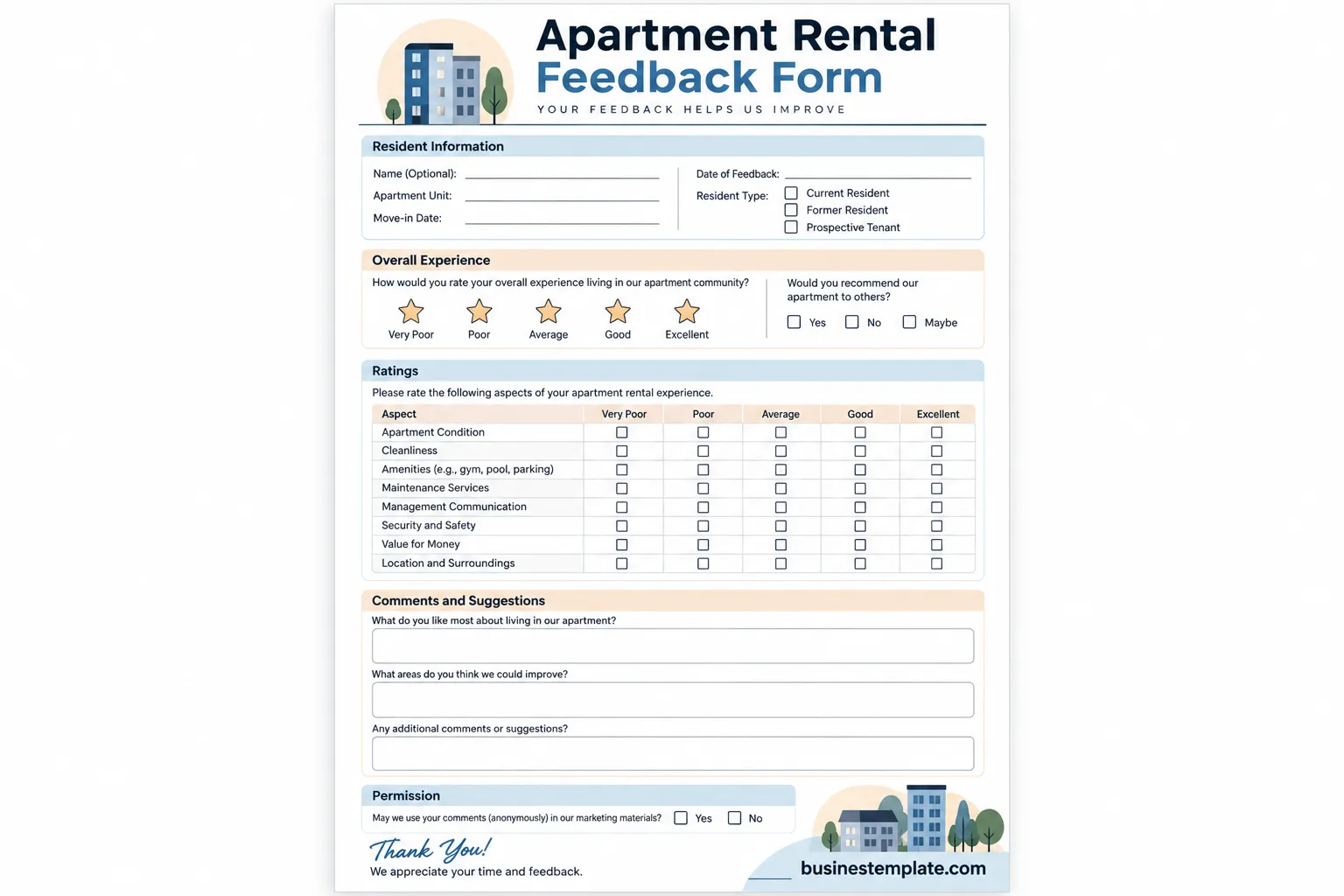
The following printable template provides a practical structure for collecting apartment resident feedback. It includes resident information, overall experience, individual ratings, comments, suggestions, and permission for anonymous use of feedback.
What to Include in a Tenant Feedback Form
A useful rental property feedback form should be easy to understand and quick to complete. Avoid asking unnecessary questions. Each question should help you learn something that can support better property management.
1. Resident Information
Begin with optional basic information such as the apartment unit, move-in date, feedback date, and resident type. Making the resident’s name optional can encourage more honest responses.
If anonymity is important, avoid requesting personal information that is not necessary for your analysis.
2. Overall Experience
Ask residents to rate their overall experience using a simple scale such as Very Poor, Poor, Average, Good, or Excellent. You can also include a question asking whether they would recommend the apartment to others.
This provides a quick snapshot of overall tenant satisfaction.
3. Property Ratings
Use a consistent rating scale for specific areas of the rental experience. Useful categories include:
- Apartment condition
- Cleanliness
- Building amenities
- Maintenance services
- Management communication
- Security and safety
- Value for money
- Location and surroundings
Keeping the same scale across categories makes the results easier to review and compare.
4. Comments and Suggestions
Open-ended questions are especially valuable because residents can explain why they selected a particular rating. Consider asking what they like most about the property, what could be improved, and whether they have additional comments or suggestions.
5. Permission for Feedback Use
If resident comments may be used in marketing materials, testimonials, reports, or promotional content, include a separate permission question. Clearly explain whether comments will be anonymous and give residents the option to decline.
How to Ask Better Apartment Feedback Questions
The quality of the answers depends heavily on the quality of the questions. Keep questions specific, neutral, and easy to answer.
Use Clear Language
Instead of asking a complicated question about several aspects of the property at once, focus on one topic per question. This makes the results easier to interpret.
Avoid Leading Questions
Questions should not suggest that a resident should have a positive or negative opinion. Neutral wording encourages more authentic responses.
Combine Ratings and Written Responses
A rating tells you what residents think, while a written response can explain why. Using both formats creates a more complete picture of the tenant experience.
Keep the Form Short
A lengthy survey can reduce completion rates. Focus on the areas that matter most to your property and residents. A concise apartment satisfaction survey is often easier for tenants to complete consistently.
When Should You Send an Apartment Feedback Form?
There is no single correct time to collect resident feedback. The best timing depends on what you want to measure.
- After move-in: Learn whether the apartment met expectations.
- After maintenance: Measure service quality and response experience.
- Mid-tenancy: Identify concerns before they become serious issues.
- Before lease renewal: Understand overall satisfaction and improvement opportunities.
- After move-out: Learn what influenced the resident’s rental experience.
- After major improvements: Measure reactions to renovations or new amenities.
Tips for Getting More Useful Resident Feedback
Simply sending a survey does not guarantee useful responses. A few practical steps can improve the quality of your tenant feedback.
- Make it convenient: Offer a printable form or digital version depending on resident preferences.
- Explain the purpose: Tell residents how their feedback will be used.
- Allow honest comments: Provide enough space for residents to explain concerns.
- Protect privacy: Do not request personal details that are unnecessary.
- Review responses regularly: Look for repeated themes instead of focusing only on individual comments.
- Take action: When practical, use feedback to improve services and communicate changes.
How Property Managers Can Analyze Feedback
Once feedback has been collected, organize the responses into categories. For example, maintenance, communication, cleanliness, amenities, safety, and value can each be reviewed separately.
Look for recurring patterns. If many residents give low ratings to the same area, it may deserve additional attention. Written comments can then help explain the reason behind those ratings.
It is also useful to compare feedback over time. A property manager might collect responses quarterly and compare results from one period to another. This can help show whether operational changes are improving the resident experience.
Printable vs. Digital Tenant Feedback Forms
A printable apartment rental feedback form is useful for in-person meetings, property inspections, move-out appointments, and residents who prefer paper. A digital survey can make data collection and analysis faster, especially for larger properties.
Both formats can use the same questions. The important factor is making the process simple for residents and ensuring that the collected feedback can be reviewed consistently.
Common Mistakes to Avoid
Several common mistakes can make a rental feedback survey less effective.
- Asking too many questions
- Using confusing or technical language
- Combining multiple topics in one question
- Making every question mandatory
- Failing to provide space for written comments
- Ignoring negative feedback after collecting it
- Using resident comments publicly without appropriate permission
The goal is not simply to collect a large number of responses. The goal is to collect information that can help improve the rental experience.
Conclusion
An apartment rental feedback form provides a straightforward way for landlords and property managers to understand the resident experience. By combining satisfaction ratings, specific property questions, written comments, and improvement suggestions, a well-designed form can turn everyday tenant opinions into useful management insights.
Whether you use a printable apartment feedback form or a digital tenant satisfaction survey, keep the questions clear, neutral, and relevant. Review responses regularly, identify recurring issues, and use the information to make practical improvements. A simple feedback process can become an important part of maintaining a better apartment community and building stronger communication with residents.
