An estate finance manager may work in a single large private residence, across several properties, or within a broader private-office structure. Depending on the organization, the position may own day-to-day bookkeeping and reconciliations, prepare budgets and forecasts, review invoices, coordinate payroll information, monitor capital expenditure, maintain financial records, and produce reports that allow decision-makers to understand where money is being spent. Estate-management sources consistently describe financial oversight as one part of a wider operational responsibility that includes vendors, staff, property maintenance, and reporting. :contentReference[oaicite:0]{index=0}
This makes the template useful for two audiences. Employers can use it to define scope, authority, qualifications, reporting lines, and performance expectations before recruitment begins. Candidates can use a well-written description to determine whether a position genuinely matches their experience in accounting, finance, property operations, household administration, or private-client service.
The strongest version is specific without becoming a procedure manual. It should explain what the role owns, what the role supports, what decisions require approval, what financial information must be reported, and what qualifications are genuinely necessary. It should also distinguish essential requirements from preferred experience so that the hiring process does not become an unnecessarily narrow search.
This guide explains how to build, customize, compare, and use an estate finance manager job description Template. It includes a practical structure, realistic examples, format considerations for Word, PDF, Excel, and collaborative documents, guidance for recruitment platforms, common mistakes, and a practical solution for turning a generic template into a role-specific document.
What Is an Estate Finance Manager Job Description Template?
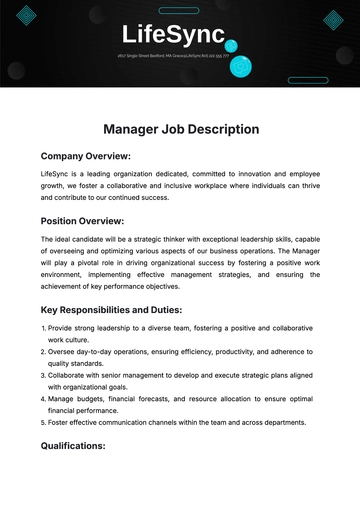
An estate finance manager job description Template is a reusable framework for defining a finance-focused position within a private estate or household operation. Instead of beginning with a blank page, the employer starts with a consistent structure containing fields such as job title, reporting relationship, purpose, responsibilities, qualifications, financial scope, systems, working arrangements, and performance expectations.
The word “estate” matters because the financial environment is different from a conventional corporate finance department. Transactions may relate to household staff, multiple residences, vehicles, property maintenance, insurance, utilities, renovations, travel, events, specialist contractors, personal assets, and other private expenses. An estate manager may already oversee some of these areas, while a finance manager may be responsible for the financial controls and reporting around them.
A job description should not assume that every estate finance role is identical. Some employers need a hands-on accounting professional who reconciles accounts and prepares reports. Others need a finance lead who coordinates external accountants, manages budgets, reviews capital projects, and provides financial analysis to a family office. The template should make that distinction visible.
Good job-description practice generally includes a clear title, role summary, responsibilities, required qualifications, preferred qualifications, reporting structure, work arrangements, and compensation or classification information where appropriate. :contentReference[oaicite:1]{index=1} For an estate finance role, these standard elements should be supplemented with estate-specific financial responsibilities.
The result should function as a source of truth for recruitment and onboarding rather than simply as an attractive job advertisement. Once approved, the same document can inform interview questions, access permissions, onboarding priorities, performance reviews, and later role changes.
Why the Template Matters in Private Estate Finance
Private-estate finance often involves information that is unusually sensitive. A finance professional may see household payroll, vendor pricing, insurance information, property costs, investment-related expenses, travel expenditure, and personal financial information. The job description should therefore establish confidentiality as an operating expectation rather than treating it as an afterthought.
Scope is equally important. If a finance manager is expected to approve invoices, authorize payments, manage a budget, supervise accounting staff, or communicate with banks and advisers, those authorities should be described clearly. Otherwise, candidates may interpret “manage finances” in very different ways.
Another benefit is accountability. An estate finance manager needs measurable outputs such as timely reconciliations, accurate monthly reporting, budget-versus-actual analysis, clean documentation, controlled payment processes, and reliable cash forecasting. These outcomes are easier to evaluate when the job description states them explicitly.
The document also helps separate financial ownership from operational ownership. For example, an estate manager may negotiate with a contractor and supervise work on a property, while the finance manager reviews the financial documentation, verifies budget availability, checks invoices, and reports project expenditure. A clear description prevents these responsibilities from becoming confused.
Finally, a structured template makes recruitment more consistent. A job description that specifies the reporting line, decision rights, essential qualifications, financial systems, and expected outputs gives candidates a more accurate picture of the role and gives interviewers a common framework for evaluation.
Core Components of an Estate Finance Manager Job Description Template
The opening section should identify the role in simple terms. Include the official title, department or function, reporting line, location, employment type, and whether the position supports one property or a portfolio. If the estate operates across countries or jurisdictions, note the geographic scope without unnecessarily revealing confidential information.
The role summary should answer three questions quickly: why the position exists, what financial area it owns, and who relies on its work. A useful summary might state that the manager is responsible for maintaining accurate estate financial records, overseeing budgeting and reporting, coordinating payment processes, and providing financial visibility to the principal or family office.
The responsibility section should use action-oriented language. “Responsible for finances” is too broad to be useful. Stronger wording identifies the activity and expected result, such as “prepare monthly management reports comparing actual expenditure with approved budgets and investigate significant variances.”
Qualifications should be divided into required and preferred categories. Required qualifications might include relevant finance experience, strong spreadsheet skills, accounting knowledge, and experience handling confidential information. Preferred qualifications could include private-estate experience, family-office exposure, property accounting, experience with multiple entities, or professional accounting credentials.
The template should also include success measures. These might cover reporting timeliness, reconciliation accuracy, payment controls, budget forecasting, documentation quality, vendor-account administration, and responsiveness to management requests. Clear outcomes make the job description useful long after recruitment ends.
For a finance-focused role, the financial section should show the expected breadth of work. It can cover operating budgets, capital expenditure, payroll coordination, accounts payable, accounts receivable where applicable, bank reconciliations, cash forecasting, financial statements, expense reviews, vendor records, and management reporting. The exact scope should reflect the estate’s actual structure.
Property-related finance should be addressed separately when it forms a substantial part of the role. A manager might track maintenance costs, renovation budgets, insurance renewals, utilities, service contracts, property taxes or equivalent local obligations, and capital purchases. The description should state whether the manager only reports these costs or also has authority over approvals.
Technology deserves its own consideration. The role may use accounting software, spreadsheets, cloud storage, payroll systems, banking platforms, expense tools, property-management systems, or family-office technology. Rather than demanding one specific product unnecessarily, describe the underlying capability when possible: financial-system proficiency, spreadsheet modeling, reconciliation workflows, and secure document management.
Confidentiality and discretion should be explicit. Estate finance professionals can have access to sensitive information even when their role is operational rather than investment-focused. The description should establish expectations for secure handling of records, appropriate communication, data access, and professional boundaries.
The reporting structure should identify who receives financial reports and who approves significant expenditures. Depending on the estate, this might be a principal, chief of staff, family-office executive, controller, CFO, trustee, or senior estate manager. Use job titles rather than individual names so the document remains usable when personnel change.
Sample Role Profile
A practical sample role can begin with the title “Estate Finance Manager” and a concise purpose statement. The position could be described as responsible for maintaining financial control and visibility across household and property operations, ensuring that transactions are accurately recorded, budgets are monitored, reporting is timely, and financial information is presented clearly to authorized decision-makers.
The sample responsibilities might include preparing annual operating budgets, maintaining monthly forecasts, reviewing invoices, coordinating payment approvals, reconciling bank and credit-card accounts, monitoring payroll information, preparing management reports, maintaining vendor records, tracking capital projects, and supporting external accountants during reporting or tax periods.
The role should also define what it does not own. For example, an estate finance manager might not be responsible for deciding whether a renovation should proceed, hiring household employees, selecting an investment strategy, or providing legal advice. Those decisions may belong to the principal, estate manager, family office, investment adviser, HR specialist, or legal adviser.
Success measures can be written in practical terms. Within the first months, the manager might be expected to understand the chart of accounts, document the payment workflow, reconcile key accounts, establish a reporting calendar, review recurring expenses, and identify gaps in supporting documentation. Longer-term measures can focus on forecasting quality, reporting reliability, budget discipline, and process improvement.
This outcome-oriented approach is stronger than copying a generic finance-manager description. A job description should describe the actual work and expected outcomes rather than an idealized list of every finance skill a hiring manager has ever encountered. :contentReference[oaicite:2]{index=2}
Financial Responsibilities to Include
Budget preparation is usually one of the most important financial responsibilities. The template should explain whether the manager prepares the budget independently, coordinates inputs from property and household teams, or consolidates budgets prepared by others. It should also specify whether the budget covers one residence, multiple properties, staff costs, projects, or broader family-office expenses.
Budget monitoring should extend beyond comparing two totals. A useful manager identifies meaningful variances, understands the operational reason behind them, distinguishes one-time spending from recurring expenditure, and communicates whether a variance is temporary or likely to affect the full-year forecast.
Cash forecasting is another valuable responsibility. A private estate may have uneven spending patterns because of renovations, insurance renewals, seasonal operations, travel, staffing changes, property purchases, or major maintenance. A finance manager can improve visibility by maintaining a forward-looking cash schedule and identifying upcoming funding requirements.
Accounts payable should describe the entire control chain where relevant: invoice receipt, coding, supporting documentation, approval, payment scheduling, and reconciliation. The manager may not perform every step personally, but the job description should identify which stages fall within the role’s ownership.
Accounts receivable may be less central to a private household but can matter for estates with rental properties, agricultural activities, hospitality operations, reimbursements, or other income-generating activities. The template should include it only when it is genuinely part of the role.
Payroll coordination can involve collecting approved hours, allowances, changes, or other information and working with an external payroll provider or internal payroll function. Avoid implying that the finance manager is responsible for employment-law compliance unless that responsibility has actually been assigned.
Reconciliation responsibilities should identify relevant accounts without overloading the description. Examples include bank accounts, credit cards, petty cash, vendor balances, payroll clearing accounts, property-related accounts, and other ledgers. The objective is accurate records supported by appropriate documentation.
Management reporting should focus on decisions. A useful monthly report might contain cash position, operating expenditure, budget-versus-actual results, major variances, capital-project spending, outstanding invoices, upcoming commitments, and concise explanations of unusual items.
Capital expenditure should be separated from routine operating costs when the estate has substantial projects. The finance manager may track approved budgets, purchase commitments, invoices paid, forecast completion costs, and remaining budget. This gives decision-makers a better picture of the financial status of a renovation or major asset purchase.
Vendor management can have a financial component even when the estate manager owns the relationship. Finance may maintain vendor records, verify invoices against contracts or purchase orders, monitor payment terms, identify duplicate charges, and report recurring cost trends.
Property and Household Finance Scope
An estate finance manager job description Template should reflect the unusual variety of spending categories found in private-property operations. Routine costs can include utilities, maintenance, cleaning services, landscaping, security, transportation, insurance, subscriptions, supplies, repairs, and professional services.
Major property portfolios may also involve recurring contracts with specialists. Examples include mechanical servicing, elevator maintenance, pool services, generators, landscaping, security systems, building inspections, technology systems, and specialist conservation or collection services. The finance manager may track the financial side while operational personnel manage technical performance.
Asset tracking can be useful when the estate contains vehicles, equipment, furnishings, artwork, collectibles, or other significant property. The finance role may maintain financial records or coordinate with an asset-management process. The description should clarify whether valuation, insurance, physical custody, and inventory are part of the role or handled elsewhere.
Multiple properties create another layer of complexity. The template should state whether financial records are consolidated, maintained separately by property, or organized by entity. A manager supporting several residences may need to distinguish costs by property, currency, legal entity, or operating purpose.
International estates require additional care. Currency conversions, local accounting practices, tax obligations, payroll arrangements, banking relationships, and professional advisers can vary by jurisdiction. The job description should describe the need to coordinate with appropriate advisers rather than implying that the finance manager personally provides legal or tax advice in every jurisdiction.
Financial controls should be practical rather than bureaucratic. Examples include documented approval thresholds, separation of payment preparation and approval, secure banking access, regular reconciliations, supporting documentation, controlled vendor setup, and periodic review of recurring payments.
The description should also establish escalation rules. A finance manager needs to know when an unusual payment, budget overrun, vendor conflict, suspected error, or missing document requires immediate escalation. This is particularly important when the role works closely with a principal who may expect rapid decisions.
Documentation is another core responsibility. Financial records should be organized so another authorized person can understand what a transaction represents, who approved it, which property or project it relates to, and where supporting documents are stored.
The template can also include a records-retention expectation, but it should avoid inventing a legal retention period. The appropriate period depends on jurisdiction, entity structure, tax requirements, contractual obligations, and the estate’s professional advisers.
A strong document therefore presents estate finance as an operational control function, not simply bookkeeping. The manager’s work should help the estate understand where money is going, what commitments are approaching, which budgets are under pressure, and whether records are complete enough for management and professional reporting.
Template Layout and Document Design
The best layout is usually simple. A clean first page can contain the title, role purpose, reporting line, location, employment type, and a short summary. Subsequent sections can cover responsibilities, qualifications, financial scope, technology, working arrangements, success measures, and approval information.
Tables are useful for structured information such as reporting relationships, authority limits, systems, and required qualifications. They are less suitable for long narrative descriptions because dense tables can become difficult to read on mobile devices or when converted to PDF.
Bulleted responsibilities are normally easier to scan than large blocks of text. Each bullet should ideally contain a meaningful action, object, and outcome. For example, “Review monthly property expenditure and investigate material variances” is more informative than “Handle property finances.”
Use consistent terminology throughout the document. If the organization uses “principal,” do not alternate between “owner,” “client,” “employer,” and “family” unless those terms have distinct meanings. Consistency reduces ambiguity and helps candidates understand the organizational structure.
Keep the visual design professional but restrained. The objective is clarity, not decoration. A finance role benefits from readable headings, clear spacing, consistent labels, and a logical order that allows an experienced candidate to locate the information they need quickly.

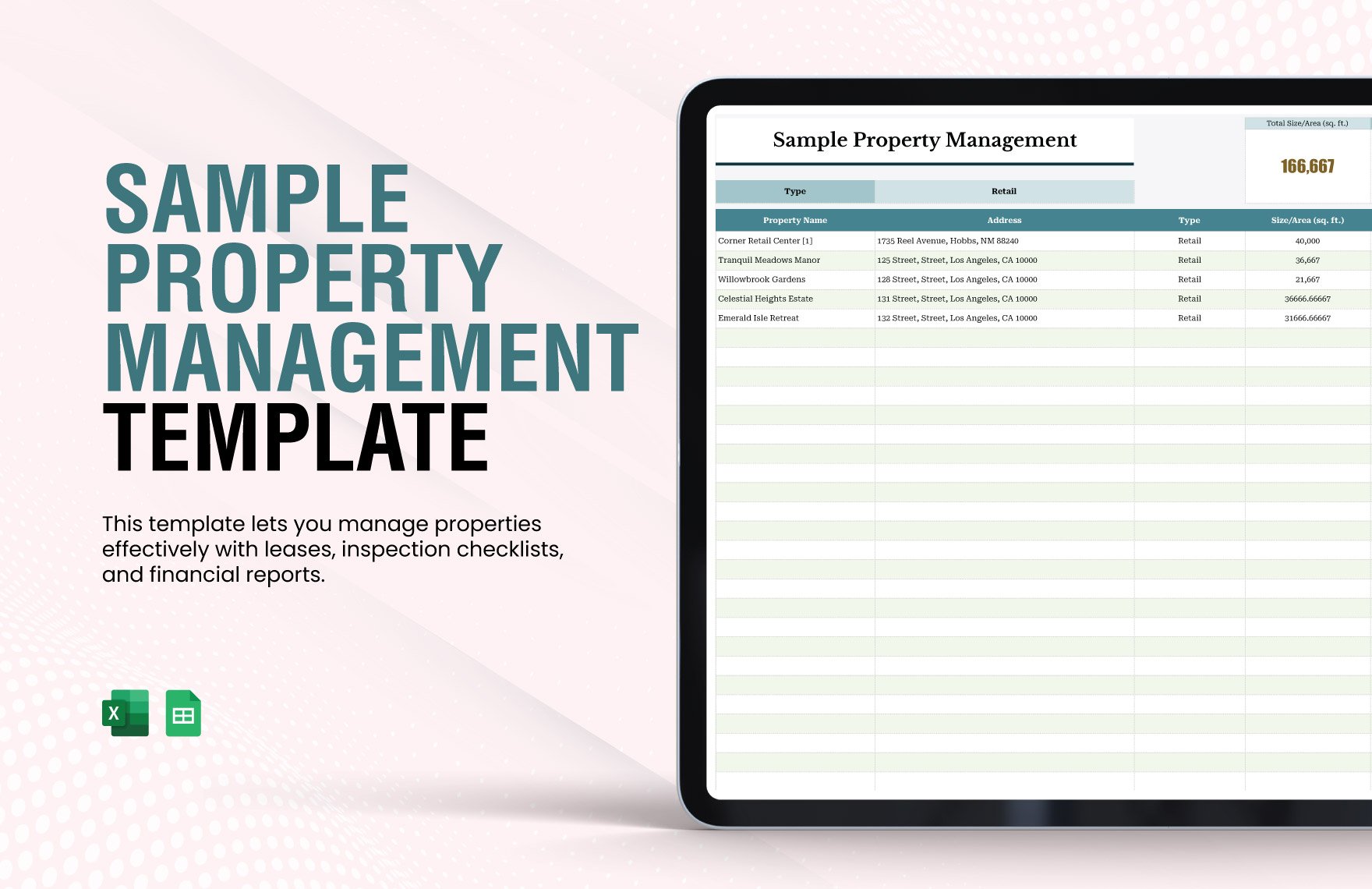
A property-management layout can be useful as a visual reference because it shows how operational details can be organized into distinct fields. For an estate finance document, the same principle can be applied to financial categories, reporting relationships, property identifiers, and recurring obligations.
The important lesson is not to copy a property-management design literally. Instead, identify the information architecture: key identifiers at the top, structured data in the middle, and enough whitespace for quick review. An estate finance manager template should adapt that architecture to financial responsibilities.
For example, a role document might place “Reports To,” “Direct Reports,” “Property Scope,” and “Financial Scope” in a compact information block. This immediately tells a candidate whether the role is an individual-contributor position, a supervisory role, or a broader finance-management position.
The same structure can be applied to authority limits. A template could state whether the manager prepares payments, recommends payments, approves payments within a defined threshold, or escalates all payments for principal approval. Those distinctions are often more useful than generic phrases such as “manage accounts payable.”
Document structure also matters for future editing. A well-organized template can be reused when an estate adds another property, changes its reporting structure, adopts new accounting software, or expands the manager’s responsibilities.
Budgeting, Forecasting, and Variance Analysis
Budgeting is where the finance manager’s role becomes especially valuable to an estate. The manager should help convert operational plans into financial expectations. This may involve collecting information from property teams, reviewing historical expenditure, identifying recurring commitments, and separating predictable costs from discretionary or project-based spending.
A useful budget structure can contain categories for staffing, property operations, utilities, maintenance, insurance, transportation, professional services, technology, travel, events, and capital expenditure. These are examples rather than universal categories; each estate should build its chart around its actual operations.
Forecasting should be treated as a living process. The annual budget is a baseline, while the forecast reflects what management currently expects to happen. If a major repair is delayed, a staffing plan changes, or a project expands in scope, the forecast should reflect that information rather than preserving an outdated expectation.
Variance analysis becomes meaningful when the manager explains causes. A numerical difference without context is rarely enough. A strong report might distinguish timing differences, price changes, volume changes, scope changes, one-time expenditure, and genuine overspending.
Budget reporting can also identify decisions that need attention. Instead of presenting every line item equally, the manager can highlight material exceptions, approaching commitments, unusual transactions, and areas where management action could affect the outcome.

A monthly property-management report provides a useful model for thinking about recurring estate reporting. It separates income, expenses, and supporting details into a repeatable structure that can be reviewed each month.
An estate finance manager can adapt that idea into a management pack containing a financial summary, budget-versus-actual analysis, cash position, outstanding commitments, major project spending, and explanations of material changes.
The report should not become a data dump. A principal or family-office executive generally needs the most important financial information first, followed by enough supporting detail to investigate an issue when necessary.
For a multi-property operation, the same report can be designed at two levels. The first view summarizes the portfolio, while supporting pages show individual properties. This preserves a concise executive view without losing operational detail.
When designing the job description, specify whether producing these reports is a core responsibility or whether the role simply supplies data to another finance professional. That distinction materially changes the seniority and qualifications required.
Accounts Payable, Vendor Controls, and Documentation
Accounts payable is often one of the most practical areas to define precisely. The template should explain whether the manager receives invoices directly, reviews coding, checks supporting documents, maintains a payment calendar, prepares payment batches, reconciles vendor accounts, or supervises an accounts-payable assistant.
Payment controls are especially important in private environments. A process can require invoices to be matched with approved work, contracts, purchase orders, or other evidence before payment. The exact control should reflect the estate’s risk profile and approval structure.
Vendor records should be maintained carefully. Changes to bank details, new supplier setup, duplicate vendors, unusual payment requests, and invoices that differ materially from established patterns can all deserve additional review. The job description can require the manager to maintain strong controls without prescribing a specific fraud-detection method.
Payment timing can also affect liquidity. A finance manager may maintain a forward payment schedule that helps the estate anticipate large outflows. Where contracts allow discounts or different payment terms, the manager can report the financial implications to the appropriate decision-maker.
Documentation is the foundation of the process. The manager should be able to trace material payments from invoice through approval to bank transaction and accounting record. This does not mean every estate needs a complex enterprise system; it means the process should be understandable and repeatable.
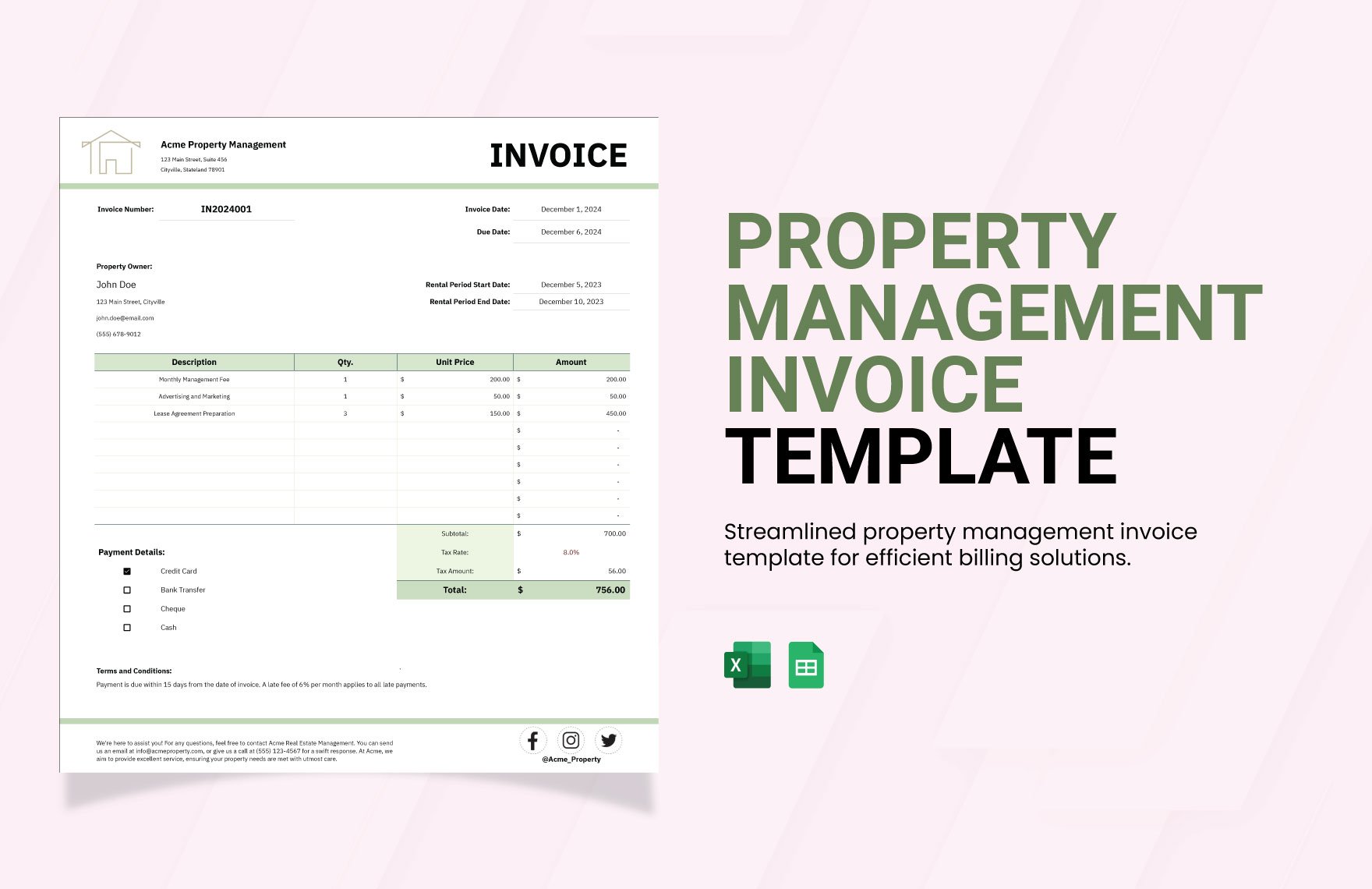
An invoice layout illustrates the type of information finance staff need to review: invoice identity, dates, description, quantities, prices, totals, payment terms, and payment information. The exact fields will vary, but the principle is universal: the supporting document should make the transaction understandable.
For an estate finance manager, invoice review may also involve checking the property, project, vendor agreement, approving person, and budget category. These additional dimensions are useful when management wants to analyze spending by residence or project.
The job description should state whether the manager has final approval authority. If approval rests with another person, use language such as “prepare and route approved payments” rather than “authorize payments.” Small wording differences can have significant operational consequences.
When external accountants are involved, the finance manager may become the internal coordinator who prepares records, resolves questions, supplies reconciliations, and tracks outstanding requests. That relationship should be included if it is a recurring responsibility.
A strong template therefore connects accounts payable to the broader financial-control system rather than treating invoice processing as an isolated clerical task.
Asset Records and Estate Inventory
Asset records can be relevant when an estate contains valuable or operationally important property. The finance function may maintain purchase records, depreciation information where applicable, insurance documentation, ownership details, location information, and disposal records, while a separate estate-management function handles physical custody.
Inventory structures are particularly helpful for large estates because assets can otherwise become difficult to track. A structured register can record an identifier, category, description, purchase date, purchase value, location, responsible function, insurance reference, and status.
The job description should distinguish accounting records from physical inventory management. A finance manager may own the financial ledger but not be responsible for physically inspecting every item. Conversely, some estates may combine these responsibilities in one position.
Asset registers can also support capital expenditure reporting. When a major purchase is made, the finance manager can connect the transaction to the approved project or budget and ensure the accounting record is consistent with the estate’s policies.
For vehicles and equipment, records may need to connect purchase costs with insurance, maintenance, registration, or replacement planning. Again, the exact responsibilities should be determined by the estate’s operating model rather than copied from a generic template.
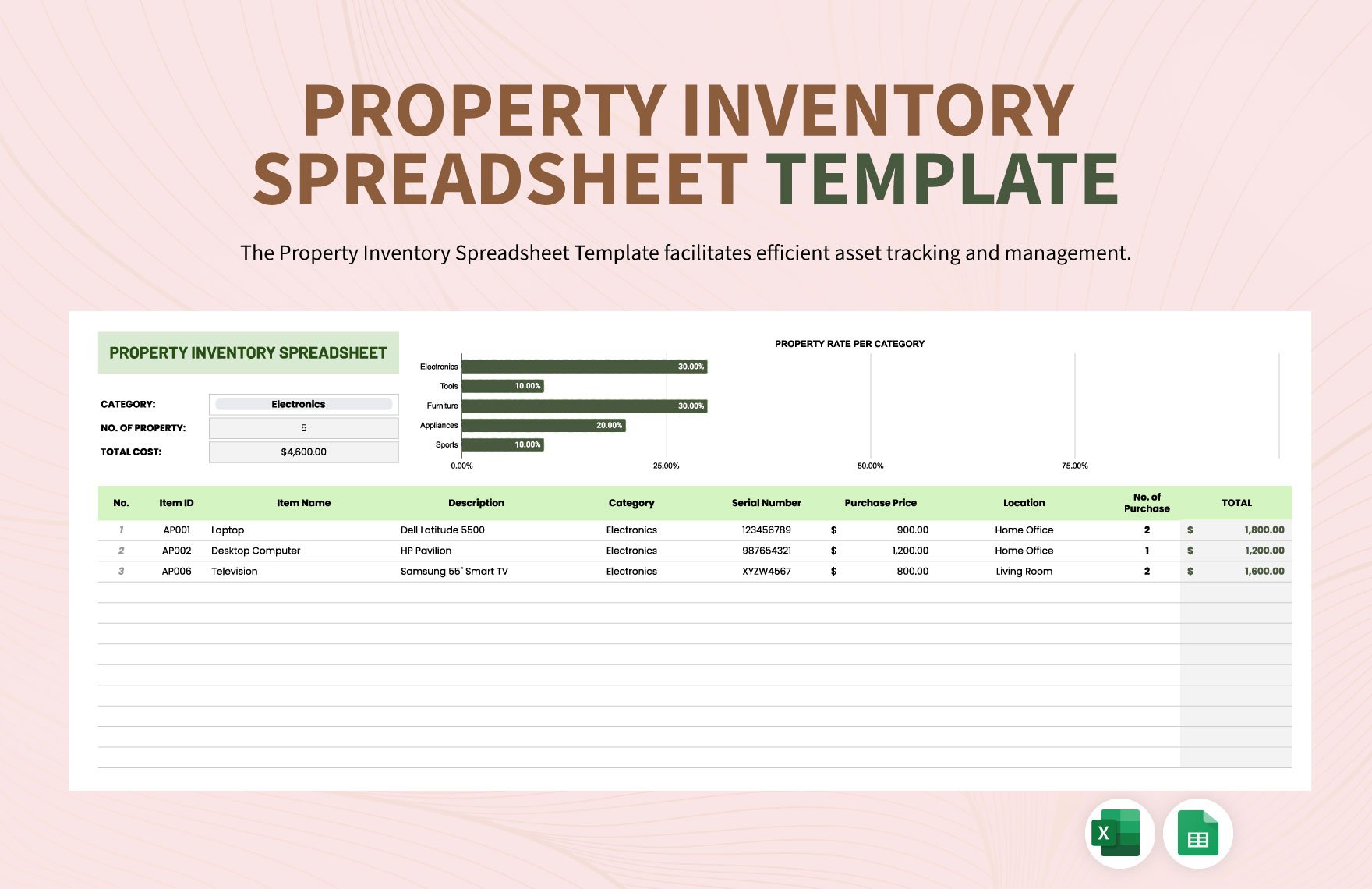
A property inventory spreadsheet demonstrates how an asset list can combine identifiers, categories, descriptions, purchase information, locations, and totals. This type of structure can inspire an estate asset register without requiring the finance manager to own every operational inventory task.
For a finance-focused position, the most useful fields are those that support financial control and reporting. Purchase cost, capitalization status, project code, entity, property, and supporting documentation may be more important than operational specifications.
Where the estate has specialized assets, the finance manager should coordinate with the appropriate expert rather than independently assigning values or making technical judgments. Valuation, insurance, conservation, and legal ownership can require specialist advice.
The template can therefore state that the manager maintains accurate financial records and coordinates with property or asset specialists. This preserves accountability without creating responsibilities that the role is not qualified to perform.
Clear boundaries are particularly important when a role touches valuable personal property. The job description should describe financial administration and control, while specialist functions remain assigned to appropriately qualified professionals.
Qualifications and Skills
Education requirements should match the actual role. A bachelor’s degree in accounting, finance, business, or a related discipline may be appropriate for some positions, while equivalent practical experience may be more relevant for others. Do not list a degree simply because it appears in another finance job description.
Professional certifications can be useful when the role involves complex accounting, reporting, or supervision. Examples include accounting qualifications or other recognized credentials, but the template should mark them as required only when the employer genuinely needs them.
Relevant experience is usually more important than a long list of theoretical competencies. Experience with private households, family offices, property operations, high-value assets, multiple entities, or confidential financial information may be especially valuable for senior estate finance roles.
Technical skills should include strong spreadsheet capability and comfort with accounting or financial-management systems. The manager should be able to reconcile data, analyze trends, identify errors, structure reports, and explain financial information to non-finance stakeholders.
Soft skills matter because the role often operates between principals, property teams, vendors, accountants, advisers, and household staff. Discretion, organization, judgment, communication, diplomacy, and the ability to work independently can be more important than polished corporate terminology.
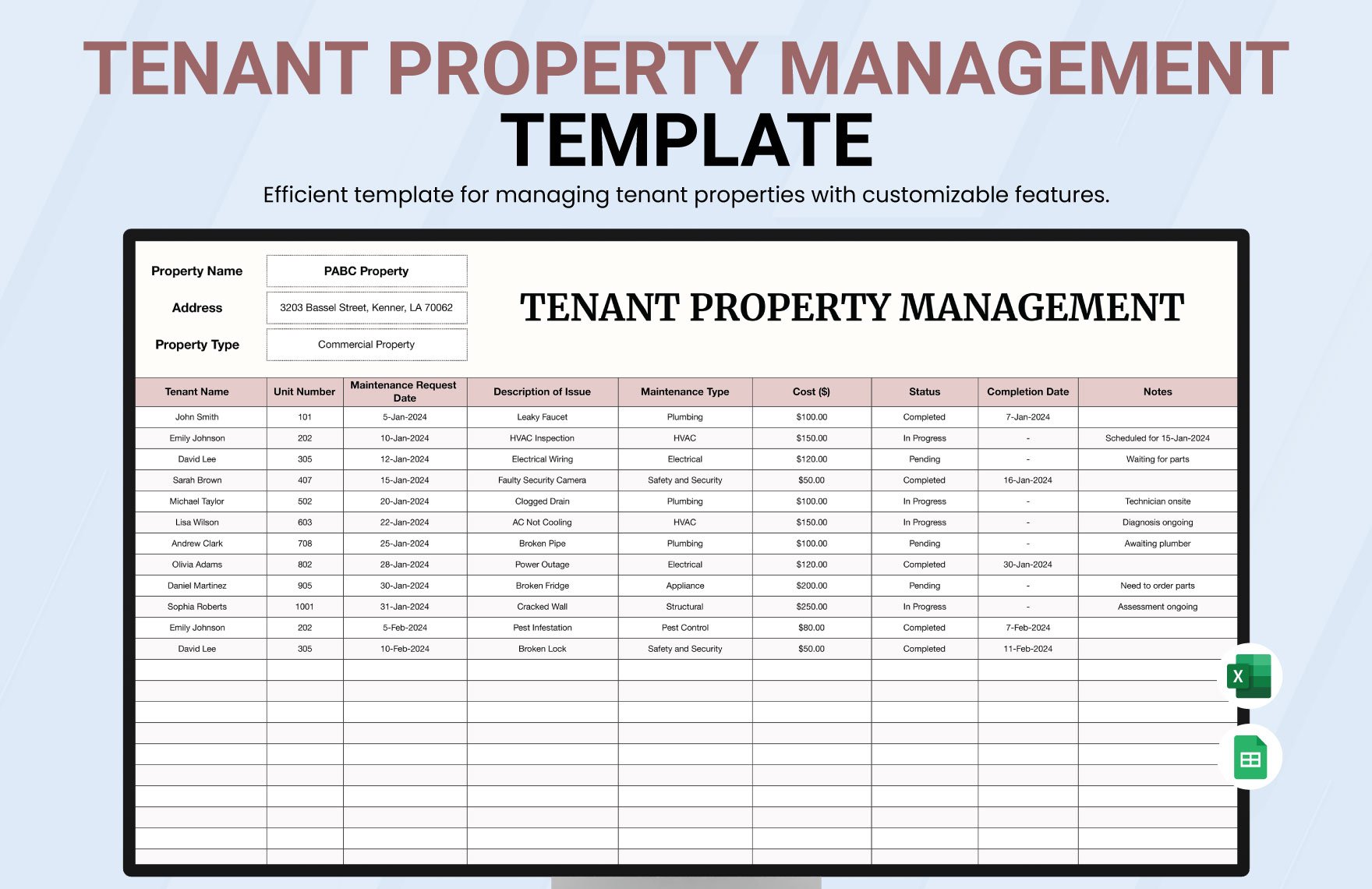
A structured property-management table illustrates why organization skills matter in roles that combine financial and operational information. A finance manager must often connect transactions with people, properties, dates, work orders, vendors, and decisions.
The strongest candidates are usually comfortable moving between detail and summary. They can investigate an individual transaction without losing sight of the monthly financial position, and they can explain a complex variance without overwhelming the decision-maker with accounting jargon.
Discretion should also be assessed during recruitment. The job description can state that the employee will handle confidential information and must exercise appropriate judgment about what information is shared, with whom, and through which channels.
Adaptability is another useful competency. Private estates can change priorities quickly because of travel, property events, emergencies, projects, or changes in household operations. The finance manager needs systems strong enough to preserve financial control without becoming so rigid that routine decisions are delayed.
Finally, the description should distinguish skills that are essential from skills that can be learned. This produces a fairer and more realistic candidate profile and helps the interviewer focus on capabilities that genuinely predict success.
How to Write Responsibilities That Actually Work
Begin each responsibility with a clear verb. Useful verbs include manage, prepare, reconcile, monitor, analyze, coordinate, review, maintain, forecast, report, document, oversee, investigate, and improve. Avoid vague verbs such as “assist with everything” or “handle finances.”
Attach an object to the verb. “Prepare monthly financial reports” is stronger than “manage reporting.” “Reconcile estate bank accounts” is stronger than “handle reconciliations.” Specific wording helps candidates understand the work and gives interviewers something concrete to evaluate.
Add an outcome where appropriate. “Review budget variances and provide explanations for material deviations” describes both the action and the purpose. Outcome-oriented descriptions also make performance reviews easier because the responsibility can later be evaluated against evidence.
Show scale when it matters. If the role supports several properties, multiple entities, or a significant capital program, say so in a non-confidential way. Scale provides context for seniority and helps candidates determine whether their experience is relevant.
Limit the main responsibility list to the work that genuinely defines the position. A template should not become a catalogue of every occasional task performed by the estate. Secondary duties can be included separately if they occur regularly enough to affect the candidate profile.

A commercial property-management template demonstrates how multiple properties and multiple expense categories can be represented in one financial view. An estate finance manager may use a similar conceptual structure when reporting across several residences or projects.
The important distinction is that private-estate reporting may contain personal or confidential categories that should not appear in a public-facing template. The job description can describe the responsibility without revealing sensitive information about the employer.
When describing multi-property work, clarify whether the manager consolidates the information or merely maintains separate records. Consolidation typically requires stronger analytical skills because the manager must reconcile different property-level views into a coherent overall position.
Likewise, if the manager works with multiple legal entities, state that entity-level accounting and reporting experience is preferred or required when appropriate. Do not assume every estate has the same legal structure.
A responsibility list built around actual scope is more valuable than one filled with generic corporate phrases. It tells the candidate what a normal working week is likely to involve and tells the employer what capabilities the hire must bring.
Reporting, Dashboards, and Management Information
Management reporting should be defined by audience. A principal may want a concise overview, while an external accountant may need detailed reconciliations and transaction-level support. The finance manager can produce both if the template clearly identifies the reporting hierarchy.
A monthly dashboard might include cash balances, operating expenditure, budget utilization, major variances, outstanding invoices, capital commitments, and forecast changes. The exact metrics should be agreed with the person receiving the report.
Charts can help communicate trends, but they should not replace underlying financial analysis. A graph showing rising maintenance costs is useful only when the manager can explain whether the change is caused by seasonal work, a major repair, higher supplier rates, or another factor.
Key performance indicators should be selected carefully. Possible measures include reporting timeliness, reconciliation completion, invoice-processing accuracy, forecast variance, aged outstanding items, documentation completeness, and adherence to approved financial controls.
The template should avoid promising unrealistic precision. Forecasts are estimates, and the job description should expect the manager to communicate assumptions and uncertainty rather than presenting projections as guaranteed outcomes.
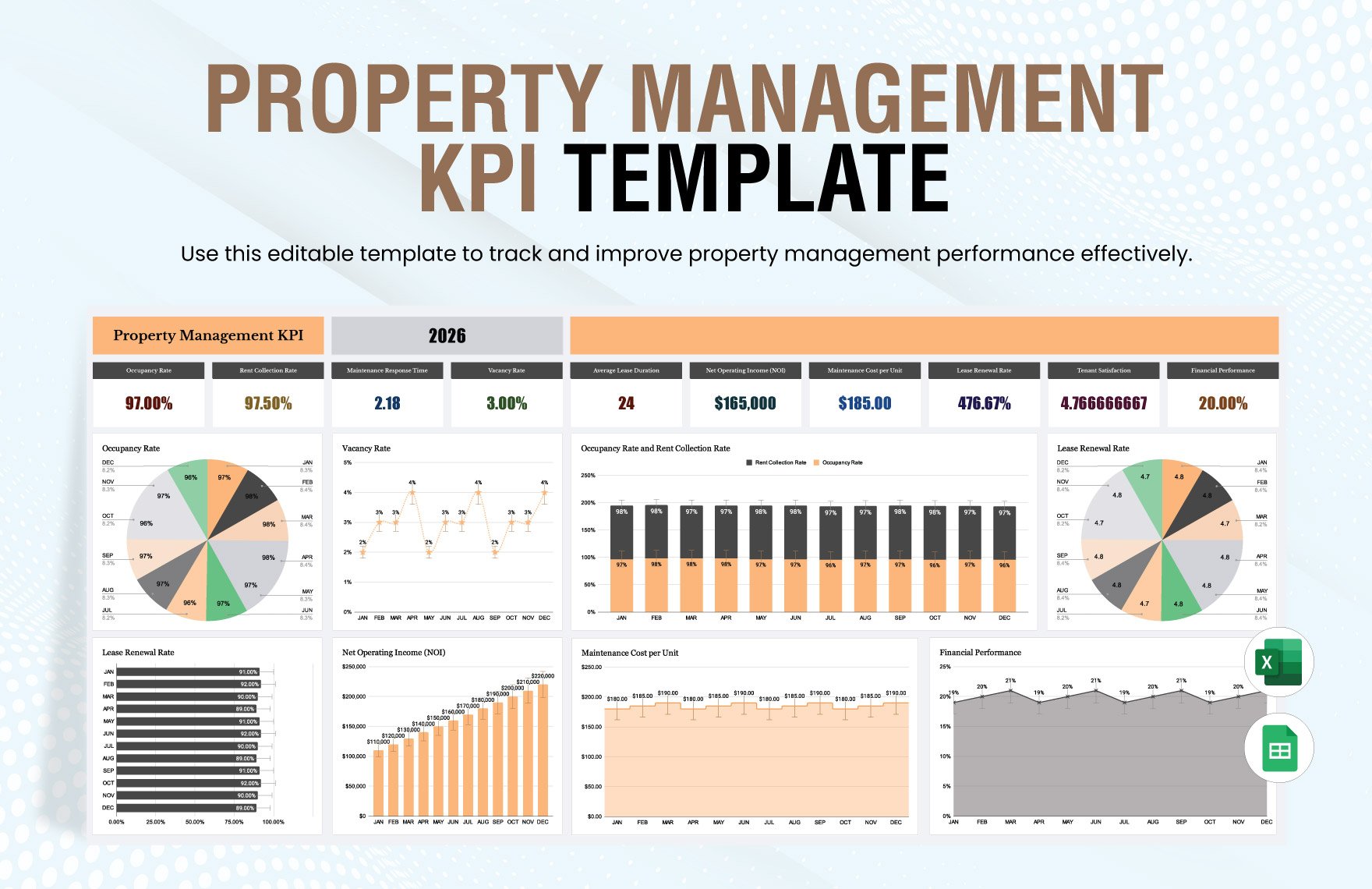
A property-management KPI dashboard demonstrates how financial and operational indicators can be brought together in a single reporting view. For an estate finance manager, the same principle can be applied to financial KPIs without importing irrelevant property metrics.
Useful estate-finance indicators could include actual expenditure against budget, forecast year-end expenditure, major project commitments, outstanding invoices, cash requirements, and the status of reconciliations. The exact set should reflect management priorities.
A dashboard should also distinguish information from action. A red variance may be interesting, but the report becomes more valuable when it states what caused the variance and whether management needs to approve a change.
The job description can therefore require “prepare and interpret management reports” rather than merely “prepare reports.” Interpretation is what turns bookkeeping output into management information.
For senior positions, the ability to communicate financial information verbally may be as important as spreadsheet competence. The manager may need to explain a budget issue clearly and calmly to a non-finance executive who wants a practical answer rather than an accounting lecture.
Maintenance, Projects, and Capital Expenditure
Property maintenance creates a recurring financial workload. Routine repairs can be small individually but significant in aggregate, while large projects can materially affect the estate’s annual spending. The job description should describe how the finance manager interacts with these activities.
For routine maintenance, the role may monitor vendor invoices, compare spending with budget, identify recurring costs, and maintain financial records. The estate manager or property team may remain responsible for determining whether work is technically necessary.
For capital projects, the finance manager may establish a project budget, track committed expenditure, reconcile invoices, update forecasts, and report expected completion costs. The role should not be described as the project manager unless it genuinely owns scheduling, contractors, scope, and delivery.
Change orders are particularly important. A project that begins with an approved budget can expand through additional work. The finance manager should have a process for recording approved changes and showing their effect on the remaining budget.
Completion reporting can close the loop. A final project report might compare original budget, approved changes, actual expenditure, outstanding commitments, and final variance. This creates a useful record for future planning.

A work-order tracker demonstrates how maintenance requests can be assigned identifiers, priorities, dates, statuses, and completion information. The finance manager may not own the work-order system, but financial reporting can benefit from linking expenditures to identifiable work.
When a repair invoice arrives, a reference to a work order or project can help establish why the cost occurred. That improves coding, budget analysis, and future review.
The job description can state that the manager coordinates with property operations to ensure financial records reflect the underlying work. This is more useful than assigning technical maintenance responsibilities to a finance professional.
For large estates, the ability to organize many small requests and a few large projects simultaneously is a meaningful competency. Candidates should understand that financial control depends on operational context.
Good documentation also makes transitions easier. If a finance manager leaves, the incoming employee should be able to understand outstanding commitments, active projects, recurring vendors, and expected cash requirements without reconstructing the entire history from scattered records.
Common Mistakes in an Estate Finance Manager Job Description
The first mistake is making the description too generic. A standard corporate finance-manager template may mention financial strategy, departmental leadership, and board reporting while saying little about property operations, household expenses, vendors, capital projects, or private-client service.
The second mistake is making the role impossibly broad. Some descriptions combine bookkeeping, investment management, tax advice, property management, HR, legal work, procurement, and household operations into one position. If all of these functions are genuinely required, the employer should consider whether the role is actually a finance manager or a broader estate executive.
The third mistake is failing to define authority. “Manage payments” can mean preparing payments or approving them. “Manage the budget” can mean preparing reports or having spending authority. The template should make those distinctions explicit.
The fourth mistake is copying qualifications from unrelated positions. Requiring every conceivable certification, software product, degree, and industry credential can shrink the candidate pool without improving job performance.
The fifth mistake is leaving success undefined. A job description that only lists duties gives candidates no indication of what a successful first six or twelve months should look like.

A checklist illustrates the value of defined fields and completion statuses. The same principle applies to financial controls: responsibilities should be specific enough that an employer can determine whether they are being performed consistently.
For example, “maintain accurate financial records” can be supplemented with concrete outputs such as completed reconciliations, organized supporting documentation, timely month-end close activities, and reviewed exception reports.
The objective is not to turn the job description into a checklist of every transaction. Instead, it should identify the recurring outputs that demonstrate the financial system is working.
Another mistake is using overly promotional language. Private-estate candidates usually benefit more from a realistic description of working conditions, confidentiality, reporting relationships, travel expectations, and decision-making authority than from generic statements about a “dynamic environment.”
Finally, do not treat the first version as permanent. Job descriptions should be reviewed when the estate adds properties, changes financial systems, alters reporting relationships, expands capital projects, or changes the level of financial authority.
How to Adapt the Template for Different Estate Structures
For a single-property estate, the role may be relatively hands-on. The manager might maintain accounting records, reconcile bank accounts, coordinate payroll, monitor household spending, and prepare monthly reports directly for the estate manager or principal.
For a multi-property estate, the emphasis shifts toward consolidation, cash planning, inter-property reporting, and coordination. The manager may spend less time entering transactions and more time reviewing information produced by property-level administrators or external bookkeepers.
For a family-office environment, the role may sit within a formal finance function. The estate finance manager could provide property and household financial information to a controller, CFO, or family-office accounting team while remaining closely connected to estate operations.
For a trust or fiduciary environment, the responsibilities can be different again. The employer may require stronger documentation, entity accounting, reporting, and coordination with legal or tax professionals. The description should reflect those requirements only when they are genuinely part of the position.
For an estate with significant rental or commercial activities, receivables and property-level income reporting may become more important. The template should then include revenue reconciliation, tenant-related financial records, or property income analysis if those tasks are part of the job.
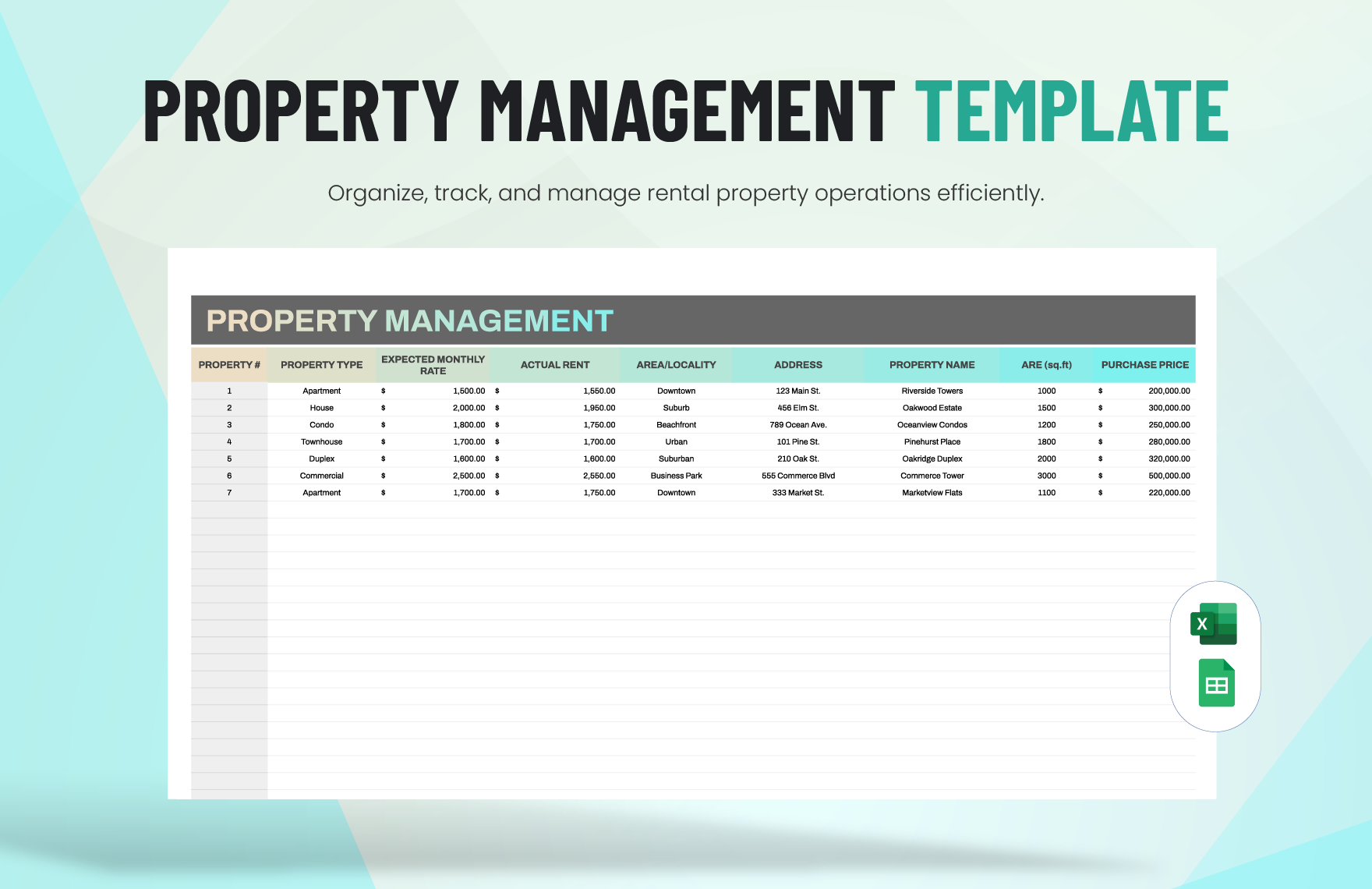
A broader property-management template shows how several properties can be represented within one structured dataset. This can be useful inspiration when designing a finance role that supports multiple residences or properties.
The key is to define the reporting unit. The manager might report by property, legal entity, cost center, project, or a combination of these. A good job description tells candidates what dimensions they will be expected to understand.
It is also useful to state whether the position manages people. A senior finance manager may supervise bookkeepers or administrators, while another position may be an individual contributor who coordinates external providers.
Management responsibility changes the skill profile. A supervisor needs delegation, review, coaching, and quality-control skills in addition to technical finance competence.
The template should therefore be customized according to organizational design rather than title alone. Two people with the same title can have very different jobs if their estate structures are different.
Word, PDF, Excel, and Google-Based Formats
A Word version is usually best when the document is primarily narrative. It works well for role summaries, responsibilities, qualifications, reporting structures, and approval sections. Word is also convenient when HR or management needs to edit wording before publication.
PDF is useful for approved versions that should preserve formatting. A PDF can serve as a stable reference copy for internal approval, candidate communication, or recordkeeping. However, it should normally be generated from an editable source rather than treated as the primary working document.
Excel can be valuable when the job description is part of a broader HR or workforce-planning system. A spreadsheet may organize fields such as title, department, reporting line, responsibilities, qualifications, salary range, location, and status across multiple roles.
Google Docs can be useful when several authorized stakeholders need to review the document collaboratively. It allows comments, version history, and controlled sharing, although access permissions should be appropriate for confidential employment information.
Google Sheets can be useful for role inventories and structured HR databases, but a polished job description is usually easier to read as a document. A spreadsheet can store the structured fields while a Word or Google Docs file presents the final narrative.
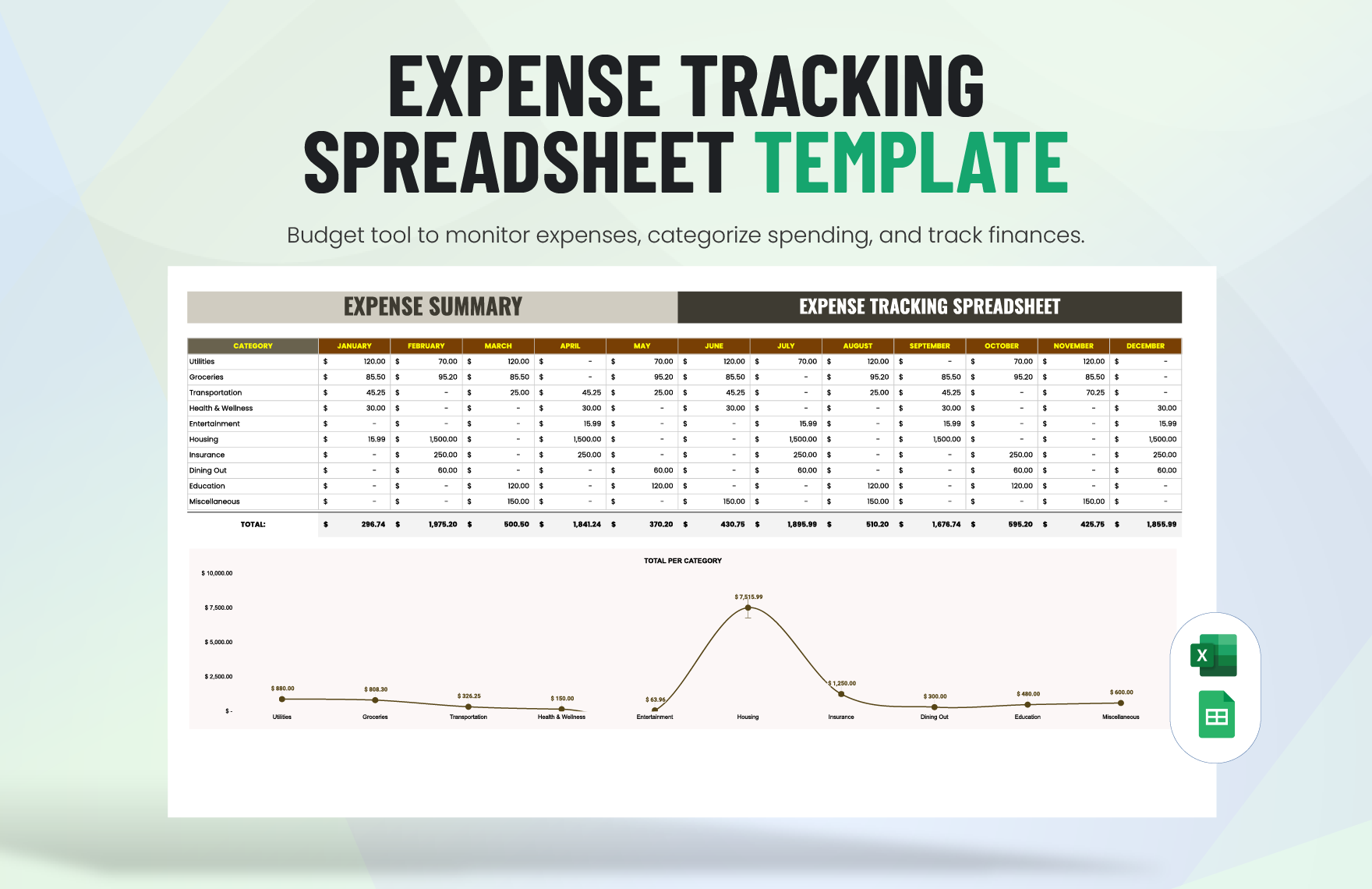
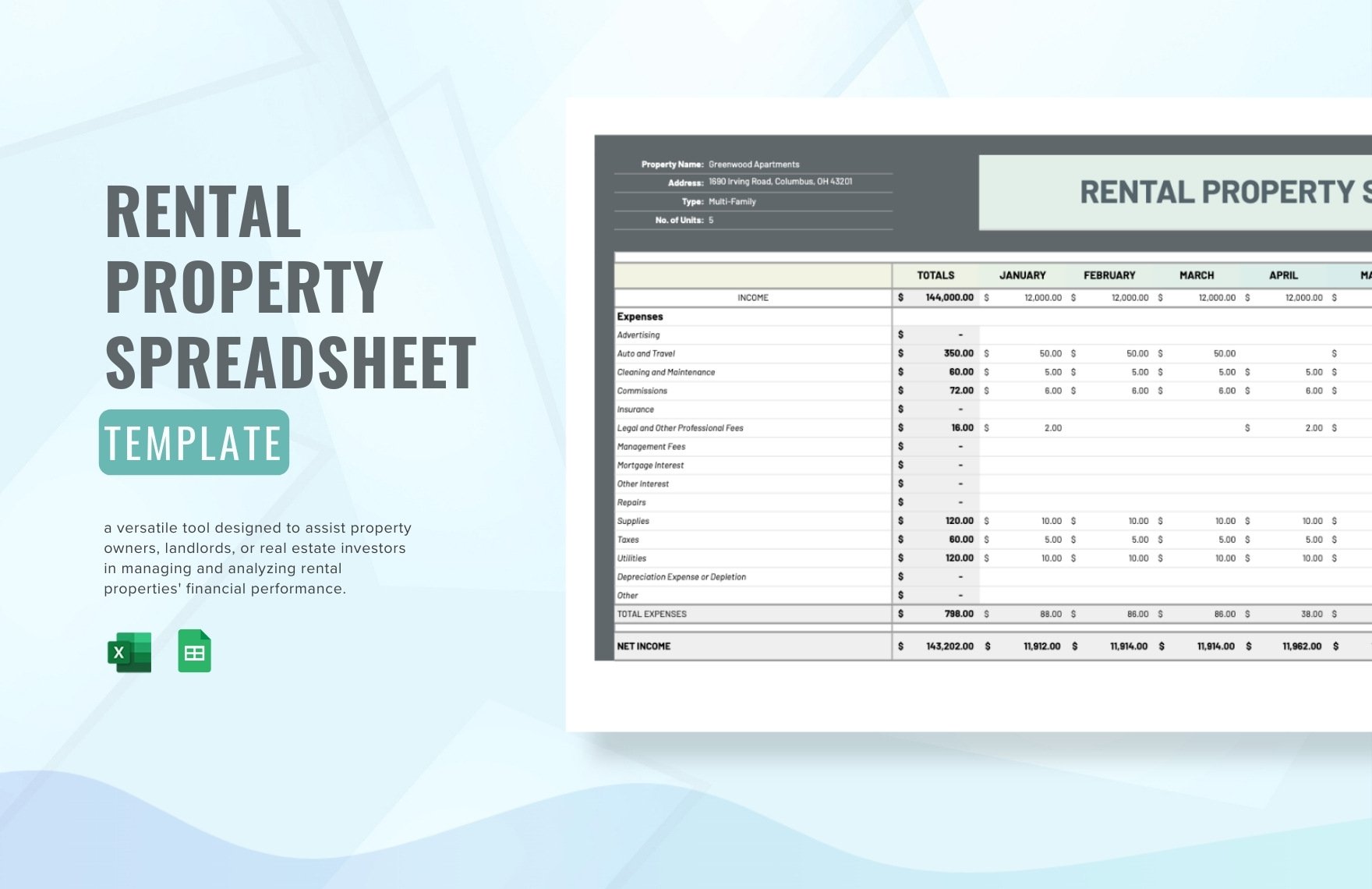
An expense-tracking spreadsheet illustrates why spreadsheet formats can be powerful for structured financial information. Categories, periods, totals, and trends can be represented consistently, which is helpful when an estate finance role must manage recurring expense data.
However, a job description should not become a financial spreadsheet. Its purpose is to define the work, not to record the estate’s actual finances. The spreadsheet principle is useful mainly for organizing structured role information and related financial responsibilities.
A practical workflow can use a document as the master role description and a spreadsheet as a hiring-control sheet. The document contains the approved wording, while the spreadsheet tracks approval status, owner, review date, location, compensation range, and recruitment status.
Whichever format is selected, maintain one approved version. Multiple uncontrolled copies can lead to different candidates receiving different information about responsibilities or compensation.
The format should support the process rather than become the process. Clarity, accuracy, controlled access, and ease of updating matter more than choosing a particular file extension.
Using the Template for Recruitment
Start internally before publishing externally. Ask the hiring manager, estate leadership, finance owner, and HR representative to agree on the role purpose, scope, reporting line, compensation framework, and decision rights.
Then identify the minimum qualifications. Separate skills that the employee must possess immediately from capabilities that can be developed during onboarding. This prevents a long “wish list” from becoming a barrier to strong candidates.
Build interview questions directly from the responsibilities. If the role includes budget forecasting, ask candidates to describe how they build and update a forecast. If it includes reconciliations, ask how they investigate discrepancies. If it includes vendor payments, ask how they design an appropriate approval process.
Use realistic scenarios. A candidate might be asked how they would respond if a renovation is forecast to exceed budget, a major vendor invoice lacks supporting documentation, or several large payments are due at the same time.
The template can also support reference checking. Questions can be aligned with the most important competencies, such as financial accuracy, confidentiality, independence, judgment, organization, and communication with senior stakeholders.

A vendor-contact structure illustrates the importance of organized supplier information. For an estate finance manager, vendor records may need to connect financial terms, payment information, contracts, property assignments, and approval responsibilities.
The finance manager may not own every vendor relationship, but the role should understand the financial records associated with those relationships. Clear ownership reduces duplicate data entry and makes invoice investigations faster.
Vendor information should also be handled carefully because it can contain sensitive contact and payment details. The job description can require confidentiality and secure record handling without specifying a particular software platform.
Recruitment interviews can test whether candidates understand the difference between a vendor relationship and a financial control. A good finance professional should be able to maintain a constructive relationship while still requiring appropriate documentation and approvals.
This balance is particularly important in private estates, where trusted long-term suppliers may have informal relationships with household staff or principals. Professional finance controls should remain clear without unnecessarily damaging operational relationships.
Practical Example: Building the Template Step by Step
Step one is to define the position title. Use a recognizable title such as Estate Finance Manager rather than an internal nickname that candidates will not understand. If the role is more senior, consider whether “Senior,” “Head of,” or another level descriptor accurately reflects authority.
Step two is to define reporting. Identify the direct manager, any direct reports, and major internal partners. If the role communicates with a principal, family office, controller, external accountant, estate manager, or chief of staff, describe those relationships by function.
Step three is to define financial scope. List the actual areas the role owns: budgeting, forecasting, reconciliations, payables, payroll coordination, reporting, capital expenditure, vendor finance, asset records, or other functions.
Step four is to define decision rights. State whether the manager prepares, reviews, recommends, approves, or escalates financial transactions. This is one of the most important distinctions in a senior private-finance role.
Step five is to define success. Identify the reports, controls, reconciliations, forecasts, and process improvements expected from the person. This converts the document from a task list into an operating agreement.

A contract template provides a useful visual reminder that responsibilities and terms can be documented separately from the narrative description. In an estate-finance context, the job description should define the role while employment contracts and policies address legal terms.
The job description should not attempt to replace an employment agreement. Compensation, leave, termination, legal obligations, confidentiality clauses, and other contractual matters should be handled through the appropriate employment documentation.
Similarly, the template should not be used to provide legal, tax, or investment advice. When the role interacts with those areas, describe coordination with qualified advisers rather than assigning professional responsibilities that the employee is not licensed or engaged to perform.
A clean separation between job description, employment contract, financial policy, and operating procedure creates a stronger documentation system.
This also makes updates easier. If a payment policy changes, the policy can be updated without rewriting the entire job description, provided the employee’s responsibility itself has not materially changed.
Research and Data Collection Before Finalizing the Role
Research should begin with the estate’s actual operating model. Interview the person currently performing the work, if there is one, and ask what consumes time, which tasks require judgment, where errors occur, and which responsibilities are expected to grow.
Review existing financial workflows. Identify who receives invoices, who approves expenses, who prepares payments, who performs reconciliations, who prepares reports, and who communicates with external advisers. These facts reveal the real role better than a generic title.
Review the financial calendar. Month-end close, payroll, insurance renewals, tax deadlines, annual budgeting, property openings and closures, capital projects, and recurring supplier payments can all influence workload and required capacity.
Review systems and access requirements. Determine which accounting platform, banking systems, spreadsheets, property-management tools, document repositories, and reporting systems the role will use. Then identify which access rights are genuinely necessary.
Finally, review the draft with the intended hiring manager. Ask whether every responsibility is real, whether every required qualification is necessary, and whether the document accurately describes the decision-making authority. This final reality check often removes the most problematic wording.

An incident-report structure demonstrates the value of documenting events in a consistent format. Finance roles benefit from the same discipline when recording unusual transactions, payment exceptions, control issues, or material financial incidents.
The job description does not need to prescribe an incident form, but it can state that the manager documents and escalates significant financial exceptions according to established procedures.
This becomes especially important when an estate operates across multiple properties or has several people involved in financial administration. Consistent documentation makes it easier to establish what happened and what action was taken.
The manager should also know when an issue is outside the role’s authority. A suspected fraud issue, legal dispute, tax question, or major financial irregularity may require escalation to the appropriate adviser or executive.
Good role design therefore combines independence with clear escalation paths. The employee should have enough authority to perform the job but not so much ambiguity that serious issues are handled informally.
Practical Solution: A Ready-to-Adapt Estate Finance Manager Framework
Start by creating a one-page role profile containing the title, purpose, reporting line, location, employment type, financial scope, and direct reports. This gives stakeholders a quick reference before they review the full document.
Next, write eight to twelve core responsibilities that describe the actual work. Group them into logical areas such as financial management, reporting, controls, vendor administration, property finance, capital projects, and stakeholder coordination. Keep occasional duties separate from core responsibilities.
Then create two qualification lists. The required list should contain only capabilities that are genuinely necessary on day one. The preferred list can include private-estate experience, family-office exposure, professional certifications, or specialized systems knowledge that would improve performance but is not essential.
Add a success-measures section covering the first ninety days and the first year. A ninety-day plan might focus on understanding systems, completing reconciliations, establishing reporting routines, and documenting controls. A longer-term plan might focus on forecast quality, reporting improvements, budget discipline, and process automation.
Finally, define authority and escalation. State which transactions the manager can process, which require approval, who receives reports, and which issues must be escalated immediately. This single step can eliminate significant ambiguity from an otherwise well-written estate finance manager job description Template.
Reference Examples
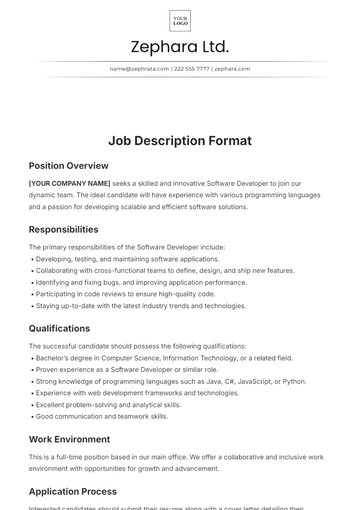
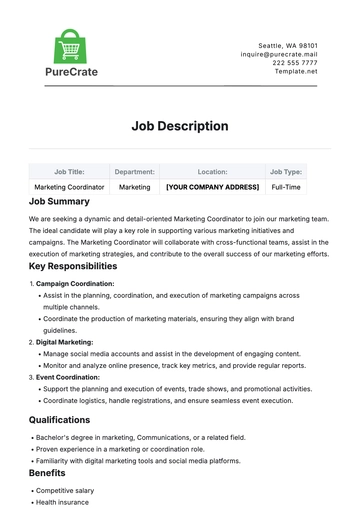
The following visual references illustrate document structures, financial templates, estate-management layouts, and job-description examples. They are reference visuals rather than claims that every pictured format is appropriate for every employer.
estate finance manager job description template free
Source: Template.net
estate finance manager job description template pdf

Source: Etsy
estate finance manager job description template word
Source: Template.net
estate finance manager job description template free download
Source: Template.net
estate finance manager job description template word free

Source: Xmind
estate finance manager job description template excel
Source: Template.net
estate finance manager job description template google docs
Source: Template.net
estate finance manager job description template free pdf

Source: Etsy
estate finance manager job description template workable

Source: Xmind
estate finance manager job description template talentlyft
Source: Template.net
estate finance manager job description template sample
Source: Template.net
estate finance manager job description template linkedin
Source: Template.net
Frequently Asked Questions
What should an estate finance manager job description Template include?
It should normally include the role title, purpose, reporting structure, financial responsibilities, qualifications, systems, working arrangements, decision rights, confidentiality expectations, success measures, and any relevant compensation or employment information. The exact sections should reflect the employer’s operating model.
Is an estate finance manager the same as an estate manager?
Not necessarily. An estate manager typically has broad operational responsibility for property, staff, vendors, maintenance, and household operations, while an estate finance manager focuses primarily on financial administration, reporting, budgeting, controls, and related analysis. Some smaller estates combine both functions.
Should budgeting be a required responsibility?
If the position is expected to prepare, manage, monitor, or report on estate budgets, budgeting should be a core responsibility. If the finance manager only supplies information to another finance leader, the description should say so rather than implying full budget ownership.
Should the template mention payroll?
Yes, when payroll administration or payroll coordination is part of the role. The wording should distinguish between preparing or reviewing payroll information and being responsible for employment-law, HR, or payroll-provider compliance.
What qualifications are useful for an estate finance manager?
Useful qualifications depend on scope. Relevant accounting or finance education, professional accounting experience, strong spreadsheet skills, reconciliation experience, budgeting knowledge, financial-reporting ability, and experience handling confidential information are common considerations. Private-estate or family-office experience can be particularly useful where the operating environment is complex.
Should the job description include salary information?
Where appropriate, yes. Compensation information can improve clarity, but the applicable disclosure requirements vary by jurisdiction and employment context. The description should be reviewed against current local requirements rather than relying on a generic rule.
Can the template be used in Microsoft Word?
Yes. A document-based version is particularly suitable for Word because the role summary, responsibilities, qualifications, reporting relationships, and approval fields can be edited easily. The final approved version can then be converted to PDF when a stable distribution copy is required.
Can an estate finance manager job description Template be used in Google Docs?
Yes. A Word-style template can generally be adapted to a collaborative document environment. Google Docs can be useful when several authorized reviewers need to comment on the draft, although access permissions should be carefully controlled for confidential employment information.
Is Excel useful for a job description template?
Excel is useful when an organization manages many roles in a structured workforce database or needs fields for approval status, reporting lines, locations, compensation bands, and recruitment stages. For the final candidate-facing description, a document format is usually easier to read.
How often should an estate finance job description be reviewed?
Review it when the role changes materially and as part of the organization’s normal HR review cycle. Major changes in properties, financial systems, reporting relationships, capital-project responsibility, staffing, or decision rights are good reasons to update it sooner.
Conclusion
A strong estate finance manager job description Template should describe a real operating role rather than a generic finance position. It should explain the relationship between financial administration and the wider estate environment, including property operations, vendors, staffing, budgets, projects, reporting, and confidential information.
The most valuable sections are the ones that remove ambiguity: a concise purpose statement, specific responsibilities, clearly separated required and preferred qualifications, defined reporting relationships, explicit financial scope, practical success measures, and documented decision rights.
Employers should customize the template around their actual estate structure. A single residence, a multi-property portfolio, and a family-office environment may require very different levels of accounting, consolidation, forecasting, project finance, and stakeholder management.
Format should support the workflow. Word or Google Docs can serve as editable master documents, PDF can preserve an approved version, and Excel or Google Sheets can support structured role inventories and financial tracking. Whatever format is selected, maintain one controlled source of truth and review the description whenever the role materially changes.
The practical goal is simple: a candidate should be able to read the document and understand what they will own, what they will report, what authority they will have, what financial problems they will solve, and how success will be judged. When those points are clear, an estate finance manager job description Template becomes more than a recruitment document—it becomes a useful operating foundation for the role.
A well-built estate finance manager job description Template ultimately connects recruitment with real estate operations, financial control, management reporting, and long-term accountability, giving both employer and candidate a clearer basis for making the right hiring decision.
